Most people booking omakase near downtown assume "aged fish" means something has been sitting in a cold room getting funkier by the day, like a wedge of Roquefort. At Akiko's on Folsom Street, chef Ray Lee's dry-aging technique is closer to charcuterie than cheese: controlled enzymatic breakdown that concentrates flavour without crossing into fermentation. The bluefin toro that arrives at your seat has spent days in precise humidity and temperature, not gathering dust.
Karpo shows you which omakase spots downtown are open tonight, how long the booking wait actually is, and whether bar seats are taking walk-ins for lunch this week.
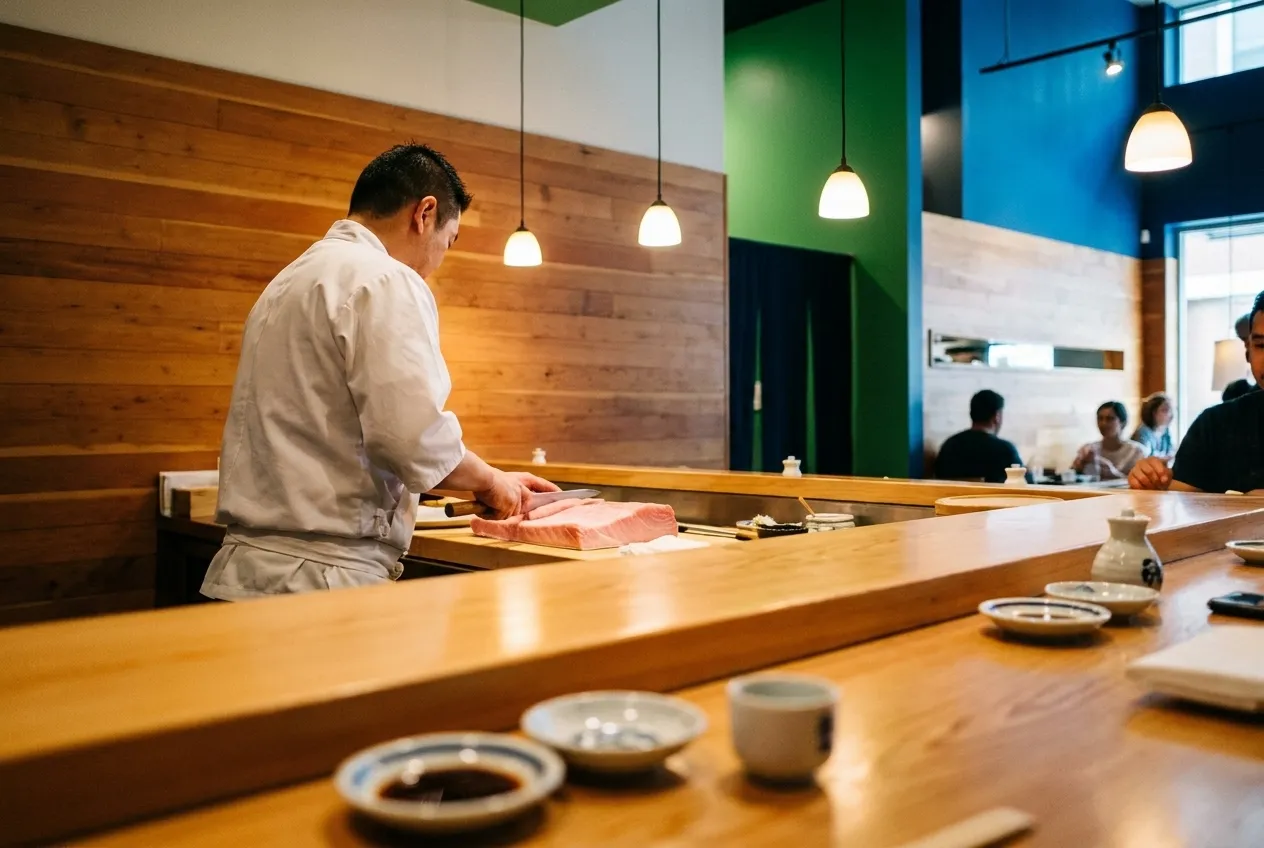
Akiko's relocated to 430 Folsom in 2021 after decades in business, trading its original digs for a flagship space with high ceilings, plank wood paneling and an open-concept chef's stage where the sushi team runs the counter. The room features bold colour accents, suspended lighting, and abstract artwork with modern flair. It's polished but not precious, and the noise level stays low enough to hear the knife work.
What people get wrong about aged fish
The assumption is that aging fish makes it taste "stronger" or gamey, the way dry-aged beef develops that iron tang. In practice, Ray Lee's technique does the opposite: it firms the texture and pulls forward the natural sweetness and umami already present in the fish. A piece of dry-aged bluefin toro tastes cleaner and more intense than its fresh counterpart, not funkier. The process takes days of monitoring—humidity, temperature, air flow—and the margin for error is thin.
Akiko's sources most of its fish from Tokyo's Toyosu Market, the same supply chain feeding Ginza counters. The nigiri-centric omakase format means you're tasting the technique piece by piece, not buried under garnish or sauce. Hokkaido uni with ikura appears as a study in brine and cream; the aged toro lands with a richness that doesn't coat your palate so much as settle into it. If you've only eaten supermarket sashimi, the textural difference will be obvious within three pieces.
What it actually is
Akiko's is a traditional omakase counter with a fixed progression—no à la carte menu, no substitutions, no skipping the course you don't like. The chef directs the meal from the open stage, and the pacing is deliberate: you'll spend ninety minutes to two hours at dinner, less at lunch. The format assumes you're here to eat what the kitchen has aged, sourced and prepared that day, not to negotiate your way through a bespoke tasting.
The room seats fewer than thirty, so the experience tilts intimate without feeling precious. Service is attentive but not chatty; if you want to know how long a piece of kinmedai was aged, ask. If you'd rather eat in silence, no one will narrate your dinner. The design—wood paneling and modern lighting—gives the space a contemporary formality that stops short of stuffiness. You're expected to dress smart casual to upscale; jackets are optional but polished attire is the norm.
The booking and timing constraint
Reservations are essential. Walk-ins are rarely accommodated because the omakase format requires advance prep and the seating count is fixed. Bar seats may have limited walk-in availability at weekday lunch, but that's the only window where showing up without a booking might work. If you miss your dinner slot, you're waiting a week or more—service windows are narrow, and dinner ends at 8:30pm sharp.
Lunch service runs Tuesday through Friday with a shorter omakase format at a softer price point than dinner. Dinner service operates Tuesday through Saturday. The restaurant is closed Sunday and Monday. The tight schedule means you can't arrive fashionably late; reservations are timed precisely and losing your slot means waiting days or weeks for another opening.
What to expect from the progression
The evening omakase is listed at $155 on some platforms and $210 on others—verify the current rate when you book. Either way, you're paying for a fixed sequence of nigiri, a few cooked or marinated pieces, and minimal filler. Expect Santa Barbara uni ($12 if ordered separately, though you won't be ordering separately), dry-aged bluefin in multiple cuts, and seasonal white fish that showcase the aging technique without overwhelming it.
The lunch omakase compresses the format but doesn't skip the signature preparations. You'll still taste the aged fish; you'll just move through fewer pieces in less time. If you're testing whether omakase suits you before committing to a $200 dinner, lunch is the audition. A sashimi tasting runs $34 for twelve pieces if you're at the bar and manage to snag a non-omakase seat, but that's rare and not the reason to visit.
Getting there and what it costs
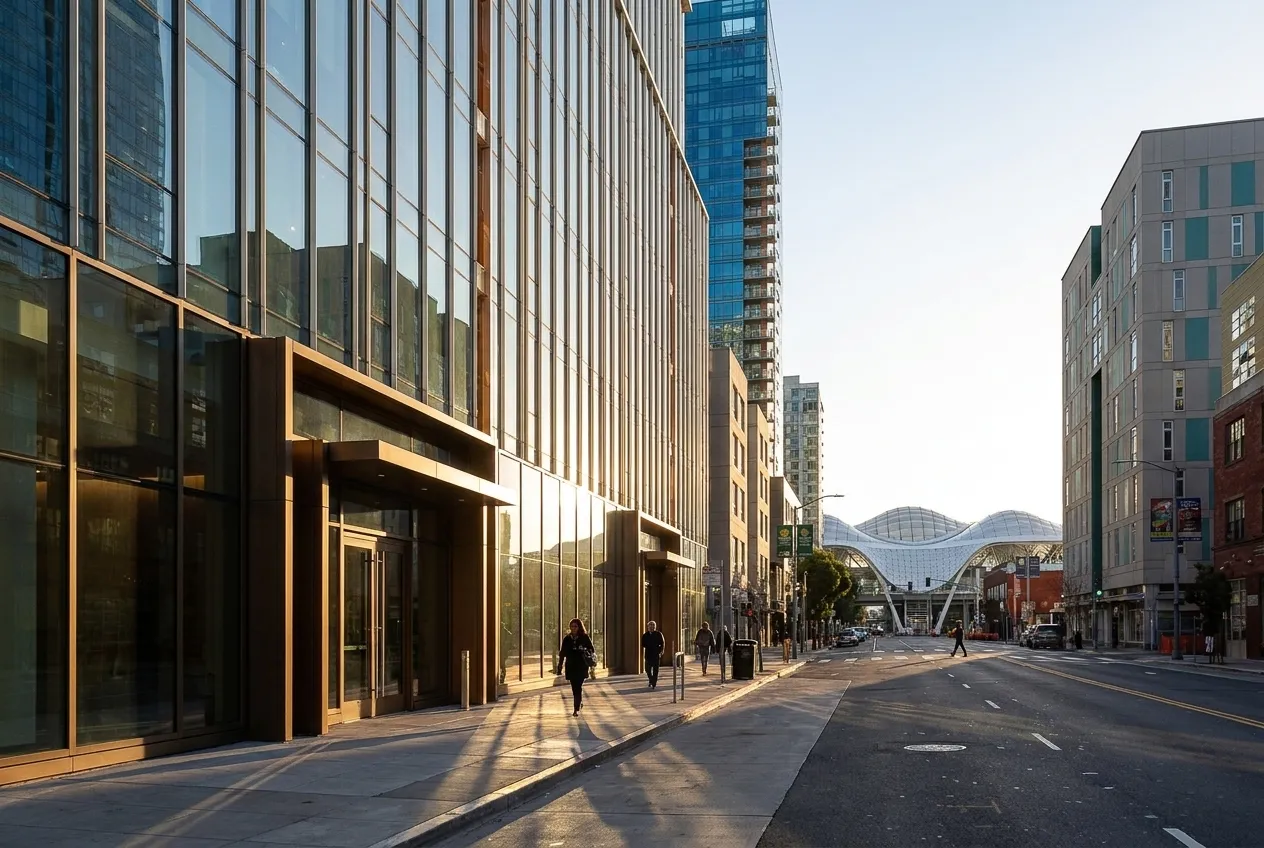
Akiko's sits at 430 Folsom Street between First and Fremont, a block south of the Transbay Transit Center. There's no dedicated valet. Nearby paid garages at One Market and 201 Spear are your best options; street parking after 6pm is scarce and metered. If you're coming from BART, Embarcadero is a ten-minute walk. Budget an extra fifteen minutes to find a spot if you're driving at dinner.
Dinner omakase is $155 to $210 depending on the source you check; lunch is lower but unspecified in verified data. Add tax, tip and sake if you're drinking, and you're looking at $200+ per person at dinner, closer to $120-$150 at lunch. The restaurant is closed Sunday and Monday, with lunch service Tuesday through Friday and dinner service Tuesday through Saturday.
Please drink responsibly. Must be of legal drinking age.
Tags: #akikossanfrancisco #omakasedowntown #driedagedfish #raylee #toyosumarket #folsomstreet #nigiriomakase #sanfranciscosushi #omakasenearme #shinsukehayashi #hokkaidouni #bluefinotoro #lunchomakase
All trademarks are the property of their respective owners.
Ask Karpo first
Ask Karpo whether Akiko's still has bar seats open for weekday lunch walk-ins, or if dinner reservations have opened up for next week. Check live transit times from your location to 430 Folsom, and confirm whether the paid garages at One Market or 201 Spear have availability before 6pm.