 SoMa Bowling Group Night Planner to Welcome New Hires
Sports Social

Mission Neighborhood Chess Club Finder: 4 Park Stops
Use a Mission District neighborhood chess club finder route from Dolores Park to Bartlett Street. Match sunny palm benches with quiet library tables.
Shielded from cold Pacific Ocean winds by the twin summits of Twin Peaks to the west, the Mission District enjoys the sunniest afternoon microclimate in San Francisco. Following a neighborhood chess club finder route from the palm-lined walkways of Mission Dolores Park across Valencia Street to Twenty-Fourth Street lets you play outdoors long after coastal fog has covered the western avenues. By pairing historic parkland benches with a 1915 Spanish Colonial Revival reading room and sunny bakery courtyards, two players can move effortlessly across the level valley floor.
Four Mission Playing Zones from Dolores Street to Harrison
Begin on the eastern promenade of Mission Dolores Park between Eighteenth Street and Nineteenth Street, parkland converted into a public green space in 1905 opposite the historic 1791 adobe walls of Mission San Francisco de Asís. Beneath the tall Canary Island date palms lining Dolores Street, wide wooden benches with flat center armrests provide a sunny morning perch for fifteen-minute rapid games before weekend picnic crowds fill the central lawn.
Walk two blocks east to the Valencia Street corridor between Nineteenth Street and Twenty-Second Street for your second stop. Independent coffee roasters and courtyard bakeries along these level Edwardian blocks feature deep wooden two-top tables that comfortably accommodate a sixteen-inch vinyl roll-up mat on weekday afternoons between 1 pm and 4 pm. Continuing south to Twenty-Fourth Street and Bartlett Street brings you to the third stop at the Mission Branch Library, a 1915 Carnegie landmark designed by architect G. Albert Lansburgh whose second-floor reading room offers quiet oak tables for endgame analysis.
Round out the four-stop loop four blocks further east at Garfield Square on Twenty-Fifth Street and Harrison Street, a neighborhood square first set aside by the city in 1881. Perimeter benches along the newly landscaped pathways give afternoon blitz partners a calm, neighborhood-focused alternative away from the main commercial avenues.
Mission Player Circles, Table Customs, and Crowds to Skip
Players gathering across the Mission District reflect the neighborhood's blend of artistic, scholarly, and longtime community traditions. Weekday mornings along Twenty-Fourth Street and inside the Bartlett Street reading room bring out retired machinists, muralists, and bilingual poets who play classical thirty-minute games without clocks over worn wooden sets. By mid-afternoon along Valencia Street and Guerrero Street, bicyclists, bookshop clerks, and software developers unpack silicone tournament mats and digital increment timers for best-of-five rapid series.
Respectful table etiquette in the Mission hinges on sharing space during lively market hours. When playing near the Dolores Street palm walk, keep bicycles parked off the paved pedestrian apron and store board tubes beneath the bench so dog walkers can pass unimpeded. Inside the Bartlett Street library reading hall, switch clocks to silent mode and whisper opening discussions out on the tiled stair landing rather than at the study tables. In the Karpo APP, you can map out all four Mission District stops in sequence and compare sunny outdoor benches against quiet indoor reading rooms.

Skip trying to set up a chessboard on the grass slopes of Mission Dolores Park near the Nineteenth Street gay beach overlook on a sunny Saturday afternoon between 1 pm and 5 pm. Thousands of weekend sunbathers, acoustic musicians, and picnickers pack every yard of turf, making it nearly impossible to keep a board level or concentrate on a rook endgame. Stick to the morning palm promenade benches before noon or walk east to Bartlett Street and Garfield Square on weekends.
Choosing Sun-Friendly Boards and Rainy-Day Indoor Backups
Bright Mission sunlight can create harsh glare on glossy lacquered wood or shiny vinyl squares. Pack a matte-finish green or mouse-gray silicone roll-up board paired with natural boxwood and ebonized Staunton pieces that stay easy to read under direct overhead sun. Weighted bases totaling thirty-four ounces or more also keep bishops and pawns stable when an afternoon breeze slips down Eighteenth Street from Twin Peaks.
Because the valley floor between Dolores Street and Folsom Street is completely flat, transitioning between outdoor park benches and indoor tables takes less than seven minutes on foot. Morning sessions work best on the east-facing benches of Dolores Street, while late afternoons stay warmest along the western sidewalk of Valencia Street and around Garfield Square.
Whenever winter rain clouds move across the bay or the Bartlett Street library reading tables fill up after school, step into one of the spacious roastery seating halls along Harrison Street or Alabama Street near Twentieth Street. Having both a civic library branch and wide warehouse cafe tables on your route guarantees an uninterrupted game in any weather. Players who bring a pocket magnetic analysis set can also use the covered exterior porticos near Twentieth and Lexington Streets to finish a correspondence study before stepping back onto Valencia Street.
BART Stations, J-Church Streetcar Access, and Mural Walks
Public transit connects the Mission chess circuit directly to downtown San Francisco, the East Bay, and the Peninsula. BART trains stop at both Sixteenth Street Mission and Twenty-Fourth Street Mission right beside the Bartlett Street library branch. On the western edge of the route, the J-Church Muni Metro light-rail line runs directly along the Eighteenth Street and Church Street border of Mission Dolores Park, offering panoramic views of the downtown skyline before you even step off the train.
Cyclists riding the Valencia Street center bikeway or the Folsom Street protected lane can lock up at municipal racks at every corner from Eighteenth Street down to Twenty-Fifth Street. The flat grade across the entire neighborhood makes carrying a canvas board bag by bike or on foot effortless, and the residential slow street on Shotwell Street offers a calm north-south pedestrian alternative between stops.
Once your last game concludes around 6 pm, take a twenty-minute walk through the painted murals of Balmy Alley near Twenty-Fourth Street or Clarion Alley between Seventeenth and Eighteenth Streets. Discussing missed tactical forks while admiring decades of neighborhood mural art and grabbing warm pan dulce along Twenty-Fourth Street is a quintessential San Francisco way to wrap up an afternoon of chess.
Ask Karpo for more information.
Keep reading
- SoMa Bowling Group Night Planner to Welcome New Hires
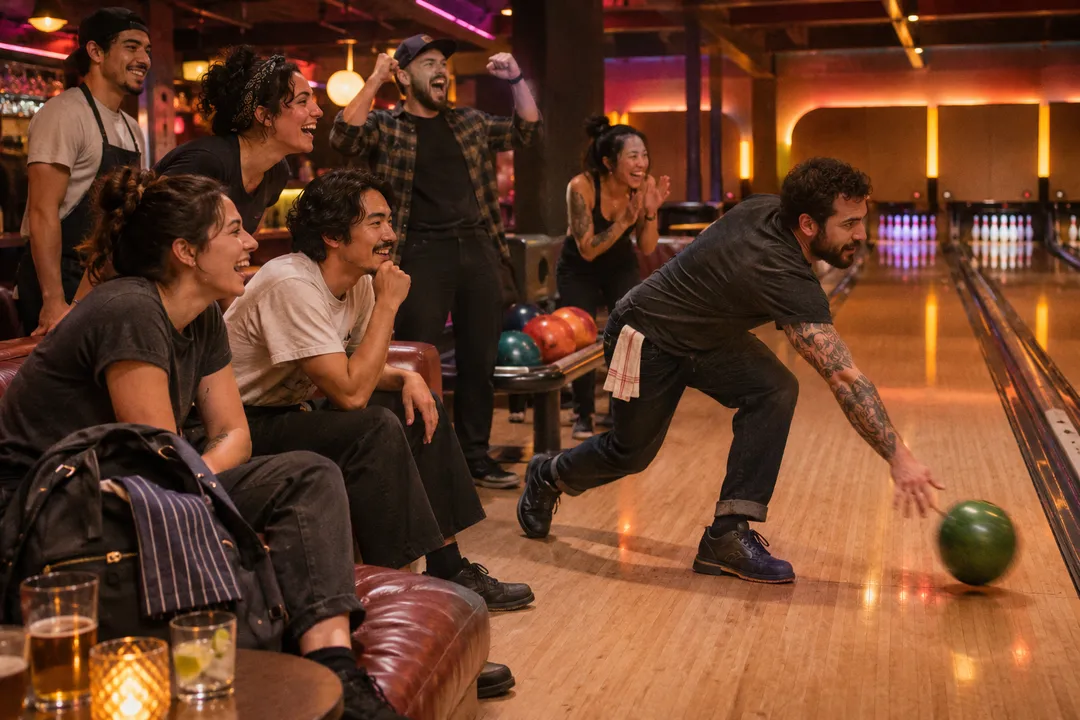 Lower Haight Bowling Group Night Planner for Kitchen Crews
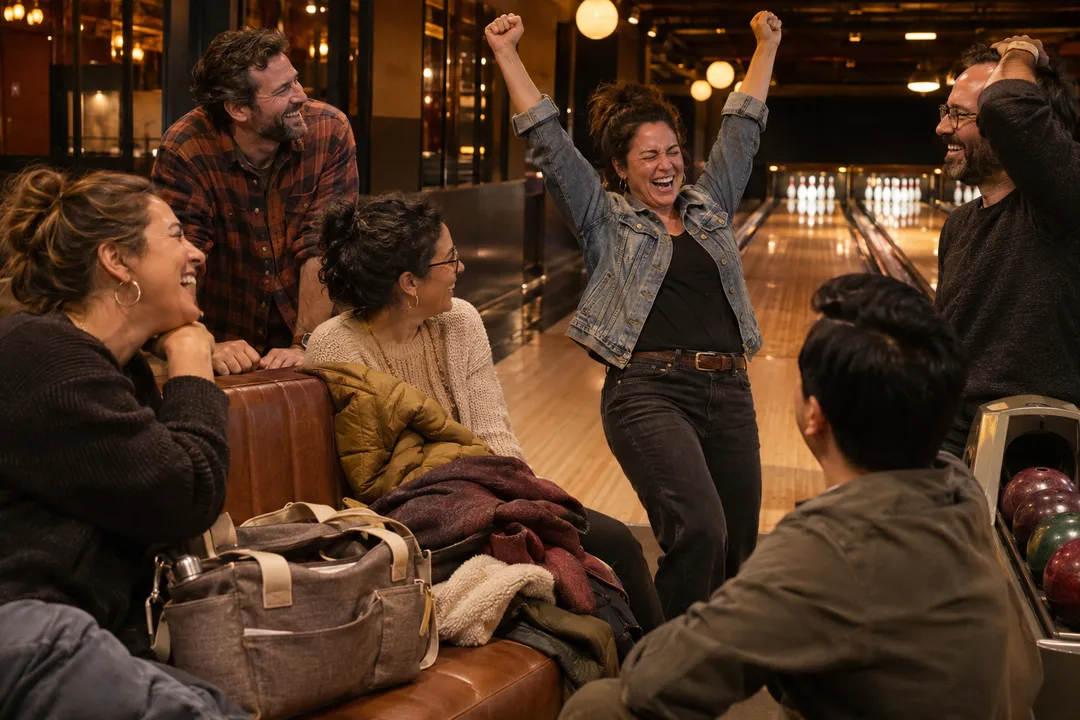 Bernal Heights Bowling Group Night Planner for Parents Out