 SoMa Bowling Group Night Planner to Welcome New Hires
Sports Social
SF Kickboxing Gym Trial Checklist for New Members
Plan an SF kickboxing gym trial with a practical checklist for registration, equipment, arrival, payment terms, and the decision after your first class.
An SF kickboxing gym trial needs a clear entry point, suitable equipment, and a payment decision you understand. Prepare those details before treating an appealing class name as a plan. A short checklist can separate what the school has supplied from what you still need to ask. Use Karpo APP to express your preferences and organize the options, then act on the information for the exact session you select. The checklist below is a planning method for a first visit in San Francisco, without merchant prices, venue opening times, or a claim that a trial is available.
Put the registration record in one place
Begin with the session name, location, intended date, and the participant's name. These details sound obvious until several similarly named classes enter the conversation. A general gym account and an individual class reservation are different records. Keep the school's instructions beside the session you intend to attend so you can see what action remains. If the description includes an eligibility condition, such as an introductory offer restricted to new participants, copy that condition into your notes. Do not assume an offer applies simply because it appears in a search result.
Read the action that produces a place in the class. You might be making an enquiry, requesting an introduction, or purchasing a specified session. Those steps should not be described interchangeably. A recommendation is useful for choosing where to investigate, while the school's response or booking record tells you what you can attend. Save any attendance instructions you actually receive. If you have only sent a question, mark the item as an enquiry and leave the visit undecided. That prevents a busy calendar from filling up with appointments that were never arranged.
Separate equipment you own from equipment supplied
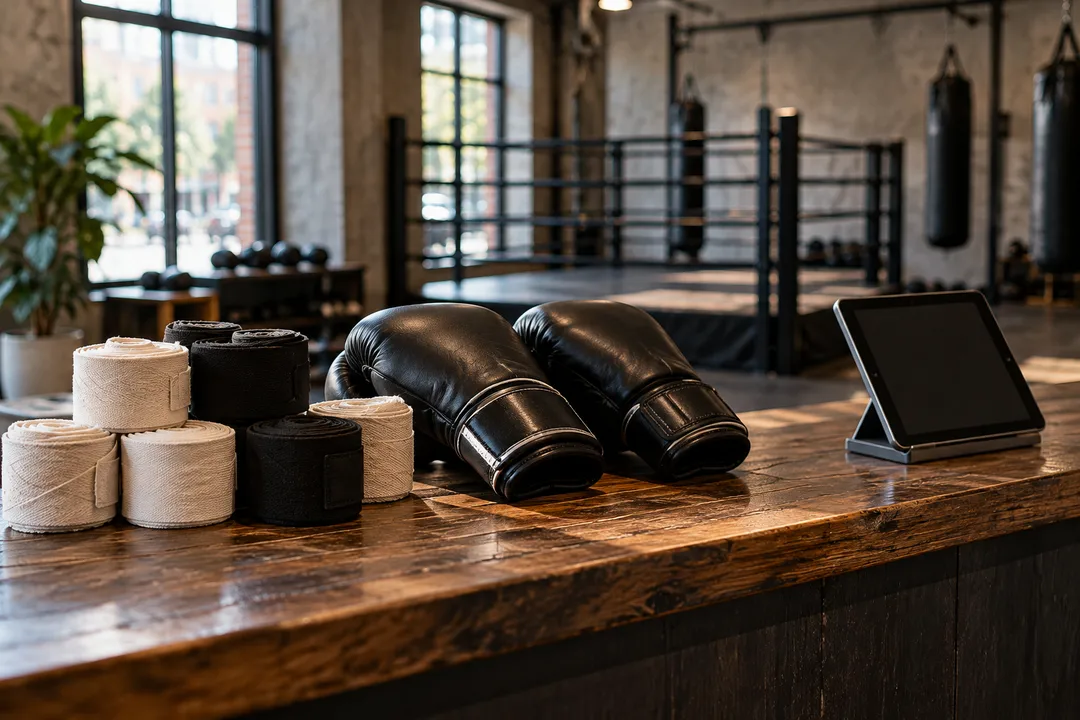
Make two small lists: what you will bring and what the session provides. Gloves, wraps, and other equipment should enter the supplied list only when the school says they are included. Having used loan gloves elsewhere does not establish a policy here. Ask about the exact trial and whether any fitting or equipment instruction happens before class. This keeps the first visit practical without turning the article into a shopping list. You are trying to learn what the introduction requires before buying equipment for a routine you have not chosen.
Clothing and footwear also belong with the school's attendance instructions. Different training arrangements can have different rules, so do not transplant advice from a photograph or another sport. Keep personal essentials and transport needs in a separate packing note. The useful outcome is being able to leave home without repeatedly reopening the same pages. If a necessary equipment detail is absent, write one direct question about it. Treat an unanswered requirement as a remaining task, rather than replacing it with the assumption most convenient to your plans.
Work backward from the arrival instruction
The session's start and your arrival are separate points in the evening. Use any early-arrival instruction the school provides to establish when you need to be there. Then add your own journey and preparation time. This page does not assign a universal arrival allowance because the facility's process is what matters. A trial requiring an introduction before class needs that time in the plan. If your work schedule makes the arrival instruction impractical, choose another session rather than hoping the first visit can be squeezed into the remaining minutes.
For an SF search, describe where you will travel from on that particular day. Home, an office, and an appointment across the city can produce different choices. Include where you need to go after class, especially if the evening has another obligation. Compare the actual entrance and location from the school with your intended route. You are building a complete visit rather than ranking addresses in isolation. Keep the route provisional until you have selected a real session, and avoid treating an illustrative neighborhood in an article as your personal starting point.
Understand the first transaction
Before paying, write the amount due and the service that amount purchases. Put any separate equipment charge or other required charge beside it when the terms supply one. A named introduction can be a single visit or part of a larger arrangement, and the checkout should tell you which. Do not compare two prices while ignoring what each includes. No price on this page is an offer from a gym. The checklist is designed to help you interpret actual terms, with unknown amounts left unfilled until the seller supplies them.
Give cancellation, expiry, and recurring payment their own lines. A first visit can be inexpensive yet come with conditions that do not suit your calendar. Conversely, a more straightforward purchase may be easier to evaluate even without a promotional label. Decide whether you understand the next payment action and whether it requires a separate choice. Skip the checkout if you cannot tell what you are buying. That is a concrete purchasing boundary, and it can save more time than trying to compare an entire set of membership packages before experiencing one class.
Carry a question that the trial can answer
Choose one main reason for attending: learning the class format, assessing how instruction works, or seeing whether the journey is repeatable. You can notice other things, but a main question gives the experience a useful purpose. Someone worried about being new might observe how the instructor explains the opening exercise. Someone uncertain about group pace might notice whether the session allows them to understand each transition. You do not need to score every feature of the facility. Pay attention to the part that would determine whether you return.
After the session, write the answer before the details fade. Use observations such as receiving an explanation of a movement, understanding the activity changes, or finding the trip difficult after work. Avoid filling the note with general words like amazing or intense when they conceal what happened. A sentence explaining why the lesson worked is more useful in a later comparison. If you felt unsure, name the unresolved issue. You can then ask a narrower follow-up rather than starting the entire search again with the same broad phrase.
Practical Notes: finish the checklist with a decision
A sample Karpo APP request is: Help me organize an SF kickboxing gym trial for a beginner, with no partner striking, a manageable trip from my starting point, and a clear list of equipment and payment questions. Add your real constraints and ask for a concise comparison. This is language you can use to begin planning, and it does not show that a school has accepted the request. The generated training images accompanying this article illustrate the subject without identifying a recommended venue or documenting a particular trial.
Your finished checklist should show either a visit ready to arrange, a specific question still outstanding, or a reason to choose another option. Each is a useful outcome. You can take the trial without promising yourself a long membership decision that evening. Leave with a note about what you learned and the purchase you would consider next, if any. The aim is a first session whose registration, preparation, and cost make sense together, followed by a deliberate decision rather than a second round of unfinished errands.
Ask Karpo for more information.
Keep reading
- SoMa Bowling Group Night Planner to Welcome New Hires
 Lower Haight Bowling Group Night Planner for Kitchen Crews
 Bernal Heights Bowling Group Night Planner for Parents Out