 Twin Peaks Hilltop Staircase Walk Planner for City Lights
Free Things to Do
Mission Historic Plaza Fountain Walk: SF Route
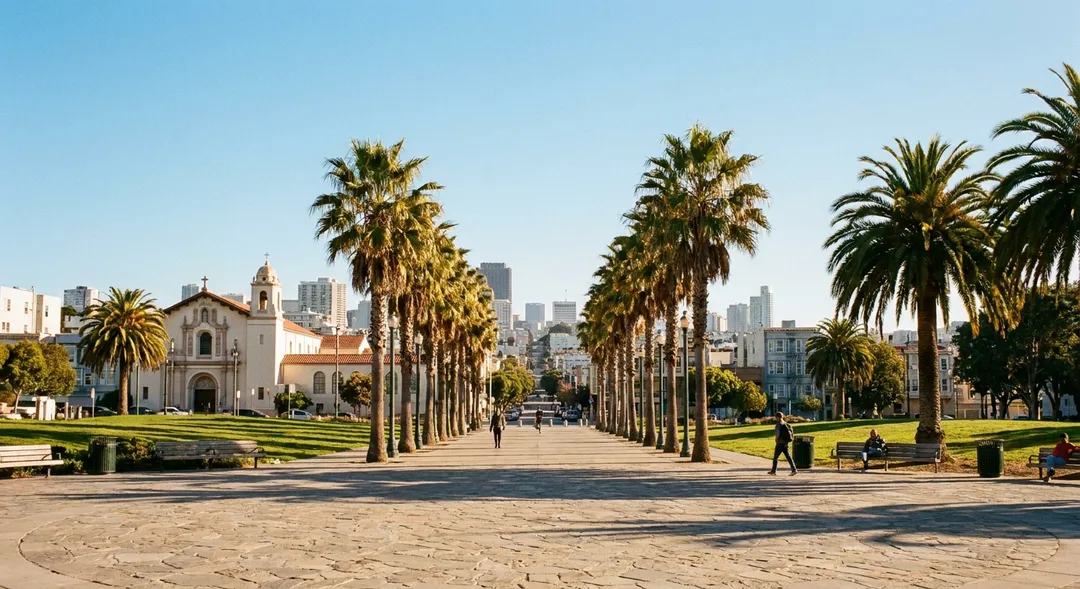
Walk past historic civic fountains across the Mission District from Dolores Park to Mission Dolores. Plan quiet morning routes with benches on Karpo APP.
Exploring the historic plaza fountain walk across San Francisco's vibrant Mission District reveals an extraordinary fusion of eighteenth-century Spanish colonial origins, municipal civic resilience, and sun-drenched neighborhood gathering spaces. Beginning near the tranquil cemetery courtyard of Mission Dolores and winding southward toward the expansive hilltop promenades of Mission Dolores Park, this self-guided walking route guides visitors past weathered bronze monuments, ornamental water basins, and sheltered stone sitting walls. The surrounding streetscapes showcase beautifully preserved Victorian row houses, swaying Canary Island date palms, and dynamic community gathering spots, giving every pedestrian block an authentic sense of historic continuity and neighborhood vitality.
Dolores Park and Spanish Colonial Plaza Origins
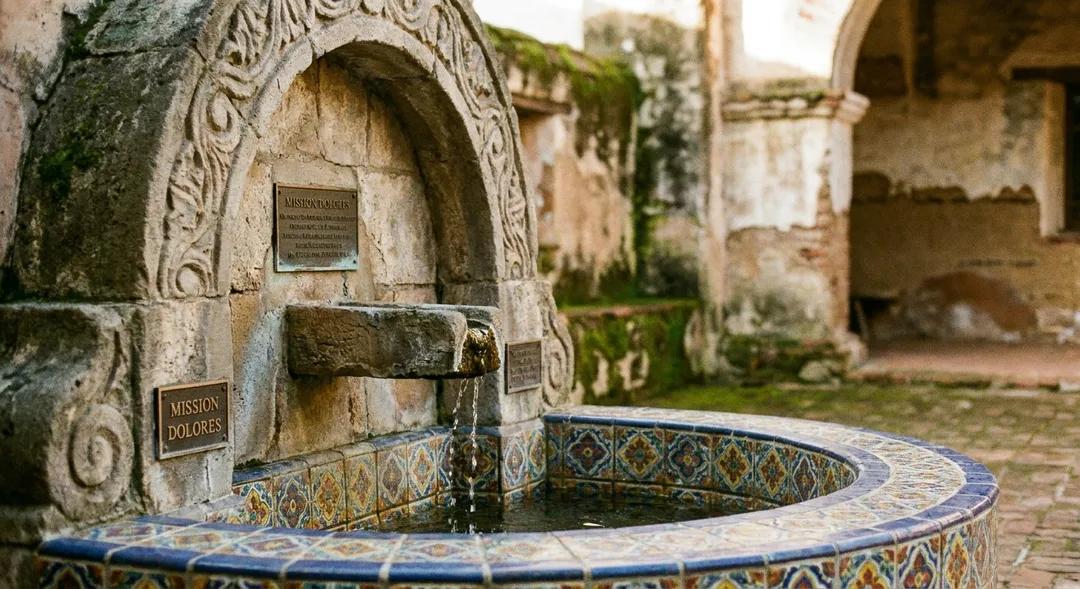
The architectural heritage of the Mission District begins at Mission Dolores Basilica, located at 3321 16th Street, San Francisco, CA 94114. Founded in 1776 as Mission San Francisco de Asís, the historic adobe chapel stands as the oldest surviving intact structure in the entire city, having remarkably withstood the catastrophic 1906 earthquake as well as centuries of urban expansion. In the adjacent mission courtyard and historic cemetery garden, a classic tiled fountain basin trickles quietly amid native climbing rosebushes, century-old gravestones, and trailing bougainvillea vines. This secluded courtyard plaza offers visitors a contemplative sanctuary where Spanish colonial masonry, whitewashed adobe arches, and gentle water murmurs transport you back to the earliest recorded days of European settlement on the San Francisco Peninsula.
Walking four blocks south along Dolores Street brings you to the grand public entry of Mission Dolores Park, centered at Dolores Street and 19th Street (566 Dolores Street, San Francisco, CA 94110). Spanning nearly sixteen acres across an east-facing natural hillside amphitheater, this iconic municipal park was formally established in 1905 on land previously used as a Jewish cemetery and municipal gathering grounds. Following a comprehensive multi-million-dollar renovation completed in 2016, the park features newly paved plaza entrances, broad stone retaining ledges, and landscaped promenades that honor its century-old legacy as the cultural and recreational heartbeat of the district.
Tracing the Golden Hydrant and Miguel Hidalgo Memorial
At the southwestern crest of the park near 20th Street and Church Street stands one of San Francisco's most revered civic landmarks: the historic Golden Hydrant, affectionately known as the Little Giant. During the devastating earthquake and firestorm of April 1906, when municipal water mains ruptured throughout the city and left firefighters helpless, this single working hydrant provided the crucial water supply that emergency crews used to halt the advancing wall of flames, saving the entire southern Mission District from total destruction. Every year on April 18 at dawn, local citizens and civic leaders gather at this elevated plaza corner to repaint the cast-iron hydrant with fresh coats of lustrous gold paint, celebrating an enduring symbol of urban perseverance and mutual survival.
Descending along the park's central pedestrian promenade, visitors encounter the striking bronze statue of Father Miguel Hidalgo, the revered champion of Mexican independence, which was dedicated by the government of Mexico in 1962. The memorial stands surrounded by curved concrete sitting ledges, ornamental shrubs, and tall Mexican fan palms that rustle gently in the morning ocean breeze. Pausing near this civic memorial allows walkers to appreciate the layered cultural identities that define the Mission District, connecting early indigenous and Spanish eras with twentieth-century Latino social movements, vibrant artistic traditions, and contemporary neighborhood life.
Morning Sunlight, Lawn Terraces, and Public Seating
The natural topography of Mission Dolores Park creates a magnificent natural amphitheater, with sloping emerald lawns offering unobstructed panoramic vistas of the downtown San Francisco skyline. The upper southwestern terraces capture warm morning sunshine while remaining comfortably sheltered from stiff Pacific coastal breezes by the crest of the surrounding hills. Dozens of contoured wooden park benches line the paved walkways, offering ideal perches for reading a morning paper, sketching historic architectural facades, or sipping an espresso while watching the city wake up beneath soft coastal morning light.
Public access to all open plazas, paved walkways, and landscaped lawn terraces throughout Mission Dolores Park requires $0 admission, making it one of San Francisco's finest free cultural and recreational experiences. Clean municipal restrooms maintained by the San Francisco Recreation and Parks Department are located inside the modern recreation pavilion building near the center of the park, open daily from 6:00 AM to 10:00 PM. High-efficiency drinking fountains and water-bottle filling stations border the primary paths, ensuring walkers and runners stay well hydrated during their explorations.
Transit Access, Muni Light Rail, and Walking Flow
Reaching the Mission District plaza walking route is remarkably simple using San Francisco's public transit network. The historic Muni J Church light rail streetcar runs directly along Church Street on the western border of the park, stopping at 18th Street, 19th Street, and 20th Street before climbing the scenic private right-of-way toward Church and 20th. A standard single ride fare on Muni costs $2.50 using a contactless bank card or Clipper transit card. For regional travelers, the 16th Street Mission BART subway station is located just four blocks east, allowing a pleasant ten-minute walk through historic residential corridors directly to the park entry.
Pedestrians arriving on foot will appreciate the wide, tree-lined sidewalks along Dolores Street, widely recognized as one of the most picturesque boulevards in northern California. Distinctive central street medians planted with soaring palm trees provide a majestic visual corridor that buffers pedestrian foot traffic from moving vehicles. Multiple well-marked pedestrian crosswalks equipped with modern countdown signals allow safe passage across neighborhood intersections, while sturdy municipal bicycle racks installed along the park perimeter provide secure locking for cyclists visiting on two wheels.
Organizing Your Plaza Walk with Karpo APP
Using the Karpo APP simplifies your urban walking adventure by organizing customized pedestrian routes that link historic fountains, cultural monuments, and scenic overlooks into a cohesive itinerary. The application features accurate topological elevation profiles, helping you decide whether to begin at the upper Church Street terraces and stroll leisurely downhill or tackle a brisk uphill morning climb. Detailed waypoint mapping highlights the exact locations of shaded park benches, public restrooms, and accessible curb ramps throughout the neighborhood.
Karpo APP also helps walkers discover noteworthy architectural facades, historic murals, and quiet side streets located just steps away from the main park perimeter. By saving your preferred walking route directly to your personal profile, you can navigate the Mission District's vibrant street grid with complete confidence and ease. The interface allows flexible on-the-go adjustments, letting you pause at historic plaques or take spontaneous detours toward local artisan bakeries without losing track of your destination.
Valencia Street Corridors and Historic Architectural Detours
After concluding your fountain stroll through Mission Dolores Park, extending your walk eastward toward Valencia Street introduces you to one of the city's foremost cultural and culinary corridors. Strolling down 18th Street takes you past landmark artisan bakeries, independent coffee roasters, and community bookstores housed in beautifully restored Queen Anne and Edwardian storefronts. The pedestrian-friendly scale of Valencia Street, with its parklets and wide walkways, makes it an effortless continuation of your morning neighborhood exploration.
A short detour north toward Clarion Alley, situated between 17th and 18th Streets, reveals an open-air corridor of vibrant murals painted by local grassroots artists addressing social justice and community heritage. Returning westward along 16th Street brings you back toward Mission Dolores Basilica, completing a fulfilling loop that encompasses deep spiritual history, civic perseverance, and lively contemporary culture in one unforgettable San Francisco walking experience.
Ask Karpo for more information.
Keep reading
- Twin Peaks Hilltop Staircase Walk Planner for City Lights
 Inner Sunset Hilltop Staircase Walk Planner for Trekkers
 Bernal Heights Hilltop Staircase Walk Planner With Kids