 Outer Sunset Cioppino Dinner Picker: Pots by Ocean Beach
Restaurants
Group Dinner Spot Picker: Chinatown Lazy Susans for Ten
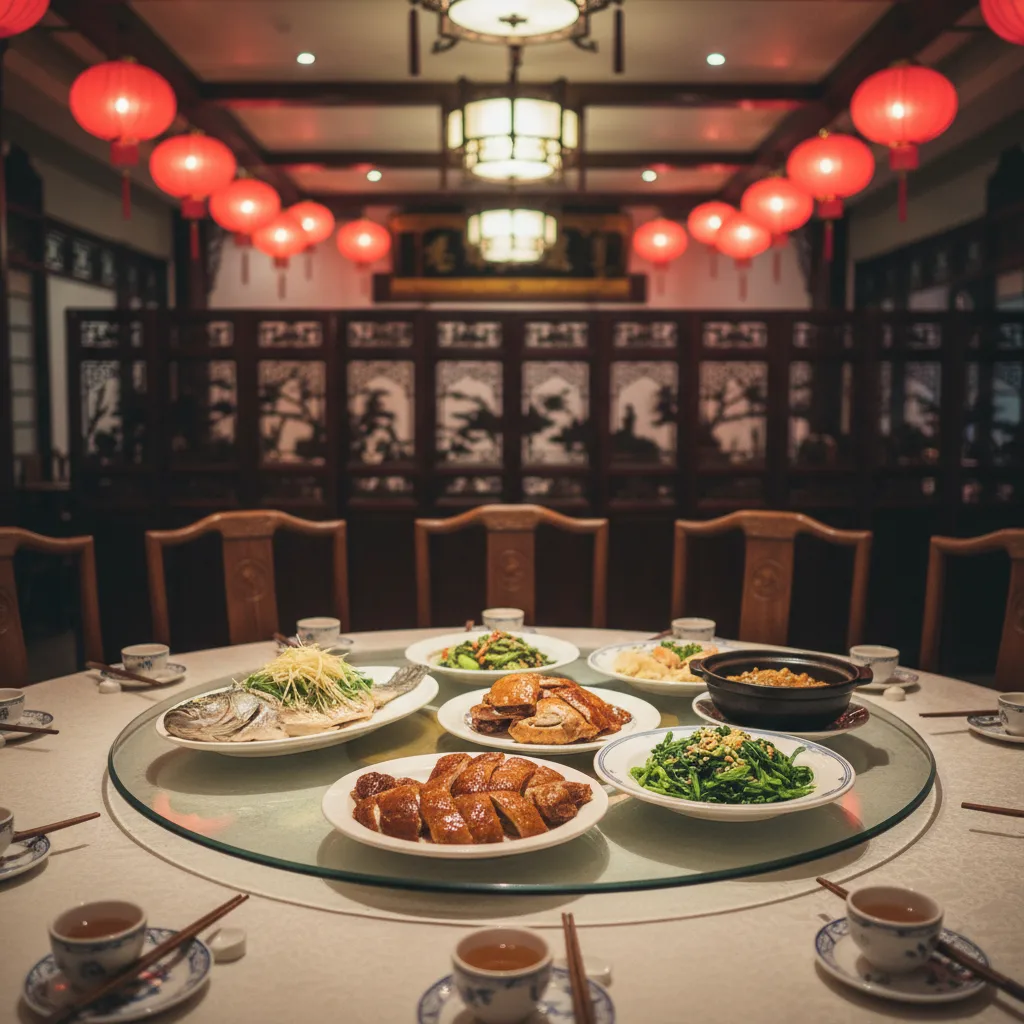
Chinatown suits big groups best at round banquet tables where family-style dishes spin past everyone. Order in rounds, not all at once, and the night flows.
A table for ten is the one reservation problem Chinatown solved generations ago. The dining rooms on and around Grant Avenue and Stockton Street were built for wedding banquets, birthday feasts and family reunions, so the round table with a lazy Susan in the middle is standard furniture rather than a special request. If you need a group dinner spot picker for San Francisco, start here: the format already assumes everyone shares, everyone reaches, and nobody orders a sad single entree.
Why the Round Table Changes the Whole Night
At a long rectangular table, the two people at the far end end up in a different conversation. A round table fixes that. Everyone faces the middle, the platters circle past every seat, and the person who barely knows the group still gets passed the roast duck. Cantonese banquet culture grew out of that idea, and the older dining rooms in Chinatown still carry it in their carved screens, red carpets and the steady clatter of porcelain spoons.
That makes the neighborhood ideal for mixed groups: a coworker farewell, a cousin visiting with kids, a book club that has outgrown the living room. Grandparents feel at home because the menu reads like the meals they grew up with. Picky eaters relax because there is always plain rice, greens and something mild on the turntable. Adventurous friends get their fill of jellyfish salad, salt and pepper squid or a whole fish steamed with ginger and scallion.
Reading the Room Before You Commit
Chinatown restaurants fall into a few loose types. The grand banquet halls upstairs have mirrored walls, a stage for wedding speeches and private rooms behind folding partitions, which suits groups of twelve or more. Mid-sized family restaurants on the side streets feel louder and more casual, with fish tanks near the door and a cashier who knows half the regulars by name. Then there are small noodle and congee shops, wonderful for four but not the place to bring a dozen.
Before you settle on one, walk the block. Look for round tables visible through the window, a host stand rather than a counter-only setup, and a second room in the back. If a server waves at a stack of folded chairs or points upstairs, that is a good sign the kitchen handles crowds. If every table is a two-top pushed against the wall, keep walking toward the next corner.
How to Order for a Big Table Without Chaos
The classic mistake is letting ten people each pick one dish and fire them off together. Instead, name one person as the orderer. Start with a cold plate or soup, then add a steamed fish, a roast meat, a tofu or egg dish, two vegetables and one noodle or fried rice at the end. A rough guide is one dish per person plus rice, but the server will often steer you toward a balanced spread if you ask what the kitchen does well that night.
Ask for the set banquet menu if the group is large. Many dining rooms keep printed family-style menus sized for eight or ten people, which removes the negotiation entirely and tends to include the celebratory dishes, like lobster with ginger or a whole chicken, that are hard to order a la carte for a small table. For a birthday, mention it up front. Longevity noodles, served uncut so the strands stay long, are a traditional touch that most kitchens are happy to add.
Etiquette That Keeps Everyone Comfortable
Turn the lazy Susan slowly and check whether someone is mid-reach before you spin. Pour tea for your neighbors before refilling your own cup, and if someone pours for you, tapping two fingers on the table is the old Cantonese way to say thank you. Leave the lid of the teapot ajar when it runs dry and a server will come by with hot water. These small habits signal to staff that your group knows the rhythm, and service usually warms up in return.
Splitting the bill is easiest if you agree on an equal split before you sit down. Family-style dining does not map neatly onto individual tabs, and asking the server to divide a dozen shared platters by who ate what will slow the end of the night for everyone. One person pays, everyone sends their share, and the table can move on to the walk afterward.
When Chinatown Is Not the Right Pick
Be honest about the group. If half the table wants cocktails and a dim room for slow conversation, a traditional banquet hall will feel too bright and too fast, with dishes arriving quickly and staff clearing plates the moment they empty. In that case, have dinner here and move the second half of the evening to a bar in North Beach or Jackson Square, a short walk downhill. Skip the most crowded tourist strip on a holiday weekend, where waits for big tables can stretch on.
Dietary limits also deserve a quick check. Many Cantonese dishes use oyster sauce, chicken stock or lard even when they look vegetarian, so tell the server early if anyone at the table avoids meat or shellfish entirely. A good kitchen will adjust a few plates rather than hand you a separate menu.
Walking the Neighborhood Before and After
Meet the group at the Dragon Gate at the south end of Grant Avenue so latecomers have an obvious landmark. Wander uphill past the bakeries and herbal shops, then cut over to Portsmouth Square, where older residents play cards and xiangqi in the afternoons. After dinner, Waverly Place and Ross Alley are worth a slow loop under the painted balconies, and the walk down Columbus Avenue into North Beach makes a natural nightcap route.
Using Karpo to Shortlist the Table
Open the Karpo APP and describe the group: how many people, whether there are kids or older relatives, any dietary limits, and how loud a room you can tolerate. Karpo can suggest nearby Chinatown dining rooms that fit the round-table, family-style format and help you compare a few options side by side. Save your shortlist, share it with the group chat, and call the restaurant directly to confirm a table for your party size.
Practical Notes for a Chinatown Group Dinner
Arrive together, since many dining rooms will not seat a large party until most of it has arrived. Bring some cash in case a smaller spot prefers it. Wear layers, because the fog rolls in quickly and the walk uphill can feel cold after a warm dining room. Keep the orderer role with one confident person. Above all, let the turntable do the work, because a good group dinner in Chinatown is less about the perfect dish and more about everyone reaching for the same plate.
Ask Karpo for more information.
Keep reading
- Outer Sunset Cioppino Dinner Picker: Pots by Ocean Beach
 Marina Cioppino Dinner Picker: Bistros After Bay Walks
 Embarcadero Cioppino Dinner Picker: Pots by the Bridge