 Outer Sunset Cioppino Dinner Picker: Pots by Ocean Beach
Restaurants
German Restaurant Near Me in the Mission: Paprika's Central European Table
Paprika brings Hungarian, Czech and German flavors, sausages, goulash and draft beer to 3324 24th Street in San Francisco.
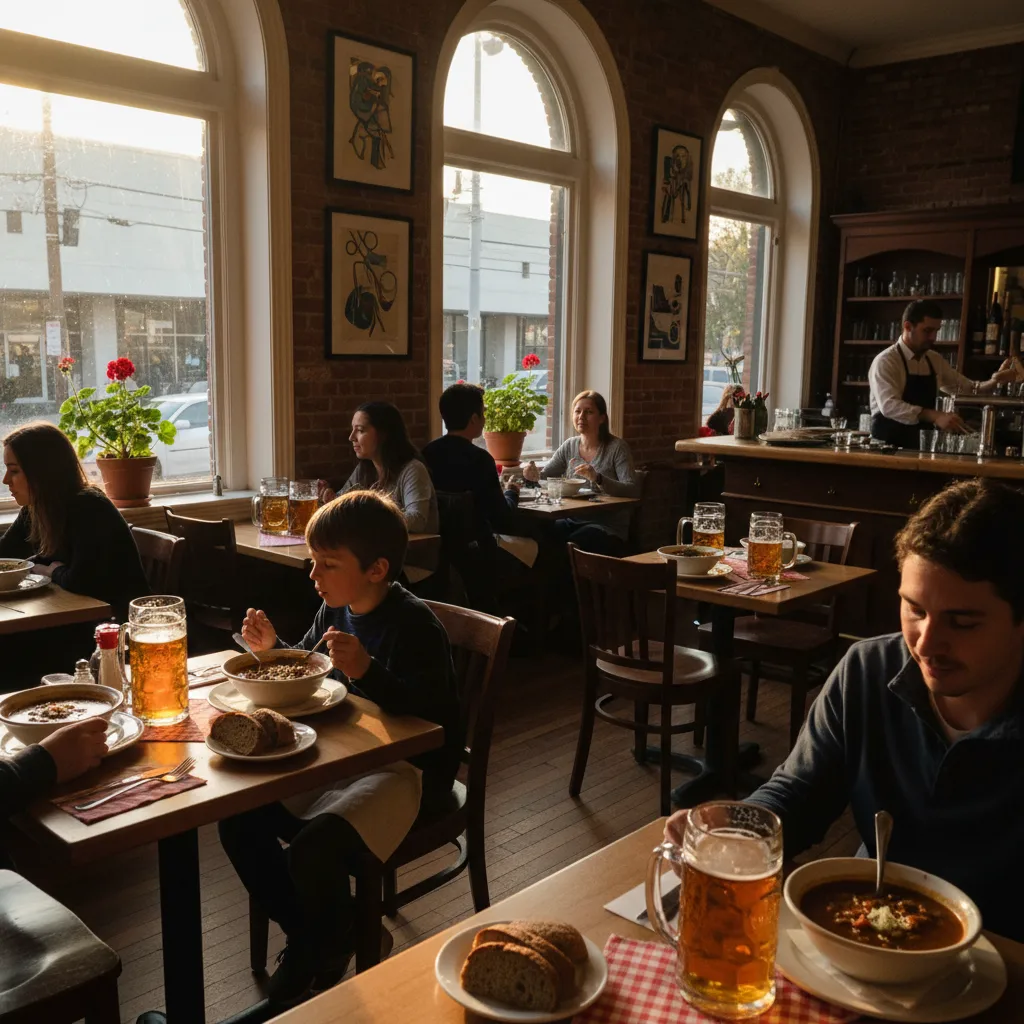
People typing german restaurant near me do not always need a strictly Bavarian menu, and Paprika is the Mission District place that broadens the question toward Central Europe. The restaurant at 3324 24th Street identifies itself as Czech and Hungarian while also emphasizing German flavors, German draft beer, sausages, and neighboring Alpine traditions. Its strongest dishes come from the shared comfort-food vocabulary of the region: paprika-rich stews, sauerkraut, dumpling-like gnocchi, sausages, mustard, bread, and beer. The room is casual enough for a weeknight but distinctive enough to organize an evening around.
The dining room welcomes both reservations and walk-ins, but the best strategy depends on the day. Monday through Thursday service begins at 4:30 pm and ends at 9 pm; Friday continues to 9:30 pm, Saturday runs from noon to 9:30 pm, and Sunday operates from 3 pm to 9 pm. Early dinner is easiest for a calm table and attentive pacing. Friday evening and Saturday dinner draw more neighborhood traffic. A reservation is sensible for groups, while one or two diners can often make a spontaneous visit work by arriving near opening.
Paprika's rules are mostly the ordinary courtesies of a compact, full-service restaurant. Keep the table clear for broad stew bowls and platters, tell the server about dietary needs before ordering, and do not assume every sausage uses the same meat or casing. The restaurant accepts credit cards and offers outdoor seating, but the sidewalk environment on 24th Street can be breezy after sunset. Bring a layer if the patio matters. Live music appears on selected nights, so guests seeking a quiet conversation should favor an earlier reservation rather than expecting the room to stay hushed.
A walk before dinner can begin at the 24th Street Mission BART station and follow 24th Street east through the neighborhood's murals, panaderias, produce shops, and independent storefronts. Balmy Alley sits a few blocks south and gives the route a concentrated mural stop. After the meal, move west toward Valencia Street for bookstores and bars, or continue east toward Potrero Avenue for a quieter finish. This corridor changes character block by block, and Paprika works best as one chapter of that street-level exploration rather than an isolated destination reached by car.
Practical Notes: Paprika is located at 3324 24th St, San Francisco, CA 94110. The restaurant is on 24th Street in the Mission District, with the 24th Street Mission BART station several blocks west. The official site lists family-friendly service, reservations through OpenTable, walk-in seating, outdoor tables, and credit-card acceptance. Drivers should expect metered and residential parking competition. Transit and walking remove that uncertainty and make it easier to include murals or Valencia Street in the evening.
A balanced first meal starts with the $13 German spice sausage appetizer, moves to the $26 pork goulash or $24 chicken paprikash, and ends with the $12 homemade apple strudel served with whipped cream and ice cream. That order covers the German-facing side of the menu, the paprika-centered house specialty, and a dessert with broad Central European familiarity. Two diners can split the appetizer and dessert while choosing different entrées. The sequence provides range without ordering so many heavy dishes that the distinctive sauces and textures blur together.
Paprika answers the German dining search by showing how porous the region's borders are at the table. German beer, Swiss bockwurst, Hungarian paprika, Czech pilsner, Austrian wine, sauerkraut, and apple strudel all coexist because the restaurant's subject is Central European comfort rather than a flag-by-flag lesson. That makes the meal especially useful for curious groups. You can order familiar sausage, discover Szeged goulash, and leave with a clearer sense of how neighboring cuisines speak to one another, all from a family-run room on 24th Street.
Paprika has served the neighborhood since 2013 and describes its cooking as inspired by a grandmother's kitchen. That family frame helps explain why the menu feels assembled around complete plates rather than small decorative tastes. The restaurant highlights pork goulash, chicken paprikash, sausages, vegetarian choices, and Czech pilsner, while Austrian wine and German beer extend the map. It is not trying to reproduce one national canon. Instead, it presents the overlapping foodways of Prague, Budapest, Vienna, and southern Germany in a friendly San Francisco dining room.
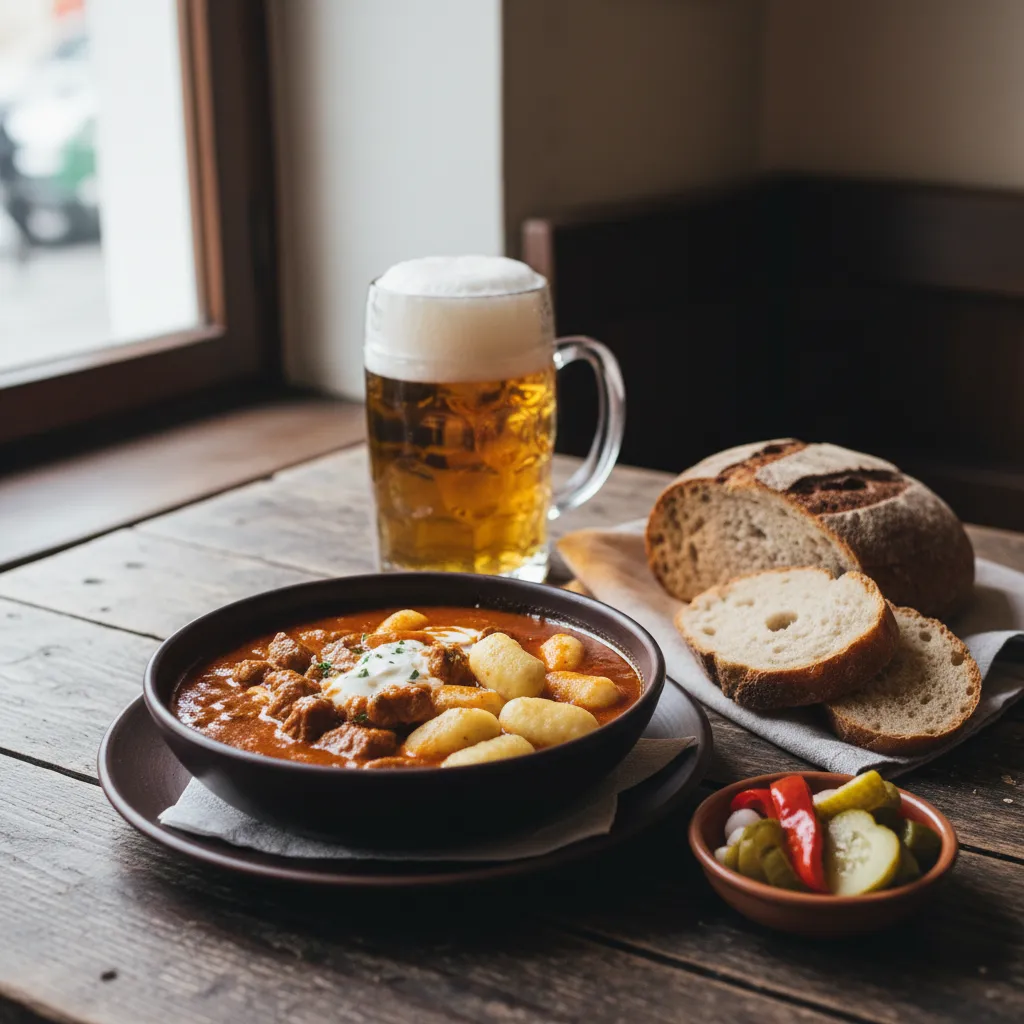
The Paprika goulash is the clearest place to begin. Priced at $26, the dish combines a hearty pork stew with paprika and spices, soft potato gnocchi, and local bread. The sauce is the center of the plate, so use the gnocchi to gather it rather than treating them as a separate side. Bread performs the same job at the end. This is a substantial entrée, especially after an appetizer, and it rewards slower eating because the paprika, pork, and starch become more integrated as the bowl stays warm.
Chicken paprikash costs $24 and shifts the texture without abandoning the restaurant's signature seasoning. Braised chicken thighs arrive in a paprika-spiced stew with creamy mashed potatoes and bread. The potatoes make this plate smoother and milder than the pork goulash, which can be useful for someone new to Central European cooking. If two diners want to compare, order one of each and place them side by side. The difference between gnocchi and mashed potato changes the entire experience even though both dishes share paprika as their organizing flavor.
Szeged goulash is listed at $27 and brings sauerkraut and cream into the pork stew. The tang from the cabbage cuts through the richness, while the cream rounds the sharper edges. This is the dish for a diner who wants the menu's most layered sweet-sour-savory combination. Paprika also offers a $25 vegetable goulash made with vegetable broth, root vegetables, peppers, a grain-based meat substitute, gnocchi, and bread. The two versions let a mixed group explore the same cooking structure without requiring everyone to order meat.
Sausages create the most direct bridge to a conventional German restaurant meal. A single gourmet sausage appetizer costs $13 and comes with sauerkraut, pickles, and local bread; choices include German spice sausage and Swiss bockwurst alongside Polish, Hungarian, and chicken-apple options. For a main course, two mixed sausages cost $25 with sauerkraut, cornichons, Dijon mustard, mashed potatoes, and gravy. Choose one German spice and one bockwurst to compare seasoning and texture, then use the pickles between bites rather than saving every acidic element until the end.
The appetizer list is designed for sharing without turning the table into a parade of tiny plates. Soup of the day is $9, a cheese platter is $15, and the Paprika platter costs $20 with prosciutto, bresaola, Parmigiano Reggiano, Austrian Gruyere, pickles, olives, mustard, and bread. The platter makes sense for three or four people waiting on stews, because it supplies salt and texture without duplicating the paprika sauce to come. One appetizer is usually enough before a full entrée; stacking meat, cheese, sausage, and goulash can overwhelm the meal early.
Beer is more than decoration here. Paprika promotes Czech pilsner and German drafts served in boots and steins, which makes the drink list a practical tour of the region around the food. Begin with a crisp pilsner alongside sausage or cheese, then choose a maltier German beer if the table moves toward goulash. Hungarian and Austrian wines provide another path, especially for diners who want acidity without carbonation. Order thoughtfully because a novelty-shaped glass can encourage faster drinking than expected, and the rich entrées are better when the beverage remains a supporting element.
Ask Karpo for more information.
Keep reading
- Outer Sunset Cioppino Dinner Picker: Pots by Ocean Beach
 Marina Cioppino Dinner Picker: Bistros After Bay Walks
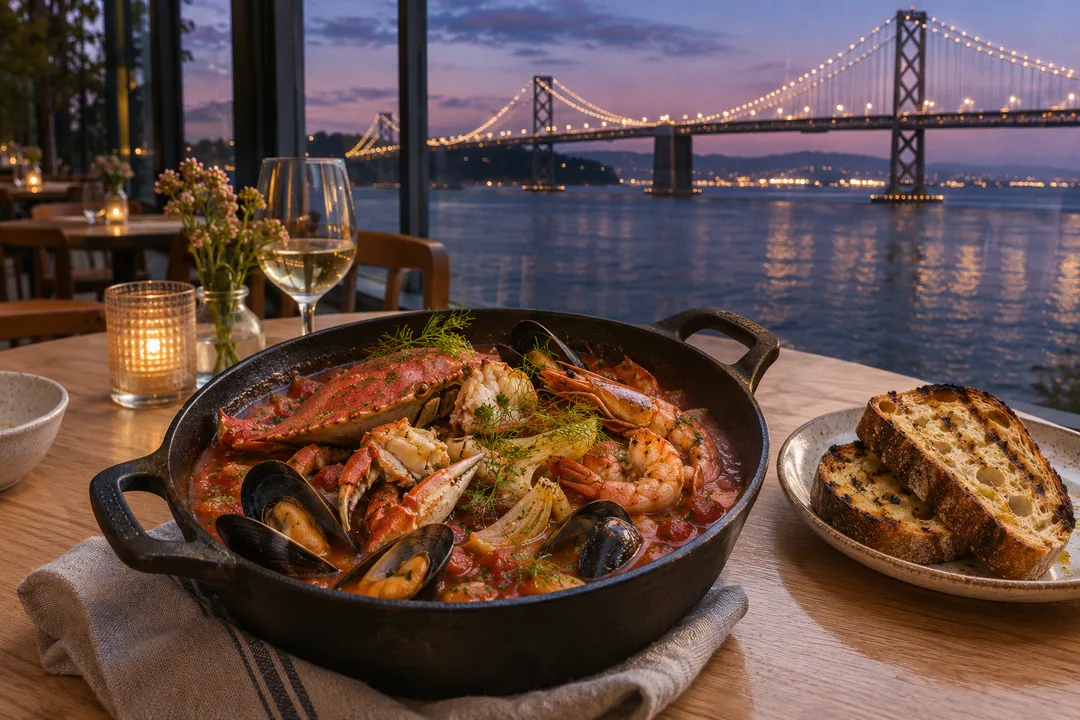 Embarcadero Cioppino Dinner Picker: Pots by the Bridge