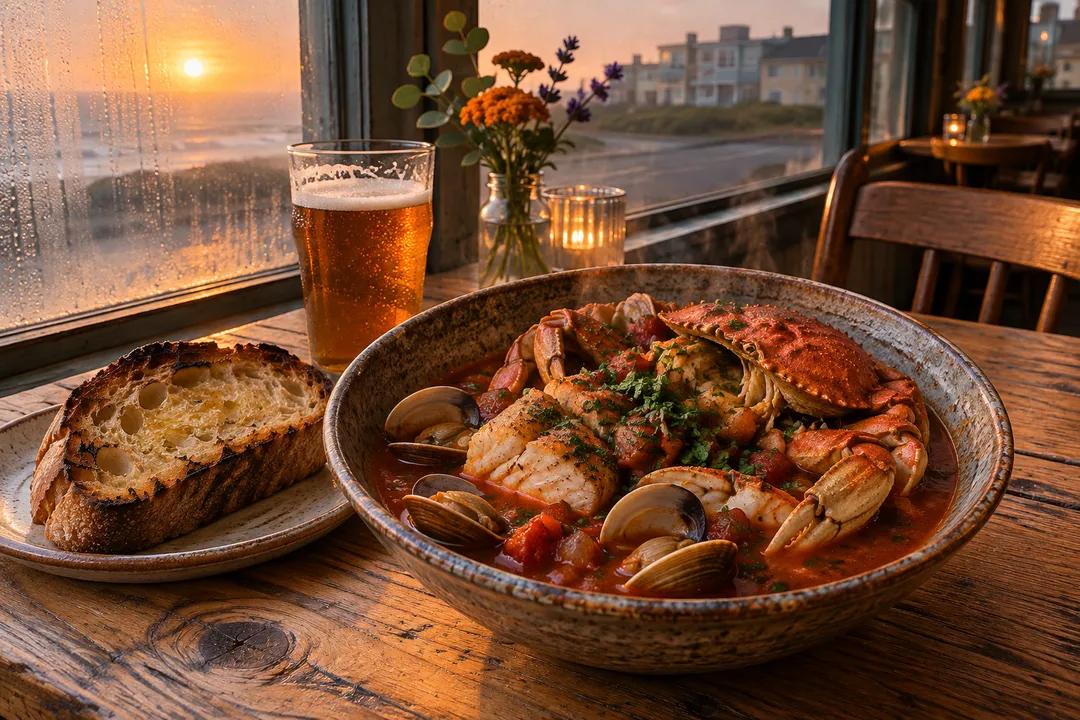
 Outer Sunset Cioppino Dinner Picker: Pots by Ocean Beach
Restaurants
Chinatown Dungeness Crab Dinner Picker: Banquet Wok Feasts
Use a Chinatown Dungeness crab dinner picker to compare upstairs Grant and Stockton banquet rooms against side-alley Cantonese wok kitchens at night.
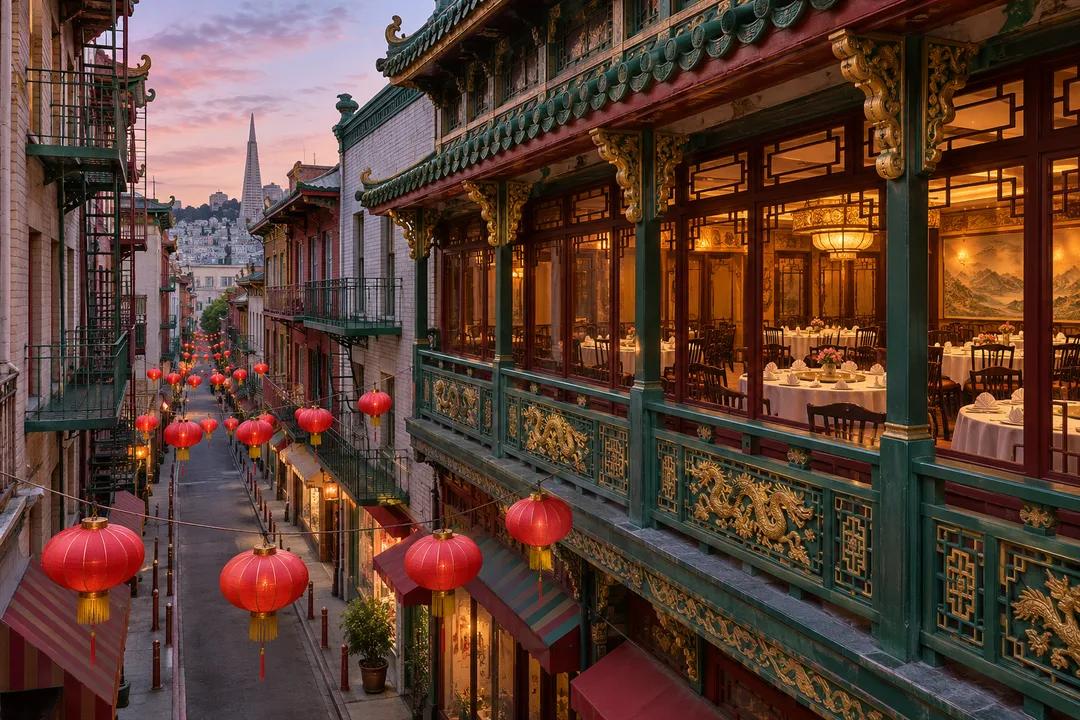
Stepping off the steep slope of California Street beneath strings of glowing crimson lanterns brings you straight into the heart of Cantonese seafood cookery, where a smart Chinatown Dungeness crab dinner picker separates souvenir-lined Grant Avenue cafés from serious Stockton and Clay Street wok kitchens. After an evening architecture talk near Jackson Square, three studio colleagues and I climbed a terrazzo staircase to a second-floor banquet room where high-BTU woks roared behind swinging kitchen doors. Up here, veteran chefs transform cold-water Pacific crustaceans into two unforgettable winter centerpieces: blistered salt-and-pepper shells tossed with fiery green chilies and bamboo baskets of whole crab steamed over savory glutinous rice.
Upstairs Tiled Banquet Floors Versus Side-Street Wok Kitchens
Chinatown's crab tables divide naturally between expansive second-floor banquet halls and compact, high-energy ground-level rooms tucked along Clay, Washington, and Jackson Streets. Ascending a brass-railed staircase to an upstairs dining floor rewards groups of four to eight people with wide tablecloth spacing, brightly lit fish tanks by the kitchen pass, and seasoned captains in waistcoats who can portion a whole steamer basket table-side in seconds.
Down at street level along the side blocks between Grant Avenue and Stockton Street, narrower tiled dining rooms hum with the clatter of steel ladles against seasoned carbon-steel woks. These ground-floor spots suit pairs or trios walking in with briefcases or sketchpads who want a brisk, deeply flavorful dinner of salt-baked crab and sautéed greens without the ceremony of a full ten-course banquet.
Watch how longtime neighborhood diners manage table space once the wide crab platters arrive: stack unused tea saucers neatly to one side, keep the ceramic bone-and-shell discard bowls right beside your wrist rather than reaching across the lazy Susan, and flip the teapot lid slightly ajar whenever your table needs a fresh hot water refill.
Steamed Crab Over Sticky Rice Versus Salt-and-Pepper Wok Toss
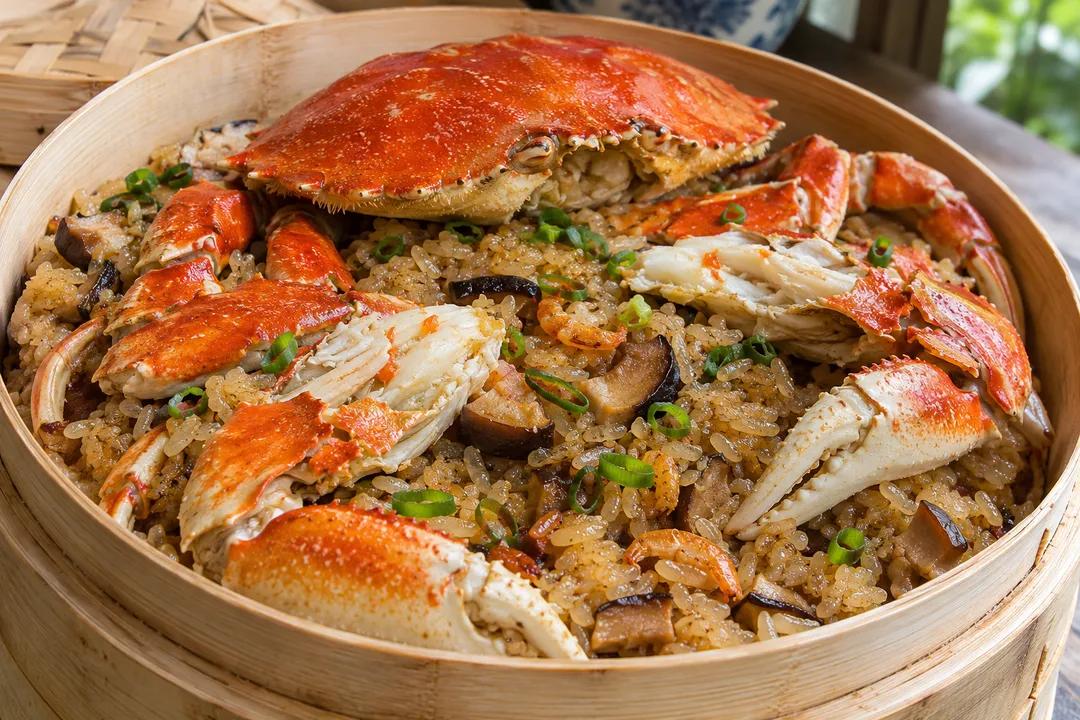
If your group orders only one signature winter dish in Chinatown, make it whole Dungeness crab steamed atop seasoned glutinous sticky rice (nuo mi fan) inside a wide bamboo basket. Before the crab goes into the steamer, the kitchen stir-fries sticky rice with diced cured sausage, soaked shiitake mushrooms, dried shrimp, and shallots, then arranges the cracked crimson crab sections directly on top. As steam circulates through the bamboo slats, the sweet crab juices and rich golden roe drip down into the rice grains, binding every spoonful with deep maritime savor.
For a second platter that contrasts in both aroma and crunch, order a dry-wok salt-and-pepper Dungeness crab. Lightly dusted shell segments hit a blistering wok with coarse sea salt, cracked white pepper, minced garlic, sliced jalapeños, and scallion whites until the exterior turns crisp and fragrant while the inner leg meat stays juicy and tender.
Skip the overly sweet mayonnaise-glazed walnut platters or thick cornstarch gravy dishes that some tourist menus push on Grant Avenue. Those heavy sugar coatings mute the clean, mineral sweetness of winter crab; pair your steamer basket instead with poached choy sum drizzled in oyster sauce and a clear winter-melon soup.
Ask the captain for small porcelain saucers of red rice vinegar and julienned young ginger alongside metal nutcrackers when the bamboo basket lands. Dipping the sweet white body meat into sharp ginger vinegar balances the savory richness of the cured sausage and shiitake oil in the sticky rice.
Tea Service, Banquet Pacing, and Ordering Live From the Tank
In traditional Chinatown seafood rooms, steamed glutinous-rice crab takes longer to prepare than standard stir-fries because the bamboo basket must steam thoroughly after the crab is cleaned and cleaved. Experienced diners place their crab order the moment the server sets down the first pot of aged pu-erh or Tieguanyin oolong tea, then order a cold starter—such as jellyfish tossed with toasted sesame oil or soy-poached free-range chicken—to share while the steamer works.
Dark fermented pu-erh tea is the classic Cantonese pairing for rich winter crustacean feasts. Its earthy, smooth finish cleanses the palate after peppery wok oils and sticky rice, leaving your mouth refreshed before the complimentary bowls of warm red-bean lotus soup or sweet almond tofu arrive at the end of the meal.
If your group has leftover glutinous rice in the bamboo steamer after finishing the crab legs, always ask the server to pack it in a foil container for home. Reheated in a covered skillet the next day with a splash of broth and fresh scallions, that crab-infused sticky rice is prized by every local regular.
Dodging Festival Crowds and Finding Calm Clay Street Tables
Evening foot traffic surges along the main lantern corridor whenever weekend walking tours or neighborhood association banquets fill the central blocks around Portsmouth Square. Arriving on a weeknight after work, or slipping into an upstairs dining room just before the main banquet seating begins, guarantees first pick of the liveliest crabs in the hallway tank and faster wok turnaround from the kitchen.
When a ground-floor Washington Street kitchen has a line of diners waiting by the glass door, walk one block uphill toward Stockton Street or cut down the quiet stretch of Commercial and Clay Streets toward Kearny. Several longstanding Cantonese seafood kitchens on those cross streets operate spacious back dining rooms that rarely back up at the entrance.
Before climbing the hill from the Financial District, open the Karpo APP to scan Chinatown's side-street wok kitchens, upstairs banquet halls, and nearby tea parlors. Checking block-by-block dining layouts on the Karpo APP helps your group head straight to the right staircase without wandering past closed daytime dim sum shutters.
Nighttime Loops Through Waverly Place and Portsmouth Square
Stepping back out into the cool evening air after a steaming wok dinner sets up one of the most atmospheric architectural walks in San Francisco. Turn off the main avenue into Waverly Place, a two-block alley where historic family association buildings display brightly painted balconies, carved wooden eaves, and glowing upper-floor temple windows.
Cross over to the terraced plazas of Portsmouth Square, the historic civic living room of the neighborhood, where elders gather beneath the lamp posts around stone chessboards and the upper pedestrian bridge looks out toward the brick spire of historic Jackson Square and the illuminated Transamerica pyramid.
Finish your loop by walking down Clay Street toward North Beach or stopping at a glass-case bakery on Stockton Street to pick up lotus-seed mooncakes, roast-pork buns, and flaky winter-melon pastries for the next morning's coffee. The gentle downhill grade toward Columbus Avenue makes it easy to connect your Chinatown crab feast with an Italian espresso or digestif just two blocks north.
Ask Karpo for more information.
Keep reading
- Outer Sunset Cioppino Dinner Picker: Pots by Ocean Beach
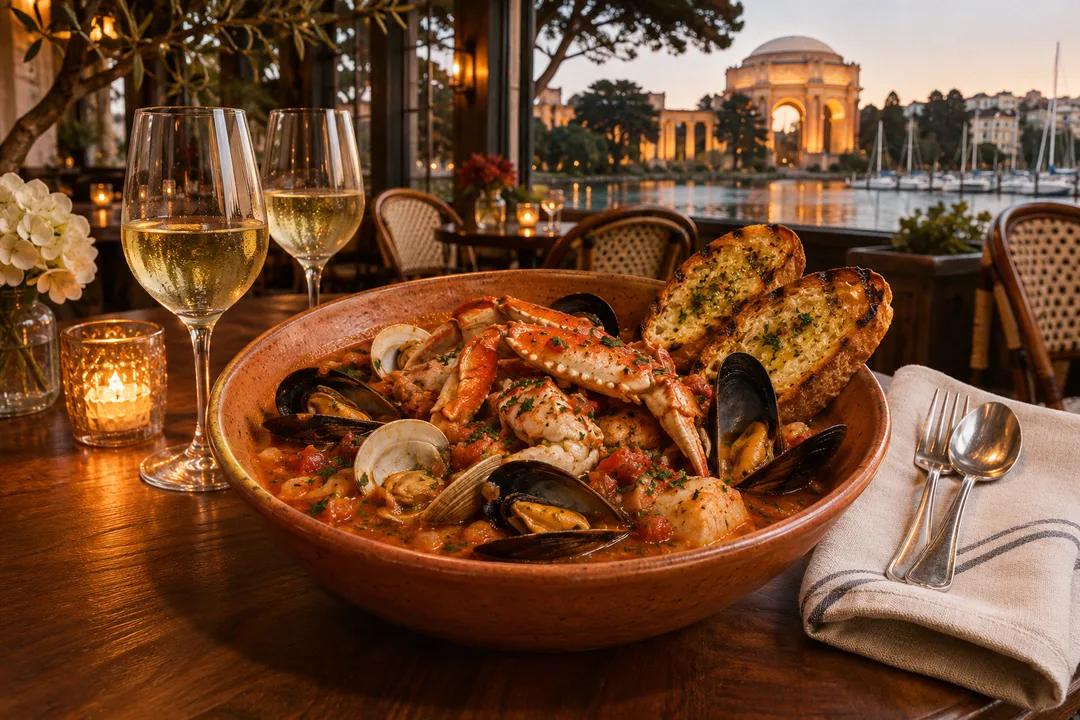 Marina Cioppino Dinner Picker: Bistros After Bay Walks
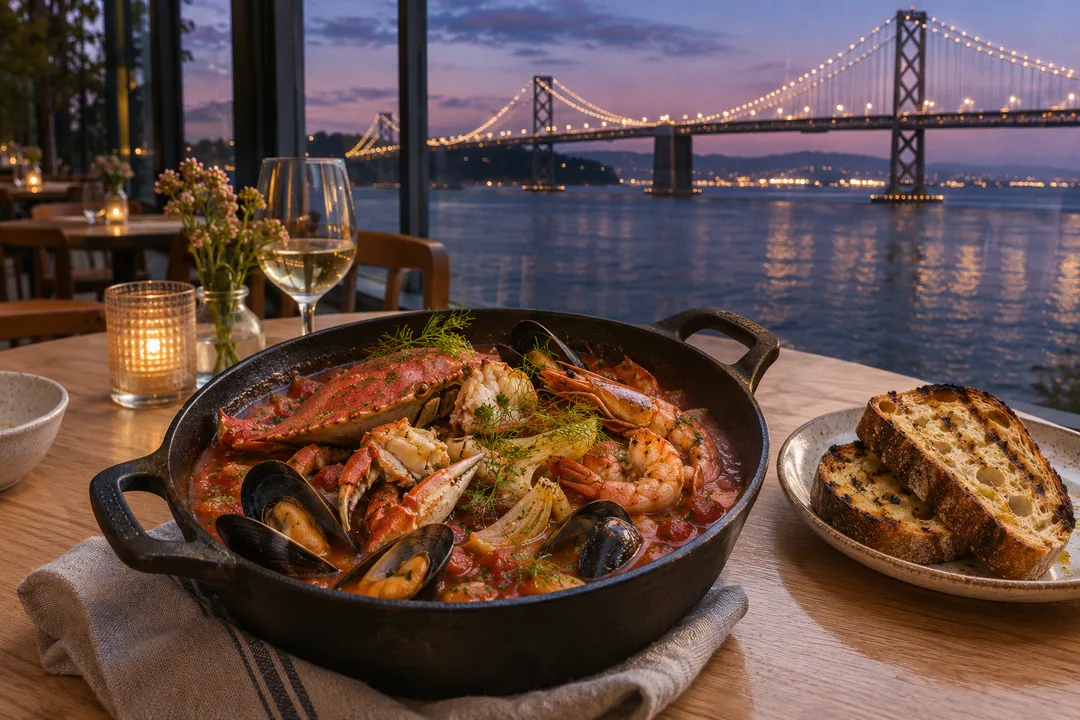 Embarcadero Cioppino Dinner Picker: Pots by the Bridge