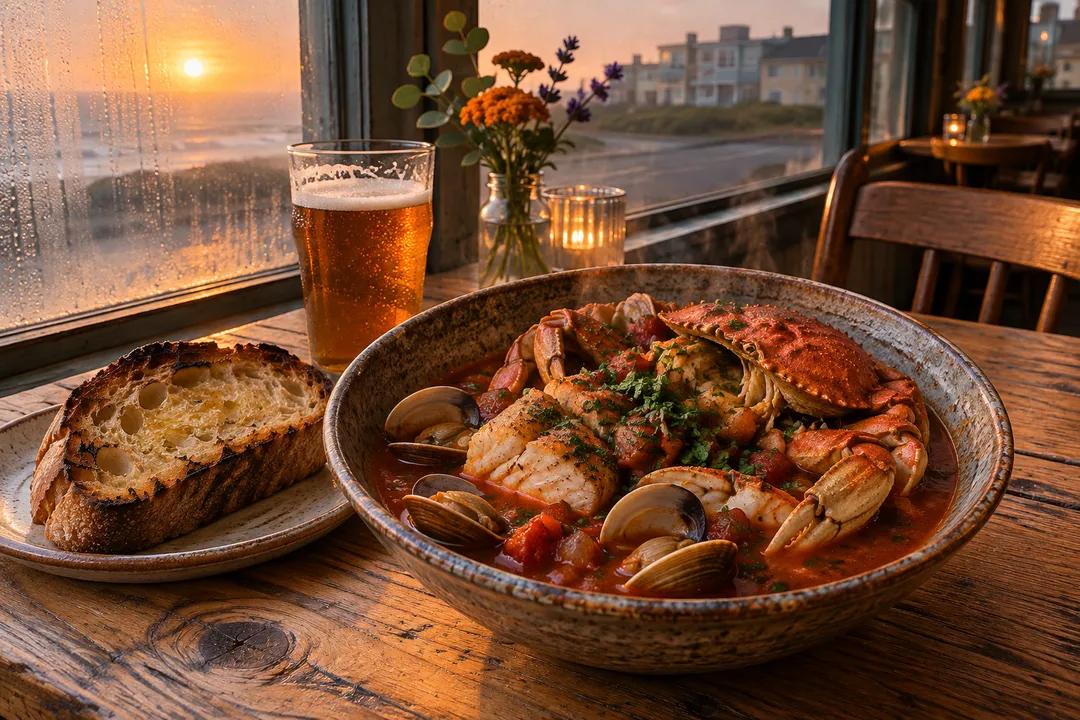
 Outer Sunset Cioppino Dinner Picker: Pots by Ocean Beach
Restaurants
SF Dinner Shortlist Builder: Eat Between Two Fixed Plans
Fit a San Francisco dinner between two appointments by defining the travel window, meal length and fallback before asking for a shortlist in Karpo APP.
Dinner between two appointments is a scheduling problem before it is a restaurant problem. You might leave a meeting near the Embarcadero and need to reach an evening event in another part of San Francisco. A dinner shortlist builder helps when the request explains both commitments, the available window and the sort of meal that fits inside it. Bring that brief to Karpo APP to ask for ideas, then evaluate the suggestions against your own calendar rather than choosing the most appealing room first.
Work backward from the second commitment
Start with the point at which you need to be ready for the next activity. That might be a check-in time, the moment you meet a friend, or an arrival buffer you choose for yourself. It is not necessarily the advertised start of an event. Write down what needs to happen before that point: travel, entering the building, putting away belongings and anything else relevant to your evening. Only then identify when dinner would need to end.
Use the first appointment's realistic finish as the other boundary. If that meeting sometimes runs longer than planned, describe the uncertainty instead of treating the scheduled finish as guaranteed. An example brief can distinguish a likely departure from a latest departure you are willing to tolerate. The difference helps you decide whether the meal should be a sit-down experience or a simpler stop. No restaurant recommendation can recover time that the calendar has already allocated elsewhere.
Give the meal its own usable window
Subtract the journeys on both sides and the arrival margin from the gap between commitments. What remains is the time available for dinner itself. This is a planning calculation using your assumptions, not a prediction of service speed. Account for the beginning and end of a meal as well as eating: entering, ordering, settling a bill and leaving all belong inside the window. Treat these steps explicitly so that the plan does not depend on everything happening instantly.
For a hypothetical evening, imagine that you have ninety minutes between leaving one place and needing to be ready at the next. If you allocate thirty minutes to travel and twenty minutes to arrival and other transitions, forty minutes remain for the food stop. Those numbers are an example, not San Francisco travel estimates. Replace them with your own route information and comfort margin. A smaller usable window suggests a different dining format from a long, leisurely dinner.
Search along the journey rather than a perfect midpoint
The geographic middle of two destinations does not necessarily make the most useful dinner location. A meal close to the second commitment can leave one short journey after eating, while a stop close to the first can make departure from work simpler. Describe which uncertainty bothers you more. You might prefer doing the longer journey before dinner so that the rest of the evening feels settled. That preference is a useful selection rule even without naming a restaurant.
Identify your travel method and any practical constraints such as carrying a bag or limiting walking. An itinerary that suits someone cycling across town may not suit a person using transit and wearing formal shoes. Ask for options in a broad corridor or near the destination you prioritize. Compare the actual journeys you would make using route information you trust. A neighborhood label alone does not establish how much time a particular journey will take.
Choose a dining format that matches the gap
Separate an unhurried meal from a practical refueling stop. You might want a single dish ordered at a counter, a takeout meal eaten in an appropriate place, or a seated dinner with enough time for conversation. These are possible formats to request, not promises about how quickly any business operates. A full evening of courses calls for a different calendar from a meal before a fixed commitment. Let the intended format rule out unsuitable suggestions early.
If you want table service, think about what would happen if seating or the first course takes longer than hoped. A reservation can address a particular booking step without guaranteeing a finish time. Ask the restaurant directly about the arrangement relevant to your visit, rather than interpreting a listing as a service-time commitment. If the schedule cannot absorb a modest delay, a different meal format may protect the next appointment better than a highly detailed plan for rushing through dinner.
Turn the calendar into a request
Try a brief such as: I will leave a meeting near the Embarcadero and need to be at my next appointment in Hayes Valley at the time I specify. I am traveling by transit and want a substantial single-dish dinner. Please suggest a few possible areas or food stops that fit this journey, explaining the tradeoff between eating near departure and eating near arrival. Add your actual timing and walking limit. This is an example prompt you can adapt in the Karpo APP conversation.
When reviewing the response, keep suggested places separate from your route calculation. Note the location, the intended meal format and the reason each candidate might fit. If a journey or service detail is not established, record the open question instead of replacing it with an optimistic assumption. The shortlist becomes useful when it makes those dependencies visible. An explanation of why an option could work is more actionable than a long list ordered by general popularity.
Set one fallback and a point for switching
Choose a fallback that solves the same need with fewer dependencies. It could be a simpler meal near the second appointment or food after the event if that suits you. Decide in advance what would trigger the switch, such as leaving the first meeting later than your own cutoff. This is a personal decision rule, not a claim about available tables. It prevents a delayed departure from turning into repeated browsing while the remaining dinner window gets smaller.
Keep the fallback geographically useful. A backup across town can create more work than it saves, especially after the original timing has already slipped. Write the relevant destination in the final plan and keep any optional detour separate. If a companion joins only for dinner, tell them which version of the plan you are using before they travel. The aim is to make a change easy to communicate without rebuilding the entire evening in a group conversation.
Practical notes for moving from dinner to the door
Before setting off, keep the appointment details, route and intended food stop together in your preferred calendar or notes. Complete any booking independently through the business's stated channel. Karpo's public site describes planning around a schedule, but a suggestion does not mean your calendar has been edited or a seat secured. Leave the restaurant at the departure point you chose, with the next destination already clear. A successful dinner in a narrow gap should make the rest of the evening feel simpler.
Ask Karpo for more information.
Keep reading
- Outer Sunset Cioppino Dinner Picker: Pots by Ocean Beach
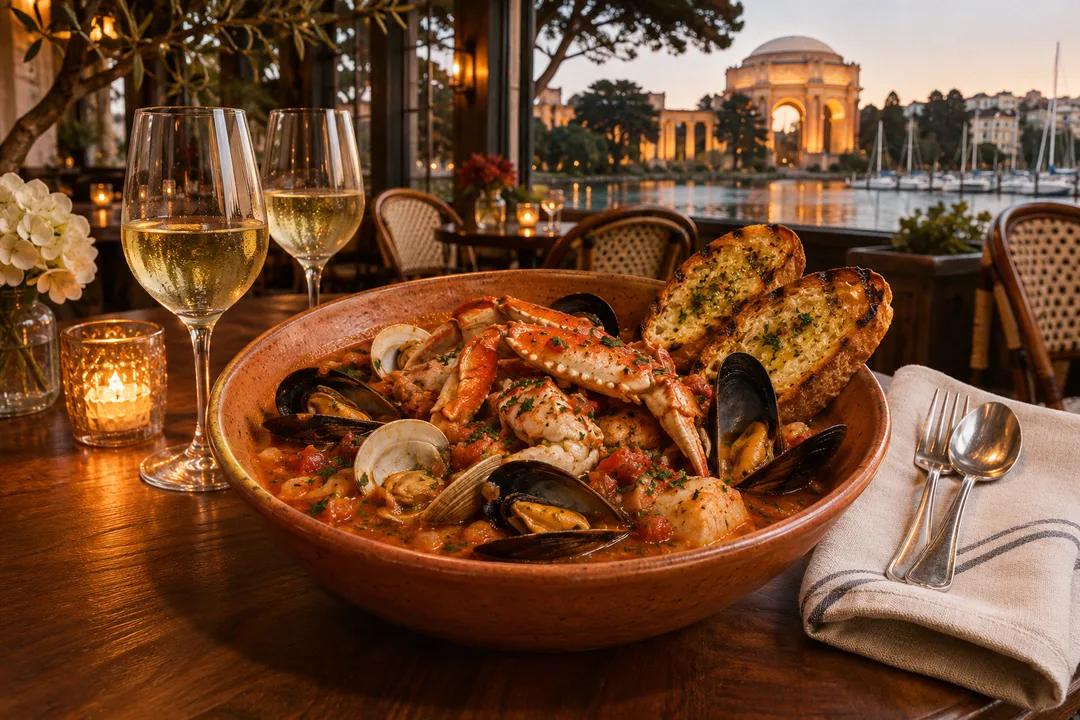 Marina Cioppino Dinner Picker: Bistros After Bay Walks
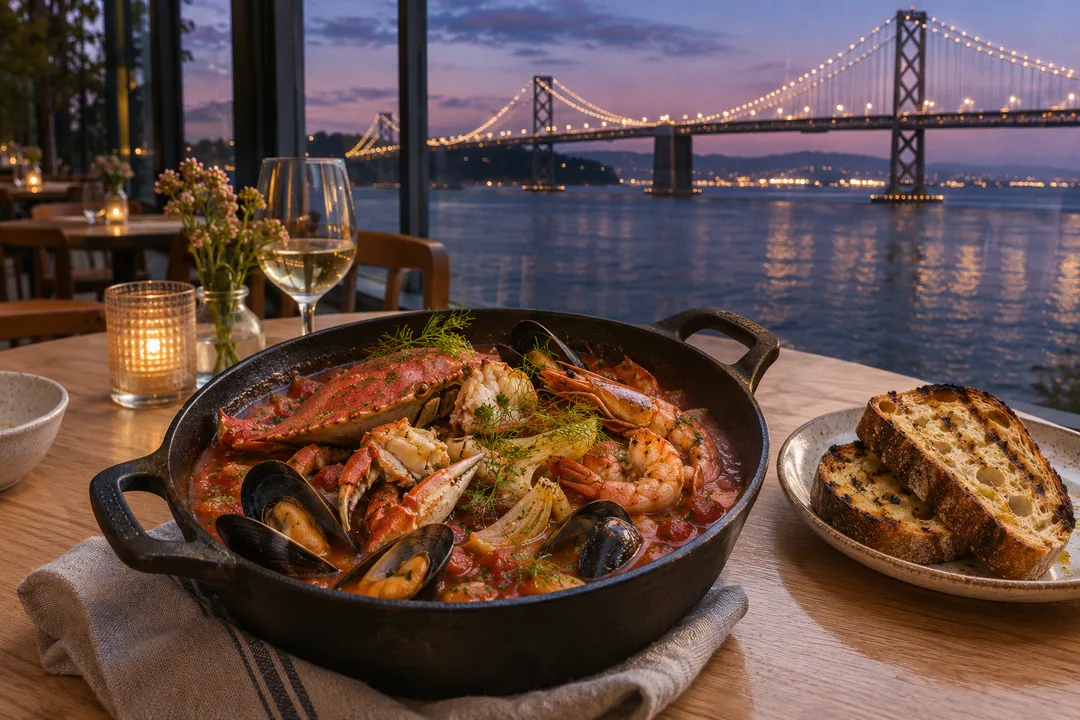 Embarcadero Cioppino Dinner Picker: Pots by the Bridge