 Outer Sunset Cioppino Dinner Picker: Pots by Ocean Beach
Restaurants
SF Dinner Shortlist Builder: Plan A Date That Fits
Choose a San Francisco date dinner by defining conversation, comfort and the shape of the evening, then use a short brief to ask Karpo APP for ideas.
A date-night dinner request can sound clear until someone tries to act on it. Romantic might mean a quiet booth, a lively counter, unfamiliar food or simply an evening without a complicated journey home. Use a San Francisco dinner shortlist builder to turn that vague wish into choices you can discuss. Open Karpo APP with the kind of evening you want, then add a few concrete details about comfort, conversation and timing. A useful shortlist should reflect two people rather than a generic picture of romance.
What do you want the evening to feel like?
Begin with an ordinary sentence about the occasion. You might be getting to know someone, celebrating an anniversary or making time together after a demanding week. Each situation suggests a different level of formality and commitment. A first date may benefit from an easy stopping point, while an established couple might enjoy building the whole evening around dinner. Describe the experience you want without assuming that a particular cuisine, expensive meal or elaborate room automatically produces it.
Choose two priorities that would make the dinner feel right. Perhaps you want to hear each other easily and avoid rushing. Or you want to try an unfamiliar dish and stay close to an activity you both enjoy. These priorities become the criteria for reviewing suggestions. They are more useful than a long string of adjectives because you can ask whether each candidate actually supports them. Keep a lower-priority preference available to trade away if it makes the search easier.
How much surprise is comfortable for both people?
Discuss the boundaries of a surprise before selecting a destination. Someone can enjoy not knowing the restaurant while still wanting to agree on spending, travel, food restrictions and what to wear. You can preserve the pleasure of revealing a place without hiding information that affects the other person's comfort. If you are uncertain, offer a broad choice between two kinds of evening. The answer gives you direction without turning the invitation into a detailed planning interview.
For an early date, consider how much of the evening you want to commit in advance. A simple dinner can leave space to continue together if both people want to, whereas a prepaid multi-part plan may create obligations you did not intend. This is a question about personal preference, not a universal rule for dating. Choose a structure that feels comfortable to the people involved, and make any financial commitment an explicit shared decision rather than a surprise presented at the table.
What does a conversational setting mean to you?
Translate atmosphere into the way you expect to interact. Do you want to talk across a small table, sit beside each other at a counter, or share dishes while watching activity in an open room? Those arrangements can support different kinds of conversation. Describe the preferred setup in your brief, then treat seating as a detail for a specific restaurant to answer. A photograph can suggest a style, but it does not establish which table you would receive.
Noise tolerance also deserves a concrete description. Some people enjoy energy around them and others find it tiring to lean across a table. State your preference without labeling a whole neighborhood quiet or lively. Reviews and pictures can provide clues, but they are not measurements of your particular visit. If conversation is the central purpose, keep that requirement ahead of decorative details when you weigh possible places. The most photogenic room may not be the room you most want to spend time in.
How should the journey shape the choice?
Give both people an easy way to arrive and leave. You can name starting neighborhoods in San Francisco and a preferred travel method without sharing private addresses. Consider whether one person will come directly from work, carry belongings or want a shorter walk. A meeting place that feels effortless to one person may require a much more complicated evening for the other. Making the journeys part of the brief is a small way to show consideration before the date begins.
Keep an after-dinner walk optional rather than making the whole plan depend on it. You might choose an area where you already enjoy spending time, but you do not need to invent a route with several stops. Weather, energy and the conversation itself can determine what happens next. If there is a fixed activity afterward, give it a separate place in the schedule. Otherwise, leave room for either person to end the evening comfortably after the meal.
What should you actually ask in Karpo APP?
An example invitation to the planning conversation is: Help me think through a dinner date in San Francisco. We want an informal meal where conversation matters more than ceremony. We both prefer individual main courses, and I will provide our dietary needs, spending comfort and starting areas. Suggest a few possibilities with a different reason to choose each. This is suggested wording for a request. It does not describe a dedicated date-matching tool or promise that the app knows your companion's preferences.
Read the suggestions together with the priorities you wrote earlier. For each candidate, explain why it could suit this particular evening and what question remains. If a response uses broad praise, ask for a more concrete comparison or do that comparison yourself. A small number of well-understood choices is easier to discuss than a collection of attractive descriptions. Keep the final shortlist short enough that your companion can react to the meaningful difference without reviewing a research document.
How do you choose without making dinner an exam?
Offer a choice that communicates interest rather than demanding a ranking. You might say that one option seems better for a relaxed conversation while the other offers a more adventurous meal. Invite the other person to tell you which evening sounds appealing, and make it easy to suggest a different direction. If neither option feels right, revise a priority. Reopening the brief once is more useful than defending a restaurant simply because you have already spent time researching it.
When both people like a candidate, divide the remaining actions naturally. One person can handle the reservation while the other decides whether they want to suggest an optional next stop. Use the restaurant's own terms for any booking or payment. A conversational recommendation is not a held table, and enthusiasm about a menu is not an agreement to every possible expense. Keeping those distinctions clear lets the invitation remain warm while the practical arrangements become dependable.
Practical notes for a date that feels considered
Send a simple final invitation with the venue, meeting time and any clothing or arrival detail that genuinely matters. Leave elaborate claims about the perfect night out of it. Karpo's public site presents mood-led discovery and conversational planning, which gives you a place to begin asking for ideas. The thoughtful part remains the attention you give to the other person: what they enjoy eating, how they want to spend the evening and whether the plan leaves both of you comfortable.
Ask Karpo for more information.
Keep reading
- Outer Sunset Cioppino Dinner Picker: Pots by Ocean Beach
 Marina Cioppino Dinner Picker: Bistros After Bay Walks
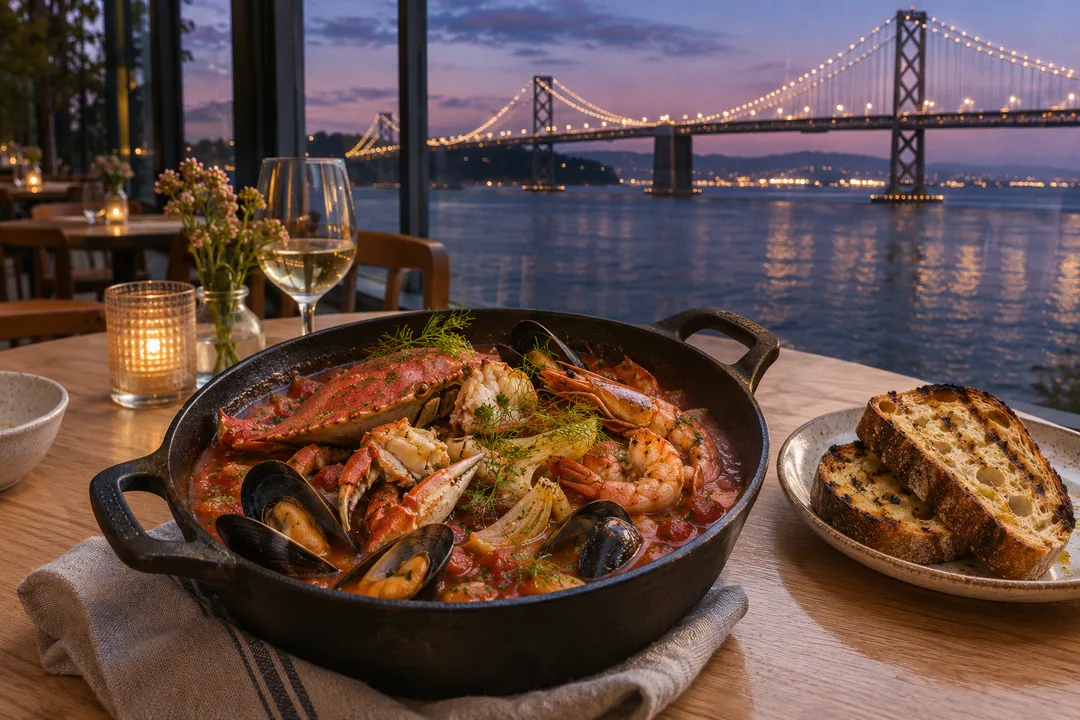 Embarcadero Cioppino Dinner Picker: Pots by the Bridge