Choosing a date-night restaurant in the Mission is harder than it should be, and the reason is not quality. There are dozens of very good rooms inside a twenty-minute walk. The reason is that the neighbourhood's restaurants are unusually varied in what they are like to sit in — a loud communal counter and a quiet courtyard produce completely different evenings from equally good kitchens, and the menu tells you nothing about which one you booked.
The room decides the evening more than the menu does. Ask Karpo which Mission table near you is quiet enough to talk at tonight.
Four room types, and who each one suits
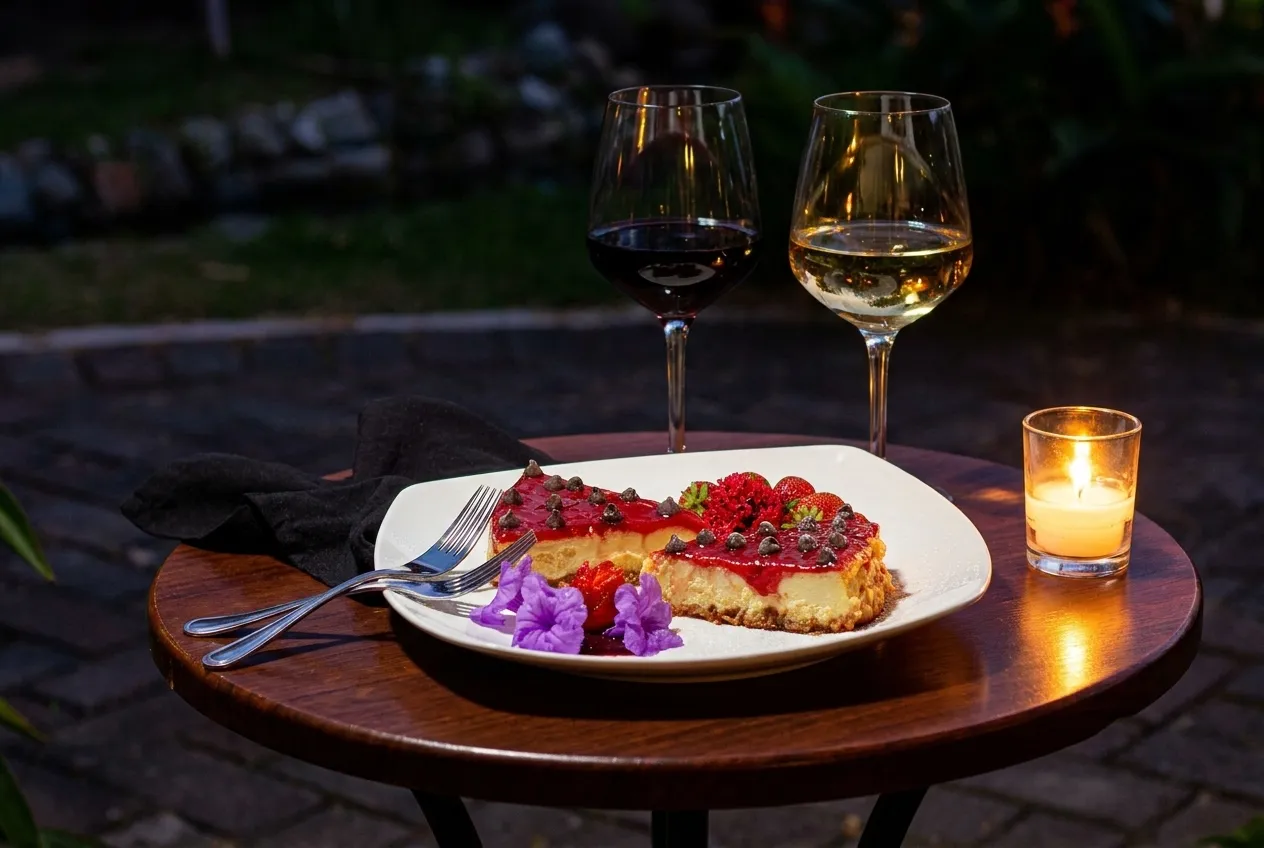
The courtyard rooms are the Mission's signature: heated outdoor space behind a plain frontage, string lights, warm enough to sit out in on most evenings of the year if you bring a layer. These are the most reliably romantic tables in the neighbourhood and the hardest to book, and they are worth planning a week ahead for.
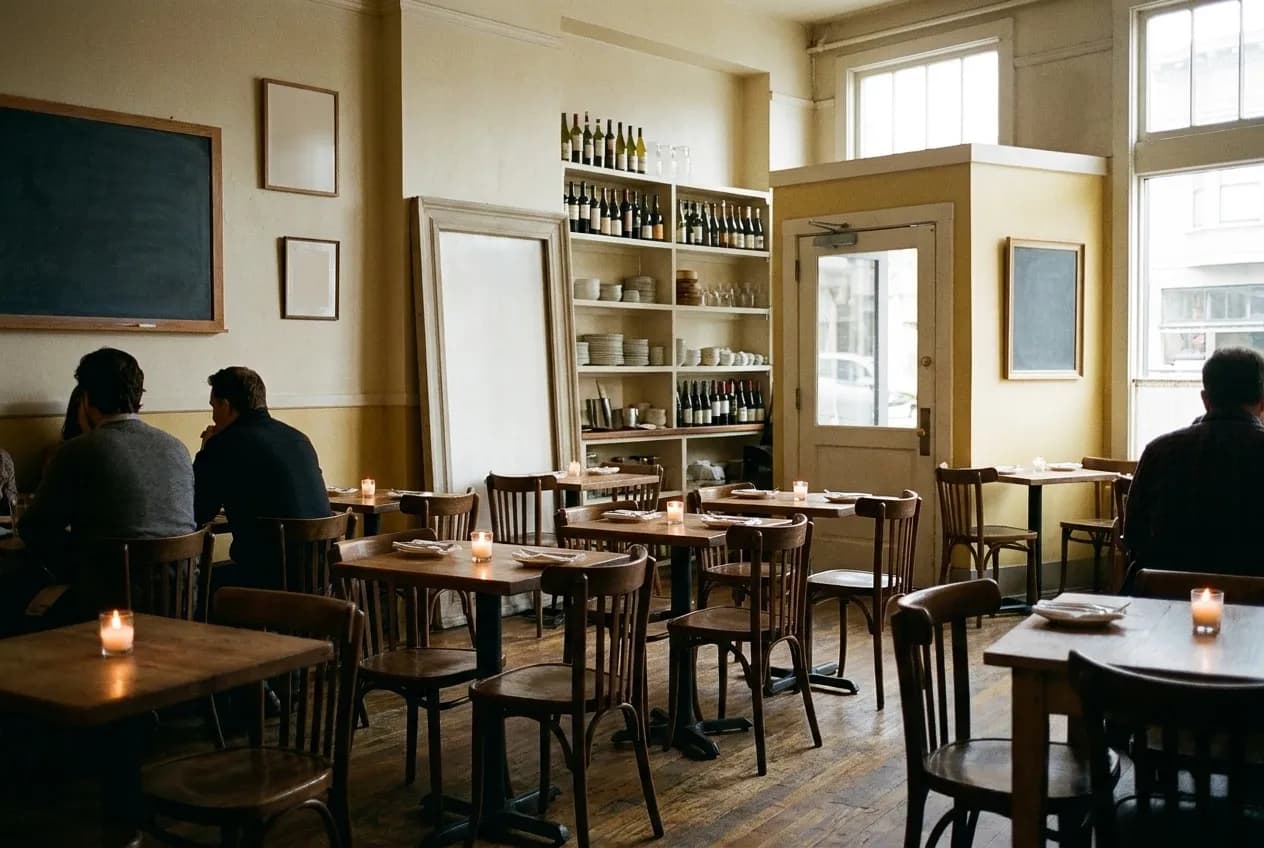
The counter rooms sit you side by side facing a kitchen. Excellent for a fourth or fifth date when you already talk easily, difficult for a first one, because you are not facing each other and there is a cook two feet away. The small dining rooms — thirty seats, one server, a menu of eight things — are the safest choice overall and the ones locals actually use on a Tuesday. And the big loud rooms, the ones with a bar three deep at eight o'clock, are fun and completely unsuitable if the point of the evening is conversation.
The noise problem is real and it is measurable
San Francisco dining rooms are loud. Hard surfaces, open kitchens, high ceilings and no soft furnishing are the prevailing design, and a full Mission restaurant on a Friday can make a normal conversation genuinely difficult. This is the single most common way a good restaurant produces a bad date.
Two fixes work. Book early — a 6pm table in a hard room is quiet in a way the same room is not at 8.30 — or ask specifically for a corner or banquette when booking, which most places will accommodate if you ask at the time of booking rather than on arrival. If you use a booking platform, the notes field is read more often than people assume.
Booking windows in this neighbourhood
The Mission is not the hardest part of the city to book, which is one of its advantages. Most of the good rooms release tables two to four weeks out and hold some inventory back; a week is usually enough for a weeknight and ten days for a Saturday. The exceptions are the tasting-menu houses and the two or three courtyard restaurants with genuine cult followings, which behave like the rest of the city and want a month.
Weeknights are dramatically easier and materially better. Tuesday and Wednesday in the Mission gets you the same kitchen, a calmer room, and a server who has time to talk to you about the wine list. If your schedule is flexible at all, this is the easiest upgrade available.
Price tiers, honestly stated
You can have an excellent Mission dinner for two at about seventy dollars all in, at a small neighbourhood room with a short menu and a glass of wine each. The middle tier — the well-known rooms with a real wine programme — lands somewhere between a hundred and forty and two hundred for two with drinks. The tasting-menu houses start well north of that per person before wine, and they are a specific kind of evening: long, structured, seated at a fixed time, and not especially conversational for the first hour.
Service charges are worth checking. Many San Francisco restaurants now add a percentage for staff healthcare or as a service charge in lieu of tipping, disclosed at the bottom of the menu. It is not a scam, it is city policy interacting with restaurant economics, but it does change the arithmetic and it is better to see it before the bill.
Where to go afterwards, which matters more than people plan for
The Mission's real advantage as a date neighbourhood is what happens at ten o'clock. Within a few blocks of almost any dinner table there is a serious cocktail bar, a wine bar with a short list and no music to shout over, a dive with a jukebox, and an ice cream shop with a queue at eleven on a warm night. Deciding the second stop before dinner is worth doing, because the walk between two places you chose is often the best part of the evening.
The corridor between Valencia and Mission along the numbered cross-streets is the densest version of this, and it is flat, which distinguishes it from most of San Francisco and makes a three-stop evening on foot genuinely pleasant.
The default that always works
A thirty-seat room on a numbered cross-street, booked for 6.30 on a Wednesday, corner table requested at the time of booking, followed by a wine bar two blocks away. It is not the most impressive dinner in the city and it is reliably one of the best evenings, which is a different and more useful thing.
Tags: #DinnerNearMe #DateNight #MissionDistrict #SanFrancisco #SFRestaurants #WhereToEatSF #ValenciaStreet #SFDining #RomanticSF #SFFood #BayArea #WineBar #SFEats #DinnerForTwo
All trademarks are the property of their respective owners.
Ask Karpo first
Want a Mission table tonight that is actually quiet enough to talk at? Ask Karpo which rooms near you still have space and what the second stop should be.