The glass display case at Good Mong Kok runs the length of the narrow room, stacked three trays deep with steaming buns and dumplings. Behind it, staff move in choreographed efficiency between steamers and register. In front, a line compresses toward the counter, customers already writing numbers on scraps of paper or reciting orders in Cantonese. There are no tables, no chairs, no place to linger. The room is a machine designed for one transaction: point, pay, leave. Everything about the space—the width of the aisle, the height of the case, the position of the door—tells you this is takeout dim sum, and you need to know what you want before you reach the front.
Open Karpo to see what's still available at Good Mong Kok right now and how early you should arrive to beat the sell-outs. The app maps the fastest route from your location and shows you the sister bakery down the street if the main line looks long.
The Counter Dictates the Rhythm
Good Mong Kok's counter is roughly four feet of working space between you and the food. Staff pull trays from steamers, box orders and ring up totals without breaking stride. The pace never slows. Customers who hesitate or ask questions create visible bottlenecks. The room trains you through repetition: watch the person ahead, note what they order, prepare your own list. Most regulars write down menu numbers before reaching the counter to speed up ordering. Make confident eye contact with staff behind the display case and recite your order quickly. The spatial constraint—no room to step aside, no second chance to deliberate—forces efficiency.
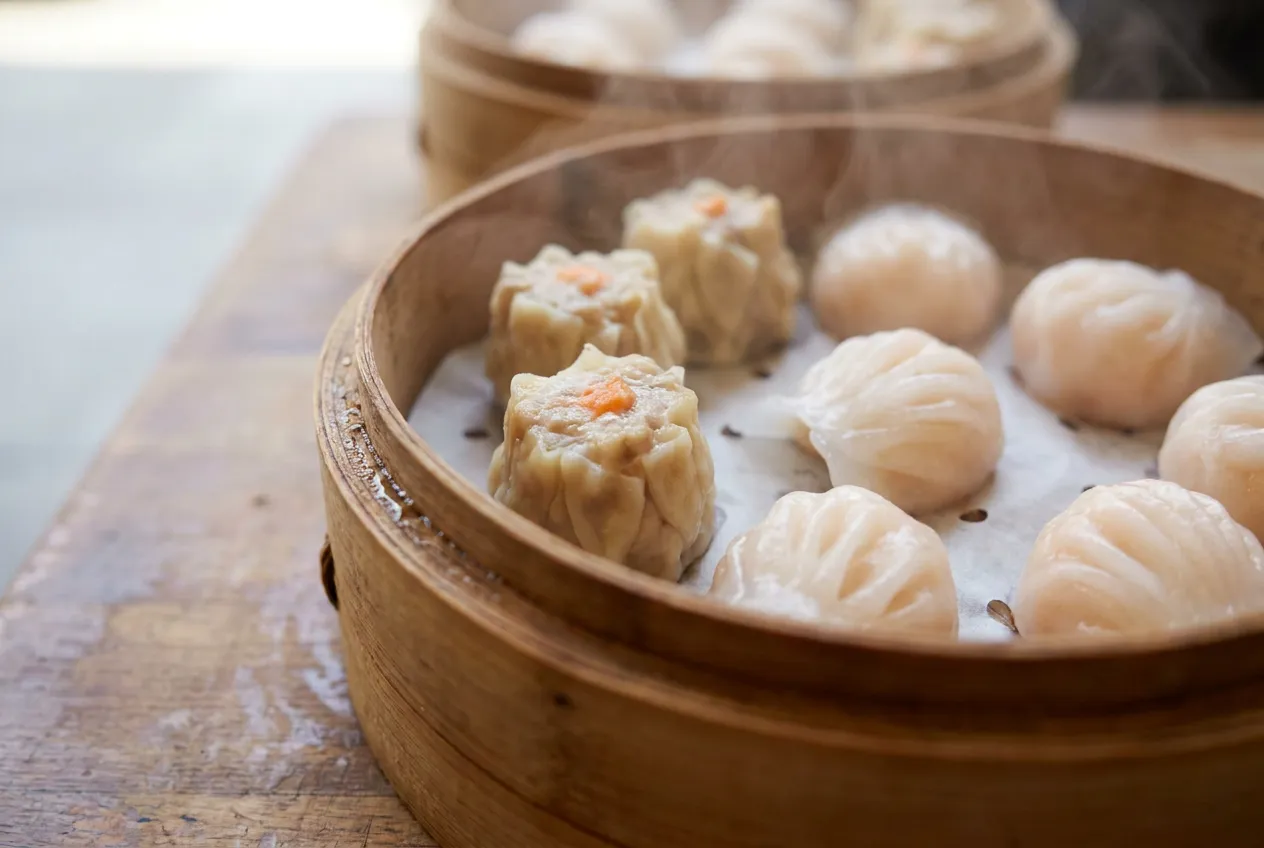
The display case itself is a menu. Bamboo steamers stack in columns: siu mai and shrimp dumplings on the left, baked buns in the center, egg custard tarts and pineapple buns on the right. Items cost under four dollars each. Egg custard tarts run one dollar and eighty cents. Fried meat dumplings are three dollars and fifty cents for three. You can assemble a full meal for under ten dollars, but only if you decide before the person in front of you finishes paying.
Zero Seating Means Zero Ambiguity
The absence of chairs clarifies intent. Good Mong Kok is not a place to eat dim sum; it is a place to acquire it. The distinction matters in Chinatown, where sit-down dim sum halls operate on different logic—carts, tea service, multi-course pacing. Here, the room removes those variables. You are buying baked and steamed goods to eat elsewhere. Portsmouth Square is less than a five-minute walk. Many customers head there, unwrapping paper bags on benches. Others walk and eat, tearing into BBQ pork buns while still on Stockton Street.
The takeout-only model also explains the hours. Good Mong Kok opens at seven in the morning and closes at six in the evening, seven days a week. The early start accommodates the neighborhood's rhythm—commuters, market vendors, residents who shop before the crowds. Go early morning for the freshest items and shorter lines. Arriving late in the day results in many items sold out. The high customer turnover ensures food is consistently fresh, but it also means popular items disappear by mid-afternoon.
The Glass Case as Quality Signal
Transparency is literal here. The full-length display case lets you see steam rising from har gow, the sheen on egg yolk buns, the char marks on baked char siu bao. Nothing is hidden or held back in a kitchen. What you see is what remains. When trays start showing gaps, you know the window is closing. Regulars scan the case before joining the line, mentally confirming their target items are still in stock.
Temperature matters with this setup. Egg yolk buns and pineapple buns are best eaten warm immediately after purchase. The buns come in orders of three. If you plan to save them, expect the texture to change as they cool. The case also broadcasts freshness through volume: full trays signal a recent restock, sparse trays mean you are late in the cycle. The room does not lie about availability.
The Sister Location as Pressure Valve
When the line at 1039 Stockton stretches past the door, a sister store operates down the street on Jackson Street, just before Grant Avenue. The second location functions as overflow. It stocks the same core items—BBQ pork buns, siu mai, egg custard tarts—and typically has shorter lines. Locals treat the two bakeries as interchangeable, choosing whichever has the faster queue. The existence of the second counter reinforces the original point: these rooms are not destinations. They are supply points in a larger Chinatown food system.
Cash remains preferred, though credit cards are now accepted. The lack of a formal menu, the speed of transactions and the cash-first culture all reinforce the room's message: this is a neighborhood bakery operating on neighborhood terms. You adapt to it, not the other way around.
Practical notes
Good Mong Kok Bakery is at 1039 Stockton Street in Chinatown, between Jackson and Washington. It opens at seven in the morning and closes at six in the evening every day. Most items cost under four dollars; a full order typically runs under ten dollars. Cash is preferred but credit cards work. There are no reservations, no seating and no place to eat inside. The space is takeout only. Arrive early for the best selection—items sell out by late afternoon. Portsmouth Square is a five-minute walk if you want a place to sit and eat. The sister bakery on Jackson Street near Grant Avenue offers the same food with shorter lines. Write your order down or memorize menu numbers before reaching the counter. The staff move quickly and expect you to do the same.
- Address: 1039 Stockton St, San Francisco, CA 94108
- Hours: Monday–Sunday, 7:00 AM – 6:00 PM
- Price: Under $4 per item; meals under $10
- Booking: Walk-in only, no reservations, takeout only
- Getting there: Portsmouth Square is a 5-minute walk; sister location on Jackson St near Grant Ave
Tags: #DimSumNearMe #GoodMongKok #SanFranciscoChinatown #StocktonStreet #TakeoutDimSum #WeekendPlans #SanFranciscoFood #ChinatownEats #BakedCharSiuBao #EggCustardTarts #SanFranciscoWeekend #ChinatownBakery #SFDimSum #PortsmouthSquare #MorningDimSum
Sources consulted: goodmongkok.com · yelp.com · corner.inc · restaurantji.com · theinfatuation.com
All trademarks are the property of their respective owners.
Ask Karpo first
Before heading to Good Mong Kok, ask Karpo whether the bakery is open right now and what time the morning rush typically clears. The app shows live status for both the Stockton Street location and the sister bakery on Jackson, so you can pick the shorter line. Karpo also maps a walking route through Chinatown that includes Portsmouth Square if you want a place to sit and eat your dim sum outdoors.