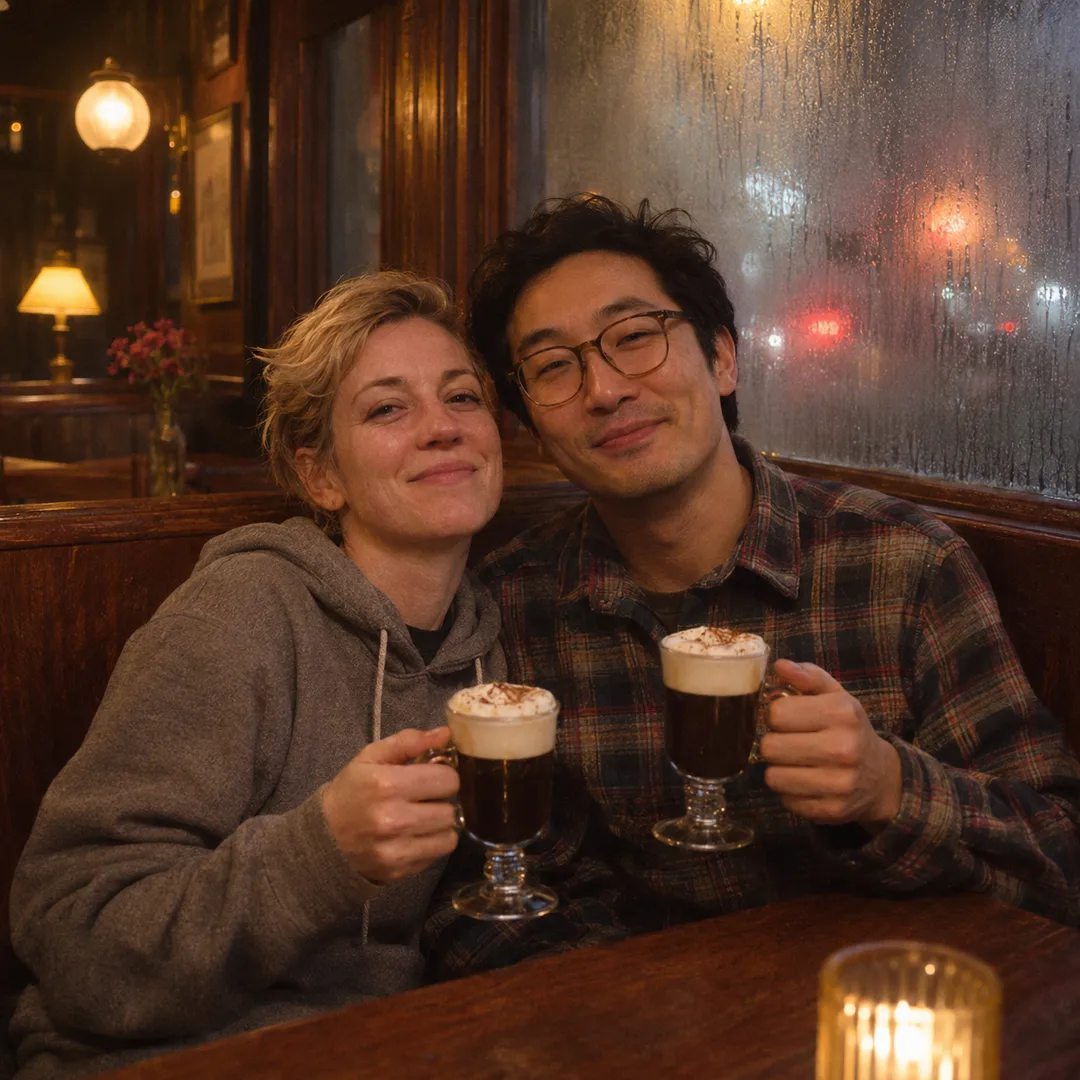
 Inner Sunset Irish Coffee Bar Night Picker for New Parents
Bars & Nights Out

SF Date Night Plan Builder for a First Meet
For a first date in San Francisco, agree on one small outing and an easy finish. Build a brief that leaves room for a second stop without expecting one.
A first date does not need an entire evening booked in advance. It needs a meeting that feels clear, comfortable and easy for both people to accept. This SF date night plan builder starts with the invitation rather than a list of romantic destinations. You will decide what the initial commitment includes, how each person can leave and what an extension would look like if you both want it. Use the resulting brief in Karpo APP to ask for suitable local ideas without turning a first introduction into a complicated production.
Make the invitation smaller than the possibilities
An invitation such as meeting for something to drink or eat has an understandable shape. An invitation that includes dinner, entertainment and a late finish asks someone to commit to several different experiences before you know how you get along. Pick one starting activity that you would enjoy even if the date lasts only for that activity. It could involve sitting and talking, browsing something together or sharing a casual bite. Choose the shape first, then ask for places that can support it.
Explain the endpoint when you invite the other person. Saying that you have about an hour, or that you would like to meet for one small outing, gives the date a natural finish. Use a time limit that is true for you instead of inventing a reason to leave. A clear endpoint can make accepting easier, because nobody has to guess whether a short meeting will be interpreted as a rejection. The possibility of another stop can wait until you are together and both interested.
Compare seated conversation with a shared focus
A seated conversation gives you a straightforward way to learn about one another. It asks relatively little coordination once you have arrived, and you can decide how much you want to order. Its main demand is sustained conversation. If that sounds enjoyable, ask for suggestions where the format supports it, rather than choosing solely on how impressive a room looks. Include your needs around seating, background sound and food. A pretty photograph is not enough to tell you whether the experience suits you.
A shared-focus date offers something outside yourselves to discuss. You might prefer a short cultural browse or a simple activity that does not require previous skill. That can help if sitting opposite a stranger feels like an interview. It also creates other questions: whether you can talk during the experience, whether it has a fixed duration and whether participation involves a financial commitment. Put those concerns in your planning request. Do not assume every activity allows a quick departure or that a suggested session has spaces available.
The useful comparison is between the kinds of interaction, not between how adventurous the two options sound. A complicated activity can leave little time to learn anything about the person beside you. A simple meeting can still feel memorable if you have something to talk about afterward. Ask yourself which format makes it easier to be present. Then tell your date what you are suggesting and why, giving them a practical opportunity to say that another format would feel more comfortable.

Choose a meeting area without sharing your whole life
Pick a public meeting point that both people can reach independently. You can plan around a neighborhood or a transit arrival without providing your home address. In San Francisco, naming the neighborhood in the request helps keep the suggestions geographically coherent. If you and your date are coming from different sides of the city, describe those starting areas and ask for ideas that reduce the burden on both people. There is no need to make one person the default traveler just because they proposed the date.
Discuss transportation as part of the invitation, especially if one person has a strict return time. Walking together afterward can be an option rather than an assumption. Each person can keep their own way home, and nobody needs to agree to being picked up to make the date happen. If a route includes hills, long outdoor stretches or stairs that would be difficult for you, state the relevant limit in the brief. A proposed short distance is not the same as a route that meets your mobility needs.
Keep the second stop outside the initial commitment
An optional continuation should be genuinely optional. Avoid buying two sets of tickets or arranging a second reservation while describing the first meeting as casual. Those commitments create pressure even when nobody intends it. Instead, ask for one nearby type of continuation you could consider together: another bite, a dessert or a short walk. The purpose is to avoid a fresh round of searching if you both want more time, not to persuade anyone that leaving after the first stop would waste the evening.
Use a simple question when the natural endpoint arrives. Ask whether the other person would enjoy continuing, and make your own preference clear enough that they do not have to interpret hints. If either of you prefers to finish, the original plan has still worked. You met, spent the agreed time together and can decide later whether to meet again. A graceful end does not need an elaborate explanation. A small initial commitment protects the possibility of a good first date without demanding that it become a long one.
Set expectations around ordering and paying
A comfortable spending level belongs in the planning conversation even if you do not want to discuss exact amounts with someone you have just met. Ask for a format where each person can make a modest choice, rather than a fixed sequence that requires both people to spend the same amount. If you have a firm personal ceiling, give it to Karpo as a planning constraint. Treat any amount you enter as your budget, not as evidence of what a suggested venue charges.
Think through how you would like to handle the bill before you are looking at it. You can offer, split or discuss another arrangement, but a plan that depends on an unspoken assumption can leave someone uncomfortable. Dietary needs deserve the same clarity. Mention an allergy or an alcohol-free preference in the invitation when it affects the format. You do not owe someone a personal history to explain what you need. The aim is to choose an outing both people can participate in without an awkward surprise.
Put the brief through a first-date test
Before asking for destinations, read the invitation as though you were receiving it. Can you tell what you are agreeing to, where it begins and when it can end? Can you decline an extension without disrupting a prepaid sequence? Is the location public and the journey manageable? Does the activity leave enough attention for the person you are meeting? If an answer is unclear, change the format before getting attached to a particular place. Those decisions will do more for the date than a long list of highly rated venues.
Then open Karpo APP and ask for suggestions using the details you have chosen: a first meeting in San Francisco, your starting area, the kind of interaction you prefer and the size of the initial commitment. Ask for a small selection with explanations you can compare. Choose a proposal, tell your date the actual arrangements and keep any extra stop as an invitation for later. A recommended outing is a starting point for your decision, and the final agreement still belongs to the two people going.
Ask Karpo for more information.
Keep reading
- Inner Sunset Irish Coffee Bar Night Picker for New Parents
 Mission Irish Coffee Bar Night Picker for a Sober Friend
 Richmond District Irish Coffee Bar Night Picker for Fiddlers