 Inner Richmond Egg Tart Bakery Crawl: Clement Street Pastry
Coffee & Dessert
Mission Croissant Bakery Crawl Planner: Butter vs Pan Dulce
Plan a Mission District croissant crawl that pairs French butter layers with panaderia conchas, a mural alley stroll and a slow finish on the Dolores Park lawn.
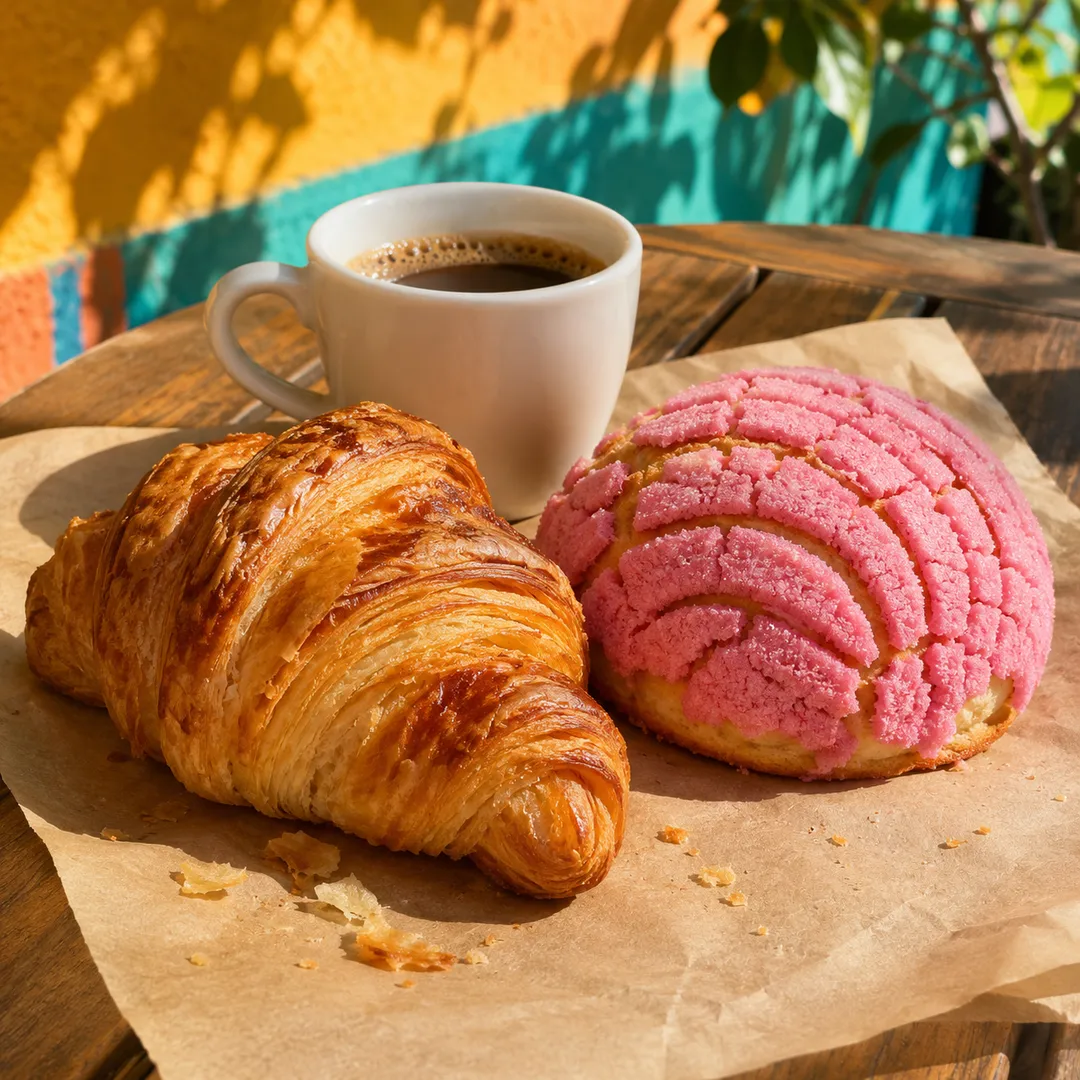
A Mission District croissant bakery crawl planner works differently here than anywhere else in San Francisco, because the neighborhood bakes in two languages. French-style shops turn out laminated croissants with a crackling shell, while the panaderias that have fed the Mission for generations stack conchas, orejas and cuernos in glass cases. The cuerno is even a cousin of the croissant, a crescent shaped with a softer, sweeter crumb. This plan pairs the two traditions on purpose. You taste a croissant, then a pan dulce, then repeat the pairing a few blocks later, so every stop teaches you something about butter, sugar and dough. Between bakeries you walk the mural alleys, and the morning ends on the grass at Dolores Park with whatever survived the bag.
Why the Mission Rewards a Two-Tradition Crawl
Most croissant crawls compare one flaky pastry to the next and end in a blur of butter. The Mission gives you a built-in contrast. A French croissant is about lamination, thin sheets of dough and butter folded again and again until the crumb opens into a honeycomb. A concha is about the topping, a crisp sugar shell scored like a seashell over a soft, almost bready roll.
Eating them side by side sharpens your palate fast. After a bite of concha, the salt in a good croissant jumps forward, and you notice whether the layers shatter or bend. After a croissant, the gentle sweetness of pan dulce feels like a rest. The pairing keeps the crawl interesting long after a straight croissant tour would have gone flat.
The Rhythm of a Mission Morning
Bakeries here work on early schedules, and the cases look fullest soon after the first trays come out. Panaderias often load their shelves before the coffee crowd arrives, so an early start gives you the widest choice of conchas in every color. French-style counters may sell out of their signature pastry first, so make that your opening stop.
Weekend mornings bring lines, strollers and dog walkers heading to the park. A weekday start feels calmer and lets you chat with the person behind the counter. Fog usually burns off over the Mission earlier than in the western neighborhoods, so the walking part of the plan tends to land in sunshine.
How to Plan the Pairings
Think in pairs rather than a long list of shops. Pick two French-style bakeries and two panaderias, then alternate between them so no stretch of the walk feels like a repeat. Three pairs is plenty for most people, and two pairs works well if you are crawling with kids.
Write a short tasting goal for each pair. The first can be plain against plain, a classic croissant beside a vanilla concha. The second can be the crescents, a croissant beside a cuerno. The third can be the fun round, an almond or chocolate croissant beside a chocolate concha or a buttery oreja. Karpo can help you find bakeries near each stop.
Ordering at a Panaderia
Many traditional panaderias run on self-service. You pick up a metal tray and a set of tongs near the door, walk the cases and choose your own pieces, then bring the tray to the register. It feels a little like a treasure hunt, and regulars move through quickly, so step aside if you need a moment to decide.
Choose one or two pieces per stop, not a full tray, because you still have a long walk ahead. Point to the shapes you do not recognize and ask what they are. Staff are usually happy to name a marranito, a ginger pig cookie, or a piece of pan de huevo, and those small exchanges become the best stories of the morning.

Ordering at a French-Style Counter
French-style bakeries in the Mission tend to work from a single counter, with pastries behind glass and a short menu board. Order the plain croissant first, every time. It is the honest test of a baker, with nothing to hide behind, and it gives you a fair baseline for the panaderia pieces that follow.
Ask for it whole rather than warmed if you can eat it right away. Look at the cross section after the first bite. Wide, airy cells and a crisp, deep golden shell mean careful lamination. A dense, bready center tells you the dough was rushed. Share one croissant between two people so you have room for the full plan.
Walking the Mural Alleys Between Stops
The Mission's painted alleys make perfect breaks between bakeries. Balmy Alley packs garage doors and fences with murals that tell stories of Central American history, community struggles and celebration, and Clarion Alley mixes newer pieces into a constantly changing gallery. Walk slowly and finish your pastry before you start, so crumbs and sticky fingers stay away from the walls.
These alleys are also neighbors' driveways and back doors, so keep voices low, stay out of the way of cars and avoid blocking garages for a photo. Pair a mural walk with each pastry pair and the crawl gains a rhythm, taste, walk and talk, then taste again.
Coffee Pacing
Coffee can take over a pastry crawl if you let it. Order one real coffee at the first stop and switch to water after that. Many panaderias also serve cafe de olla or champurrado, warm and spiced, which pair beautifully with pan dulce and make a cozy choice when the morning starts cold.
Keep a refillable water bottle in your bag. Butter, sugar and coffee add up quickly, and a sip of water between pairs resets your palate so the third croissant tastes as clear as the first.
Building a Tasting Scorecard
A simple scorecard turns a snack walk into a game. For croissants, rate shatter, crumb, butter aroma and salt. For pan dulce, rate topping crunch, softness, sweetness and how well it pairs with coffee. Use a one to five scale and jot down one word for each piece.
At the end, compare notes. Friends almost always disagree about the concha topping, some want it thick and sandy, others want a thin glaze. That argument is half the fun, and the notes help you plan a sharper second crawl.
Carrying Pastries Without Crushing Them
Conchas are tender and their sugar shells crack easily, while croissants flatten the moment something heavy lands on them. Bring a flat, sturdy tote and keep pastry bags on top. A shallow box is even better if you plan to carry pieces to the park.
Never seal a warm croissant in plastic, because steam softens the shell within minutes. Leave paper bags slightly open, and keep pan dulce in its own bag so the sugar topping does not rub off onto the croissant.
Finishing at Dolores Park
Save one or two pieces for the end and walk up to Dolores Park. The upper slopes look out over the city skyline, and on a clear morning the view stretches toward downtown and the bay. Spread a blanket, lay out the survivors from each pair and run one last blind tasting.
Weekends bring crowds as the day goes on, so a late morning picnic usually finds space. Pack out every napkin and bag. Squirrels and crows know exactly what a paper bakery bag means, so keep pastries close and covered.
Who This Crawl Suits
This plan suits curious eaters, families with kids who love bright pink conchas, and visitors who want more than a single famous croissant. It also works for friends who grew up on pan dulce and want to show a French pastry fan what they have been missing, or the other way around.
If you only want laminated pastry, skip the pairing idea and use the plan as a straight croissant walk. You will miss the best part of the neighborhood, though, and the panaderias are part of what makes a Mission morning unlike anywhere else in the city.
Practical Notes
Wear comfortable shoes, since the Mission's flat grid hides a steep climb up to the top of Dolores Park. Bring a little cash, because some smaller panaderias prefer it. Plan for two to three hours, including the alley walks and a slow finish on the lawn.
Use Karpo to find bakeries near your starting point, swap a stop if a case sells out and line up pairs that keep the walk short. If rain rolls in, cut the alley walks and finish with a warm cafe de olla at your last panaderia instead.
Ask Karpo for more information.
Keep reading
- Inner Richmond Egg Tart Bakery Crawl: Clement Street Pastry
 Portola Egg Tart Bakery Crawl: San Bruno Avenue Pastry
 Outer Sunset Egg Tart Bakery Crawl: Ocean Mist and Custard