 Inner Richmond Egg Tart Bakery Crawl: Clement Street Pastry
Coffee & Dessert

Hayes Valley Croissant Bakery Crawl Planner: Classic to Cube
Run a Hayes Valley croissant crawl from classic crescents to cubes, cruffins and kouign-amann, learning to read lamination before a rest on Patricia's Green.
A Hayes Valley croissant bakery crawl planner is a chance to see how far bakers can push a single dough. This compact neighborhood near the Civic Center is known for design shops, wine bars and pastry counters that experiment freely, and laminated dough is their playground. Within a few blocks you can taste a traditional crescent, then move on to cube-shaped croissants filled with cream, swirled cruffins and the caramel-crusted kouign-amann from Brittany. This plan arranges the walk from classic to creative, so each stop builds on the last. You learn to read lamination by tearing pastries open, compare how shape changes texture and finish with a slow rest on the lawn at Patricia's Green, the small park at the heart of the neighborhood.
One Dough, Many Shapes
Laminated dough starts the same way everywhere. Bakers fold a block of cold butter into dough, then roll and fold it repeatedly to build dozens of thin layers. In the oven, water in the butter turns to steam and pushes the layers apart, creating the flaky shell and open crumb that make a croissant special.
What changes from shop to shop is shape, fermentation and finish. A crescent bakes with open ends that crisp up. A cube is baked in a mold, so the sides stay soft and the center holds a filling. A kouign-amann adds sugar between the folds, which caramelizes into a crackly crust. Tasting them in order shows you why.
Why Hayes Valley Works for This Crawl
Hayes Valley is small, flat at its core and full of independent shops. Its blocks around Hayes Street and Octavia Boulevard mix boutiques, coffee bars and bakeries that like to try new things, from seasonal fillings to inventive shapes that show up on social media feeds.
The neighborhood also has a good place to sit. Patricia's Green, a small park built where a freeway ramp once stood, gives you benches, a lawn and rotating public art right in the middle of the crawl. You can pause, compare notes and decide whether you still have room for the next stop.
Stop One: The Classic Crescent
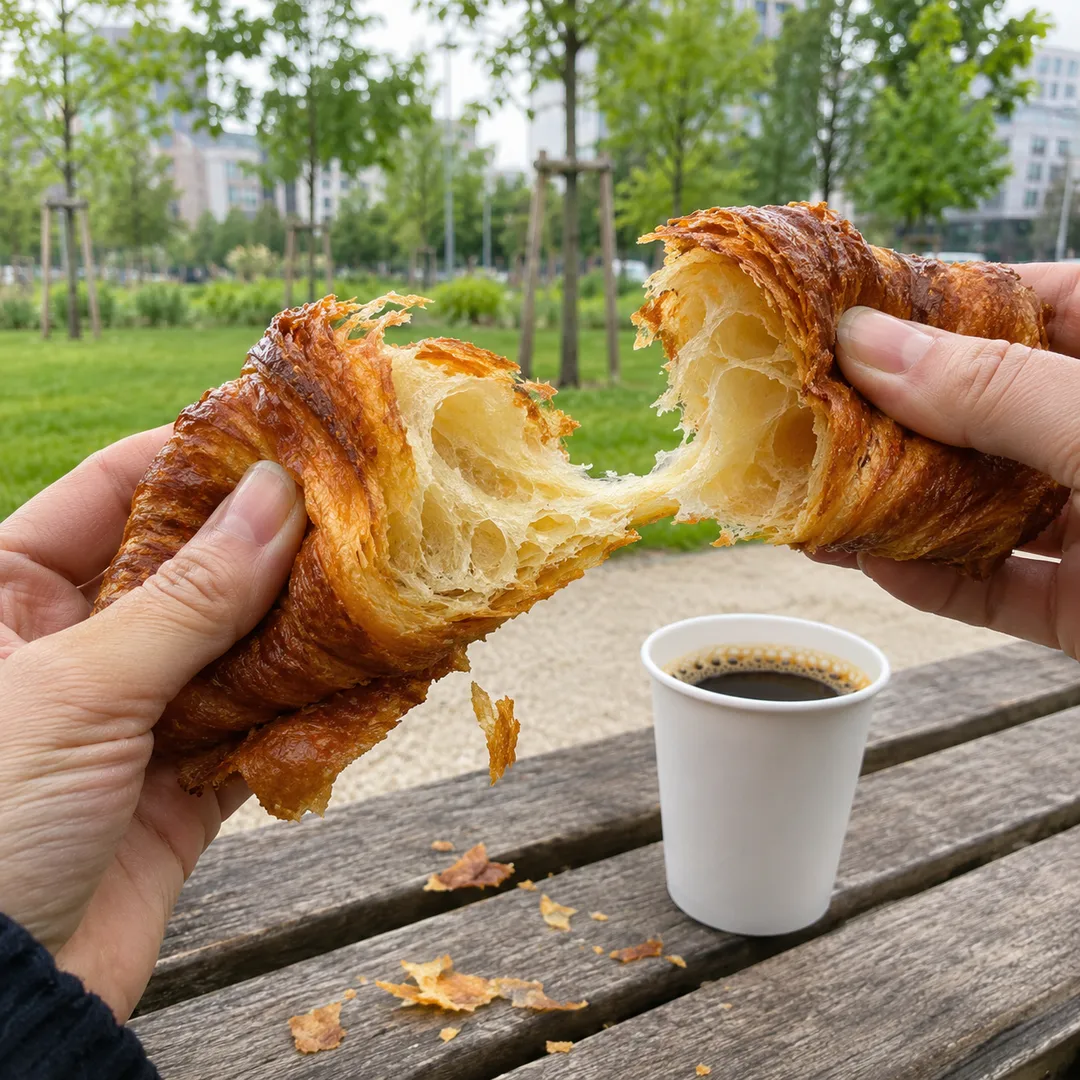
Begin with a traditional butter croissant. It is the reference point for everything that follows. Look at the outside first, a deep amber color and visible layers along the curve. Then tear it in half rather than biting. A good one crackles, sheds flakes and shows a web of large, irregular holes inside.
Smell the torn edge before you taste. Fresh butter should dominate, with a faint tang from the fermentation. Eat half and save half, because you want to compare it against the shapes that come next.
Stop Two: The Cube
Cube croissants have become a favorite in many cities, and they show what happens when lamination meets a mold. The edges bake into crisp, square corners while the walls stay tender. Many bakeries pipe them with pastry cream, chocolate or seasonal fruit fillings and finish the top with a glaze or a dusting of sugar.
Cut or tear the cube from top to bottom to see the layers stacked like the pages of a book. Notice how the mold keeps the crumb tighter than in a crescent. If the filling is rich, share it with a friend, because the crawl still has two stops to go.
Stop Three: Swirls and Cruffins
Next, look for a swirled pastry such as a cruffin, a croissant dough rolled up and baked in a muffin tin. The spiral shape creates a crunchy outer ring and a soft center, and many versions are rolled in sugar and filled with curd, cream or jam.
This is a good stop to judge balance. Ask yourself whether the filling overwhelms the dough or lets the butter shine through. The best swirled pastries still taste like laminated dough, not just a vehicle for sugar. If one shop offers a morning bun with cinnamon and orange zest, it makes a fine alternative.
Stop Four: Kouign-Amann
Finish the pastry part of the crawl with a kouign-amann. Its name comes from Breton words for butter cake, and it is made by folding sugar into the laminated dough. In the oven the sugar melts and caramelizes, creating a glassy, crackly crust that shatters loudly when you bite in.
Because it is so rich, the kouign-amann works best as the final pastry. Eat it slowly, and listen for the crack. A great one is crisp on the outside, chewy and tender inside and never greasy. If it feels heavy, a few bites are enough.
Reading Lamination Like a Baker
Throughout the crawl, look for the same few signs. Even, distinct layers on the outside show careful folding. Large, open holes inside mean the dough was proofed well and the butter stayed cold. A greasy bottom or dense middle suggests the butter melted into the dough before baking.
Compare the sound too. A crescent should crackle, a cube should give a soft crunch at the corners and a kouign-amann should snap. Keeping these markers in mind turns a sweet walk into a crash course in pastry craft.
A Break on Patricia's Green
Between stops two and three, or at the end, settle on a bench at Patricia's Green. The park is often busy with dog walkers, office workers on breaks and families with small kids heading to the playground. Large art installations rotate through the lawn, giving you something new to look at on every visit.
Spread out your half-eaten pastries and do a quick side-by-side tasting. Rank them by flake, butter and filling, and decide whether the classic or the creative shapes win. Then gather every napkin and crumb before you go, because the lawn is shared by the whole neighborhood.
Pacing the Sugar
Four laminated pastries is a lot of butter and sugar for one morning. Share every stop between two or more people, and drink water between bites. A plain coffee or unsweetened tea helps cut the richness and resets your palate.
If you are crawling alone, ask for half portions where possible or plan to take the last pastry home. A kouign-amann reheated briefly the next day still tastes good, while cream-filled cubes are best eaten the same morning.
Who This Crawl Suits
This plan suits pastry fans who already know a good croissant and want to try something new, home bakers studying technique and friends who enjoy comparing notes. It is also a fun outing for visitors who saw a trendy pastry online and want to taste it alongside the classics.
If you prefer a simple butter croissant, skip the cubes and cruffins and stick to stops one and four. You will still get the contrast between a classic croissant and a caramelized kouign-amann without a sugar overload.
Practical Notes
Hayes Valley is easy to reach on several Muni lines, and its core blocks are flat and walkable. Plan for about two hours, including the park break. Bring a small knife or ask for pastries cut in half so you can see the layers without crushing them.
Popular shapes can sell out, especially on weekends. Karpo can suggest another bakery a short walk away with a similar pastry, so the classic to cube comparison still comes together if one case is empty.
Ask Karpo for more information.
Keep reading
- Inner Richmond Egg Tart Bakery Crawl: Clement Street Pastry
 Portola Egg Tart Bakery Crawl: San Bruno Avenue Pastry
 Outer Sunset Egg Tart Bakery Crawl: Ocean Mist and Custard