 Twin Peaks Hilltop Staircase Walk Planner for City Lights
Free Things to Do
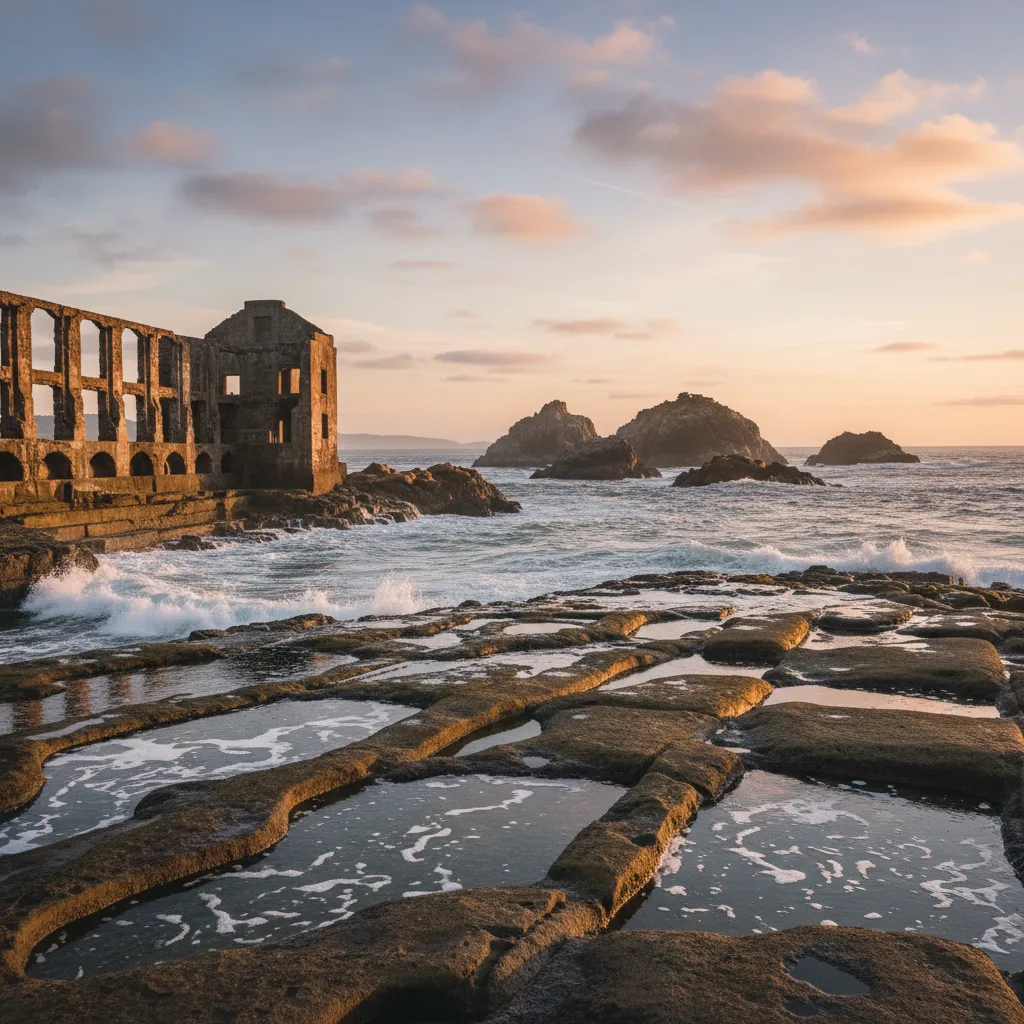
Sutro Baths Coastal Tidepool Viewpoint: Ocean Basin Guide
Reach coastal tidepool viewpoints around Sutro Baths stone ruins in San Francisco. Inspect natural saltwater pools facing Seal Rocks on receding tides.
Carved into the rugged sea cliffs of Point Lobos at the far western edge of San Francisco, the ruins of Sutro Baths create a fascinating intersection of maritime history and wild marine ecology. Once a colossal Victorian public bathhouse, the surviving concrete foundations and natural rock ledges now function as an accessible coastal tidepool viewpoint directly facing the Pacific Ocean and Seal Rocks. During receding tides, the ocean water drains through stone channels, leaving natural and artificial rock basins teeming with marine flora, sea anemones, and coastal birds. Low-tide exploration here combines architectural archaeology with active marine discovery along the outer Pacific coastline. Navigating with Karpo APP enables you to mark historic ruins overlooks, save Point Lobos walking routes, and coordinate your ocean basin visit with low tide hours.
Descending from Point Lobos to Historic Sutro Ruins and Sea Caves
Begin your journey at Point Lobos Avenue near the historic Cliff House vista point. Travel to the site effortlessly using SFMTA Muni route 38R Geary Rapid, which terminates at 48th Avenue and Point Lobos Avenue, providing rapid cross-city transit for an adult fare of $2.85 via Clipper card or $3.00 cash. From the upper terrace overlooking the ocean, paved ramps and broad stone stairs descend through coastal shrubs into the sheltered cove of the historic bathhouse ruins.
As you walk downward, the weathered concrete walls, foundations, and seawalls of Adolph Sutro's 1896 structure spread out along the ocean waterline. Take time to inspect the historic sea-tunnel carved straight through the northern rock bluff, where waves rush through a dark vaulted stone cavern during moderate tides. Sturdy walking shoes with reliable grip are essential, as sea spray, ocean moisture, and coastal moss can make concrete surfaces and natural rock steps slippery underfoot.
Tidal Fluctuations and Saltwater Inundation Cycles
The water levels within the Sutro Baths basins are directly governed by the ebb and flow of Pacific tides. At high tide, powerful ocean swells breach the outer retaining seawalls, filling the historic channels with turbulent, foaming saltwater. The optimal time for exploring both the ruins and the surrounding natural tidepools is during low tides measuring 0.5 feet MLLW or lower, when water drains from the outer rock shelves to expose calm, clear observation pools.
Consult the NOAA Golden Gate tide forecast to determine the precise hour of low water for your chosen visit date. Plan to arrive at the lower ruins approximately thirty minutes before low tide, giving yourself sufficient daylight and time to navigate the rock basins safely. As the tide recedes, protected pools on the outer rock shelf become accessible, revealing delicate intertidal life that thrives sheltered from the direct brunt of open ocean breakers.
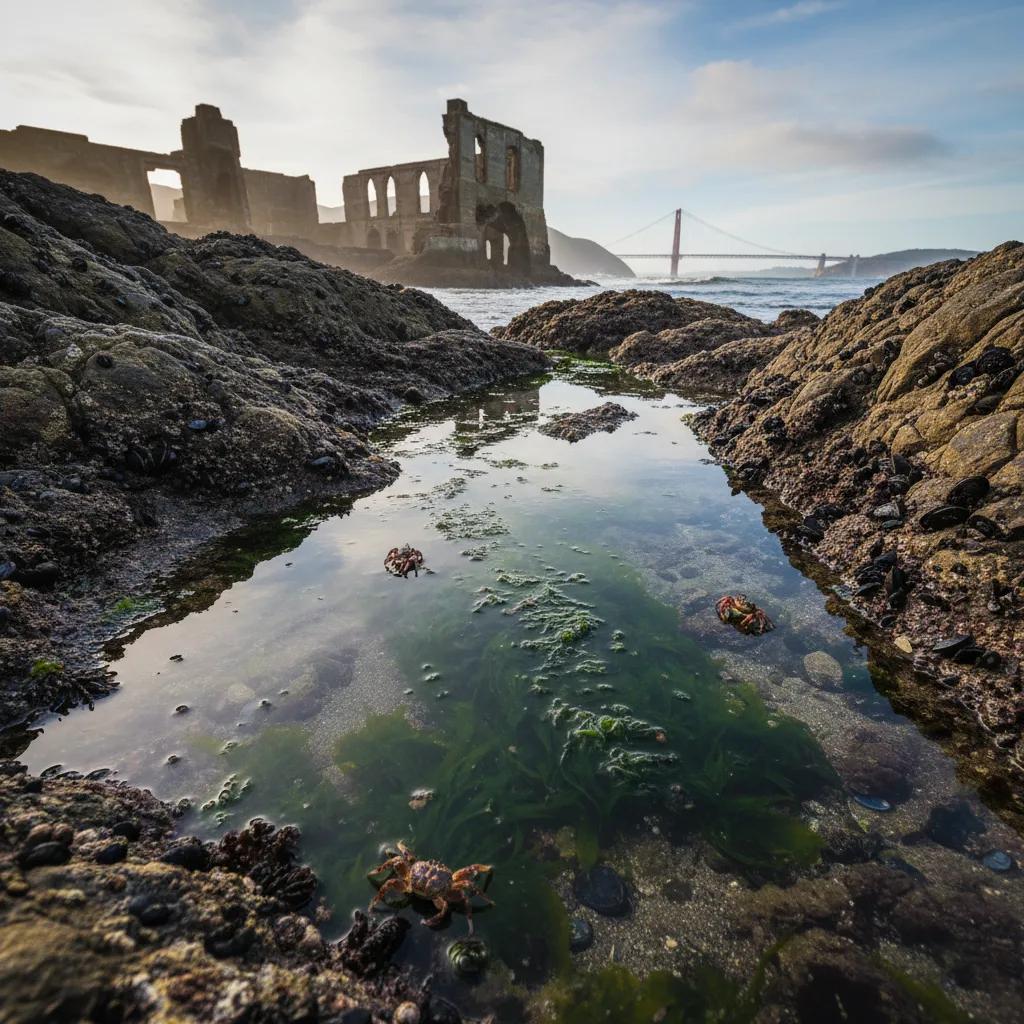
Intertidal Colonizers of Concrete Channels and Natural Bedrock
The mixture of historic concrete seawalls and natural Franciscan sandstone provides a diverse array of micro-habitats for intertidal species. Vibrant green sea anemones establish colonies inside submerged concrete corners, opening emerald tentacles to capture passing crustaceans. Thick carpets of acorn barnacles and California sea mussels line the outer walls, their shells tightly closed against the dry air while awaiting the returning tide.
Peer into the deeper, crystal-clear natural basins to observe colorful ochre sea stars clinging to underwater ledges alongside spiny purple sea urchins. Fast-moving shore crabs dart between rock crevices and crumbling brickwork, while small tidepool sculpins dart across sandy basin bottoms. Bright patches of sea lettuce, red coralline algae, and brown rockweed soften the concrete ruins, demonstrating nature's remarkable ability to reclaim historical urban architecture into a living marine habitat.
Ocean Spray, Algal Slime, and Navigating Historic Sea Walls
Safety is of paramount importance when navigating the wet, exposed structures of Sutro Baths. The narrow concrete walkways and seawall ledges lack guardrails and are frequently slick with a fine layer of green algae and ocean spray. Walk deliberately along the center of pathways and never run or jump across gaps in the ruined masonry. Avoid stepping onto narrow outer walls where a sudden loss of balance could result in a fall into cold, turbulent water.
Always stay vigilant regarding ocean wave action, especially along the western seawalls that face Seal Rocks. Sneaker waves and sudden Pacific swells can surge over protective rock barriers without warning, drenching unsuspecting visitors. Keep a safe distance from active wave crash zones, and designate one person in your party to monitor approaching ocean sets. Dress in windproof, water-resistant layers to stay comfortable against brisk Pacific breezes and coastal marine mist.
Respecting Marine Habitats and Historic National Landmark Ruins
Sutro Baths forms part of the Golden Gate National Recreation Area and is preserved both as a historic landmark and a sensitive coastal nature sanctuary. Federal regulations strictly forbid the removal of architectural artifacts, bricks, stones, shells, or marine specimens from the site. Leave all marine creatures completely undisturbed in their natural pools, refraining from touching delicate anemone crowns or attempting to pry sea stars off rock walls.
Step carefully across bare stone surfaces, taking care not to crush barnacle colonies or mussel beds growing along the ruins. If examining small, loose rocks at the pool margins, always return them gently to their exact original positions. Dispose of all personal trash and recycling in the designated bins at the upper parking terrace, ensuring this iconic historical and ecological site remains pristine for future generations of coastal explorers.
Connecting with Cliff House Vista Platform and Ocean Beach Esplanade
After exploring the low-tide basins at Sutro Baths, ascend the stone staircase back to the Point Lobos terrace. Walk south past the historic Cliff House building to the Camera Obscura, an authentic 1940s optical attraction offering projected live views of the ocean shoreline. Continue south down the hill to connect with the wide paved esplanade of Ocean Beach, where miles of open sand stretch toward the southern horizon.
Enjoy a scenic stroll along the ocean promenade, watching local surfers catch Pacific swells and shorebirds foraging in the surf foam. Conclude your coastal outing with a visit to the nearby cafes and bistros along Balboa Street and Geary Boulevard in the outer Richmond District, accessible via a short walk or a quick ride on Muni route 38R Geary Rapid, which provides convenient transit back across San Francisco.
Ask Karpo for more information.
Keep reading
- Twin Peaks Hilltop Staircase Walk Planner for City Lights
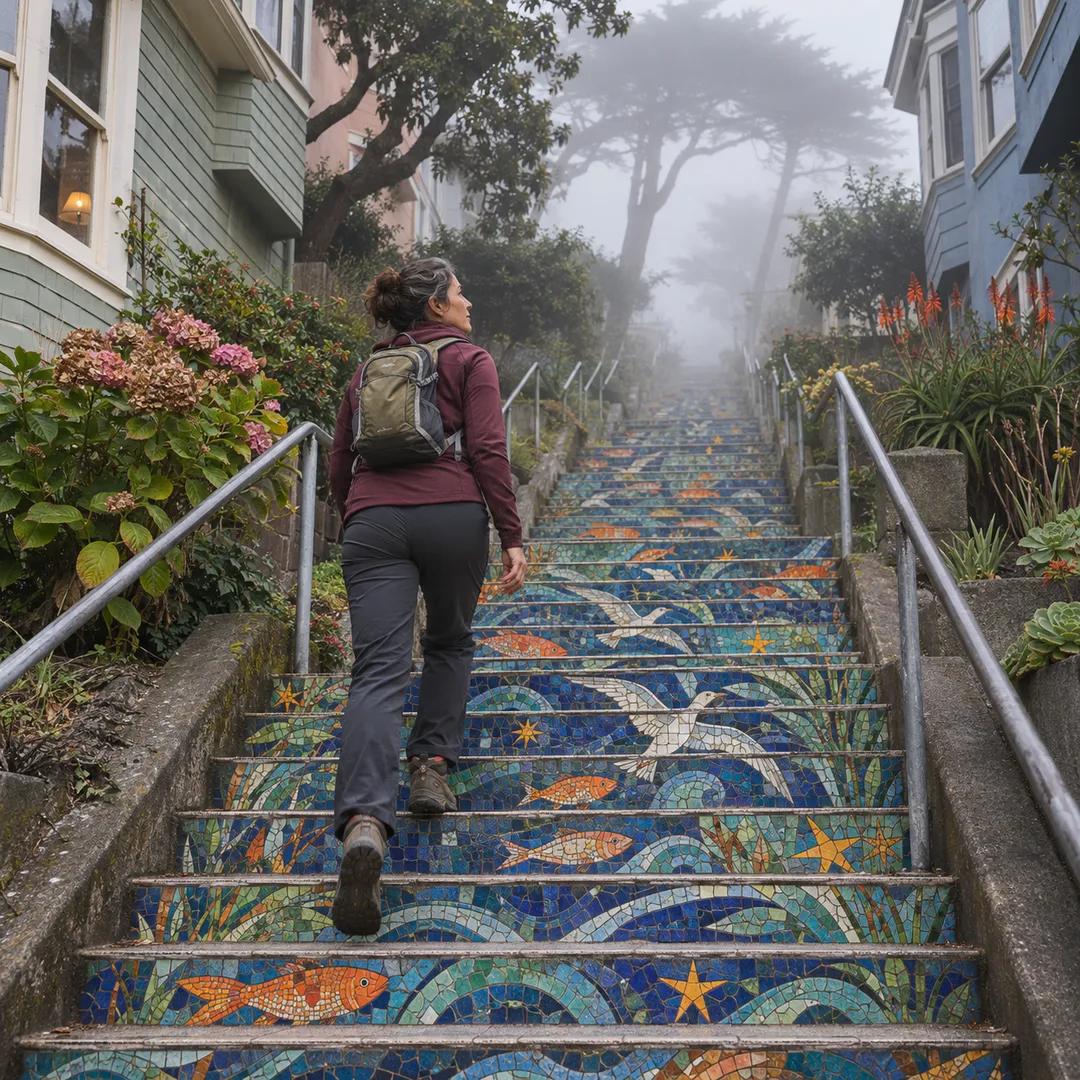 Inner Sunset Hilltop Staircase Walk Planner for Trekkers
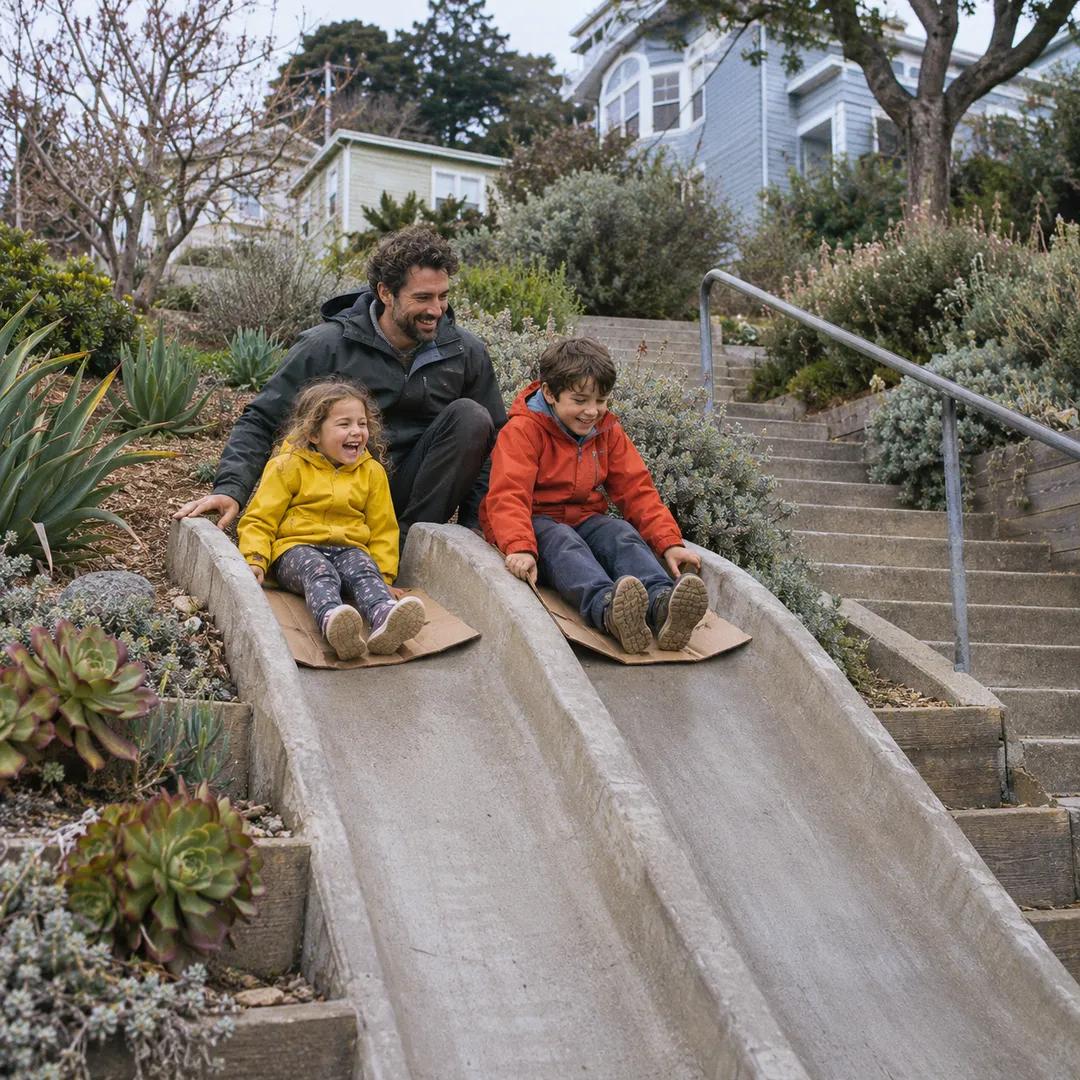 Bernal Heights Hilltop Staircase Walk Planner With Kids