 Twin Peaks Hilltop Staircase Walk Planner for City Lights
Free Things to Do
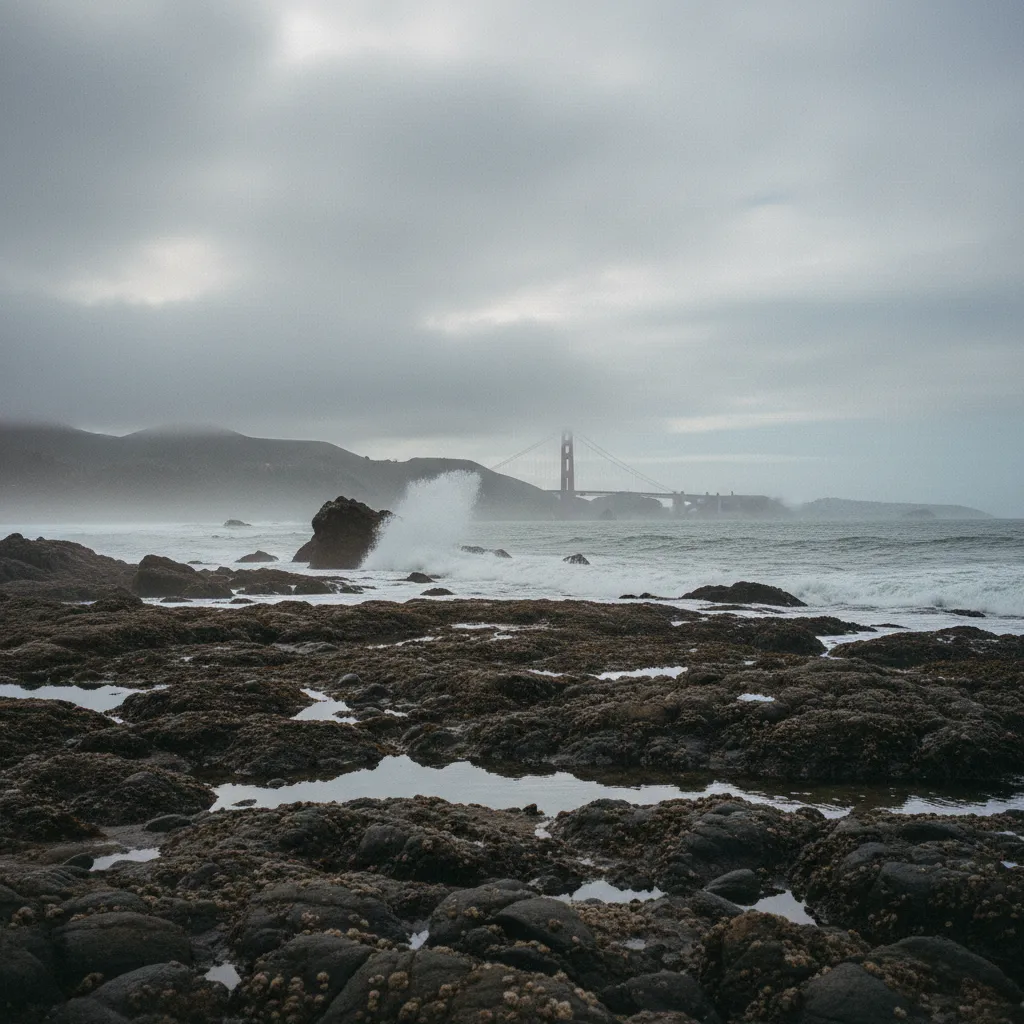
Marshall's Beach Coastal Tidepool Viewpoint: Low Tide Guide
Explore coastal tidepool viewpoints along Marshall's Beach bluffs in San Francisco. Check minus tides across serpentine rocks beneath Golden Gate cliffs.
Tucked directly beneath the towering serpentine bluffs of the Presidio, Marshall's Beach delivers one of the most secluded coastal tidepool viewpoints in northern California. Facing the turbulent entrance of the Golden Gate strait, this rugged shoreline features dark, polished metamorphic rock formations that emerge dramatically during low tide cycles. Walking along this wild coastal stretch connects visitors with pristine marine habitats, where colorful invertebrates, kelp clusters, and tidal wash reveal the raw marine biodiversity of San Francisco's outer headlands. Visiting during falling tides provides rare access to exposed marine ecosystems beneath sweeping ocean views of the Marin Headlands. Consulting Karpo APP helps you save Presidio coastal bluffs routes, locate stairway access markers, and coordinate your visit with published low-water windows.
Reaching the Batteries to Bluffs Staircase and Coastal Descent
Access to Marshall's Beach begins along Lincoln Boulevard within the historic Presidio of San Francisco. Transit riders can take the PresidiGo Shuttle south route or Muni bus route 29 Sunset to Lincoln Boulevard near Bowley Street, paying standard adult Muni fares ($2.85 with Clipper card, $3.00 cash). Locate the trailhead for the Batteries to Bluffs Trail near historic Battery Crosby, where an elevated wooden boardwalk hugs the dramatic ocean bluffs. From this blufftop starting point, the Golden Gate Bridge spans grandly across the marine horizon.
Descend the steep wooden stairs that switchback down through fragrant native coastal sage, coyote brush, and bush lupine. The path drops rapidly toward the ocean, providing sweeping vistas across the open Pacific and the rocky Marin coastline. Because sea fog frequently rolls across the Presidio bluffs, stair treads and handrails can carry slick ocean moisture. Step cautiously and maintain a steady pace on the downward trek, allowing roughly fifteen minutes to reach the narrow strip of sand and dark rocks below.
Tidal Planning for Serpentine Intertidal Reef Exploration
The intertidal shelves at Marshall's Beach are narrow and flanked by steep cliffs, making tidal planning essential for any successful exploration. Successful tidepooling requires targeting low tide intervals measuring 0.0 feet MLLW or lower, which typically expose the outer rocky platforms and protected channels. Always review published tide schedules for the San Francisco Golden Gate NOAA tide station prior to leaving home, matching your visit with falling water levels.
Plan your arrival at the base of the bluff stairs approximately thirty to forty minutes ahead of the lowest predicted tide mark. This timing allows you to follow the receding water outward and safely view delicate creatures before incoming wave energy accelerates. Because the beach is bordered by vertical rock outcroppings, incoming high water can rapidly submerge dry sand pathways. Keep track of elapsed time and begin heading back toward the staircase well before the tide reverses direction.
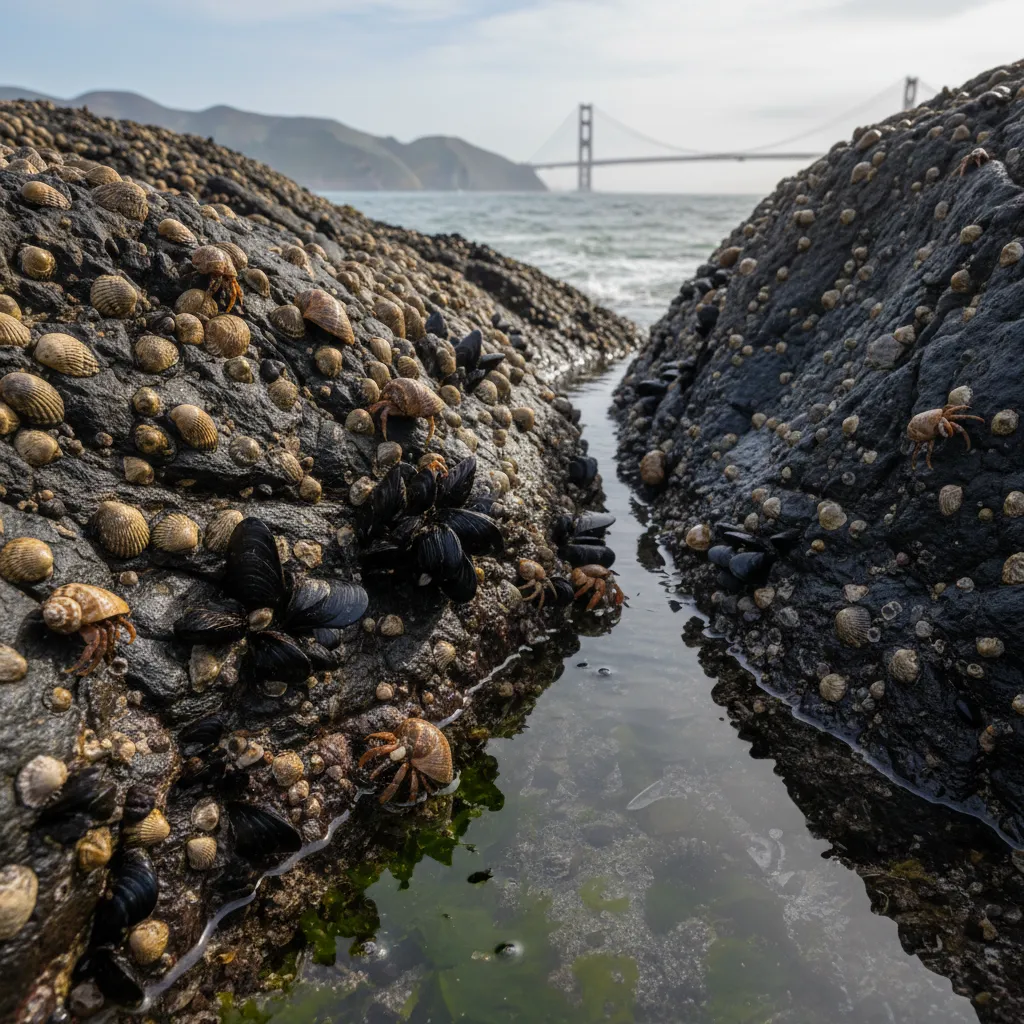
Marine Flora and Intertidal Invertebrates of the Golden Gate Shore
Marshall's Beach boasts exceptional intertidal diversity due to the continuous flow of nutrient-rich ocean currents funneling through the Golden Gate strait. Glaucophane and serpentine rock pools host thriving colonies of aggregating anemones, which clone themselves to carpet shallow stone depressions. California sea mussels form dense, clustered beds along exposed rock shoulders, providing micro-habitats for porcelain crabs and polychaete worms. Look into sheltered crevices to spot lined chiton plates adhering tightly to the stone.
In deeper rocky hollows, ochre sea stars showcase distinct predatory feeding postures above barnacle beds, their calcified spines resisting the constant wash of ocean surge. Algal communities flourish along the rock faces, including shimmering iridescent seaweeds, red sea lettuce, and feathery coralline structures. Offshore, dense bull kelp beds buffet the impact of ocean swell, creating underwater sanctuaries for juvenile rockfish and cabezon. Sitting quietly beside these clear natural aquariums reveals subtle predator-prey interactions that remain completely hidden during normal water levels.
Navigating Jagged Serpentine Rocks and Marine Fog Safely
The distinct geology of Marshall's Beach requires specialized footing precautions for all coastal visitors. Serpentine rock—California's official state rock—takes on a slick, soapstone-like texture when wet with saltwater spray. Avoid stepping on polished green rock faces or slopes coated in fine micro-algae, which can cause sudden falls. Select secure steps on weathered, textured sandstone or dry gravel patches between boulders.
Pacific wave conditions along the Golden Gate bluffs are notoriously unpredictable, with rapid changes in swell height and surge velocity. Never stand on narrow, exposed sea ledges where unexpected wave sets can knock you off balance into cold coastal currents. Keep a respectful distance from active breaker zones and remain vigilant of rogue waves at all times. Bring warm, windproof layers, as coastal fog and brisk Pacific headwinds can cause rapid temperature drops along the water's edge.
Pacific Marine Conservation in the Golden Gate Biosphere
Marshall's Beach forms an integral component of the UNESCO-designated Golden Gate Biosphere Reserve and the Presidio National Historic Landmark. Strict conservation mandates govern all activities within this coastal sanctuary to safeguard fragile marine ecosystems. Never remove rocks, seashells, sea glass, or marine animals from the intertidal zone, as every element plays a necessary ecological role in stabilizing the shoreline.
Take great care when stepping around live mussel colonies and barnacle-encrusted ledges, choosing designated pathways across bare rock. If you turn over small, unattached stones to observe hidden shore crabs, always replace them gently in their original orientations to shield moisture-dependent creatures from drying air. Pack out every scrap of waste, including food packaging and beverage containers, ensuring this pristine sanctuary retains its wild, untouched allure.
Extending Your Shoreline Walk Along Baker Beach and Immigrant Point
Following your low-tide exploration at Marshall's Beach, climb the Batteries to Bluffs staircase back to the coastal ridge. Turn south along the Coastal Trail to reach the broad sands of Baker Beach, where you can inspect historic Battery Chamberlin and relax on expansive sandy dunes. Alternatively, follow the trail northward toward Immigrant Point Overlook, which offers framed vistas of the Golden Gate Bridge cables through native cypress branches.
Continue north past historic coastal gun batteries to Fort Point National Historic Site, situated directly beneath the southern arch of the Golden Gate Bridge. The surrounding Presidio paths feature tranquil cypress groves, historic military architecture, and native wildflower gardens. When you are ready to conclude your day, reconnect with the PresidiGo Shuttle or Muni route 29 along Lincoln Boulevard for a comfortable return to neighborhood transit corridors.
Ask Karpo for more information.
Keep reading
- Twin Peaks Hilltop Staircase Walk Planner for City Lights
 Inner Sunset Hilltop Staircase Walk Planner for Trekkers
 Bernal Heights Hilltop Staircase Walk Planner With Kids