 Twin Peaks Hilltop Staircase Walk Planner for City Lights
Free Things to Do
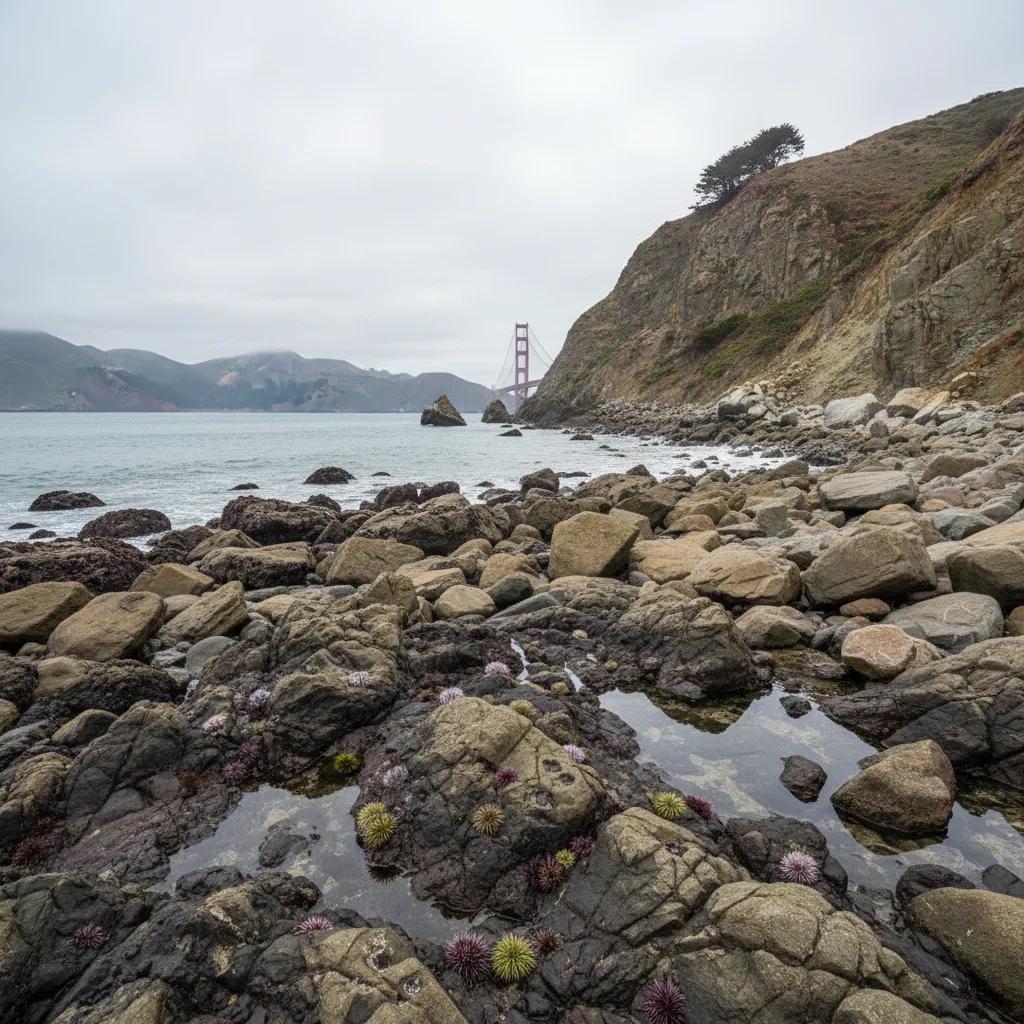
Baker Beach Coastal Tidepool Viewpoint: Rocky Shore Guide
Find coastal tidepool viewpoints on northern Baker Beach rocks in San Francisco. Discover intertidal marine life beneath Marin Headlands coastal vistas.
Stretching along the southwestern approach to the Golden Gate Bridge, Baker Beach offers one of the most famous coastal landscapes in San Francisco. While the wide southern sands attract sunbathers and beachcombers, the rugged northern end beneath the serpentine cliffs of the Presidio transforms into a remarkable coastal tidepool viewpoint during low tide cycles. Massive granite boulders, serpentine reefs, and sheltered rock hollows become exposed to the open air, revealing rich intertidal ecosystems framed by dramatic views of the Golden Gate Bridge and the Marin Headlands. Exploring this shoreline during winter low tides connects walkers with thriving marine colonies adapted to surging ocean tides and cool Pacific fog. Referencing Karpo APP allows you to chart northern boulder access paths, save Golden Gate scenic spots, and organize your intertidal outing around verified tide windows.
Accessing Northern Baker Beach via Battery Chamberlin and Coastal Bluffs
Begin your coastal exploration at the main Baker Beach parking area located at the end of Bowley Street and Gibson Road in the Presidio. Public transit passengers can easily reach the beach via SFMTA Muni route 29 Sunset, which stops along Lincoln Boulevard and Bowley Street for a standard adult fare of $2.85 with Clipper card or $3.00 cash. Step onto the beach path passing historic Battery Chamberlin, where an original 1898 disappearing coastal defense gun remains preserved among cypress-covered bluffs. The battery's historic earthworks and interpretive signs offer a compelling glimpse into late nineteenth-century harbor defenses before you touch the ocean sand.
Walk northward along the shoreline sand toward the towering rocky headlands that flank the Golden Gate strait. As you progress north, the sandy beach narrows and yields to large, rounded ocean boulders, gravel bars, and jagged rock outcroppings. The ocean soundscape intensifies as Pacific breakers strike the rock barriers, sending spray into the crisp coastal air. Offshore, container ships and sailboats navigate the main shipping channel into San Francisco Bay. Wear durable footwear with substantial traction, as moving from soft sand onto wet shoreline boulders requires steady, deliberate steps.
Timing Your Walk with Golden Gate Negative Tide Windows
To witness the intertidal treasures of northern Baker Beach, synchronizing your trip with the local tide calendar is essential. The rocky boulder shelves and hidden intertidal channels only fully reveal themselves during negative low tides, when water levels drop below 0.0 feet MLLW. Consult the National Oceanic and Atmospheric Administration tide predictions for the Golden Gate station to determine the optimal timing for your outing. Tides along this headland are influenced by massive water exchanges rushing in and out of the bay entrance, creating swift tidal currents.
Aim to reach the northern boulder field forty-five minutes prior to the projected lowest tide point. This arrival window grants you ample time to explore the exposed rock formations while the tide continues its outward retreat, maximizing your viewing opportunities before the water turns. Keep in mind that northern California winter months frequently feature favorable daylight minus tides during the late morning and early afternoon, creating ideal conditions for photography and observation. In summer, minus tides typically occur in early dawn hours before coastal winds rise.
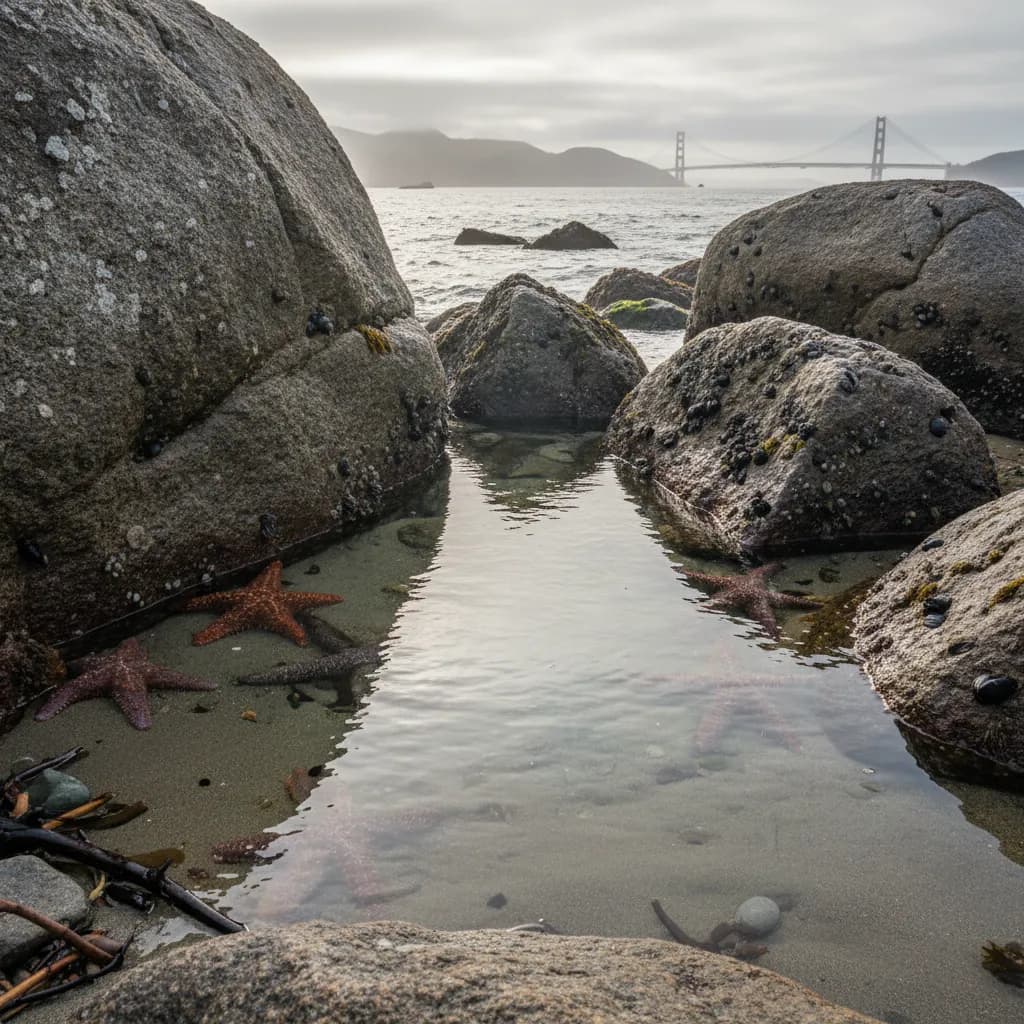
Intertidal Biodiversity on Northern Boulders and Granite Outcrops
The northern rock formations at Baker Beach support a vibrant marine community adapted to the vigorous wave energy of the Golden Gate entrance. Giant green sea anemones nestle in deeper rock crevices, displaying vivid photosynthetic tentacles that sway gently in calm pool water. Robust beds of California mussels anchor themselves tenaciously to sheer stone faces, providing critical shelter for porcelain crabs, limpets, and sea snails. In shaded hollows, delicate sea sponges and orange bryozoans coat the undersides of overhanging boulders.
Vivid ochre sea stars in brilliant shades of saffron, orange, and purple cling tightly to the underside of overhangs, actively hunting barnacles and small bivalves. Delicate hermit crabs wander through shallow depressions lined with pink coralline algae and bright green sea lettuce. Look closely into sunlit rock pools to spot small sculpins darting between pebbles, while black oystercatchers forage along the outer reef edge, using specialized chiseling beaks to feed on exposed mollusks. Flocks of brown pelicans skim just inches above breaker crests, scanning shallow tidal channels for schooling baitfish.
Managing Slippery Shoreline Boulders and Changing Pacific Sets
Navigating the rocky northern section of Baker Beach requires continuous attention to ocean conditions and secure footing. Shoreline boulders are frequently coated in slippery green algae, kelp fronds, and wet ocean foam. Avoid stepping on polished or sloping rock surfaces, choosing flat, textured stone surfaces that provide reliable grip. Maintain a wide, balanced stance and use your hands for stability when clambering across large boulder fields. Bringing a hiking pole with a rubberized tip can provide an additional point of contact across slick rocks.
The Pacific Ocean along Baker Beach is subject to powerful undertows, strong currents, and sudden sneaker waves. Under no circumstances should visitors enter the ocean surf, as rip currents here are exceptionally dangerous. Always face the water while observing tidepools and maintain a watchful eye on approaching swell sets. If unexpected waves begin washing over your footing ledge, retreat calmly and immediately toward higher sand or elevated bluffs. Be mindful of rising tides that can cut off return paths around protruding headland rocks.
Preserving Marine Life and Following Presidio Leave No Trace Standards
Baker Beach lies within the protected boundaries of the Golden Gate National Recreation Area and the Presidio of San Francisco. Federal conservation regulations strictly forbid the harvesting, collection, or removal of any marine animals, shells, drift material, or natural artifacts. Observe all tidepool inhabitants gently and respectfully, refraining from touching delicate anemone disks or attempting to detach sea stars from their rocky perches. Prying marine organisms off rock surfaces destroys their sensitive suction organs and exposes them to predator attacks.
Walk with extreme care to avoid stepping directly on living mussel beds, barnacles, or fragile tube worm casings. If you gently turn over a small rock to inspect the organisms beneath, always carefully return it to its exact original position to prevent sun and wind exposure from harming delicate creatures. Carry out all trash and personal debris, upholding Leave No Trace principles to keep this iconic shoreline pristine for wildlife and future visitors. Respect local beach rules by keeping leashed pets away from sensitive rocky intertidal zones.
Connecting with Lincoln Boulevard Overlooks and Presidio Forest Paths
Following your tidepool exploration, stroll southward along the broad sandy expanse of Baker Beach, enjoying panoramic vistas of the Golden Gate Bridge and the Marin Headlands. Climb the marked trail steps ascending from the beach to the coastal bluffs above Lincoln Boulevard. Here, elevated observation terraces offer sweeping photographs of the Pacific surf rolling toward the Golden Gate cliffs beneath the afternoon sun. Benches along the bluff path provide restful spots to watch cargo vessels navigate beneath the bridge cables.
From Lincoln Boulevard, you can easily connect with the extensive network of scenic walking trails crisscrossing the Presidio, including the Batteries to Bluffs Trail and the forested Ecology Trail. Follow neighborhood paths eastward into the Presidio's historic Main Post or catch Muni route 29 along Lincoln Boulevard for a smooth, convenient transit connection back to San Francisco's lively Richmond and Sunset neighborhood corridors. Local dining hubs along Clement Street and Geary Boulevard provide warm evening meals just minutes away from the park.
Ask Karpo for more information.
Keep reading
- Twin Peaks Hilltop Staircase Walk Planner for City Lights
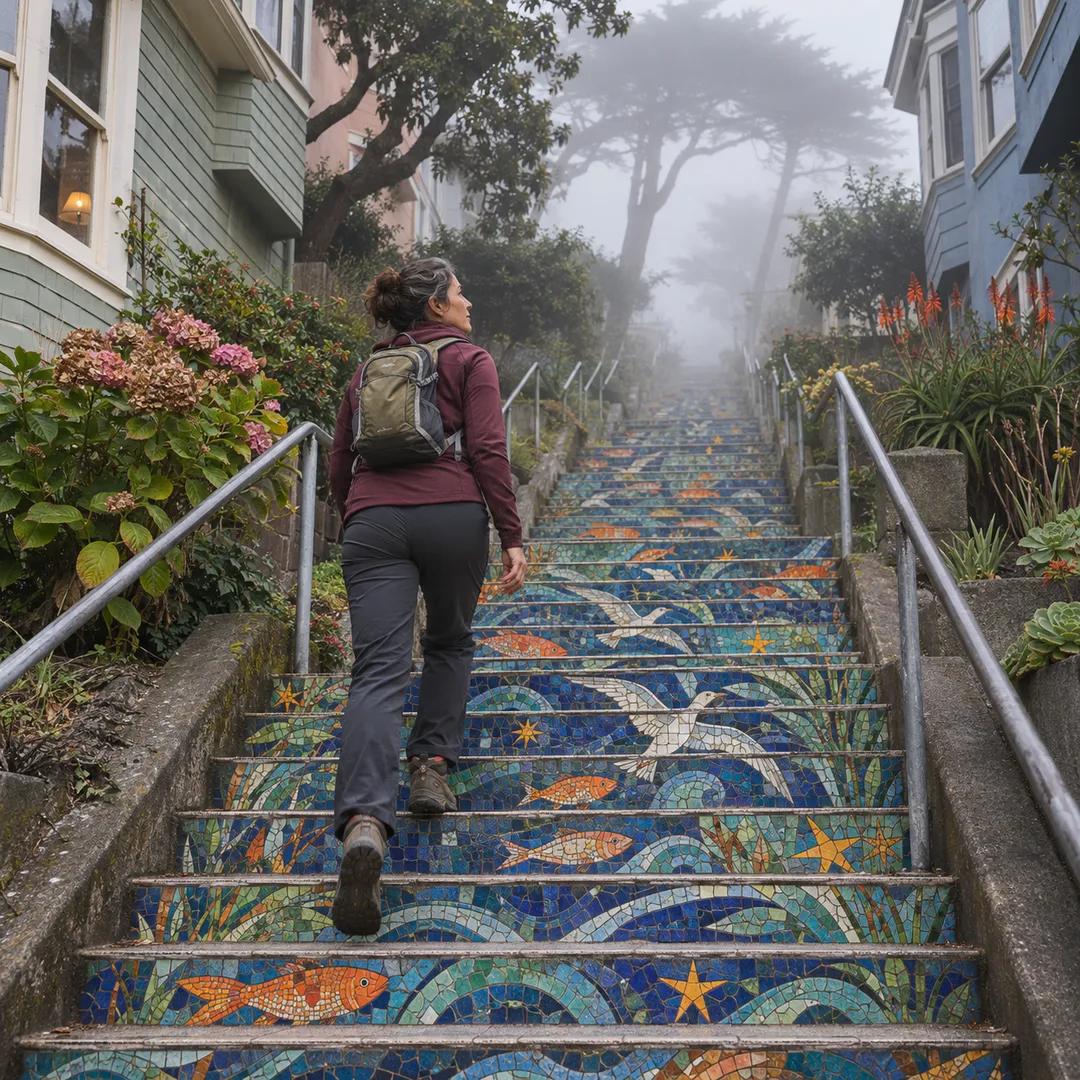 Inner Sunset Hilltop Staircase Walk Planner for Trekkers
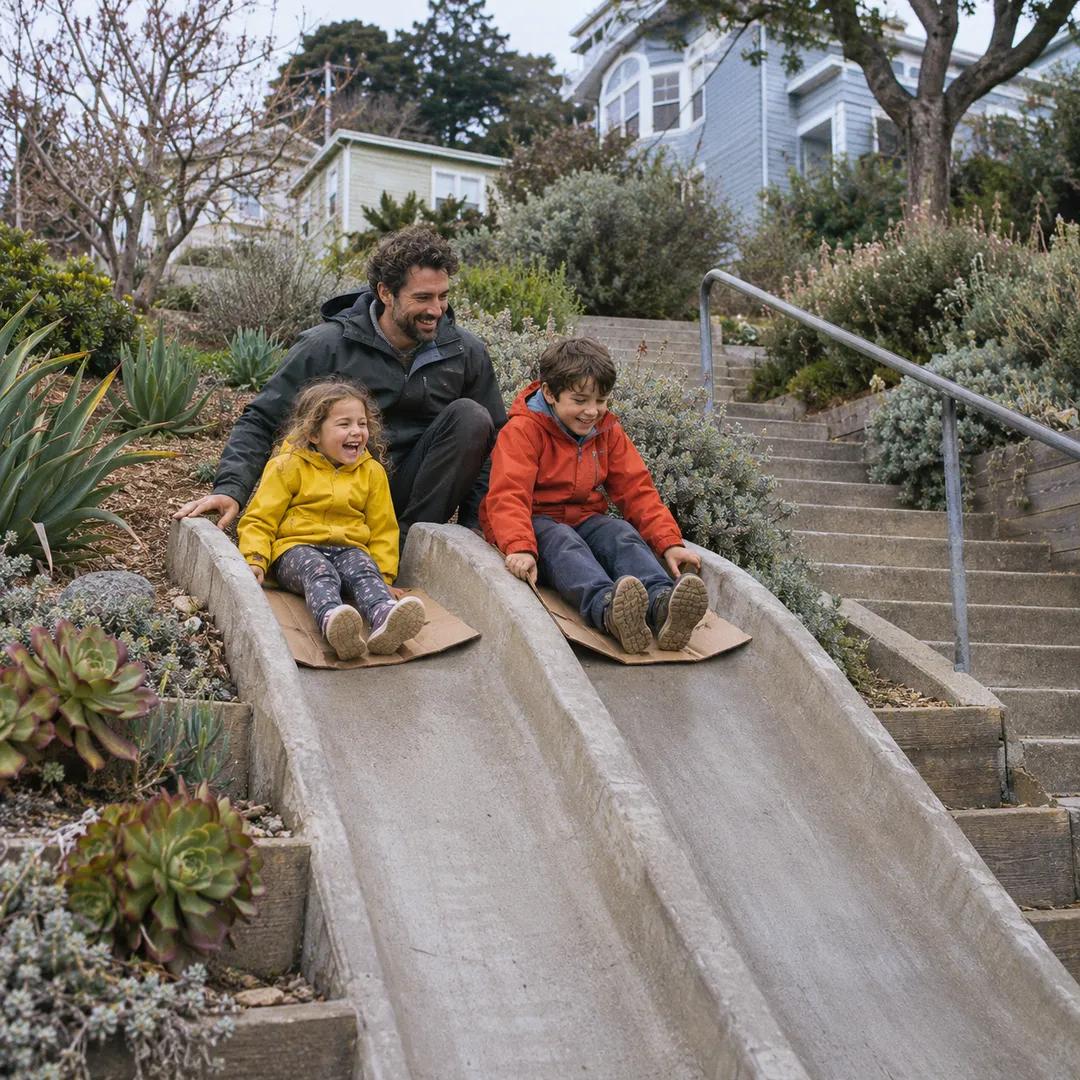 Bernal Heights Hilltop Staircase Walk Planner With Kids