 Outer Sunset Cioppino Dinner Picker: Pots by Ocean Beach
Restaurants
North Beach Cioppino Dinner Picker: Pots for Two
Use a cioppino dinner picker in North Beach to compare subterranean marble counters and white-cloth trattorias. Match broth style and pasta to a park walk.
Descending a short flight of terrazzo steps off Green Street or pushing through a heavy wooden door along Columbus Avenue immediately surrounds you with the scent of crushed garlic, dry white wine, oregano, and sweet Dungeness crab shells simmering in tomato broth. Using a cioppino dinner picker in North Beach comes down to a clear fork in the evening: do you want a lively, elbow-to-elbow subterranean seafood counter where the server ties a plastic bib around your neck and slides a metal shell bucket between two stools, or a slower, white-tablecloth Italian dining room where the stew arrives beside ironed linen napkins and a carafe of Barbera? When my uncle—a retired marine machinist whose Genoese grandfather once mended nets near the old wharf—came into town with my cousin for a chilly weeknight supper, we walked the triangle between Broadway, Grant Avenue, and Washington Square to compare how each room handles the pot, the pasta add-on, and the walk-in wait.
Subterranean Marble Counters Versus White-Cloth Trattorias
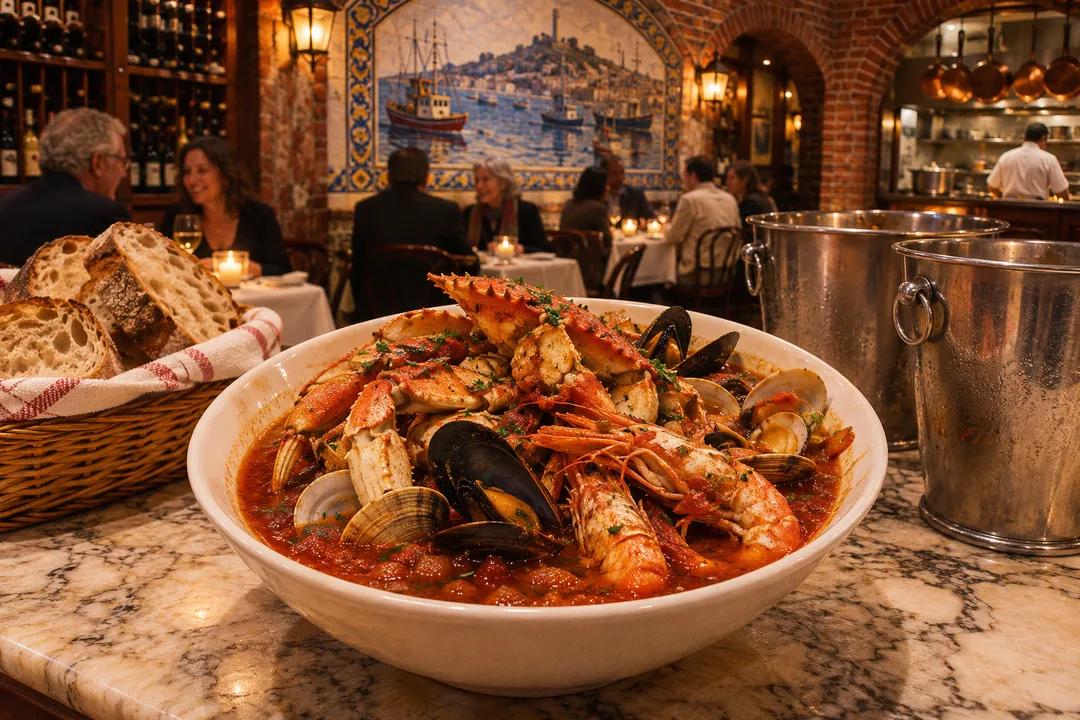
Our first stop down a tiled staircase beneath street level showed why North Beach cellar counters remain a rite of passage for two hungry people who do not mind a little tomato splash on their cuffs. Here, red-and-white checkered curtains, hanging fishing nets, and chalkboard catch notes set a brisk, convivial rhythm where solo regulars, neighborhood bookbinders, and date-night pairs sit shoulder to shoulder along a narrow marble bar. The signature move in these downstairs rooms is ordering the house two-person cioppino built over a base of rigatoni or penne rigate already resting at the bottom of the bowl, or asking the kitchen to toss a half-order of short pasta into the remaining garlic-and-chile broth once you have pulled the last crab leg and mussel shell from the pot. Because the counter space is tight, servers clear empty clam shells at high speed and keep the sourdough basket moving without ceremony.
Cross Columbus Avenue toward the quieter side streets around Union and Filbert, and the neighborhood offers a completely different dining cadence inside traditional wood-paneled trattorias. In these upstairs rooms, veteran waiters in crisp aprons work wide booths where three generations of a family can talk without raising their voices over a blender or a crowded bar rail. Instead of mixing pasta directly into the stew pot, these kitchens ladle a cleaner, fennel-scented tomato and fish-stock broth over cracked crab, scallops, Petrale sole, and prawns in a wide tureen, keeping the toasted garlic bread or crostini on a separate plate so the crust stays crisp until you dip it. If your group includes someone wearing a silk blouse or hosting an out-of-town colleague who prefers a measured two-hour dinner over a bustling counter squeeze, pick the white-cloth dining room and save the cellar stools for a casual duo.
How the Clipboard Sign-In Works and When to Skip the Line
Most classic North Beach seafood counters still run on a paper clipboard or a podium host list at the top of the stairs rather than digital table-holding apps, and there is an unspoken neighborhood rule every diner should respect: your entire party must be standing within earshot when the host calls your name on the sidewalk. Putting a name down and disappearing for forty minutes without checking back will get your line crossed out in grease pencil while the next pair on Green Street takes the two open bar stools. Instead, once you hear the wait estimate from the person at the door, leave one person near the awning or step literally next door into a classic Italian caffe or corner saloon where you can still see the host step outside to call the list.
Know when to pivot so hunger does not ruin the evening. Skip joining a sidewalk queue along Green or Vallejo if more than a dozen groups are already huddled under the heaters and your party needs a four-top booth rather than two flexible counter seats—two-person bar stools turn over quickly, whereas four-person tables in tiny cellar rooms move slowly once a big pot of crab hits the table. When the wait stretches past your patience, walk two blocks uphill toward Grant Avenue or across Washington Square toward Powell Street, where larger family-style Italian seafood houses and neighborhood bistros keep deeper dining rooms and can often seat a walk-in quartet in the back parlor while serving an equally generous bowl of shellfish stew.
Bib Etiquette, Shell Buckets, and Sharing the Sourdough
My uncle insisted on three table habits that separate lifelong San Francisco cioppino regulars from first-timers who fill up before the main bowl arrives. First, skip ordering a heavy fried calamari platter, creamy clam chowder starter, or garlic bread basket loaded with melted mozzarella before a shared cioppino; the stew itself is rich with olive oil, reduced wine, and sweet shellfish liquor, and you want every bit of appetite saved for sopping the bottom of the pot with plain, tangential-cut sourdough. Second, arrange your table geometry before the server sets the hot tureen down: place the empty stainless-steel discard bucket on the outside edge of the table rather than wedged behind the water glasses, and keep one hand designated as your clean wine-glass hand while the other works the crab cracker and seafood fork.
Third, eat the pot in order of heat sensitivity so nothing overcooks in the residual steam. Pull the delicate white fish fillets, bay scallops, and plump prawns onto your side plate first, since they firm up quickly in boiling tomato broth; next, work through the Manila clams and black mussels, using an empty half-shell as a natural pincer to scoop out stubborn clams and spoon broth over your bread. Save the heavy Dungeness crab clusters and body sections for the second half of the meal when the broth has cooled just enough to handle the shells comfortably with your fingers, then finish by dragging the chewy sourdough heel through the concentrated garlic sediment at the base of the bowl.
Washington Square, Jack Kerouac Alley, and Espresso After
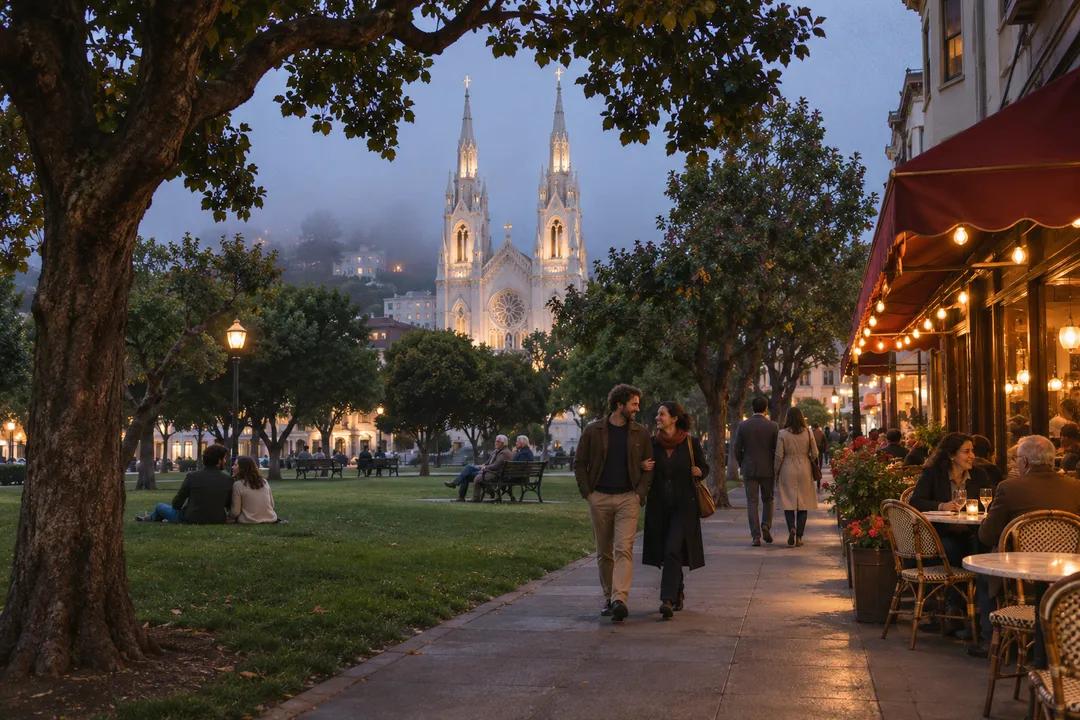
A rich bowl of tomato-and-crab stew calls for a brisk walk in the cool bay air before you even think about dessert. Step out of the dining room and head toward the sloped green expanse of Washington Square Park, where the illuminated twin spires of Saints Peter and Paul Church rise above the sycamore trees and neighborhood dog walkers gather along the perimeter paths. From the park, cut south down Grant Avenue past vintage guitar windows, small postcard racks, and brick alleys until you reach Jack Kerouac Alley and the historic bookshop corners near Broadway, where murals and poetry plaques connect the old Italian fishing quarter to its Beat Generation literary neighbors.
Instead of ordering dessert at the seafood counter where tables are waiting, carry your conversation into one of the historic North Beach espresso bars along Columbus or Stockton for a standing macchiato, a small glass of amaro with an orange peel, or a crisp pistachio cannoli filled to order at the pastry case. When you want to compare which North Beach counters, quiet side-street trattorias, or nearby Telegraph Hill dining rooms fit your group size and mood without wandering from door to door in the evening fog, open the Karpo APP to browse neighborhood seafood spots and map out the rest of your walk.
Ask Karpo for more information.
Keep reading
- Outer Sunset Cioppino Dinner Picker: Pots by Ocean Beach
 Marina Cioppino Dinner Picker: Bistros After Bay Walks
 Embarcadero Cioppino Dinner Picker: Pots by the Bridge