 Twin Peaks Hilltop Staircase Walk Planner for City Lights
Free Things to Do
Pacific Heights Botanical Conservatory Glasshouse vs Garden
From Pacific Heights, compare plants under glass at the 1879 Conservatory of Flowers with open-air collections at the San Francisco Botanical Garden.
Pacific Heights is a neighborhood of hilltop parks, grand Victorians and long views over the bay, but it has no botanical conservatory glasshouse. What it offers instead is an easy starting point for a day that compares two ways of growing plants in San Francisco: under glass at the Conservatory of Flowers, and in open air at the San Francisco Botanical Garden, both in Golden Gate Park. The mild climate makes that contrast unusually interesting.
Why San Francisco Needs Less Glass
Most cities build conservatories because their winters would kill tender plants. San Francisco is different. Its cool summers and mild, frost-light winters let gardeners grow an astonishing range of species outdoors, from Chilean wine palms to New Zealand tree ferns and high-altitude plants from Central and South America. That is why the city's botanical garden is mostly open sky rather than glass.
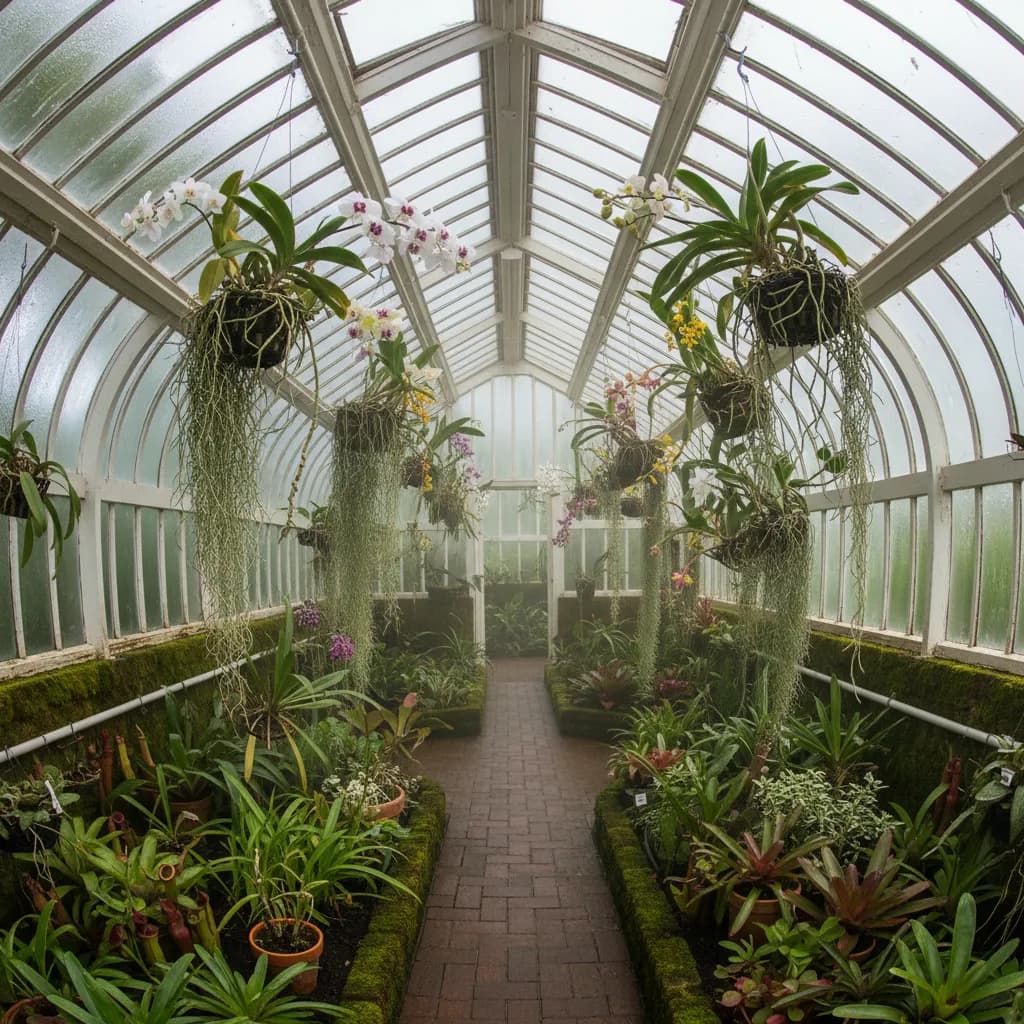
The plants that truly need protection are the lowland tropicals, which want steady heat and heavy humidity, and the orchids and aquatic plants that sulk in fog. Those are the stars of the Conservatory of Flowers. Visiting both places on the same day shows you exactly where the line falls, which plants can handle a San Francisco morning, and which need a warm wooden house of glass.
Starting on the Heights
Begin at Alta Plaza Park or Lafayette Park, two terraced hilltop greens where neighbors walk their dogs and the views stretch to the bay and the Golden Gate on clear mornings. Then stroll along Fillmore Street, the neighborhood's main shopping corridor, where you can pick up coffee and something to eat for later in the day before heading south.
From the Heights, the route to Golden Gate Park runs downhill. Walk south along Divisadero Street or a parallel side street until you meet the Panhandle, then follow its path west into the park. The full walk takes about an hour at an easy pace. If you would rather save your legs, Muni buses on Divisadero and Fillmore connect toward the Haight and the park in a fraction of the time.
Under Glass at the Conservatory of Flowers
Start with the glasshouse, since it sits at the eastern end of the park, closest to where you arrive. The Conservatory of Flowers opened in 1879, assembled from a kit that philanthropist James Lick had ordered but never built before his death in 1876. It is the oldest building in Golden Gate Park and survived a dome fire in its early years and a devastating windstorm in 1995.
The galleries are organized by climate. Lowland Tropics under the central dome is hot and steamy, with palms and a philodendron more than a century old. Highland Tropics is cool and misty, home to orchids and cloud-forest species. The Aquatic Plants room holds giant water lilies. Notice how much more humid and enclosed these rooms feel than anything you will see later outdoors.
Open Air at the Botanical Garden
From the conservatory, walk west through the park toward the San Francisco Botanical Garden, near the Ninth Avenue entrance. The trip on foot takes about twenty minutes and passes the Music Concourse and the Japanese Tea Garden. The botanical garden spreads across roughly fifty-five acres and is organized by region, so you can wander from Mediterranean plantings to Australian and Andean collections in a single loop.
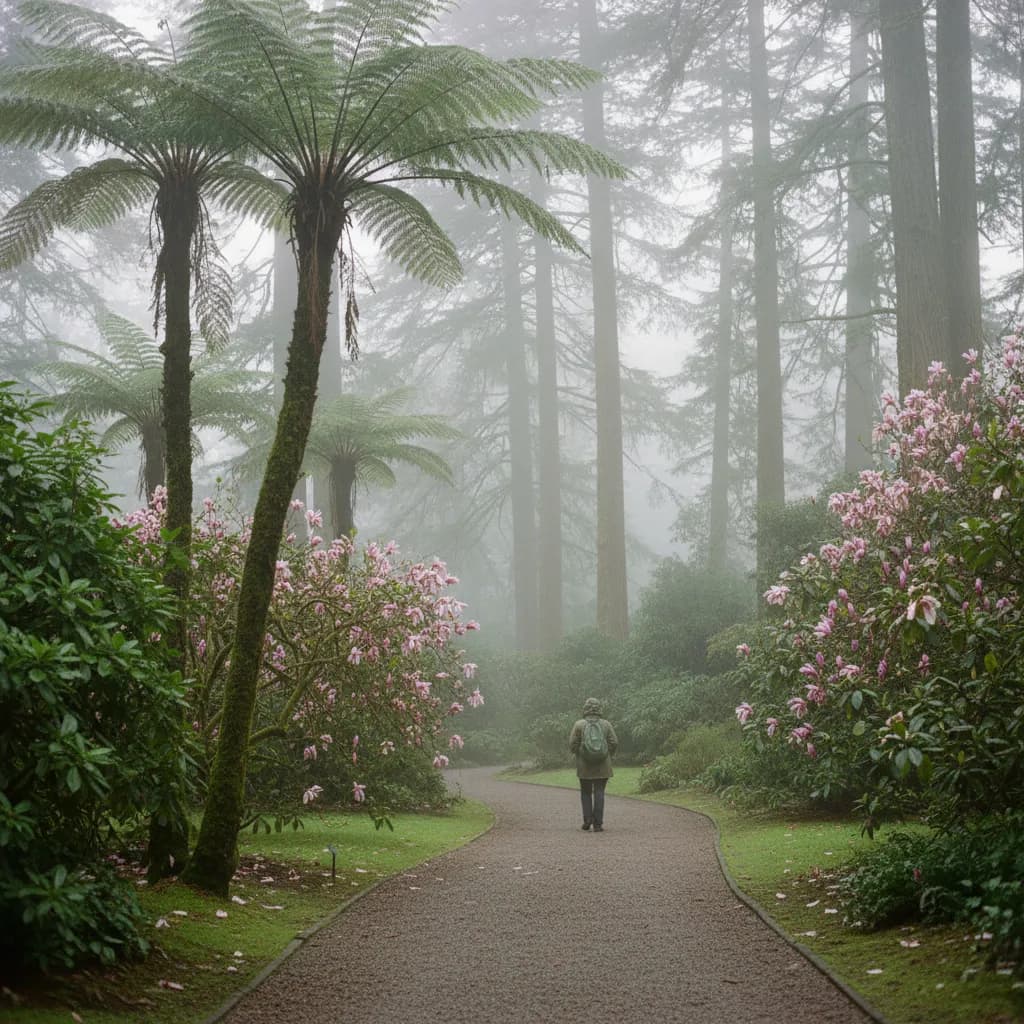
Look for the cloud forest collection, which grows high-elevation plants from Mexico, Central America and South America outdoors because San Francisco's foggy, cool air mimics their native mountain climate. Compare it with the Highland Tropics gallery you just saw under glass. In winter, the garden's large magnolia collection begins to flower, one of the most celebrated seasonal displays in the city.
A Detour Past the Tea Garden
Between the two gardens, the Japanese Tea Garden sits just off the Music Concourse. It is the oldest public Japanese garden in the United States, created for the 1894 California Midwinter International Exposition, and it adds a third way of shaping plants to your day: carefully pruned pines, moss, stone lanterns and a steep wooden drum bridge over a pond.
Even if you do not go in, walking along its edge makes a useful transition between the dense tropical rooms of the conservatory and the wide, wild plantings of the botanical garden. Inside, a teahouse serves green tea and snacks, and the pagoda and koi ponds are a favorite with photographers on misty mornings, when the colors feel softer and the crowds are thinner.
Making the Comparison Count
The pleasure of this day lies in noticing differences. Under glass, plants are packed together in a controlled, almost theatrical arrangement, chosen for drama. Outdoors, they sprawl across meadows and hillsides, shaped by wind and fog. Take one photograph of a similar leaf or flower in each place, and the contrast between the hazy, warm indoor light and the cool, clear outdoor light becomes vivid.
Volunteers and docents at both sites are often happy to explain why certain plants live inside and others outside. Questions about frost, fog and humidity tend to start good conversations. If you are a home gardener in Pacific Heights, the botanical garden's plantings also offer practical ideas for what will thrive on a breezy hilltop terrace.
Keep a short list as you go: three plants that surprised you outdoors, three that clearly needed the glass, and one you want to try at home. By the end of the afternoon, that small list turns a pleasant walk into something closer to a lesson in how microclimates shape a city, and it gives you a reason to come back in another season.
Ending the Day
After the botanical garden, the Inner Sunset's Ninth Avenue and Irving Street are just outside the gate, with plenty of casual places to eat and rest. From there, buses and rideshares make the return to Pacific Heights simple, or you can walk back through the park to the Panhandle if the light is still good and you want one more look at the white conservatory dome.
Clear days suit the open-air garden more, while gray, drizzly days make the glasshouse feel especially snug, so plan around the forecast if you can. To keep the logistics in one place, ask Karpo APP in chat to build a Pacific Heights route to both gardens, with a lunch stop and a return plan for the evening.
Ask Karpo for more information.
Keep reading
- Twin Peaks Hilltop Staircase Walk Planner for City Lights
 Inner Sunset Hilltop Staircase Walk Planner for Trekkers
 Bernal Heights Hilltop Staircase Walk Planner With Kids