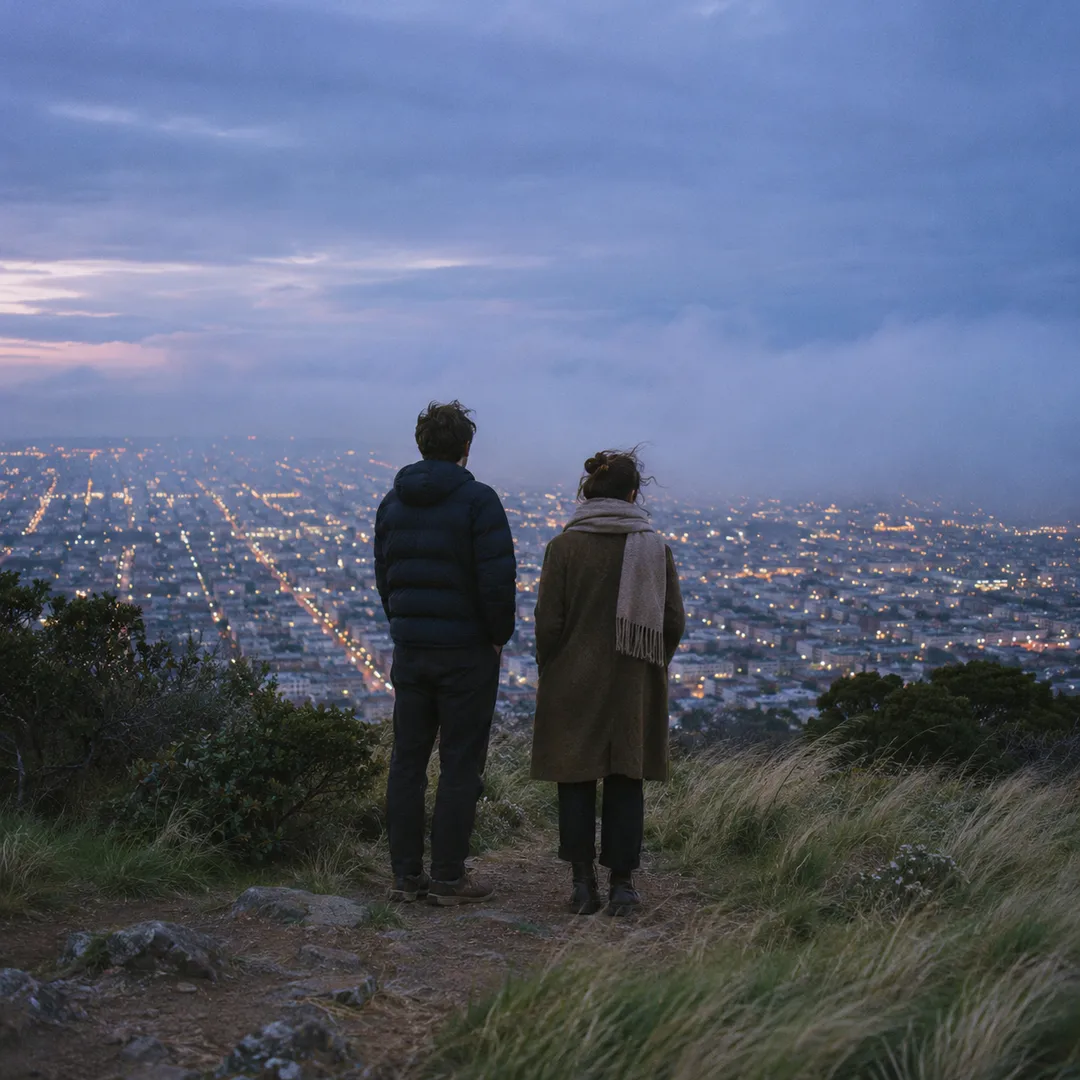
 Twin Peaks Hilltop Staircase Walk Planner for City Lights
Free Things to Do
Inner Sunset Guide to the Botanical Conservatory Glasshouse
A local's guide from the Inner Sunset to the Conservatory of Flowers, Golden Gate Park's 1879 Victorian glasshouse, with gallery routes and seasonal habits.
Of all the neighborhoods in San Francisco, the Inner Sunset has the easiest claim on a botanical conservatory glasshouse. The Conservatory of Flowers stands just inside Golden Gate Park, a short walk north from Irving Street, and for many residents it is less a tourist sight than a familiar neighbor. This guide is written for that local rhythm: how to fold the white Victorian glasshouse into ordinary weeks, foggy mornings and visiting-relative weekends.
A Neighbor in White Paint
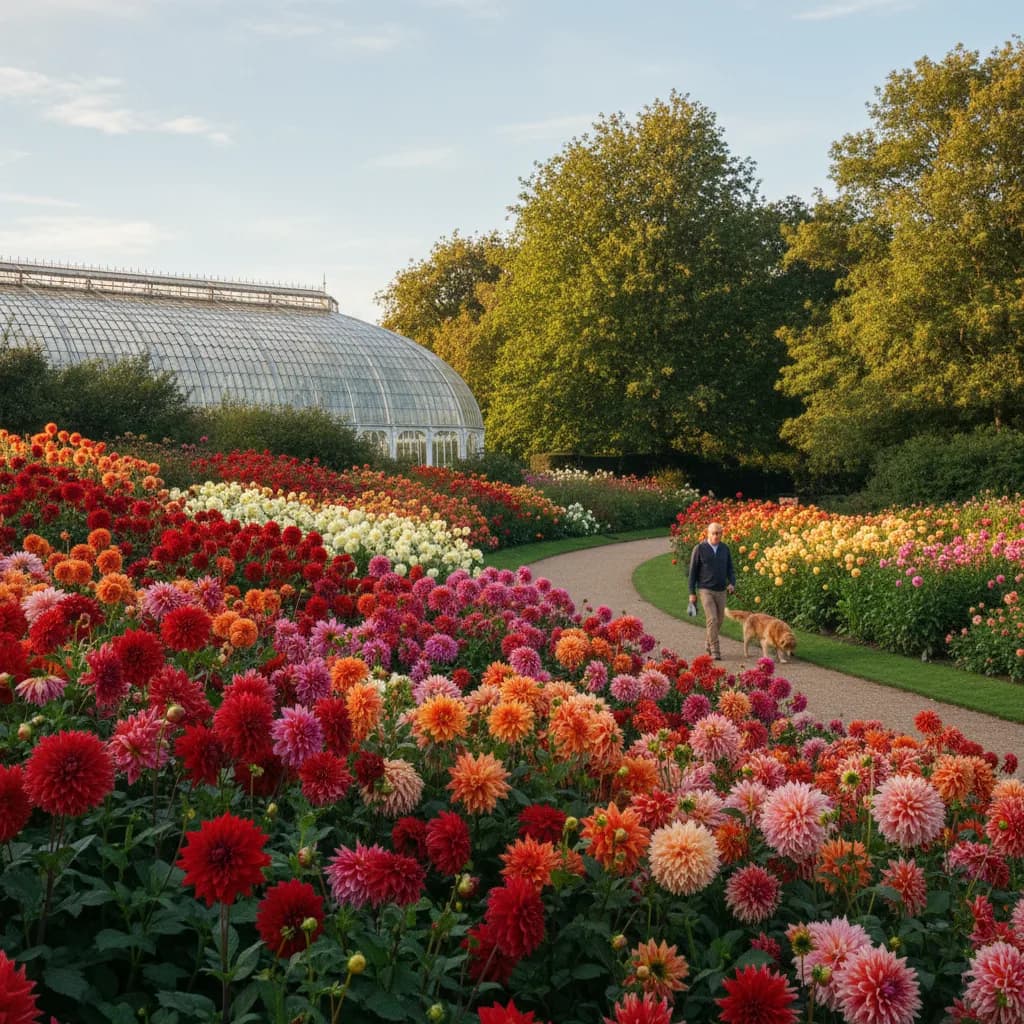
Walk north from Irving Street up Ninth Avenue and you are in the park within minutes. Bear east along the paths and the conservatory rises on its grassy slope, its central dome and long wings painted a brilliant white. It has stood there since 1879, making it the oldest building in Golden Gate Park and an official city landmark, as well as a listing on the National Register of Historic Places.
For Inner Sunset residents, the building marks the seasons. In late summer the Dahlia Dell beside it erupts in color. Through the rainy months the glass glows softly in the fog. In spring the beds on the lawn are replanted in fresh patterns. Many neighbors never go inside more than a few times a year, yet they pass it constantly on runs, dog walks and bike rides through the park.
How the Glasshouse Came to Be
The structure arrived in pieces. Philanthropist James Lick, at one time among the wealthiest men in California, ordered the components for his own estate but died in 1876 with the crates still unopened. A group of civic leaders purchased them and presented them to the young park, and the conservatory opened a few years later in a city still building itself out of sand dunes.
Its life since has been eventful. A fire damaged the dome in its early years, and in 1995 a powerful winter storm smashed a large portion of the glass and forced the building to close. A long, careful restoration brought it back in 2003, replacing rotted timber and replanting the galleries. When you look up at the curving ribs of the roof today, you are seeing both nineteenth-century craft and modern repair.
A Regular's Route Through the Galleries
Locals who visit often tend to develop a favorite order. Many begin in Lowland Tropics under the dome, where the air is hot and thick and enormous leaves crowd the paths. Look for the heritage philodendron, which has lived in this building for more than a century and is one of its oldest residents. Then move into Highland Tropics, a cooler, misty room where orchids and mosses cling to branches.
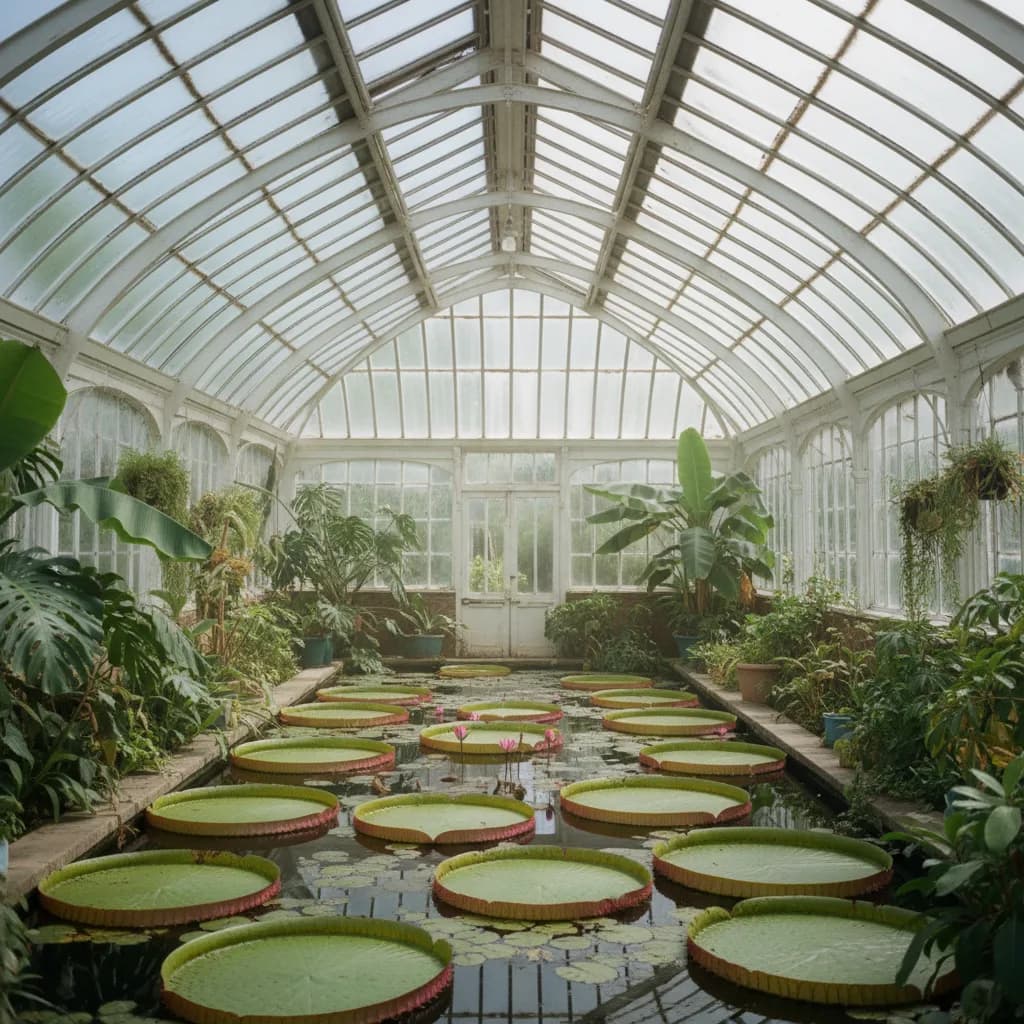
The Aquatic Plants gallery is the slow finale. Its pond holds giant water lilies whose pads can grow wider than a dinner table, alongside lotus and other water plants. Sit on the edge for a few minutes and the room becomes very quiet. The Potted Plants gallery, with its smaller, carefully arranged specimens, is worth a look on the way out, and the side wing hosts a changing special exhibit.
Fitting It Into Ordinary Weeks
Living close by means you can treat the conservatory differently from a visitor who has only one chance. Go for half an hour on a foggy weekday morning when you need a dose of warmth. Pop in after work during the longer days of the year. Return each time the special exhibit changes, since the side gallery's displays shift and keep the building feeling new across repeated visits.
Weekday mornings are reliably the calmest time, while weekend afternoons bring families, tour groups and photographers. If you are hosting visitors, bring them on a weekday if you can, then walk them through the Dahlia Dell and the lawn outside, where the classic view of the white facade over the flower beds makes a good farewell photo of San Francisco.
Check the conservatory's own website before you go, since it occasionally closes for private events, maintenance or exhibit changeovers, and it lists any special programs such as family days or evening events. Residents of San Francisco are sometimes offered special access days as well, so it is worth reading the visitor information carefully.
Pairing It With the Rest of the Neighborhood
The conservatory fits neatly into a longer Inner Sunset loop. Start with breakfast on Irving Street or Ninth Avenue, walk into the park for the glasshouse, then continue west to the Music Concourse, where the de Young and the California Academy of Sciences face each other across the sunken plaza. The San Francisco Botanical Garden lies just beyond, near the Ninth Avenue entrance.
That sequence gives you three very different gardens in one afternoon. The conservatory shows the tropics under glass, the Japanese Tea Garden beside the concourse shows plants shaped by centuries of careful pruning, and the botanical garden shows how much will grow outdoors in the cool, foggy air of the western neighborhoods. Few cities let you compare all three on foot within a mile.
For a quieter variation, skip the museums and head instead for the paths around Stow Lake, where a shoreline path circles Strawberry Hill and a footbridge leads up to a small waterfall and views over the park. Either way, the loop ends back on Irving Street, where noodle shops, bakeries and cafés make it easy to sit down and warm up after a breezy afternoon in the park.
Small Habits That Make Visits Better
Bring a layer you can take off and put back on, since the galleries are warm and humid while the park outside can be cold and windy. Leave large bags at home, because the paths are narrow and the building is not large. Wipe your camera lens or glasses when you walk in, and let them adjust to the humidity for a minute before taking photographs.
Most of all, slow down. The conservatory rewards attention: the dew on a fern, the way light changes through the old panes, the sound of water in the aquatic room. Neighbors who come back again and again often say the building feels different in every season, warmer and brighter in summer, almost secretive on the darkest winter afternoons. If you would like to plan a full Inner Sunset afternoon around it, ask Karpo APP in chat to sketch a loop from Irving Street through the conservatory and on to Stow Lake.
Ask Karpo for more information.
Keep reading
- Twin Peaks Hilltop Staircase Walk Planner for City Lights
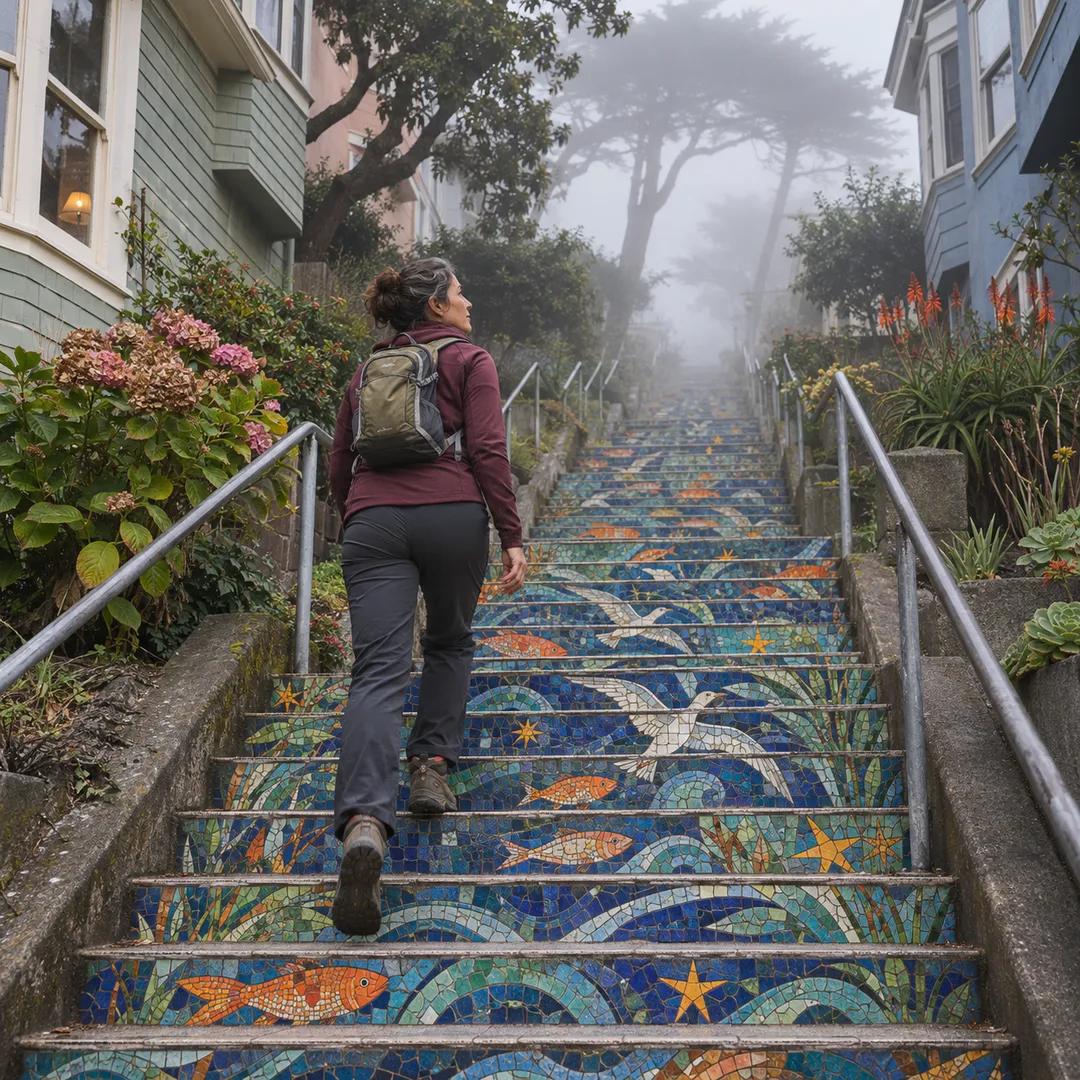 Inner Sunset Hilltop Staircase Walk Planner for Trekkers
 Bernal Heights Hilltop Staircase Walk Planner With Kids