Every year before the next 2K drops, players start comparing their local courts to the game's digital parks, wondering which ones could pass for the real thing. San Francisco's outdoor basketball scene doesn't need a console to feel cinematic—it's already got the history, the competition, and the atmosphere that game developers spend months trying to recreate. With the 2K27 release date approaching in September, now's the time to lace up and run the courts that inspired the virtual ones.
Karpo monitors real-time court availability, Saturday run start times, and weather windows so you know exactly when to pull up with your sneakers.
The Panhandle: where physicality is policy
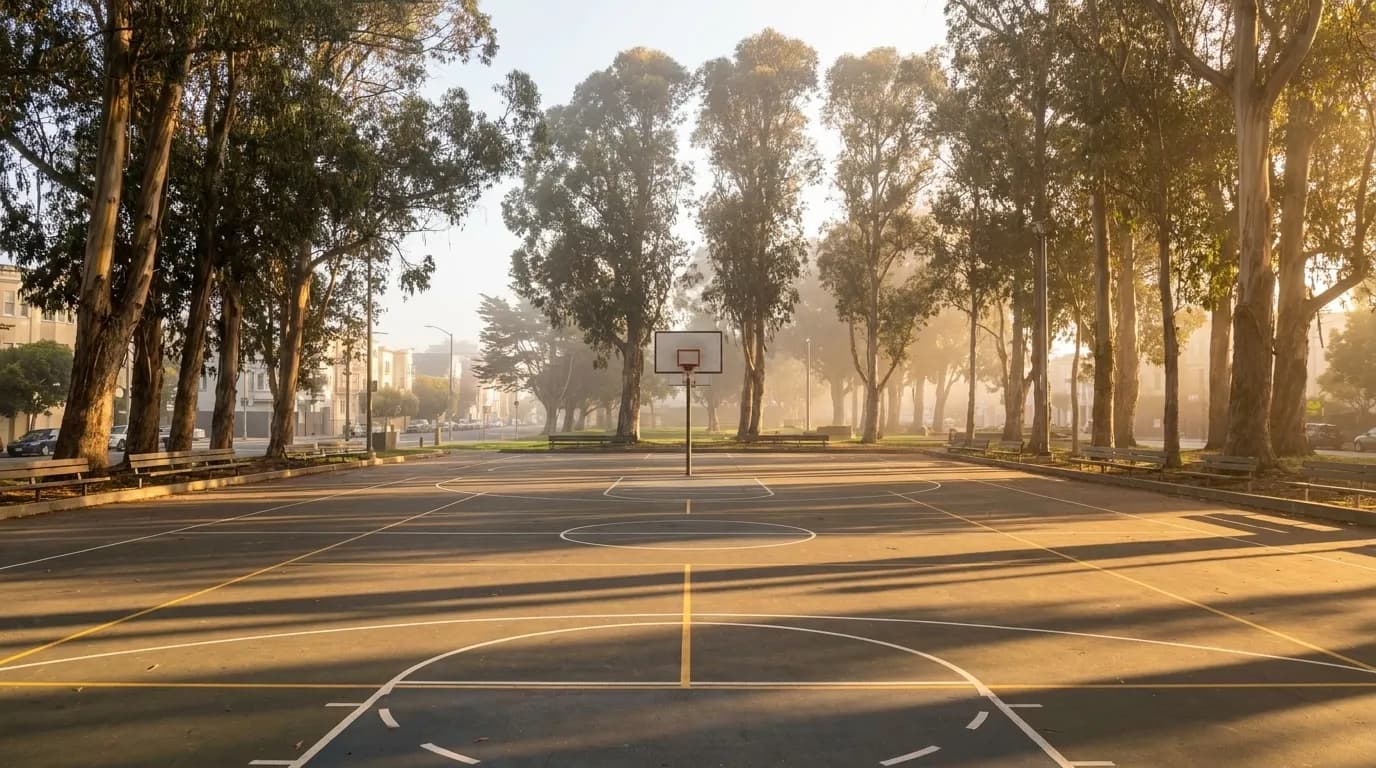
Stretching three-quarters of a mile between Baker and Stanyan, the Panhandle is a narrow ribbon of green that connects the Haight to Golden Gate Park. The basketball court here—officially named after Warriors legend Nate Thurmond following a 2016 renovation—sits near the Oak Street edge, flanked by eucalyptus trees and the steady hum of cyclists heading west. The court got its facelift courtesy of the Warriors Community Foundation and Good Tidings Foundation, but the culture predates any corporate sponsorship by decades.
What makes the Panhandle legendary isn't the fresh paint or the regulation lines. It's the house rules. The 'no and-1' policy means fouls don't stop play—no soft calls, no flopping, just basketball the way it was meant to be played. This isn't a place for finesse guards who live at the free-throw line; it's built for players who can absorb contact and keep moving. Trash talk flows freely, generations overlap on the same blacktop, and the competition stays sharp year-round.
Saturday runs are the crown jewel. The annual 3x3 tournament—revived in 2021 by John McCormick after a pandemic hiatus—now draws nearly 20 teams and sponsors including the Warriors. But even outside tournament season, Saturday mornings pack fast. Locals say the best games start around 10am when the court fills with players who've been running here since the '70s and '80s, back when Billy Reid and Phil Smith would show up between Warriors practices. The Panhandle has always been more than hoops—it's the heartbeat of a neighborhood that refuses to let gentrification erase its identity.
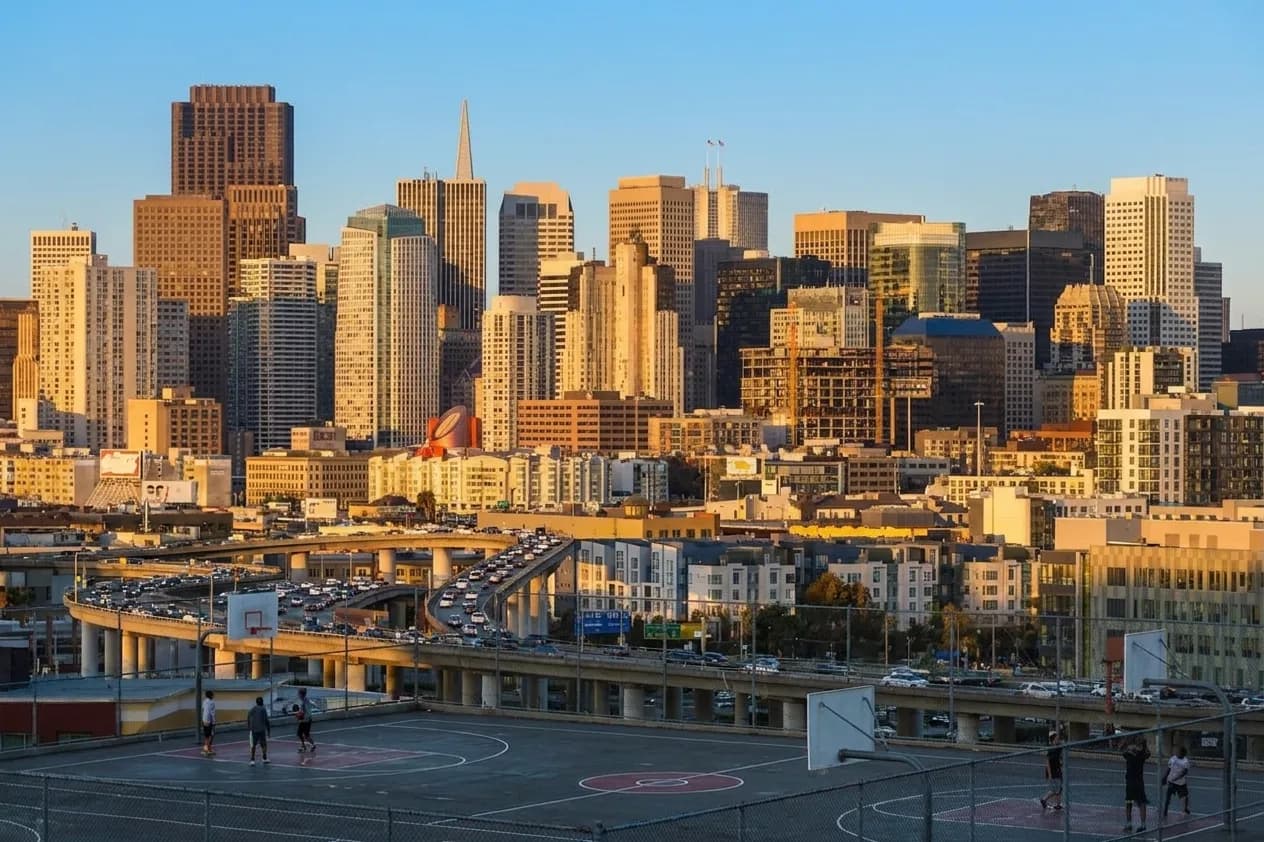
Potrero Hill Recreation Center: views and vintage hardwood
Perched on a hill overlooking downtown San Francisco, Potrero Hill Recreation Center offers something most indoor courts can't: natural light pouring through old wood-beamed ceilings and panoramic views of the skyline when you step outside. The rec center opened over a century ago, and the indoor court still carries that history in its creaky floorboards and high rafters. It's the kind of gym where you can smell the decades—sweat, varnish, and the faint mustiness of a building that's hosted thousands of games.
Basketball hours are set, not open-gym chaos. Weekdays the court opens at 4pm, but if you're serious about getting into games, you need to arrive by 6pm. After that, you're waiting through rotations. The crowd skews older than Betty Ann Ong's high-school rush, and the level of play reflects it—organized, competitive, frequently used for coaching camps and training sessions. This is where people come to work, not just mess around.
When the indoor court fills up, head down the hill to the outdoor courts at Potrero Hill Recreation Playground. Two full courts sit on a terraced slope with unobstructed views of the Bay Bridge and the city skyline. The elevation change means you're shooting uphill on one end, downhill on the other—a quirk that regulars learn to read but visitors struggle with. On clear evenings, the light hits the downtown towers just right, and for a moment the backdrop feels ripped straight from a 2K park intro cutscene.
Joe DiMaggio Playground: the solo shooter's sanctuary
Tucked into North Beach at the corner of Mason and Lombard, Joe DiMaggio Playground is the rare San Francisco court that's almost never crowded. One full court, one half court, and a mini hoop near the tennis courts sit in a well-maintained park that feels more residential than streetball. This is by design—North Beach is quieter, wealthier, and the basketball culture here leans toward friend groups running private games rather than open pickup.
That makes Joe DiMaggio ideal if you're looking to shoot around solo or run drills without waiting for next. Weekday evenings are especially empty; you can have the full court to yourself and work on whatever needs attention. The asphalt is smooth, the rims are true, and the neighborhood feels safe enough that you don't need to keep one eye on your bag. It's not where you go to test yourself against the city's best competition—it's where you go to put in reps without distraction.
The lack of serious pickup also means the court stays in better shape than high-traffic spots. No deep scuff marks, no bent rims from dunk attempts, no nets shredded by years of swishes. It's the kind of place that rewards consistency over flash, repetition over spectacle. If you're the type who needs an empty gym to lock in, Joe DiMaggio is your spot.
Mission Creek: hoops under the freeway
Mission Creek Park sits beneath the shadow of Highway 280, sandwiched between Mission Bay and SoMa. The court is literally under the freeway overpass, which sounds grim but actually works—shade all day, protection from wind and light rain, and an urban atmosphere that feels cinematic. One full court and one half court run parallel to the creek, and the concrete overhead amplifies every dribble, every swish, every shout.
This is the closest legitimate court to the Chase Center, which means you'll occasionally see Warriors staffers or media types getting shots up before or after games. The usual crowd is welcoming, a mix of Mission Bay residents and SoMa workers who treat the court like a lunch-break escape. The level of play is solid but not intimidating—competitive enough to keep you honest, casual enough that you're not getting screened out if you're rusty.
What makes Mission Creek special is how it reclaims dead space. The land under 280 can't be developed for housing, so the city turned it into a park. The result is a basketball court that feels like it belongs in a video game—industrial, atmospheric, and just gritty enough to feel real. It's also one of the only reasonable courts in SoMa; other nearby options like Gene Friend and Victoria Manalo Draves skew sketchy after dark.
Practical notes
The Panhandle court is open daily, dawn to dusk, with Saturday morning runs starting around 10am. Potrero Hill Recreation Center's indoor basketball hours vary; check SF Rec & Park's schedule, but plan to arrive by 6pm weekdays to avoid long waits. Joe DiMaggio Playground is open daily with no set hours, best for solo work on weekday evenings. Mission Creek runs open pickup most afternoons and weekends. All courts are free. Muni access: take the 5 Fulton or 21 Hayes to the Panhandle; the 22 Fillmore or 48 Quintara to Potrero Hill; the 30 Stockton or 45 Union to Joe DiMaggio; the 10 Townsend or 22 Fillmore to Mission Creek. Bring your own ball—none of these spots provide equipment.
Tags: #SanFranciscoBasketball #PanhandleCourts #PotreroHillHoops #JoeDiMaggioPlayground #PickupBasketball #GoldenGatePark #NorthBeachSF #StreetballSF #BayAreaHoops #NateThurmond #MissionBay #SFRecPark #OutdoorBasketball #CourtCulture #SF2026
All trademarks are the property of their respective owners.
Ask Karpo first
Need live court conditions, Saturday run start times, or the fastest Muni route to any of these spots? Just ask Karpo in iMessage—I'll check real-time availability, weather windows, and even tell you which court matches your skill level and style of play.