 SoMa Bowling Group Night Planner to Welcome New Hires
Sports Social
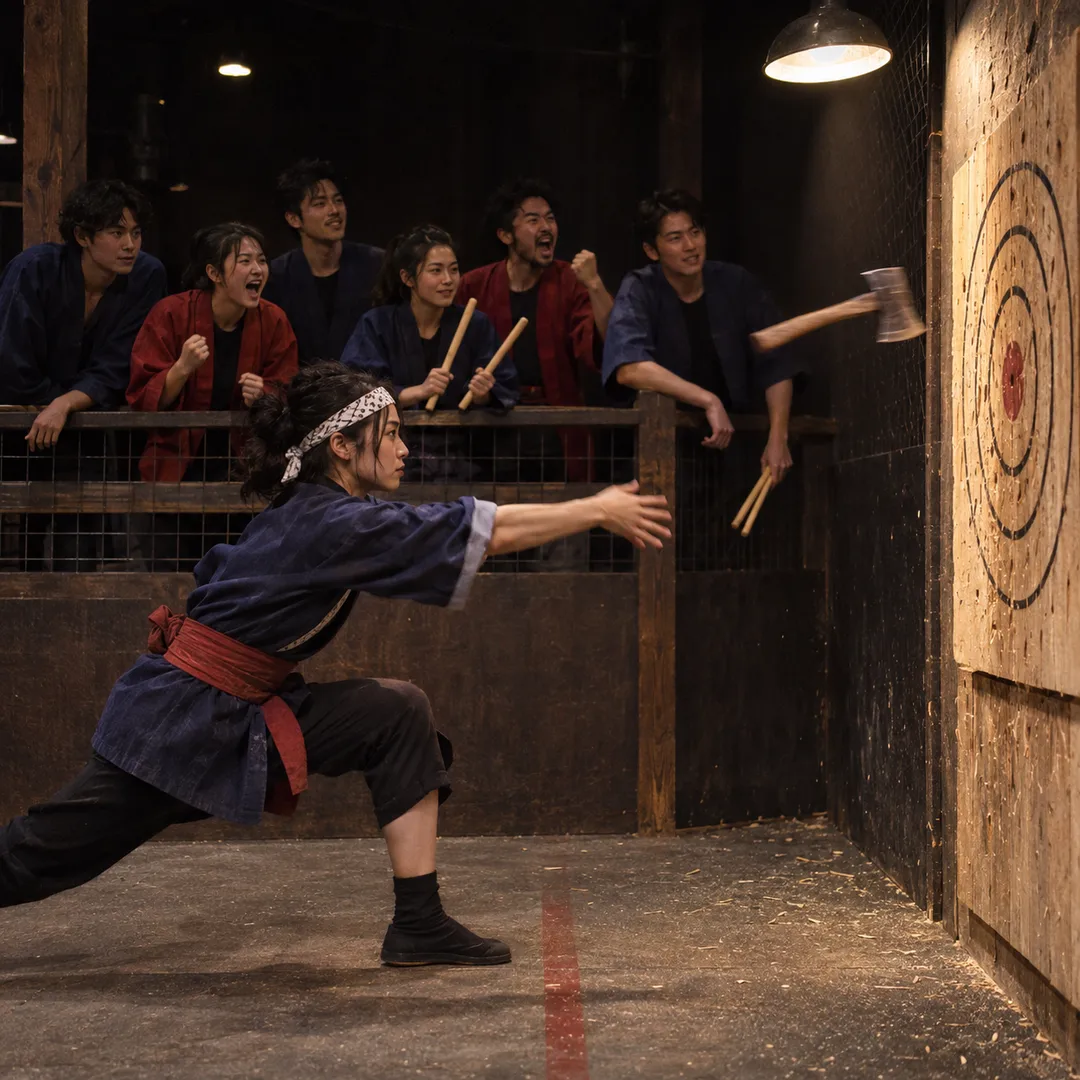
Japantown Axe Throwing Group Night Picker: Taiko Crew
Japantown taiko players can wrap the performance season with an axe night that rewards rhythm over muscle. Here is how to choose the lane and run the evening.
San Francisco's Japantown is closely tied to the story of taiko in North America, and on any given week the neighbourhood's drummers are rehearsing for festivals, community events and school shows. When the performance season winds down in autumn, an ensemble of eight to fourteen players often wants a celebration that is not another rehearsal. This axe throwing group night picker is built for them: a night that uses the same stance, timing and kiai shout they practise all year, aimed at a wooden target instead of a drum.
Why Drummers Take to Axe Throwing
Taiko is as much a physical art as a musical one. Players hold low stances, swing heavy bachi from the shoulders and hips, and shout together to keep the group in time. Coaches talk about relaxation, follow-through and breathing more than raw power, and every rehearsal includes a good amount of drilling the same motion until it feels natural.
Axe throwing rewards almost exactly those habits. A smooth, relaxed swing beats a tense, muscled one, and a group that already counts and breathes together picks up the rhythm of a lane very quickly. Expect the ensemble to have a little fun with it: a shared shout on each release, a call-and-response cheer from the rail, and a sense that this is a rehearsal where nobody is critiquing the timing of the second song.
Choosing a Night That Works for the Ensemble
Ensembles are busy in late summer and early autumn, with festivals, school assemblies and community shows piling up. The best time for an axe night is a week or two after the last performance, when instruments are packed and people still feel the buzz of the season. Avoid the night before a big rehearsal, since sore shoulders and strong drumming do not mix.
Ask the group leader or senior players to pick the date, and check in with the youngest members if they are still at school. Some ensembles have players of many ages, from teenagers to grandparents, so it is worth deciding early whether the night is adults only or a family event at a venue that welcomes younger throwers under supervision.

What to Compare When Picking a Venue
Look for a venue with private or semi-private lanes, a coach who runs the safety talk and keeps the games moving, and enough room behind the rail for a larger group to gather and cheer. Ensembles are used to making noise together, so a space where a group shout will not startle a neighbouring birthday party is a big plus. Read recent reviews for notes on how staff handle larger groups.
Axe venues in the city tend to sit in larger industrial or warehouse buildings outside Japantown, which is compact and built around shopping malls, offices and a few blocks of homes and temples. Plan for a short trip across town, and if the venue offers different formats, choose a lane-based tournament over a free-for-all so everyone gets plenty of turns.
Using the Karpo APP to Shortlist Options
Describe the evening in the Karpo APP the same way you would to a friend: axe throwing for twelve taiko players starting from Japantown, a private lane, a coach, room for a loud group, a few players who do not drink, and a ramen spot back in the neighbourhood afterwards. You can add that some people are coming from rehearsal and might be carrying gear.
Karpo can help you compare a shortlist and think through the trip, whether that means a bus along Geary or a few shared rides. Share the options in the ensemble chat, let players vote, and then follow the venue's own reservation process to lock in the lanes. Karpo helps you pick and plan the night; the booking and venue rules stay with the venue itself.
A Format That Echoes a Taiko Piece
Give the night a structure that feels like a song. Start with a quiet warm-up round, like a soft opening, then build through a round-robin where every throw gets a group shout. Finish with a final where the top four players throw in sequence without a pause, like the fast closing section of a piece, while the rest of the ensemble keeps a steady beat by clapping on the rail.
Small touches make it fun. Name the teams after the pieces the group performed this season, and award a prize for the best stance and another for the loudest kiai. If someone brought a spare pair of bachi, they can be passed to the winner as a trophy. The coach at the venue can suggest games that fit the time you have.
Safety and Shoulder Care
Take the safety talk seriously. Stay behind the line until called, wait for the lane to be clear before retrieving axes, and follow the coach's instructions on grip and release. Closed-toe shoes are commonly required, which may mean swapping out the tabi or sandals some players wear to rehearsal for regular sneakers.
Drummers already know how to warm up, so lead a short stretch for the shoulders, wrists and back before the first round, just as you would before a practice. Players nursing a sore shoulder from the season can keep score or lead the cheers instead. Keep drinks away from the throwing area and follow the venue's alcohol rules, so the night stays safe for everyone.
Getting There From Japantown
Meet at the Peace Pagoda in the plaza between the Japan Center malls, which is easy to find and well known to every player. Geary Boulevard runs along the south side of Japantown with frequent buses east and west, and Fillmore Street runs north and south with its own bus lines. For venues off the main routes, split rides in groups of four.
Agree on the plan home before you leave. Some players will want to come back for food; others live in the East Bay or down the Peninsula and will head straight home. Make sure anyone carrying drums or gear from an earlier rehearsal has a ride, and that younger players are picked up by a parent or guardian at the agreed spot.
Ramen and Dessert Back in the Neighbourhood
Japantown has a well-loved mix of ramen shops, izakaya, udon counters and dessert spots spread across the malls and side streets, and a steaming bowl is the right way to end a night of throwing. Larger groups may need to split across two tables or two restaurants and meet afterwards for something sweet, such as taiyaki, mochi or a cup of matcha soft serve.
Waits can be long at popular places, so send a couple of people ahead to put the group's name down. If the ensemble is too big for one restaurant, consider picking up snacks and gathering in the plaza near the pagoda instead. Use the time to talk about next season, new pieces and who will lead the workshop for beginners.
A Walk Down Fillmore the Next Day
For players who want a slower postscript, walk south from Japantown along Fillmore Street toward the Western Addition, an area with a long jazz history and a mix of cafés, record shops and murals. The walk is a good reminder of how Japantown's story is tied up with the neighbourhoods around it, including the forced removal of Japanese Americans during the Second World War and the community's return afterwards.
Alternatively, walk north up Fillmore into Pacific Heights for a view from Alta Plaza Park. Either route gives the ensemble an easy way to stretch tired arms and talk about the season ahead. Many groups make the axe night a yearly ritual, the last loud evening before the drums are covered for the winter.
Ask Karpo for more information.
Keep reading
- SoMa Bowling Group Night Planner to Welcome New Hires
 Lower Haight Bowling Group Night Planner for Kitchen Crews
 Bernal Heights Bowling Group Night Planner for Parents Out