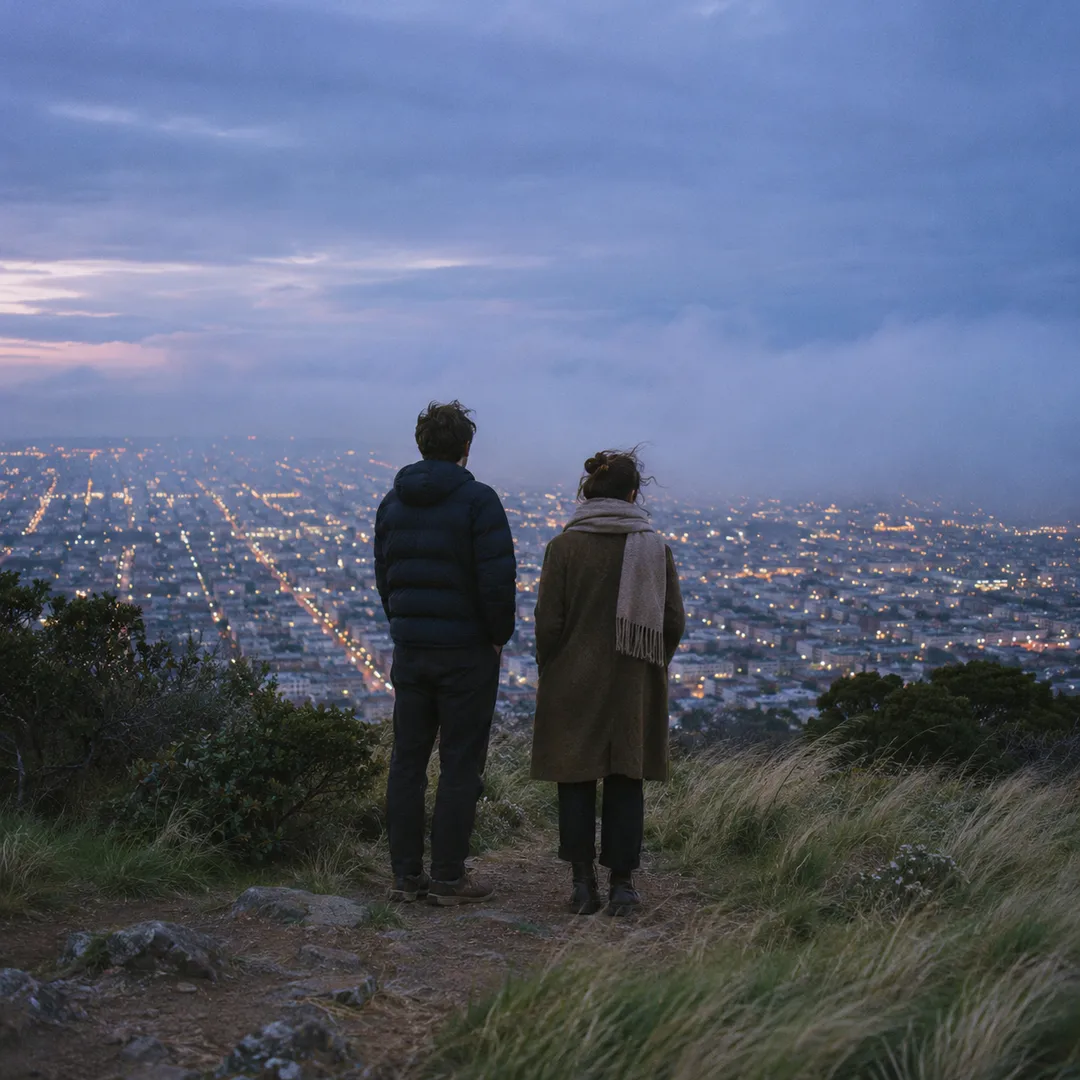
 Twin Peaks Hilltop Staircase Walk Planner for City Lights
Free Things to Do
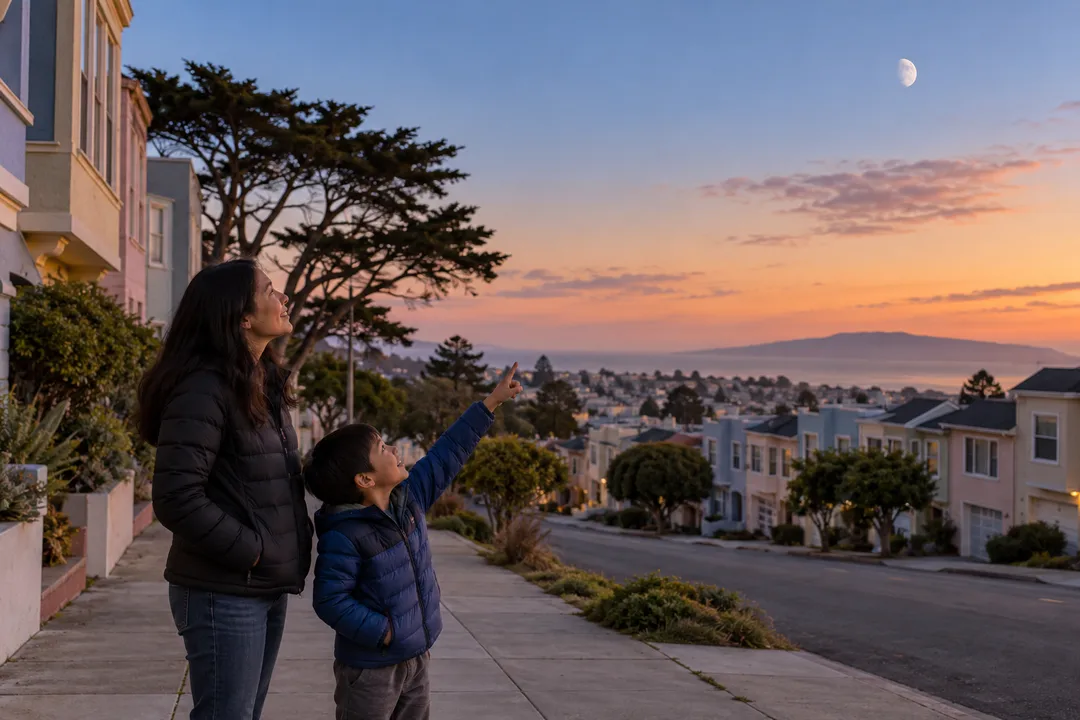
SF Autumn Stargazing Spot: Make Sunset a Family Experiment
Make a Sunset sky walk a small family experiment with one clear question and an easy finish. Let children describe the view without guessing what they see.
A family search for an autumn stargazing spot in the Sunset and Golden Gate corridor works better as a small experiment than a late-night expedition. Give children something they can notice, let them help decide when to stop, and keep the route easy to reverse. The corridor in this plan is a suggested area for planning, not a promise of darkness or access to a particular park. A single observation from a suitable public place can be enough to make the evening feel different from an ordinary walk home.
Let the youngest observer choose the question
Offer a choice between two manageable activities. One might be looking for the Moon with the help of an appropriate sky chart. Another could be comparing how much sky is visible from two different public positions. Avoid beginning with a long list of constellation names. A child can choose a question they understand and still enjoy the outing if the answer is that a roof or cloud blocks the view. The question gives the walk a purpose without demanding a successful astronomical identification.
Once the child chooses, ask them to explain the activity back in their own words. This is a useful check on the plan. If they think you have promised a meteor shower or a field of brilliant stars, correct the expectation before leaving. Describe the actions you will take together: walk a little, stand somewhere appropriate, look, and decide what you noticed. Those are promises you can keep. The sky's cooperation remains outside the family's control, and it is easier to accept that when the distinction is clear from the beginning.
Make the stopping rule equally simple. Each person can ask to finish, and nobody needs to earn the return journey by spotting something. Children may become cold, bored, or tired faster than an adult absorbed in a chart. A rule agreed at home prevents a small disappointment from becoming an argument outdoors. It also gives the adult permission to end the activity when the location is unsuitable. A successful family experiment includes being able to stop safely and pleasantly.
Rehearse the route with ordinary needs in mind
Choose the approach according to the family's normal walking ability. A route that looks short on a screen can involve more standing and waiting than expected. Think about the way back before deciding how far to go. Keep the first attempt close enough to familiar surroundings that turning around feels easy. There is no need to add a second neighborhood merely to make the evening sound more adventurous. The unusual part of the outing is the attention you bring to the sky, not the distance traveled.
If you hope to use a managed park or other destination, consult the relevant operator's access information and follow restrictions at the site. A broad green area on a map is not proof that a particular route is available after dark. Do not frame fences, closed gates, or unclear entrances as puzzles to solve. Move to a suitable public alternative or head home. This is a useful lesson for a child as well as a practical choice: curiosity about the sky does not override the rules of the place beneath it.
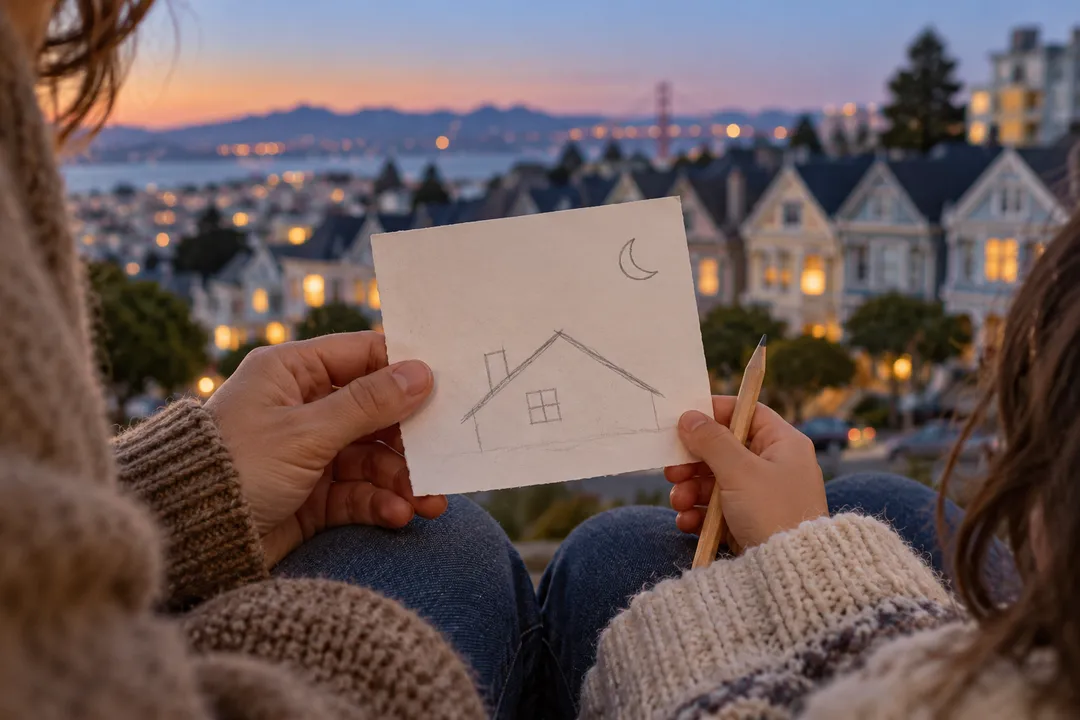
Before departure, explain where everyone will stand when the group stops. Children should know that looking upward happens away from the street edge and outside the path of other people. Adults can model the same behavior by finishing navigation before the sky pause. Keep bags close, avoid leaving belongings on the ground behind you, and do not ask a child to walk backward while keeping an object in view. A clear standing arrangement makes the activity calmer for both the family and passersby.
Use a game that records what actually happened
Try a short round of describe, point, compare. One person describes a visible shape in the sky or along its edge. Another points from a safe standing position. Then everyone says what they can see, including anyone who cannot see it. Keep the language ordinary. A triangle of light, a curved edge, or a gap above a roof is enough to begin. The activity encourages careful looking without implying that every bright point needs an immediate scientific name.
An adult can use a dated astronomy chart for the planned place and time when identification is part of the question. Consult it deliberately, then return attention to the scene. If the chart and the view do not line up clearly, leave the identity open. Children learn something valuable when adults are comfortable with uncertainty. Saying that you need more information is better than attaching a confident planet name to a passing light or a point seen through a narrow gap between buildings.
For a second round, change the task rather than merely repeating it louder. Ask which part of the view is blocked, or whether a nearby light makes looking in one direction uncomfortable. These are observations a child can contribute even when stars are hard to distinguish. Do not turn the number of things spotted into a competition between family members. Different heights and positions produce different views. The conversation becomes more inclusive when each person describes their own experience instead of trying to win.
Make the waiting part comfortable
Pack one easy layer for each person who needs it and keep hands free for the walk. A snack can be part of the family's usual routine, but it does not need to become a shopping itinerary. Avoid scattering wrappers or setting cups where someone might trip. Equipment should serve the chosen game. A telescope is unnecessary for comparing roof gaps, and a large camera setup can make an outing harder to abandon when a child has had enough.
Use pauses in a way that fits the group. Some children want a moment of quiet, while others prefer to narrate everything they notice. Give both styles room without treating either as the correct way to enjoy astronomy. Keep voices appropriate for nearby homes and other people using the route. If the activity stops feeling comfortable, change it or leave. The family is practicing a way of paying attention together, and that practice benefits from a pleasant finish more than from a longer observation.
A planning request to Karpo APP can describe those family needs before naming destinations: a Sunset starting area, a short walk, no required equipment, and a sky activity that can end early. Use any suggested plan as an idea to assess against access information and your family's judgment. Astronomy resources supply celestial positions, while weather sources inform conditions. Do not assume an itinerary includes live cloud tracking, automatic visibility checks, or permission to enter a managed place. The family makes the final decision on arrival.
Practical notes for the story afterward
End by asking each person for one thing they noticed and one thing they would change next time. Accept answers about the walk as well as the sky. A child may remember a roof silhouette or the comfort of a warm layer more clearly than the target. Those details are part of the experience. Keep the record short enough that it feels like a conversation, not homework. A sentence or small drawing can preserve the outing without requiring a polished photograph.
If the sky was hidden, let that remain the honest ending. You can say the family tested a position, found the view unsuitable, and returned together. That is a complete experiment. On another evening, the question can become smaller or the route can become easier. The Sunset and Golden Gate corridor does not need to provide a guaranteed celestial show to support a worthwhile family walk. The lasting result is a shared habit of noticing, asking, and making room for everyone to enjoy the answer.
Ask Karpo for more information.
Keep reading
- Twin Peaks Hilltop Staircase Walk Planner for City Lights
 Inner Sunset Hilltop Staircase Walk Planner for Trekkers
 Bernal Heights Hilltop Staircase Walk Planner With Kids