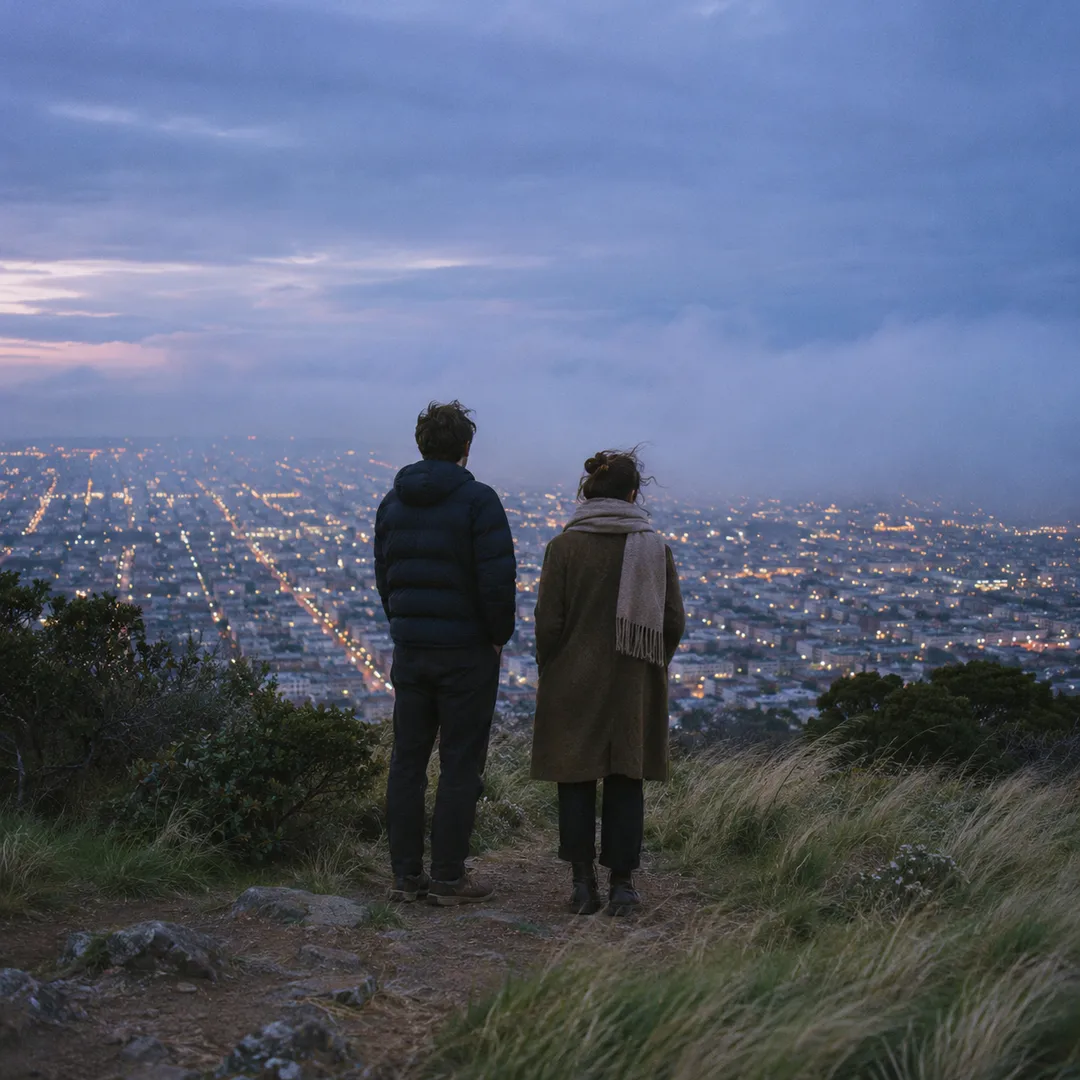
 Twin Peaks Hilltop Staircase Walk Planner for City Lights
Free Things to Do
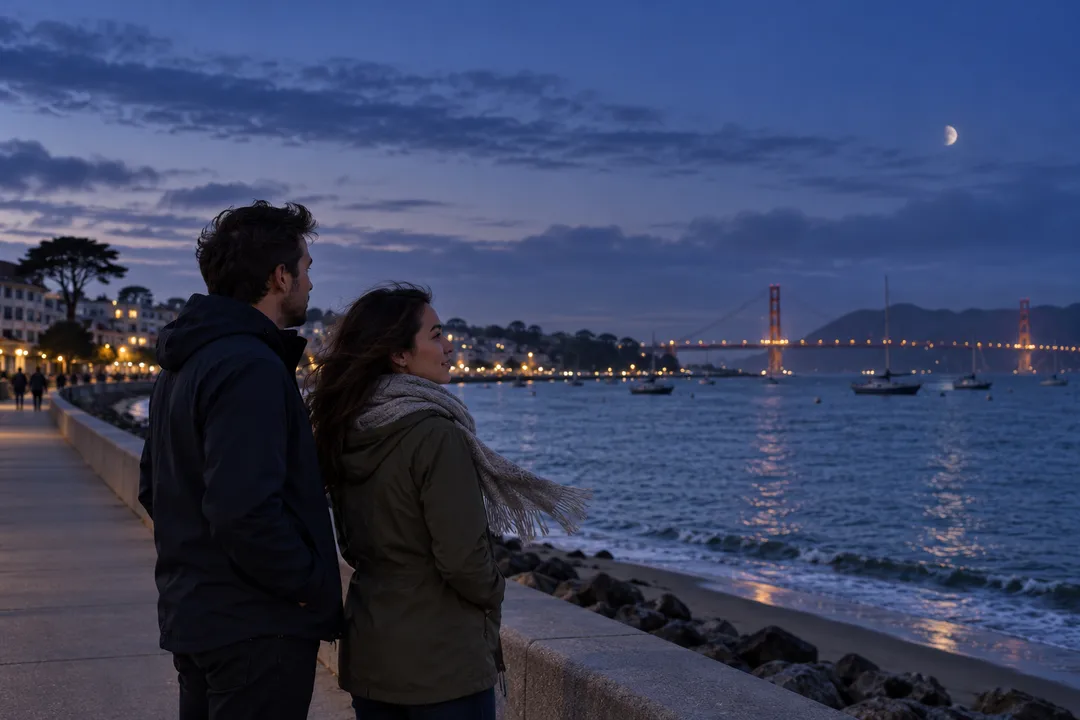
SF Autumn Stargazing Spot: Build a Windwise Marina Plan
Build a short Marina sky outing around comfort, a clear sightline and an easy return. Keep the pause optional when wind or clouds change the evening.
A Marina and Presidio autumn stargazing spot should earn its place in your evening by being comfortable enough to use. An open-looking sky can be attractive on a map, while the actual experience is shaped by the wind, the walking surface, and how easily everyone can leave. This plan treats the neighborhood corridor as a place to make a decision, not as a certified observing destination. Begin with a short outdoor option, keep the equipment light, and make a graceful early finish part of the invitation.
Dress for the pause you intend to take
Think about the least active part of the outing when choosing what to carry. A layer that feels unnecessary while walking can become useful once you stop and look upward. Put it where you can reach it without emptying the bag onto the ground. The same approach applies to gloves, a hat, or another comfort item you already use. Bring what suits your body rather than building an expensive kit for a first attempt at an ordinary city sky break.
Ask companions how they feel about standing outdoors before choosing an ambitious observing interval. Someone who enjoys a long walk may dislike being still in an exposed place. Give them a clear way to participate: walk together, try one brief observation, and decide whether to continue. Avoid interpreting an early request to leave as a lack of interest in astronomy. Comfort is a condition of the experience, and a plan that responds to it is more likely to become an outing people want to repeat.
Separate an open view from a usable place
A broad horizon and a good standing position are different things. You may be able to see a large patch of sky while having no room to pause without interrupting other people. Scout for a position that keeps ordinary movement possible and does not require leaning on a barrier, occupying a cycling line, or balancing beside traffic. Keep the group's footprint small. Bags belong close to their owners, and nobody should need to step over a tripod to pass.
For a managed destination, use the operator's access information and obey the rules on arrival. Do not infer permission from the absence of a crowd or the apparent openness of a path. A route suggestion cannot grant entry, and a photograph cannot establish that a gate will be available. Build the evening so it still works if the first candidate is unsuitable. The alternative can be a normal public sidewalk with a smaller view, or simply the return walk. It need not be another named attraction.
Test comfort before unpacking
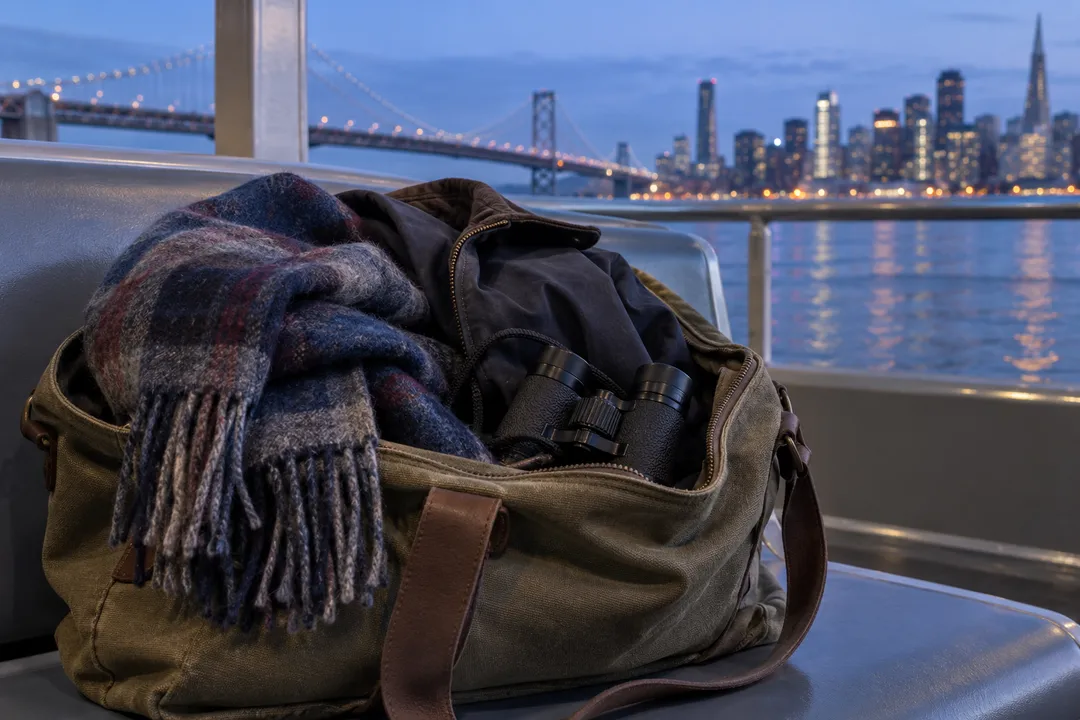
On arrival, stand together briefly before taking anything out. Notice whether you can face the intended direction comfortably and hear one another without shouting. If the position feels unpleasant immediately, move or finish. There is little value in arranging equipment and then staying only because packing it away feels like admitting defeat. The first decision is whether this is a sensible place for the group to spend a few quiet minutes, not whether a camera can make it look impressive.
A small relocation should solve a specific problem. Moving out of direct glare might help. Moving only because another stretch looks more atmospheric may not. Keep a distinction between improving the observation and extending the walk for its own sake. If the group wants the latter, say so and enjoy it as a walk. That clarity prevents an endless sequence of nearly suitable stops, each followed by another promise that the next one will finally deliver the sky everyone imagined.
Give the sky a weather alternative
Choose a modest target with a dated astronomy chart, then use a weather source to inform the departure decision. Keep those two tasks separate. The chart helps with position and timing. Weather information concerns conditions. Neither establishes what you will actually see from behind the buildings or trees at your chosen pause. Let the final judgment happen outdoors. If the intended part of the sky is obscured, there is no need to keep refreshing a screen while the group gets colder.
Have an alternative question that does not pretend clouds are transparent. You might compare the sky's brightness above different rooflines or simply notice how the neighborhood changes as twilight deepens. These are observational activities in their own right, although they are not substitutes for a successful astronomical identification. Describe the change honestly. The evening can become a twilight walk without anyone needing to claim that a hidden constellation was visible. A truthful record is a better starting point for the next attempt.
Keep optics out of the first decision
Do not let available equipment choose the outing for you. Borrowing a telescope can seem like an easy way to make the evening special, but it adds carrying, setup, stability, and space requirements. For a corridor walk, an unaided-eye plan lets you respond quickly when the position is unsuitable. You can put on a layer, look for one subject, and leave without a lengthy packing ritual. If using an instrument is the real goal, plan an instrument-centered event separately.
A phone is useful as a reference when handled deliberately. Stop in a clear place before consulting it, keep the screen comfortable for others nearby, and put it away once you have the information you need. Avoid turning the whole sky pause into an effort to reproduce a photograph seen online. Cameras can render a scene differently from the unaided eye. Choose whether you want a memory of the outing or a photographic experiment, because those goals ask different things of both the route and the group.
Turn preferences into a clear planning request
A useful request to Karpo APP can begin with the human constraints: a Marina starting point, a companion who prefers a short walk, and a sky pause that can be skipped. Ask for help arranging the outing around those preferences. Include the return journey rather than treating it as something to solve later. Keep the request focused enough that a proposed route is easy to assess. Adding every possible interest can produce an itinerary that is attractive on paper and impractical for the actual evening.
Use the result as a planning aid. Make the access decision from the applicable destination information and the conditions you encounter. Look to astronomy resources for the target's location. Do not treat a suggested itinerary as a live measurement of cloud cover, wind, crowding, or darkness. The people taking the walk remain the best judges of whether they are comfortable standing there. A useful city assistant helps clarify choices, while the final decision belongs to the outing's participants.
Practical notes for a clean turnaround
Agree on a departure cue that is easy to express. One person can say they have finished looking, and the group can start the return without bargaining over another stop. Keep the route back independent of whether the observation succeeds. If a companion wants to split off, establish that option before leaving the meeting point. Planning the end first makes the middle more relaxed because nobody is wondering how a brief experiment became an open-ended evening far from their preferred way home.
After the walk, write down one comfort lesson and one viewing lesson. Perhaps the chosen position was easy to leave but exposed, or the visible sky was broad while the desired direction remained blocked. Avoid naming the place a reliable astronomy spot after one visit. What you have is an account of one attempt under particular circumstances. That account is enough to improve a future outing, and it keeps the Marina and Presidio corridor in its proper role: a possible setting for a thoughtful sky break, rather than a guarantee of celestial drama.
Ask Karpo for more information.
Keep reading
- Twin Peaks Hilltop Staircase Walk Planner for City Lights
 Inner Sunset Hilltop Staircase Walk Planner for Trekkers
 Bernal Heights Hilltop Staircase Walk Planner With Kids