 Twin Peaks Hilltop Staircase Walk Planner for City Lights
Free Things to Do
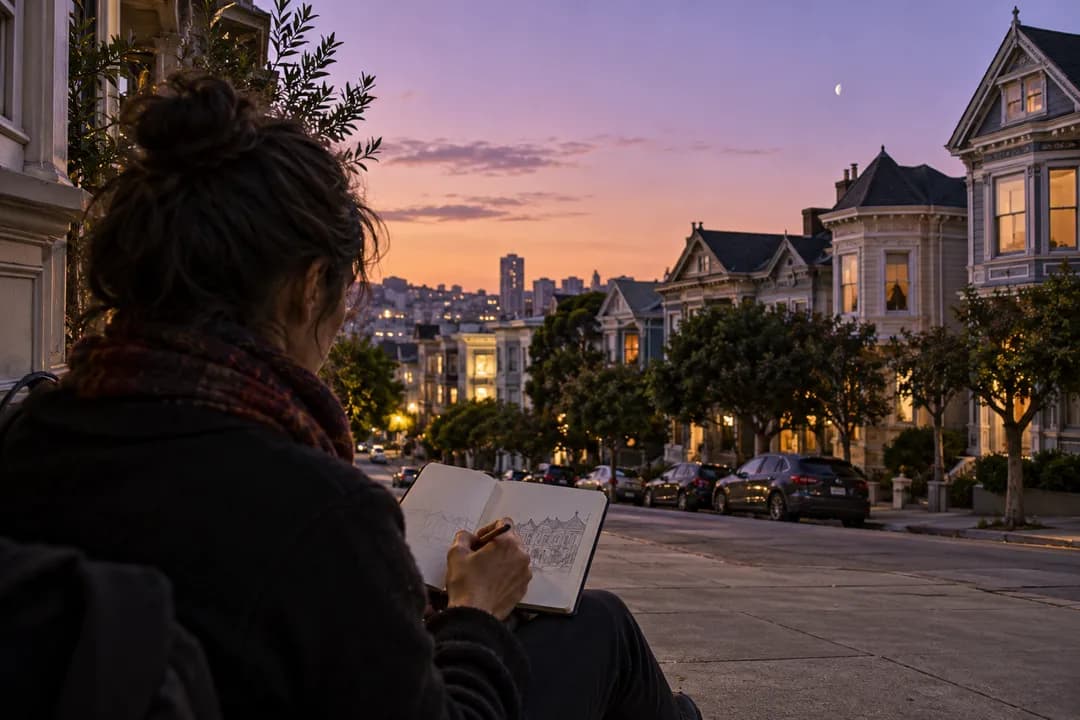
SF Autumn Stargazing Spot: Sketch Your Hayes Valley Sky
Sketch a small patch of Hayes Valley sky to compare roofs, glare and uncertain bright points. Make two honest drawings before planning a longer walk.
For an autumn stargazing spot near Hayes Valley and the Western Addition, try making a sketch before making a claim. A simple drawing of the visible sky turns an ordinary neighborhood pause into a small observation project. You do not need artistic confidence or a telescope. You need a place where you can stand without blocking anyone, one clear question, and a willingness to leave uncertain marks unlabeled. This suggested outing is about noticing how the city frames the sky, rather than finding a supposedly secret dark corner.
A blank page makes a useful instrument
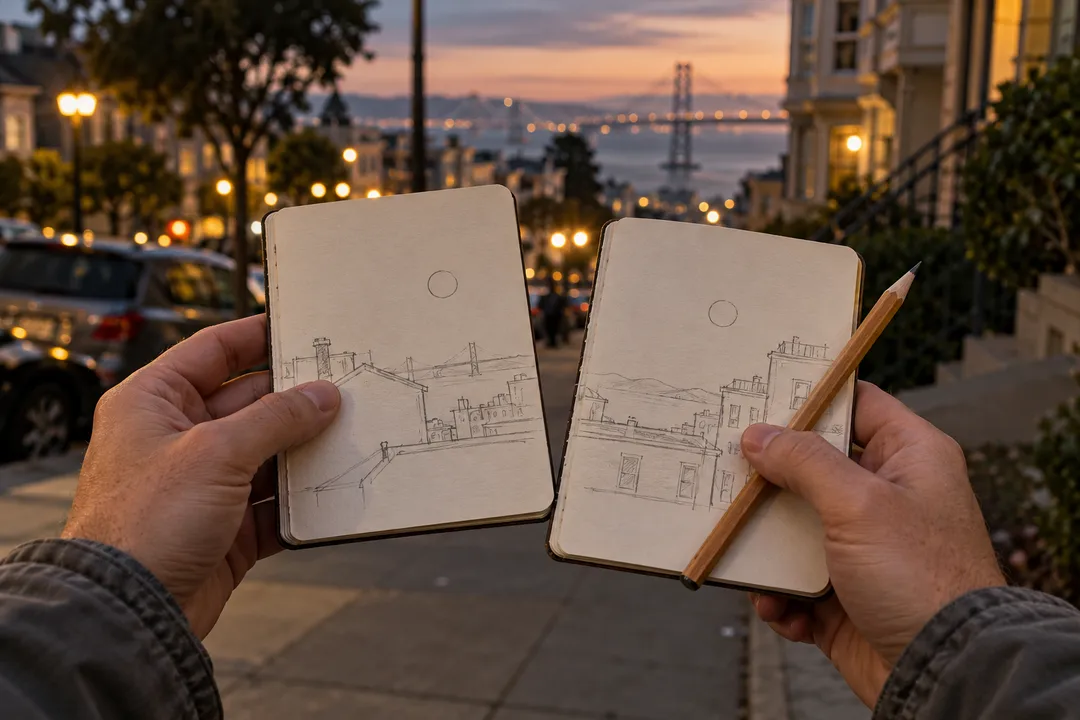
Divide a pocket notebook page into two loose areas. Use the lower part for the shapes that interrupt the sky and the upper part for what you notice above them. Straight lines can stand for roofs, an uneven outline can stand for a tree, and an unfilled circle can stand for an unidentified bright point. Accuracy matters only to the extent that the marks help you remember the view. Resist the temptation to decorate the page with stars that you did not actually see.
Begin with the obstructions because they give the observation a frame. Draw the rough opening while standing in the chosen position, then look up again before adding anything celestial. That second look often reveals how much your first impression simplified the scene. You might notice a wire, a projecting roof edge, or a patch of glare that the initial drawing missed. These details matter because a viewpoint is not just a geographic position. It is the view available from a particular place to stand.
Use pencil if it makes revision easy, and keep the notebook small enough to close quickly. There is no reason to spread a drawing kit across a public bench or sidewalk for this exercise. If holding the page and looking upward feels awkward, make the marks after each short look. The drawing is a memory aid, not a performance. Another person should be able to enjoy the outing without feeling required to produce a finished piece of art.
Compare drawings without competing
Invite a companion to draw the same opening independently. When both pages are ready, describe the differences before trying to decide which is correct. One person may have emphasized the roofline while the other noticed the brightest part of the sky. Ask whether you were standing in exactly the same position. A small change in viewpoint can alter what a building hides. This conversation is more interesting than treating the number of marks on the page as evidence that one person has better eyesight.
If the drawings disagree about a bright point, look again together. Use a dated sky chart when you want to investigate its identity, setting the location and intended observing time appropriately. Keep an unresolved point unresolved when the comparison remains inconclusive. Your notes become more trustworthy when they distinguish observation from interpretation. The fact that someone confidently names an object is not proof that the object is present, and a persuasive phone photograph is not a substitute for that distinction.
After the comparison, add a brief note explaining the drawing's limits. It might say that a lamp interfered with the lower left part of the view, or that the observer could not comfortably see above a tree. These are descriptions of an experience, not measurements of neighborhood darkness. Avoid converting them into a ranking of local streets. The next person may arrive under different conditions, face another direction, or need a different place to stand.
Take the page for a short walk
Once you have one sketch, decide whether a second position would answer a new question. Moving merely to fill another page is unnecessary. A useful comparison might ask whether a broader street opening reveals more of the intended direction, or whether standing away from direct glare makes the same subject easier to notice. Name the question before moving. That keeps the route purposeful and prevents a neighborhood stroll from expanding into a search for an impossible perfect viewpoint.
Choose the next position from ordinary public space, with room for other pedestrians to pass. Do not use a doorway, private courtyard, or ambiguous landing as a drawing station. If a managed destination is part of the plan, use the applicable operator's access information and follow restrictions on arrival. An attractive space on a map does not establish permission to use it after dark. Your sketchbook is portable, so there is no need to force the activity into an unsuitable corner.
At the second pause, draw a fresh frame instead of copying the first one and adding more stars. You are documenting a new view. Keep the same plain symbols so that the pages remain comparable, but let their proportions differ. If the sky is obscured, draw the obstruction and write that the celestial subject was unavailable. A page that records a failed attempt can be just as useful as a successful sighting because it explains what the route actually offered.
Keep the phone in a supporting role
Decide beforehand whether the phone is a chart, a navigation tool, or a camera for the evening. It can serve each purpose, but switching constantly between them can consume the whole pause. For this outing, let the notebook carry the memory while the phone supplies information when needed. Stop walking before consulting either. Put the screen away once the question is answered, and allow the group to look at the actual scene without competing with a glowing display.
If you do take a photograph, label it as a photograph of the view rather than evidence of everything visible to the unaided eye. A camera and a person do not render a scene identically. Avoid adding a confident astronomical caption solely because an image looks convincing. You can save the photo beside the drawing and return to the identification later. That delay is part of careful observing, and it gives the outing a second life as a question to investigate at home.
Karpo APP can help you think through the city part of the plan. A useful prompt might describe a Hayes Valley starting area, a preference for a short walk, and two unobtrusive pauses for sketching the sky. Treat any proposed itinerary as an idea to assess. Use relevant access information for actual destinations, astronomy resources for celestial positions, and weather information for conditions. The app does not need to claim a live darkness reading or automatic astronomical identification to be useful in organizing your preferences.
Practical notes for keeping the record honest
Keep the outing easy to end. Carry a layer for standing, choose a return option before you leave, and let the second sketch remain optional. A tired hand, an uncomfortable neck, or an obscured sky is sufficient reason to close the notebook. There is no need to compensate with a longer route. A single page made with attention offers more than several rushed pages produced while the group wonders when the activity will be over.
At home, add the circumstances you remember and preserve uncertainty in the labels. Write what changed between the two positions and what you would do differently on another walk. Do not turn a pleasant evening into a claim that you have certified an autumn observing site. The useful outcome is smaller and more personal: you now know how your chosen patch of Hayes Valley or the Western Addition framed one sky, how your companion experienced the pause, and which question might be worth carrying out on the next blank page.
Ask Karpo for more information.
Keep reading
- Twin Peaks Hilltop Staircase Walk Planner for City Lights
 Inner Sunset Hilltop Staircase Walk Planner for Trekkers
 Bernal Heights Hilltop Staircase Walk Planner With Kids