 Inner Sunset Irish Coffee Bar Night Picker for New Parents
Bars & Nights Out
San Francisco Autumn Cider House: Plan Around Rainy Weather
Make a rain-ready cider plan with indoor priorities, short transfers, food timing and a clear backup when an outdoor autumn itinerary stops working.
Rain changes an autumn cider house search in San Francisco from a flavor question into a timing question. A route that looks charming on a dry map can become a wet transfer with no comfortable pause. In the Karpo APP, give the starting neighborhood, indoor preference, maximum walking distance and desired meal length before asking for recommendations. The useful result is a weather-resilient shortlist with visible tradeoffs, not an invented promise that a patio or seasonal event is operating.
Set a dry-arrival boundary
State how much outdoor exposure the group accepts between transit and the door. You may want a short walk with a covered option, or you may want the destination to be the only stop outside. Include mobility needs and the time you have before dinner. Those details let the assistant sort a practical route instead of presenting every nearby place as equally good in a downpour.
A rainy afternoon can make a sparkling, bright pour feel especially welcome, while a heavier drink may suit a long indoor stay. Describe that preference without assuming a menu offers it. Ask for the available cider style and tasting format separately. The distinction keeps a seasonal search from turning into an unsupported promise about what is pouring once you arrive.
Choose the drink after the shelter
Tell the app whether the group wants to eat first, order a substantial plate at the tasting stop or finish with dinner elsewhere. Rain makes an unnecessary second journey more costly, so ask for the distance and time between steps. If a menu does not show dinner, the answer should say so. A short, honest plan beats a perfect-sounding itinerary that leaves everyone hungry under an umbrella.
When a menu or venue page is available, quote it instead of translating a vague phrase into a stronger claim. “Seasonal apple drink” may refer to a cocktail, while “cider on draft” answers a different question. Ask whether the listing identifies a pour, a flight, a bottle or a mixed drink. If the format is absent, leave it unresolved and decide whether the gap matters.
Make food timing explicit
A bookstore, gallery or market can be a useful shelter only when its public access and timing are stated. Ask for one nearby pause with a clear purpose, then keep it optional. The rain plan should still work if the group skips it. This protects the evening from a second set of assumptions and gives late arrivals a place to regroup without adding a long detour.
Easy might mean one transit line, a level walk, an accessible restroom or a room where a wet coat is not a problem. Put the relevant meaning into the request. The app cannot infer your threshold from the word alone. The more concrete the constraint, the more useful the comparison becomes, especially when two venues are equally close but very different in practical comfort.
Use the source wording
Ask for a second option that solves the rain problem, not just another cider name. It could shorten the walk, reduce transfers or place food closer to the tasting. Explain which tradeoff you accept: a less ambitious flight for a dry arrival, or a longer route for a stronger menu. Naming the compromise helps everyone decide quickly when the forecast turns.
Recommendations do not reserve seats, report live pours or confirm a door is open during a storm. Use the venue’s own current information for the final decision and keep your backup ready. That boundary is not a weakness; it keeps the plan honest. A tool can organize the question and surface the options while you make the real-time call.
Plan an indoor pause
Three stops, two walks and a scenic detour create more failure points than value in wet weather. Ask for one core destination and one optional nearby idea. If the group is tired, the optional piece disappears without harming the evening. A restrained plan gives the cider conversation enough room and makes the experience feel deliberate rather than rushed.
Rain-ready timing contingency note: decide what the group will do if the first option is too crowded, too far, too warm or missing the flavor detail that mattered. Rain-ready timing Name one alternate and the exact reason it exists. Rain-ready timing Keep that fallback short enough to use while everyone is already traveling, and leave the final service question for the venue’s own information.
Practical Notes
Rain-ready timing decision worksheet: write the main preference, the acceptable compromise and the one unanswered detail that belongs to the venue. Rain-ready timing Keep a second line for the companion who has a different pace, appetite or way home. Rain-ready timing A short record is easier to use than a list of twelve names, and it gives the next request a clear starting point.
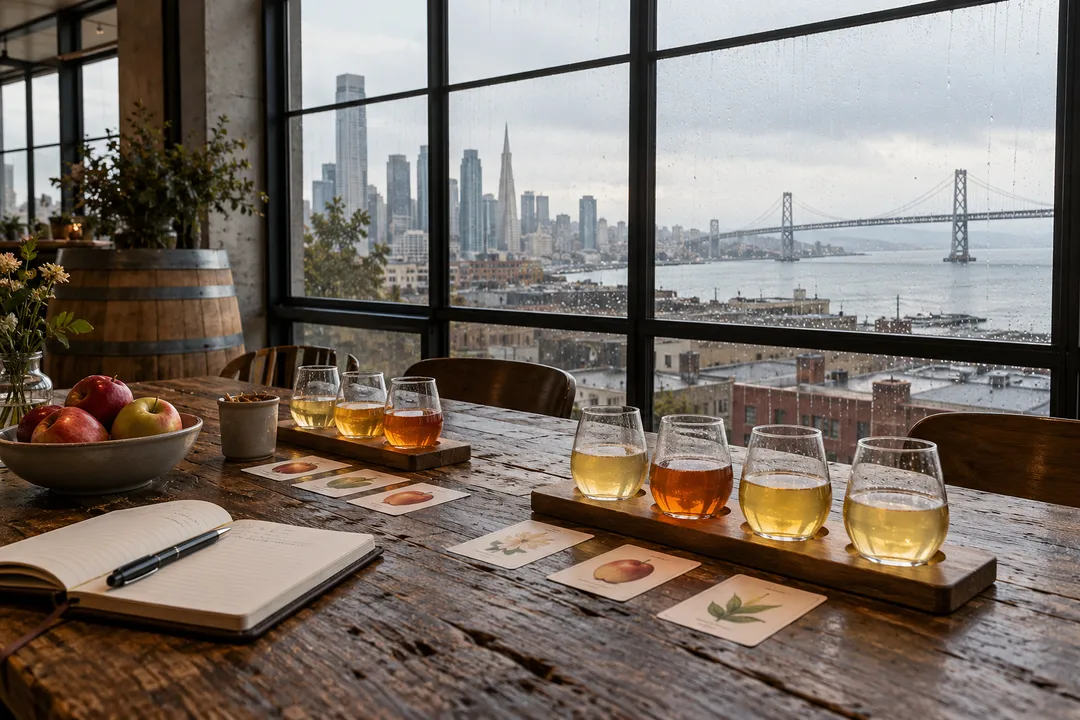
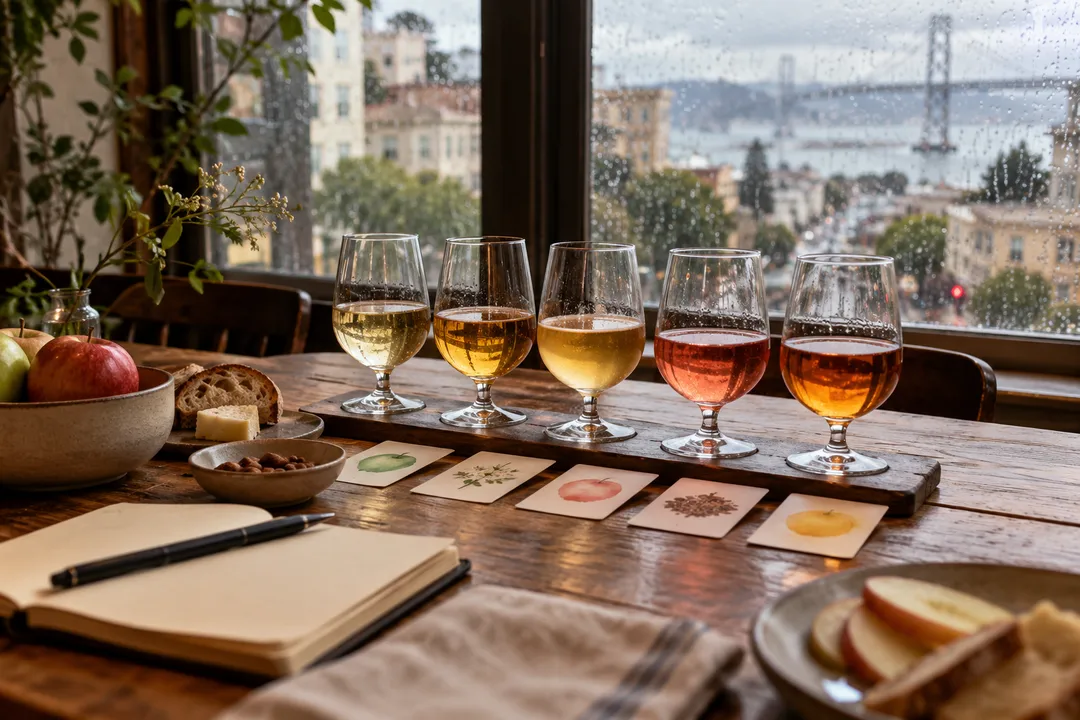
Weather resilience comes from fewer assumptions: set the shelter boundary, keep the route short and make the walk optional. The generated images here are editorial illustrations, not proof of any specific San Francisco business or its weather policy. Ask Karpo to choose the plan that preserves a good tasting conversation even if the outdoor autumn portion disappears. Rain is a planning variable, not a reason to write a grand itinerary. Mark the covered approach, the indoor anchor and the moment the optional walk disappears. Then save the alternative that keeps everyone dry with the least extra effort. A follow-up can ask for the same flavor direction inside a smaller travel window, or for a dinner-led stop that does not depend on a weather break. The result is a route with a graceful failure mode, which is more valuable than a scenic promise that only works under blue skies. Let each candidate earn attention by explaining shelter, tasting focus and the shortest workable approach. If the forecast shifts, retain the flavor brief and request a drier route rather than restarting everything. This weather rule keeps a fall atmosphere from implying that outdoor conditions will cooperate. Rain planning begins with the exact moment the group stops accepting exposed pavement or uncovered waiting. Write down the covered segment, the indoor pause and the backup question before opening a broad search. Build the rainy version around the door-to-table experience. Mark the maximum uncovered distance, the point where waiting becomes unpleasant and the food timing that cannot slip. If one candidate solves the drink question but fails the shelter test, keep it as a note rather than the winner. A shorter request can ask for an indoor anchor, a manageable arrival and one clearly named cider style. Once the weather is settled, the group may add a walk; until then, preserving warmth and an easy departure is the more useful design choice.
Ask Karpo for more information.
Keep reading
- Inner Sunset Irish Coffee Bar Night Picker for New Parents
 Mission Irish Coffee Bar Night Picker for a Sober Friend
 Richmond District Irish Coffee Bar Night Picker for Fiddlers