 Inner Sunset Irish Coffee Bar Night Picker for New Parents
Bars & Nights Out
San Francisco Autumn Cider House: Bike-Friendly Tasting Plan
Plan a bicycle-friendly cider outing by balancing secure arrival, drink pacing, companion preferences and a route that does not rely on unsafe assumptions.
A bike-friendly autumn cider house plan needs more than a pin on a map. In San Francisco, hills, weather and the trip home belong in the first question, especially when a tasting may include more than one pour. In the Karpo APP, describe the kind of ride you are willing to make, where you will start, whether you need a meal and how you want to handle the return journey. Ask for options to compare, not a promise that a particular stop can store a bicycle or hold a seat.

Describe the ride before the drink
Say whether your route is a short neighborhood pedal, a flat cross-town trip or a ride that needs to end near a transit connection. Add whether you want an indoor destination, a place where you can pause without crowding gear and a schedule that leaves room for a slow meal. Those details help separate a useful route from a technically nearby result that feels awkward once the bike, helmet and weather enter the picture.
The app can organize a route question, but it cannot invent bike racks, secure storage or a safe return path. Ask it to show which logistics are stated by a venue and which are simply planning assumptions. If a detail matters, follow the link and use the business’s own instructions. Treat the absence of bike information as an open question rather than an invitation to fill in a convenient answer.
Separate cycling logistics from venue facts
A rider arriving after a long climb may prefer one crisp glass and food before deciding on more. Someone meeting friends from another direction may want a small comparison. State the desired pace and ask the shortlist to explain how each option supports it. The useful distinction is not “flight versus no flight” in the abstract; it is whether the format fits the group, the route and the time you have left before heading home.
When a menu is available, quote its wording in your request. Ask whether a cider is listed as dry, tart, sparkling, hopped or fruit-infused, and keep those labels separate from your own interpretation. If the menu names an apple cocktail, do not call it a cider flight. This small discipline makes the comparison clearer and protects the plan from a search result that uses “cider house” as a mood rather than a service description.
Choose a tasting shape that matches the ride
A bike outing often includes someone who arrives by foot, rail or car. Mention those different starting points and the shared finish you want. The app can compare a central meeting point with a destination farther out, then explain the compromise. If one person needs a substantial meal while another only wants a tasting, ask for a plan that does not make either person wait through an unnecessary second stop.
Do not ask a recommendation engine to decide whether you should ride after drinking. Decide your return rule first: ride only before tasting, lock the bike and use transit, arrange a sober pickup or choose a zero-proof plan. Then ask for a destination that works with that rule. A good tool response supports the boundary you set; it does not turn transportation risk into a fun seasonal detail.
Use exact menu language
A short walk or market stop can give the group time to arrive and settle before ordering. Keep it optional, especially when wind or wet pavement changes the ride. Ask for a nearby buffer activity without requiring a street-by-street itinerary. If the ride runs late, remove the buffer and preserve the meal or tasting. The best route is resilient enough to lose one extra idea without collapsing.
Tell the app what should happen if the first choice is too crowded, lacks food or sits too far from the return connection. A second option should solve a specific problem, not merely be another name. For example, ask for one alternative with easier transit and one with a stronger food fit. This creates a usable backup while avoiding the false confidence of a ranked list with no reasoning.
Plan for the non-cyclist
Save the facts you saw on the venue’s own site, the route assumption you made and the question still unanswered. Recommendations can change as menus and hours change, and a record prevents a remembered convenience from becoming a claimed amenity. It also helps you explain the plan to a friend who is deciding whether to join.
Two-wheel arrival contingency note: decide what the group will do if the first option is too crowded, too far, too warm or missing the flavor detail that mattered. Two-wheel arrival Name one alternate and the exact reason it exists. Two-wheel arrival Keep that fallback short enough to use while everyone is already traveling, and leave the final service question for the venue’s own information.
Practical Notes
Two-wheel arrival decision worksheet: write the main preference, the acceptable compromise and the one unanswered detail that belongs to the venue. Two-wheel arrival Keep a second line for the companion who has a different pace, appetite or way home. Two-wheel arrival A short record is easier to use than a list of twelve names, and it gives the next request a clear starting point.
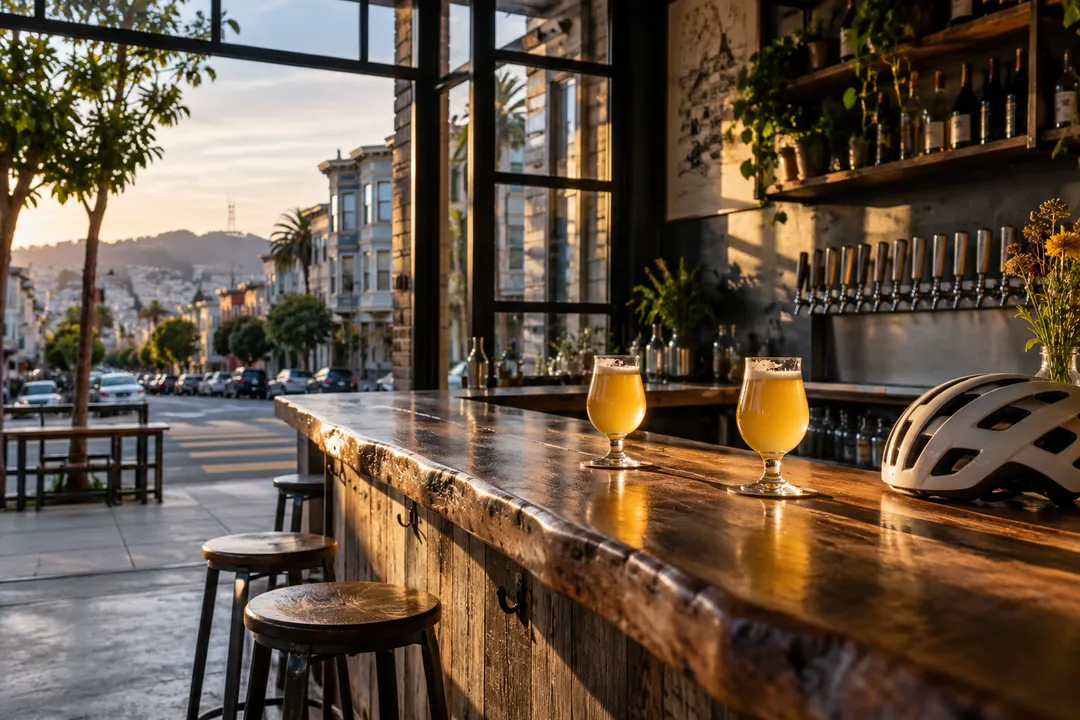
Keep your ride decision separate from your tasting decision, state your return plan plainly and treat bike storage as unconfirmed unless the venue says otherwise. The generated images are editorial illustrations, not proof of a particular San Francisco establishment. A focused request should end with a choice: which option gives the group a good cider introduction without creating a risky or tiring trip home. A bicycle plan deserves its own small ledger: where the ride ends, what happens to the gear, and how the group gets home after tasting. Those details are personal limits, not venue promises. If the first suggestion leaves too much uncertainty, ask for another route with a simpler return and a different cider emphasis. Keep the tasting pace modest and let the companion who arrived another way set the shared departure rhythm. The strongest result is the one that makes the ride and the conversation feel like parts of one evening rather than competing agendas. A ride-aware shortlist should show its reasoning instead of pretending every tasting has the same storage setup. When the ride changes, ask for a new route while preserving the group's flavor preference. Separating cycling logistics from drink enthusiasm stops a seasonal idea from implying facilities a venue has not published. Start the bike brief with where the ride ends, how long the lock can wait and what food matters. Record the chosen turn, the acceptable walking gap and the fallback that protects the return. Give the bicycle plan a clear beginning and end. Record where the ride finishes, how much time the group will spend off the bike and what happens if the weather turns. The tasting request can then focus on one crisp or tannic direction instead of trying to solve every logistics question at once. Ask for a route that keeps the return comfortable for the slowest rider. Afterward, write down which transfer felt natural and which one made conversation harder. That observation is useful evidence for the next search, even when no venue detail is available yet.
Ask Karpo for more information.
Keep reading
- Inner Sunset Irish Coffee Bar Night Picker for New Parents
 Mission Irish Coffee Bar Night Picker for a Sober Friend
 Richmond District Irish Coffee Bar Night Picker for Fiddlers