 Inner Richmond Egg Tart Bakery Crawl: Clement Street Pastry
Coffee & Dessert
Potrero Hill Apple Cider Donut Bakery Finder for Home Bakers
Potrero Hill and nearby Dogpatch bakeries slip cider donuts into fall cases. Buy one to taste, learn to read the crumb, and bake a better batch at home.
An apple cider donut on Potrero Hill is easiest to find as a seasonal extra at the small bakeries and coffee bars along the hill's shopping blocks, or a short walk downhill in Dogpatch, where craft bakers rotate fall flavors. For home bakers, the point is less about stocking up and more about research. Buy one, taste it carefully, take notes on crust and crumb, and use what you learn to bake a better batch in your own kitchen.
Buy One to Study, Not a Dozen to Hoard
Home bakers often make the mistake of buying a whole box, eating three, and forgetting what made the first one special. A better approach is to buy a single cider donut from one counter, and perhaps a second from another, then treat them as samples. Ask the person at the register whether it is a cake donut and if the cider is reduced before mixing.
Most bakers are happy to talk technique in a general way, especially on a slow weekday. You will not get a recipe, but you might hear whether they use buttermilk, how long they rest the dough, or which apples they favor. Those small hints are worth more than any written recipe, because they come from someone who fries these by the tray every autumn.
Where Fall Donuts Turn Up on the Hill and in Dogpatch
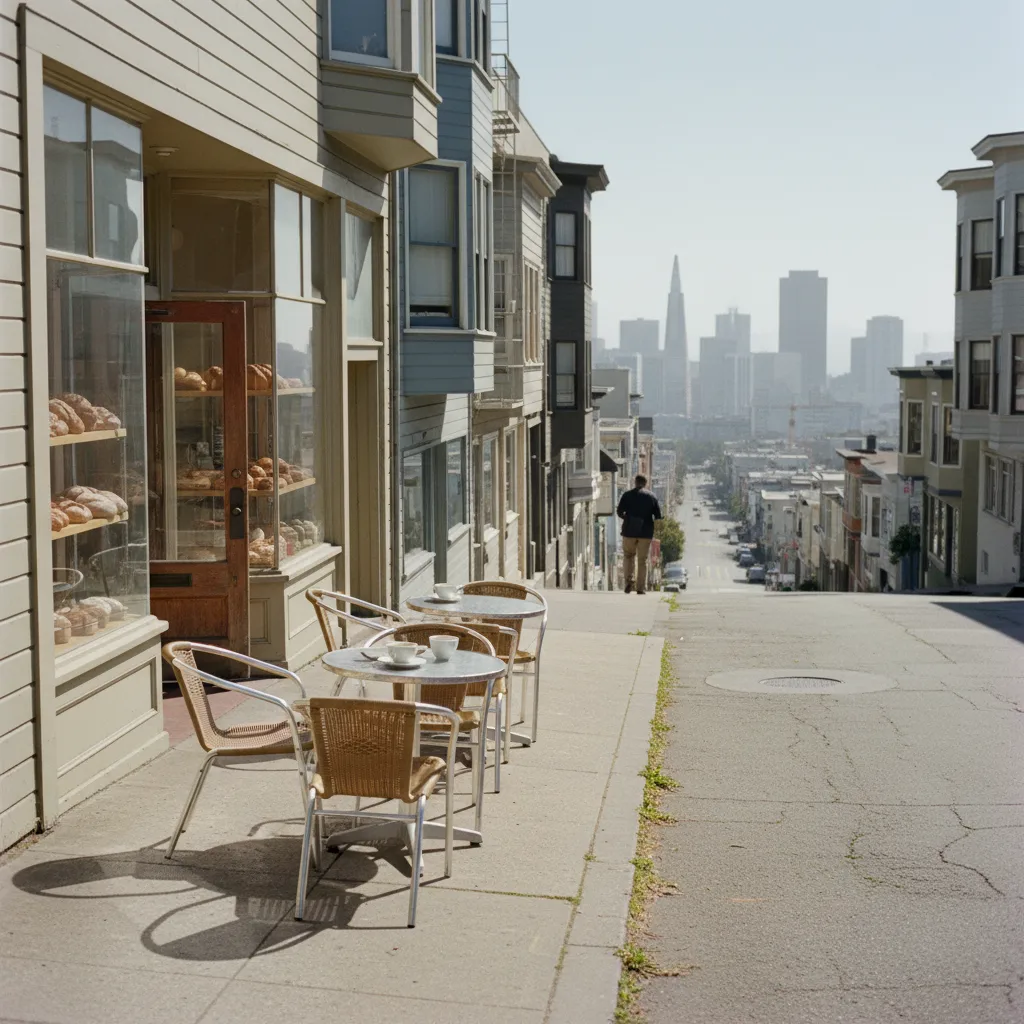
Potrero Hill's small commercial stretches have a village feel, with a neighborhood bakery or two, coffee bars and delis serving people who live on the surrounding slopes. In autumn, those counters tend to add a cinnamon-sugar cake donut, apple hand pies or spiced loaves. A true cider donut is not guaranteed, so be ready to study whatever fall pastry carries the same idea.
Walk downhill toward Dogpatch and the options widen. The old industrial blocks near the waterfront now hold artisan bakeries, coffee roasters and food makers in converted warehouses. Some rotate seasonal donuts, while others supply cafes across the city. This is where you are more likely to find a baker experimenting with cider reductions, browned butter or unusual apple varieties in the fall case.
A third source is the farmers market circuit nearby, where bakery stands from around the Bay Area sometimes bring apple goods in autumn. Market stalls are excellent for home bakers because the person behind the table is often the baker. Ask what makes their version different, then note the answer before the next customer steps up and the conversation moves on.
A Tasting Notebook on a McKinley Square Bench
McKinley Square, near the hill's western edge, is a grassy park with sweeping views toward downtown and the bay. It is a favorite of dog walkers, who circle the lawn with leashes and coffee cups, and of neighbors who come up to watch the light change. Claim a bench, open your notebook, and set the donuts on a napkin beside you.
Write down first impressions before tasting. Note the color of the crust, how evenly the sugar coats it, and whether the surface looks smooth or rugged. Then break each donut in half and record what you see inside. Patient tasting while a dog sniffs hopefully at your shoe is part of the experience, so keep the bag closed when you are not writing.
Crumb Forensics: What a Good Cider Donut Reveals
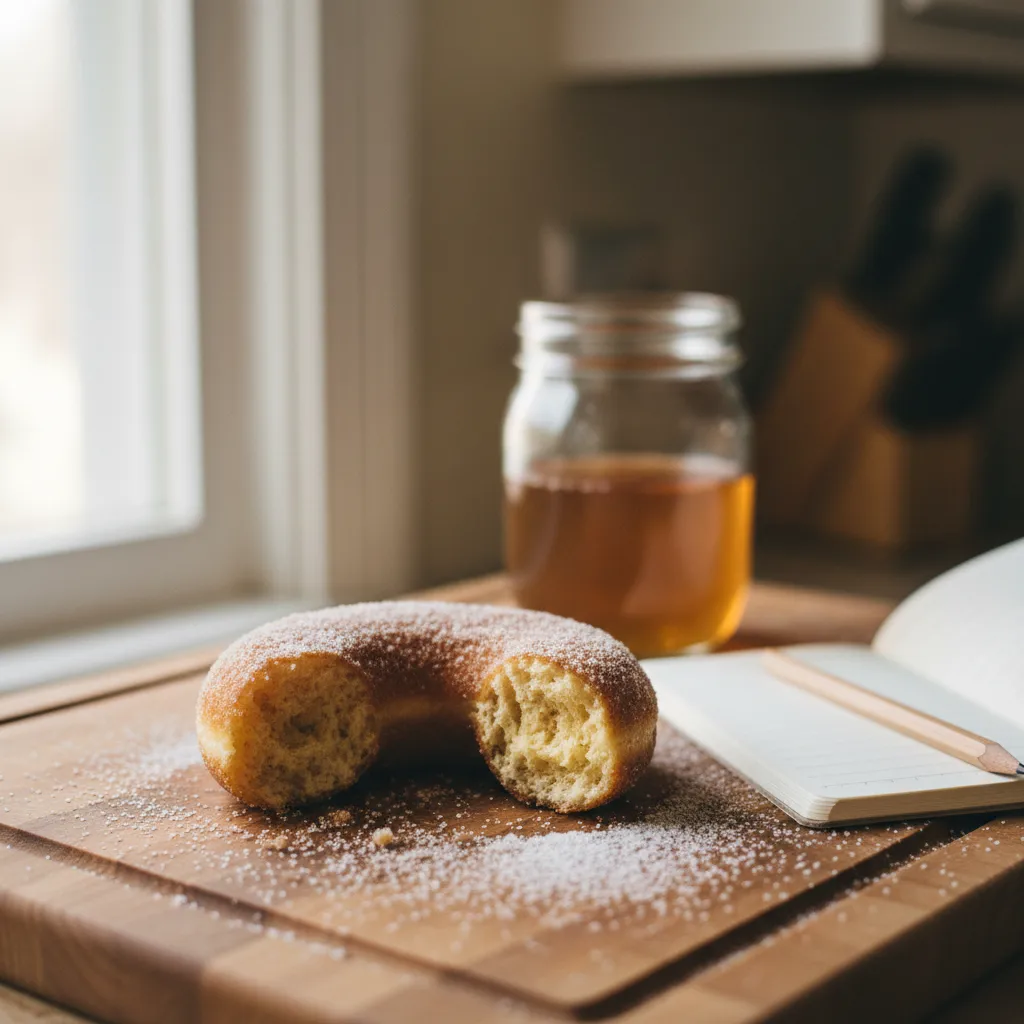
Start with texture. A well-made cider donut is a cake donut with a tight, moist crumb and fine, even holes. If the inside is dry and powdery, the dough was likely overmixed or fried too long. If it is greasy and dense near the center, the oil was probably too cool, letting the donut soak up fat instead of setting quickly.
Next, taste for apple. The cider should be noticeable but subtle, a faint fruity tang under cinnamon and nutmeg. Bakers usually reduce cider on the stove until it is thick and concentrated, because unreduced juice adds too much liquid without enough flavor. A flat-tasting donut tells you the reduction was skipped or too brief, which is the single most common home-baking error.
Finally, judge the crust and timing. The outside should crackle slightly under a thin coat of cinnamon sugar, and the donut should taste best warm, within a few hours of frying. Store-bought leftovers can be revived in a toaster oven until the edge firms up, then tossed again in sugar. Compare that revived texture with your fresh sample for useful notes.
Bringing the Lessons Back to Your Kitchen
Begin with the reduction. Simmer a generous amount of fresh cider in a wide pan until it shrinks to a syrupy fraction of its original volume, then let it cool. This concentrated cider is the heart of the recipe. Combine it with buttermilk, melted butter, egg and a little brown sugar, then fold into flour, baking powder, cinnamon and a fresh grating of nutmeg.
Handle the dough gently and chill it before rolling, because cold dough cuts cleanly and holds its shape in the oil. Use a thermometer to keep the oil at a steady moderate heat, and fry a test donut first. Cut it open to compare with your notes from McKinley Square, adjusting time and heat until the crumb matches the version you liked best.
Toss the donuts in cinnamon sugar while they are still warm, so the coating sticks without turning wet. Serve them quickly, with hot cider or coffee, and treat the first batch as another round of research rather than a final result. Most home bakers need two or three tries before the crust, crumb and cider tang come together in proper balance.
Plan B, Plus One Shortcut Not Worth Taking
If no cider donut appears in the cases on the hill or in Dogpatch, study a cinnamon-sugar old-fashioned or an apple fritter instead. Both teach useful lessons about frying and sugar coating, even if the flavor is different. A slice of spiced apple cake can show you how a baker balances fruit and spice, which carries straight over into your donut batter.
Skip boxed cider donut mixes from the supermarket aisle. They tend to rely on artificial apple flavor and produce a sweet, bland crumb that hides every lesson you came here to learn. If rain sets in, take your samples home, study them at the kitchen table, and turn the wet afternoon into your first frying session instead of waiting for sun.
Hill Logistics for Bakers on a Mission
Potrero Hill's streets are steep, and Dogpatch sits at the bottom near the water, so plan your route around the slopes. The Karpo APP can help you search for bakeries and coffee bars on the hill and in Dogpatch, compare their styles, and save a shortlist of places to sample. That saves you from climbing the same block twice in search of one donut.
Bring a small notebook, a pen and paper bags for each sample, labeled by place so your notes stay clear. When you are ready for another research round, the Karpo APP can help plan a walking order that starts at the top of the hill and ends downhill in Dogpatch, so the hardest climb happens before the tasting begins and your legs are still fresh.
Ask Karpo for more information.
Keep reading
- Inner Richmond Egg Tart Bakery Crawl: Clement Street Pastry
 Portola Egg Tart Bakery Crawl: San Bruno Avenue Pastry
 Outer Sunset Egg Tart Bakery Crawl: Ocean Mist and Custard