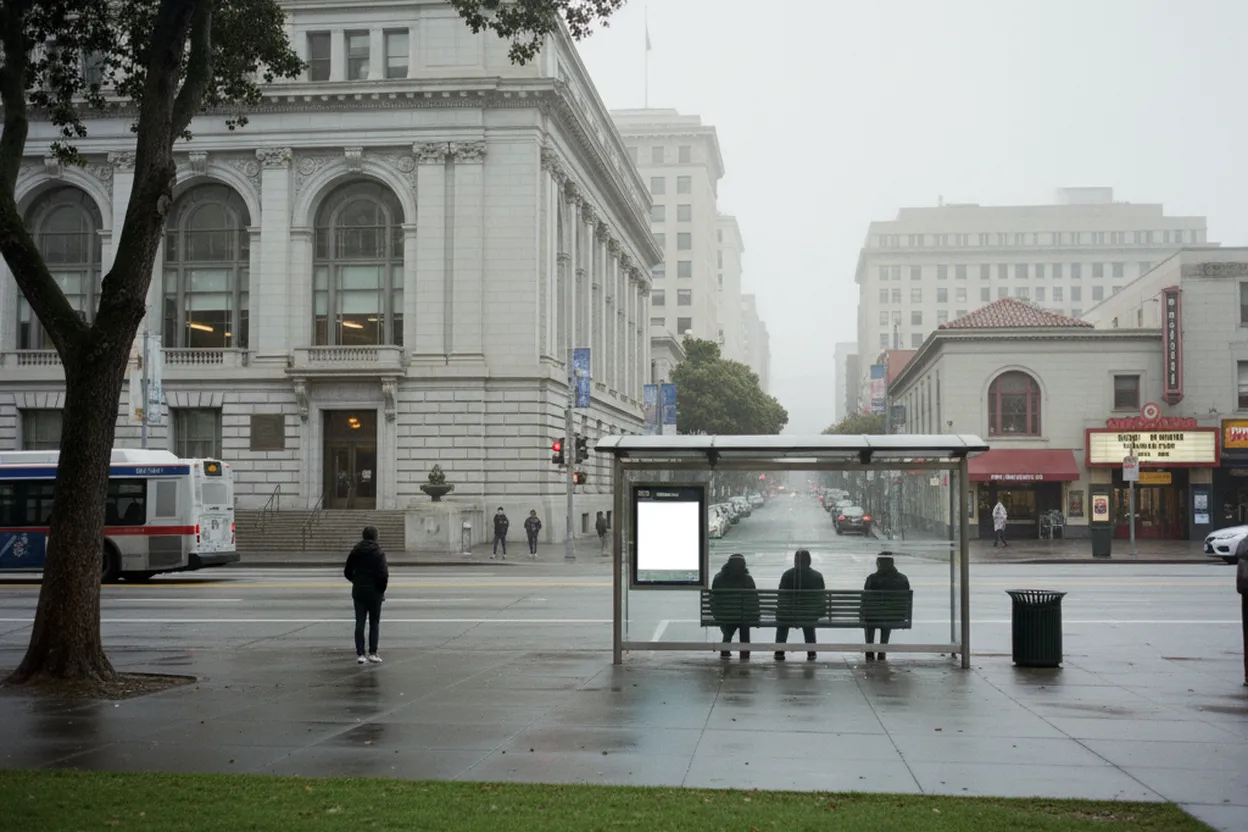
San Francisco rarely plans its day around Midwestern-style storm language, but a spike in severe thunderstorm watch searches is still a useful prompt: slow down, verify, and move activities indoors before the weather makes decisions for you. As of Tuesday, August 11, 2026, the National Weather Service San Francisco Bay Area office is highlighting isolated thunderstorms possible Wednesday and a Coastal Flood Advisory for bayshore locations, not a confirmed citywide severe thunderstorm watch for San Francisco. That distinction matters. This guide turns the alert search into a practical free backup route centered on SFPL, Muni choices, and public museum-adjacent indoor space where plans can bend without spending money.
Want a faster storm-day route that starts near your block? Text Karpo for San Francisco indoor stops, Muni-friendly pivots, and free options to check before you leave.

Check weather.gov/mtr before leaving Civic Center
Start with the National Weather Service San Francisco Bay Area page, not a reposted alert screenshot. On August 11, its local page shows the latest map update from late Monday night and flags isolated thunderstorms possible Wednesday, plus a Coastal Flood Advisory affecting bayshore locations. If a severe thunderstorm watch appears later, read the geography and expiration time carefully; San Francisco may be outside a broader Bay Area headline, or only part of the city may face a practical impact.
The decision rule is simple: if the official page mentions lightning, flooding, gale conditions, or low-lying shoreline impacts, choose a plan with short walks, indoor waiting space, and easy exits. Skip exposed waterfront wandering, hilltop viewpoints, long park loops, and any route that depends on an outdoor line. Keep the NWS page open until you arrive at the first stop, because storm timing can change faster than museum or library hours.
Use SFPL Main Library at 100 Larkin Street as the anchor
The Main Library is the cleanest free anchor for a weather-flex day because SFPL lists it at 100 Larkin Street with Tuesday hours of 9 a.m. to 8 p.m. It has WiFi, study rooms, public transit information, exhibits, and enough space to absorb a solo visit, a family pause, or friends regrouping. It is also close to Civic Center transit, which reduces the number of wet street crossings needed after arrival.
The tradeoff is that a library is not a private shelter or all-day lounge without norms. Keep bags compact, lower voices, and avoid treating seating as guaranteed during a citywide rain pivot. If you need a stroller-friendly, low-stimulation option, arrive earlier and use the building as a reset point rather than a packed itinerary. If Main Library posts a closure or event crowding, pivot to the nearest open SFPL branch listed on the locations page.
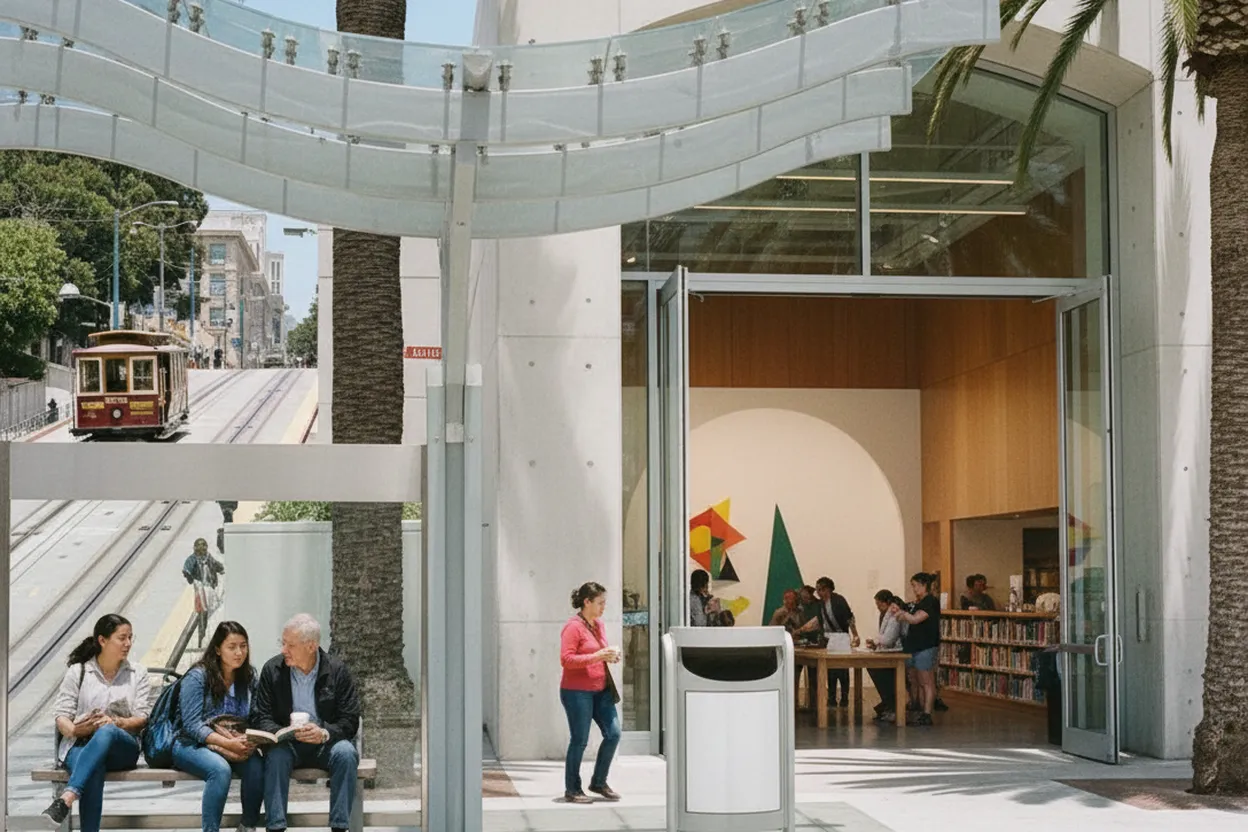
Choose Civic Center, Powell, or Montgomery Muni entries for shorter wet walks
Muni’s routes-and-stops page currently lists 73 routes and includes the trip planner, route filters, and major lines such as J Church, K Ingleside, L Taraval, N Judah, T Third Street, 5 Fulton, 14 Mission, 30 Stockton, and 38 Geary. For storm-day planning, the route name matters less than reducing uncovered transfers. Civic Center works for the library, Powell works for Union Square and Market Street cover, and Montgomery works for the Yerba Buena and SFMOMA area.
Do not assume every shelter protects you from sideways rain or that every elevator is running during a disruption. SFMTA’s travel updates page says stop status is updated every 30 minutes and includes Muni Metro elevator status, temporary stop relocations, and subway help. Check those pages immediately before moving, especially with kids, mobility devices, luggage, or a tight appointment. If predictions fail, choose the route with the fewest transfers rather than the one that looks fastest.
Make SFMOMA’s free public spaces a short Yerba Buena stop
SFMOMA is useful as a museum-adjacent indoor backup because its own free-days page lists 151 Third Street and states that 45,000 square feet of art-filled public spaces are open to the public. Its hours page shows Tuesday hours of 10 a.m. to 5 p.m., with Wednesday closed and Thursday noon to 8 p.m. That makes it a practical same-day add-on after Main Library only if you verify the current day and closing time first.
The catch is access scope. Free public areas are not the same as full museum admission, and special exhibitions, timed programming, or crowd controls can change the feel of the stop. Treat SFMOMA as a dry pause for lobby-level art and a route reset, not a promised full museum day. If the free areas are crowded, step back toward Yerba Buena’s covered edges or transit instead of waiting outside in a storm cell.
Keep the Asian Art Museum near Civic Center as a verification-only backup
The Asian Art Museum sits near the Main Library and can be tempting when rain hits Civic Center, but it should be handled as a verification-only backup for this free plan. Free programs can vary by date, age, residency, school closure context, or special promotion, and the research found no current official page confirming a universal free Tuesday visit for August 11. That means it is useful as a nearby indoor landmark, not a guaranteed no-cost replacement.
This is where the plan protects your budget: before walking over, check the museum’s own admission page or call if the website is unclear. If admission is not free for your group, stay with SFPL, SFMOMA’s public areas, or a transit move to another open branch. Families should be especially careful with age-based offers, because youth discounts, guardian rules, and reservation requirements can differ across institutions and may not apply on a normal Tuesday.
Avoid Embarcadero edges during bayshore flood advisories
The official weather page’s Coastal Flood Advisory language matters in San Francisco because low-lying bayshore locations can flood trails, beach access points, and tidal edges even when downtown streets feel merely damp. For a free indoor backup route, the Embarcadero can look convenient but become awkward if water, wind, or closures narrow the walking path. Choose Market Street, Civic Center, or Yerba Buena interiors over a waterfront stroll when advisory language is active.
Visitors often underestimate the failure mode: the problem is not only getting wet, but getting boxed into a longer exposed detour with kids, a cane, a dead phone, or shoes that slip on slick pavement. If your original day involved Ferry Building browsing, piers, or bay views, move the social part inland first and check conditions again later. Never walk around barricades or through standing water to preserve a sightseeing plan.
Refresh NWS, SFMTA, and SFPL pages at the door
The final action happens before you step outside, not the night before. Refresh weather.gov/mtr for watches, warnings, advisories, and thunderstorm timing; refresh SFMTA travel updates for elevator status, stop relocations, and subway help; refresh SFPL locations for the branch you plan to use. If one page fails to load, treat that uncertainty as a reason to simplify the route, shorten outdoor gaps, and pick a destination with multiple transit exits nearby.
For a low-cost San Francisco day, the best storm plan is deliberately modest: one verified free indoor anchor, one nearby covered or indoor-feeling backup, and one clean way home. Solo visitors can work or read; friends can regroup without buying tickets; families can pause without forcing a museum spend. If official alerts escalate while you are out, end the outing early and use the nearest reliable transit option instead of adding another stop.
Tags: #SanFrancisco #SFWeather #SevereThunderstormWatch #FreeThingsToDo #SFPL #MainLibrary #Muni #SFMTA #SFMOMA #YerbaBuena #CivicCenterSF #RainyDaySF #AskKarpo #BeforeYouGo
Sources consulted: Source 1: weather.gov · Source 2: sfpl.org · Source 3: sfmta.com · Source 4: sfmta.com · Source 5: sfmoma.org · Source 6: sfmoma.org
All trademarks are the property of their respective owners.
Ask Karpo first
Tell Karpo your date, group size, budget, and starting point. We’ll check current access, timing, transit, and the cleanest San Francisco plan for San Francisco Public Library, Muni shelters, and free museum-adjacent indoor stops before you head out.