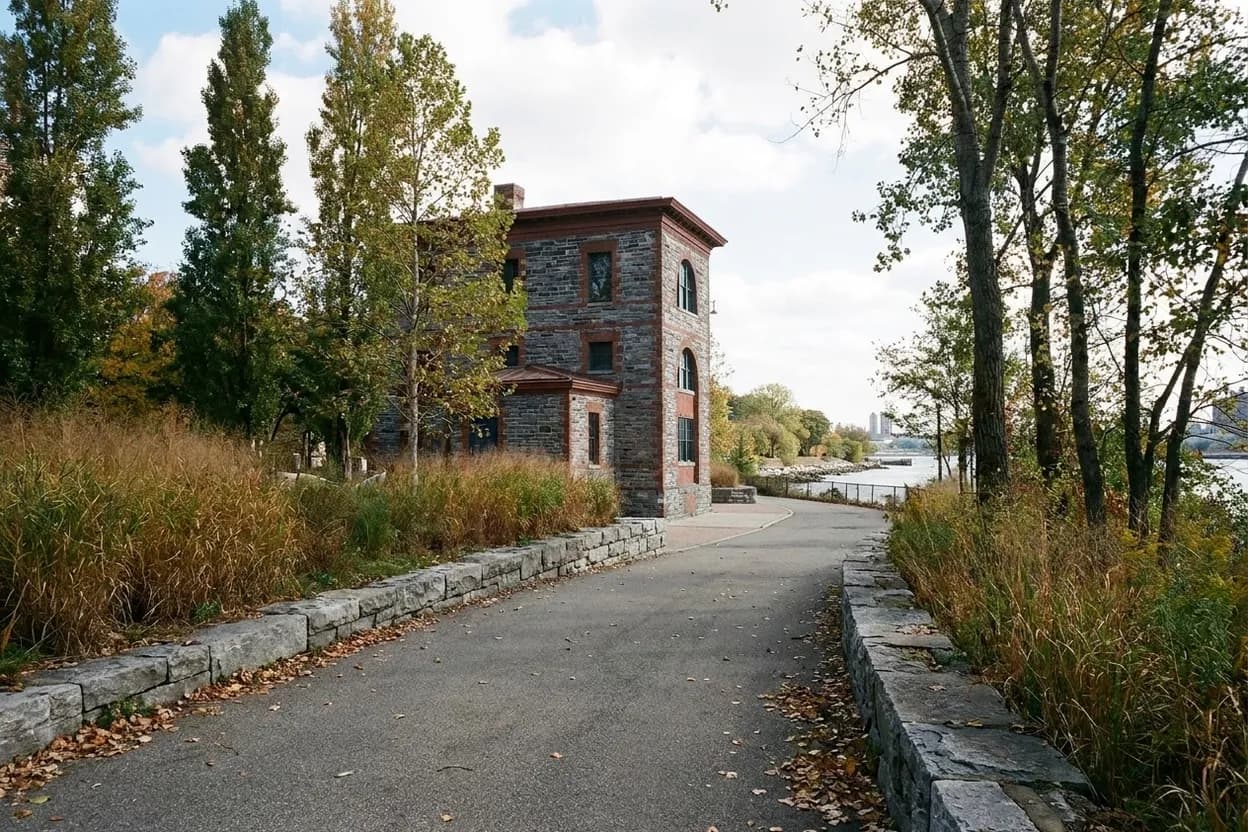
Inwood, Manhattan, holds a peculiar architectural secret: the Seaman-Drake Arch. This imposing structure, built in 1855, once served as the grand entrance to a sprawling 19th-century estate. Today, it stands alone, a solitary monument of locally quarried Inwood marble amidst the contemporary street grid and commercial enterprises. Its survival, despite the disappearance of the mansion it once guarded, creates one of uptown's most compelling visual contrasts, inviting a moment of reflection on the city's continuous evolution. This walk suits those who appreciate historical anomalies and the quiet grandeur of forgotten eras, offering a tangible link to Inwood's pre-urban past.
Want to explore more of NYC's hidden historical marvels and get custom-tailored itineraries for unique urban discoveries? Text Karpo for personalized recommendations.

The Unexpected Grandeur of the Seaman-Drake Arch
The Seaman-Drake Arch, sometimes referred to as the Inwood Arch, presents an arresting sight for those who know where to look. This 19th-century gateway, crafted from local Inwood marble, stands as a solitary sentinel. It measures approximately 35 feet tall, 20 feet deep, and 40 feet wide, an impressive scale that belies its current setting. Its construction dates back to 1855, originally serving as the entrance to the Seaman family estate, which has long since vanished, replaced by modern developments.
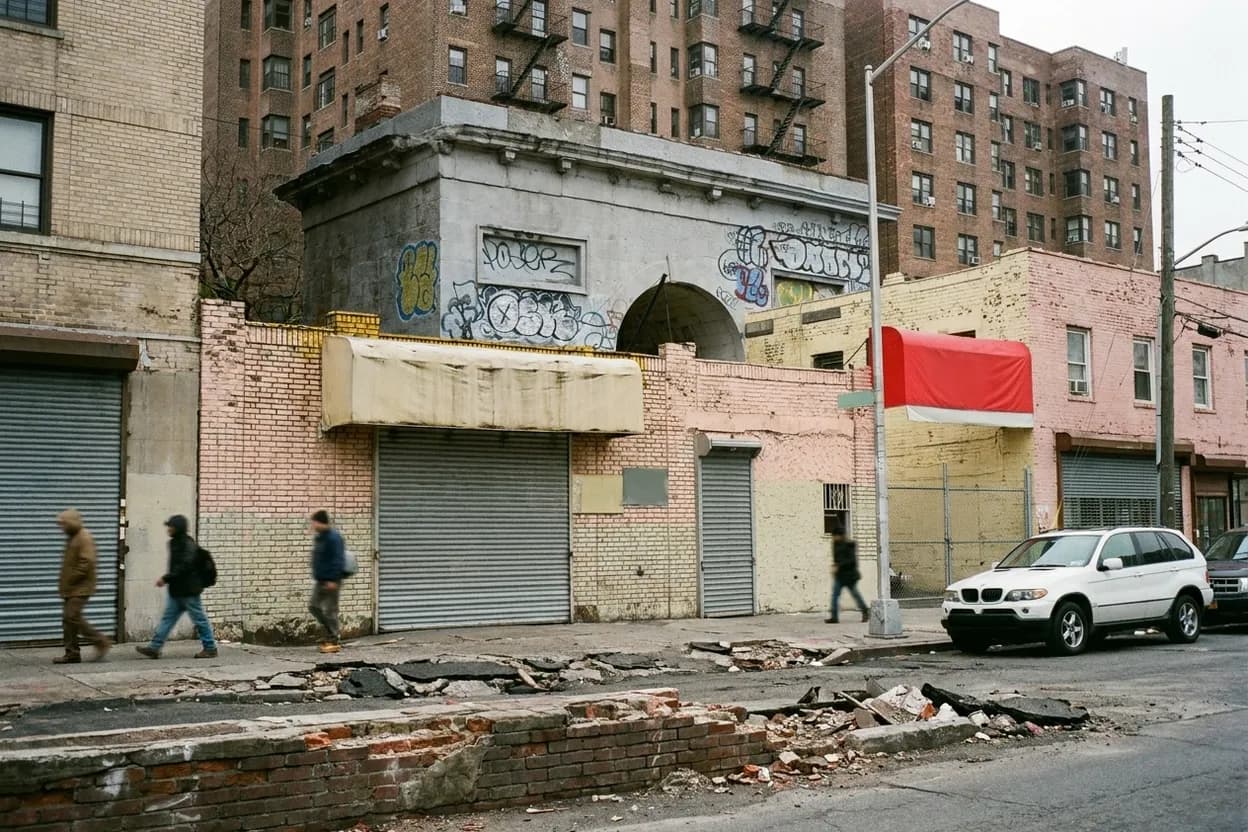
The arch's significance lies not just in its age or material, but in its unexpected placement. It is a stark reminder of Inwood's landscape before urbanization, a time when grand country estates dotted what is now a dense urban environment. The juxtaposition of this historic, monumental arch against the backdrop of an auto repair shop and other contemporary commercial buildings creates a unique visual narrative, highlighting the layers of history that coexist within New York City.
Architectural Anomaly in Inwood
What makes the Seaman-Drake Arch particularly compelling is its status as a standalone relic. Unlike many historical structures integrated into modern use or preserved within parks, this arch exists as a solitary, unattached gateway. Sources describe it as often partially obscured amidst the modern street grid and adjacent buildings, making its discovery a more profound experience for the observant visitor. This isolation underscores its role as one of the last remaining physical traces of Inwood's pre-urban estate era, offering a tangible connection to a forgotten past.
The arch's material, locally quarried Inwood marble, further grounds it in the history of the area. This choice of material speaks to the resources available in the mid-19th century and the architectural styles prevalent at the time. Its enduring presence, despite the surrounding transformations, allows for a moment of quiet contemplation on the impermanence of human endeavors and the surprising resilience of certain structures against the relentless pace of urban development.
Tracing the Estate's Footprint
The Seaman-Drake Arch once marked the grand entrance to a vast estate, a stark contrast to its current commercial surroundings. The original mansion that it served no longer exists; instead, the site is now occupied by the Park Terrace Gardens apartment complex. This transformation illustrates the dramatic land-use changes that have shaped Inwood over more than a century. The arch, therefore, acts as a silent witness to these shifts, a portal to a bygone era that has been physically erased.
Understanding its original context enhances appreciation for the arch's survival. It was not merely a decorative element but a statement of wealth and prestige, guiding visitors to a grand country residence. Its presence today, stripped of its original function and context, invites speculation about the lives once lived within its gates and the decisions that led to its preservation while the rest of the estate succumbed to development. This historical layering is a hallmark of New York City's complex urban landscape.
The Arch's Place in the Modern Streetscape
Currently, the Seaman-Drake Arch is associated with commercial uses, particularly in front of or around an auto repair and transmission repair property. This integration into the utilitarian fabric of modern Inwood creates a striking visual dichotomy. The classical, monumental gateway stands in sharp relief against the practical, often industrial, aesthetics of its immediate neighbors. This contrast is not merely visual; it speaks to the ongoing negotiation between historical preservation and contemporary urban functionality.
For visitors, this setting means that viewing the arch is an experience intertwined with the everyday life of the neighborhood. It is not a pristine museum piece but an active participant in the urban environment, lending an unexpected gravitas to an otherwise ordinary street corner. This blend of the historic and the mundane offers a unique photographic opportunity and a chance to observe how the past continues to assert its presence in the present, even in the most unexpected ways.
Navigating the Arch's Visibility
While the Seaman-Drake Arch is a public landmark, its visibility can be influenced by its surroundings. Sources indicate that the arch can be partially obscured by adjacent commercial buildings, including an auto-repair shop. This means that its full majesty might not be immediately apparent from all angles. Approaching the site with an awareness of these potential obstructions can help in planning your viewing strategy to get the best impression of its scale and detail.
The most impactful visual context comes from appreciating the contrast between the arch's enduring marble form and the surrounding auto-focused commercial frontage and apartment-era development. This interplay is central to the arch's narrative and its significance as an urban anomaly. Patience and a willingness to explore different vantage points along Broadway near West 215th to 216th Street will enhance the experience of discovering this unique piece of New York City history.
Preservation Efforts and Status
Despite its historical significance, the Seaman-Drake Arch is not listed on the National Register of Historic Places. Furthermore, efforts for local landmark designation have not yet succeeded. This status means that the arch does not have the same level of formal protection as other designated historical sites in the city. Its continued existence relies on a different set of circumstances, including its robust construction and perhaps a quiet appreciation from the local community.
The absence of official landmark status highlights the fragility of historical remnants in a rapidly developing city. It underscores the importance of public awareness and informal advocacy in preserving such unique structures. For those interested in urban history and architecture, the arch serves as a powerful reminder of what can be lost and what, through sheer resilience or benign neglect, manages to survive against the odds.
Practical notes for Seaman-Drake Arch
The Seaman-Drake Arch is visibly located on Broadway, specifically near West 215th Street and West 216th Street in Inwood. There is no confirmed information regarding public visiting status, specific hours, or whether interior access or tours are available in the provided sources. It is advisable to plan your visit with the expectation that viewing will primarily be from the street, allowing you to observe its impressive scale and unique placement within the modern urban fabric. The site is described as partially obscured by adjacent commercial buildings and auto-repair uses, so consider exploring different angles for optimal viewing.
Before heading out, it is always prudent to verify any potential changes to the streetscape or access conditions, especially for a site not formally designated or managed. Checking recent satellite imagery or local community forums might offer current insights into the immediate surroundings. Expect the best impression from the street, focusing on the powerful contrast between the arch's historic grandeur and the contemporary commercial frontages surrounding it. There are no indications of seasonal closures, ticketing requirements, or guided tours, suggesting it remains a freely accessible, if unconventional, urban discovery.
Tags: #SeamanDrakeArch #InwoodNYC #HistoricNYC #HiddenGemsNYC #NYCArchitecture #UptownManhattan #SecretNYC #UrbanExploration #NYCWalks #KarpoNYC #SecretArchitectureWalks #AskKarpo #BeforeYouGo #NYCHistory
Sources consulted: Source 1: 6tocelebrate.org · Source 2: theclio.com · Source 3: myinwood.net · Source 4: untappedcities.com · Source 5: en.wikipedia.org · Source 6: robertkhederian.substack.com · Source 7: instagram.com · Source 8: de.wikipedia.org · Source 9: theclio.com · Source 10: uptowncollective.com · Source 11: 6tocelebrate.org · Source 12: aroundus.com
All trademarks are the property of their respective owners.
Ask Karpo first
Tell Karpo your date, group size, budget, and starting neighborhood. We’ll check current access, timing, transit, and the cleanest plan for Seaman-Drake Arch before you head out.