A search for seafood near me on the Lower East Side returns two overlapping traditions: the century-old appetizing counters selling smoked and cured fish by the quarter-pound, and the three new seafood-focused rooms that opened in June 2024 to serve the same cold-water species on plates instead of in paper. The neighbourhood sits on a lineage of immigrant preservation techniques—curing in salt, smoking below 85 degrees, pickling in brine—that predate refrigeration and still govern the menus. Knowing the difference between lox, nova, and sable, and knowing when the ticket queue at the century-old counters runs longest, separates the walk-in from the regular.
Karpo maps every appetizing counter, seafood room, and fishmonger in the Lower East Side with live hours and the next-closest alternative when the ticket queue runs past twenty. Save the addresses that matter.
Lox, nova, sable: what the names mean and what you taste
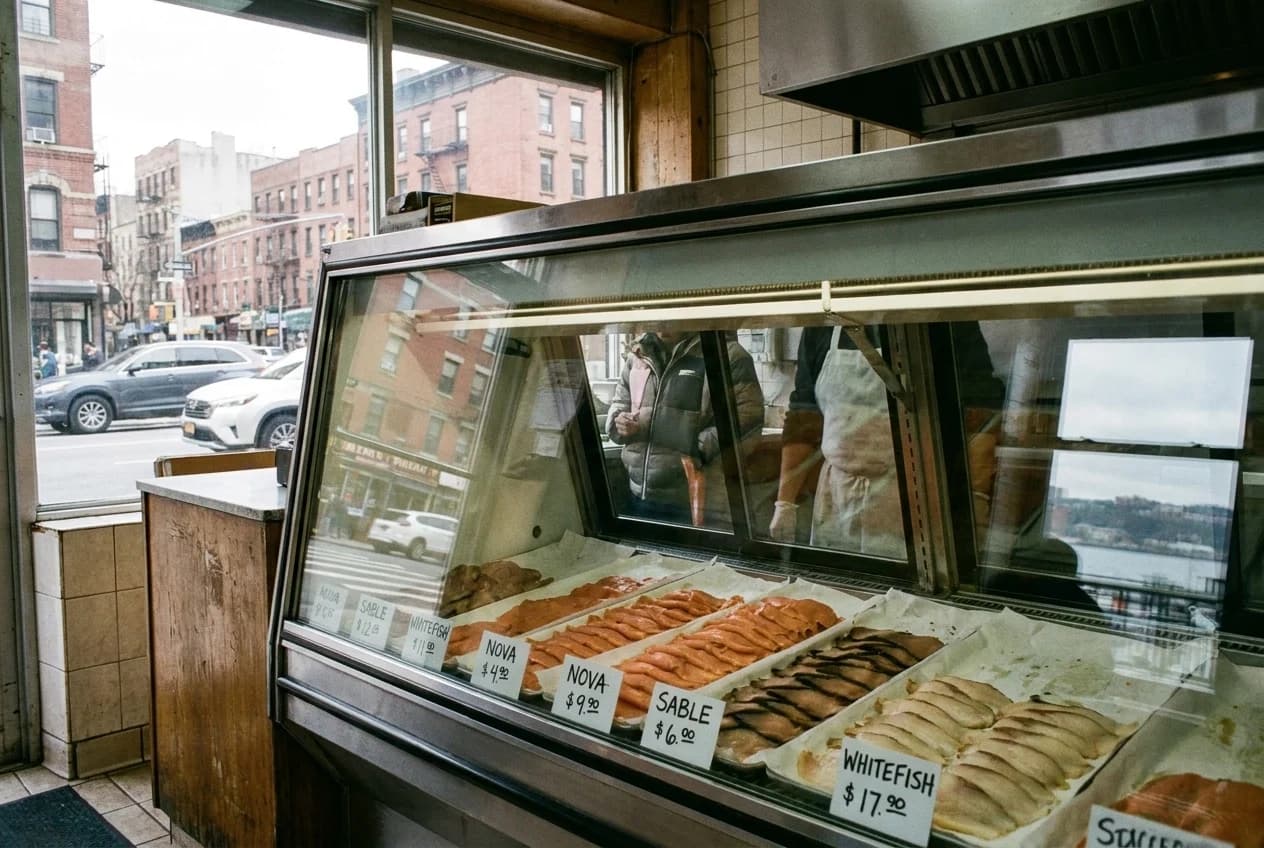
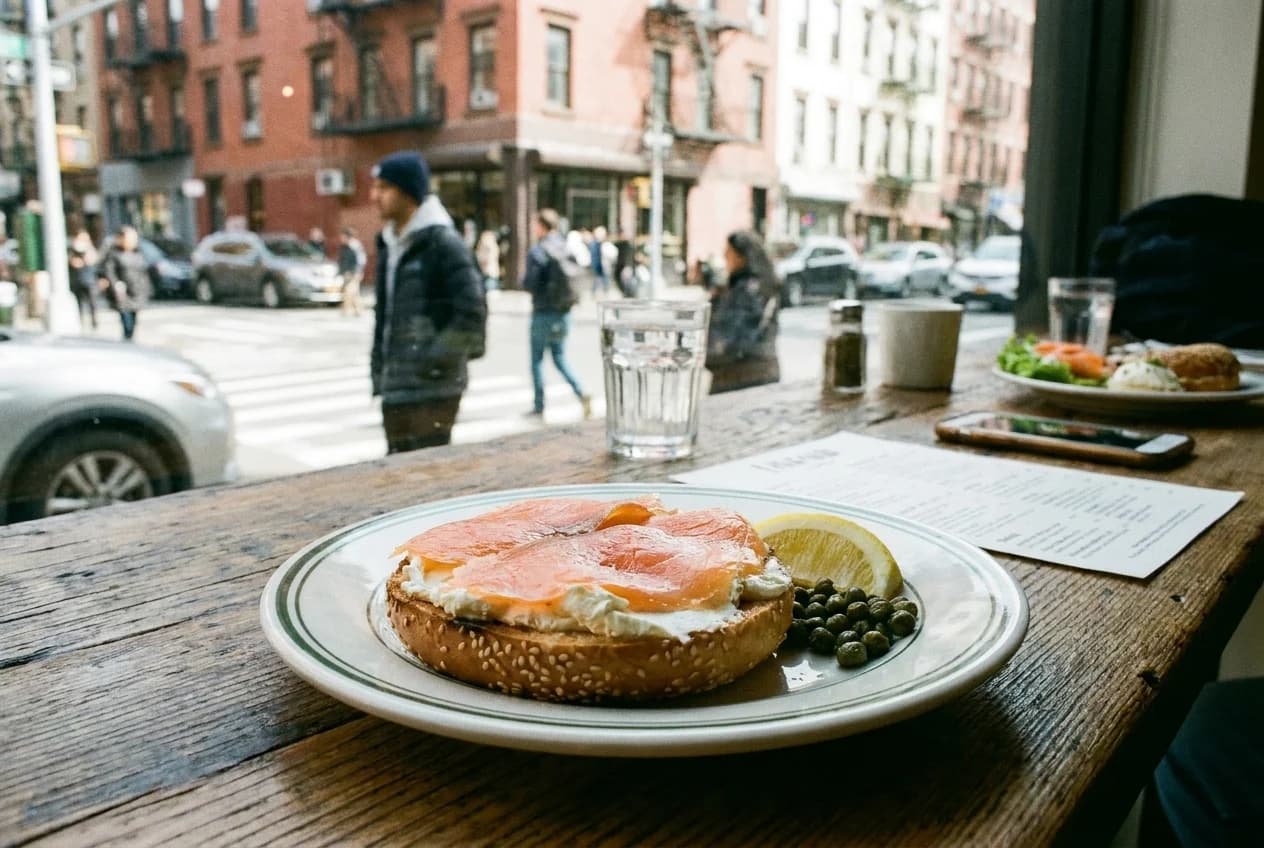
Lox refers specifically to salmon belly cured in salt without smoking. The process is preservation by sodium alone, and the result is aggressively salty—salty enough that laying a slice on your tongue for a few seconds produces a burn. The name derives from the Yiddish laks, meaning salmon, but at an appetizing counter it means belly lox, the fattiest cut from the underside of the fish. Before refrigeration, salmon from the Pacific was hauled across the country in gigantic salt baths and sold to the Jewish immigrants of the Lower East Side. Bagels with lox, the standard pairing, exists because belly lox needed bread and dairy to cut the salinity.
Nova—short for Nova Scotia, the region where much of the fish is caught—is cold-smoked salmon that has been cured first. Cold-smoking happens below 85 degrees, which means the fish remains raw but picks up smoke flavour and a silky texture. At Russ & Daughters on 179 East Houston Street, Gaspe Nova is the signature product: a marbled, fatty salmon smoked lightly enough that the cure still shows through. Scottish salmon, another counter option, is fatter and retains more moisture. Western Nova, made with wild king salmon, is leaner and more muscular, with a tighter texture and a more assertive flavour.
Sable—black cod—is the most expensive item on the smoked-fish menu. The belly is the fatty section running along the underside, roughly fifteen per cent of the fillet, and it carries a higher oil content that keeps it moist through the smoking process. The belly cut sells out by 11:00 AM on weekends at most appetizing counters. Whitefish, by contrast, is the mild, affordable option. The chunk version of whitefish salad leaves actual flakes of smoked whitefish intact, while the pureed version is ground fine with mayonnaise and lemon. The chunk version is the one to buy if you want to taste fish rather than spread.
How the ticket-number counter works and when the line is worst
Russ & Daughters at 179 East Houston Street operates on a take-a-number system. You pull a ticket from the dispenser near the front door, then wait for your number to appear on the digital board above the counter. Behind the counter, fish cutters wear white lab coats and slice salmon thin enough to read the New York Times through. The line is worst on weekend mornings between 10:00 AM and noon, when tourists and locals converge. Expect to say excuse me several times to reach the drinks fridge for a Dr. Brown's while you wait.
The counter itself runs along the right side of the shop, and the staff will ask what you want before you see the full menu. If you ask for lox, they will clarify whether you mean belly lox or one of the seven varieties of smoked salmon. If you are over a certain age and ask assertively for belly lox, they will not question you. Everyone else ends up buying nova.
Katz's Delicatessen at 205 East Houston Street uses a similar ticket system, though primarily for pastrami rather than fish. A door attendant hands each customer a numbered ticket on entry, and employees mark the running total as you move through the sandwich, hot dog, and drink stations. The ticket is non-negotiable: lose it, and you pay a penalty fee at the register. The system was installed to prevent walkouts during the lunch rush, which on weekends extends from noon until 3:00 PM.
What a quarter-pound actually covers and how to order it
A quarter-pound of sliced nova or sable is the standard counter order, and it covers two to three bagels depending on how thickly you spread the cream cheese. The fish is sliced to order, and the cutter will hold up the first slice to show you the thickness before continuing. If you want it thinner, say so immediately. The quarter-pound is also the smallest increment you can buy without ordering a pre-made sandwich.
Russ & Daughters sells a pre-made sandwich called The Classic: two slices of nova, one slice of sable, cream cheese, and a toasted bagel. It is the only way to buy sable without committing to a full pound. The shop also offers sturgeon and other specialty fish by special order or when available at the counter. If you ask for the works on a sandwich, you receive pickles and other traditional accompaniments that vary by what the counter has prepared that day.
Whitefish salad, pickled herring, and the rest of the appetizing menu
Whitefish salad is smoked whitefish flaked and mixed with mayonnaise, lemon, and sometimes celery. The chunk version is less processed and retains the texture of the fish. Pickled herring comes in several styles: matjes herring is the mildest, cured in a light brine with sugar and onions; schmaltz herring is fattier and cured in its own oil; and herring in cream sauce is matjes herring in a sour-cream base. All three are sold by the pound or in smaller containers at appetizing counters.
Other items on the appetizing menu include pickles, prepared salads, bagels, bialys, babka, rugelach, halva, and assortments of dried fruits and nuts. The term appetizing refers to the parve category in Jewish dietary law—foods that contain neither meat nor dairy—which allowed these shops to operate alongside kosher butchers and delicatessens without violating kashrut. The division between delicatessen (meat) and appetizing (fish and dairy) was spatial as well as legal: in immigrant neighbourhoods, you went to the delicatessen for corned beef and pastrami, and to the appetizing store for fish and dairy.
Yonah Schimmel's Knish Bakery at 137 East Houston Street is a parallel lineage to the appetizing counters, operating since 1910 at its current location. The shop specializes in knishes—baked dough pockets filled with potato, kasha, or cheese—and represents the parve baked-goods side of the same Eastern European Jewish food tradition. The potato knish is the standard order, and the shop sells thousands of them weekly to walk-in customers who line up along the counter.
The new seafood rooms that opened in June 2024
Three seafood counters—Fishmonger LES, Bivalve, and Neptune's Daughter—opened on the Lower East Side during the week of 17 June 2024. All three serve cold-water species in both dine-in and takeout formats, extending the neighbourhood's cured-fish lineage onto dinner plates. Fishmonger LES opened at 128 Ludlow Street and focuses on daily selections of oysters, clams, and local whitefish, sourcing most of its menu from Northeast fisheries. Bivalve, at 82 Rivington Street, operates as a casual seafood bar offering tinned fish, ceviche, and shellfish. The counter is open from noon to 10:00 PM and has seating for eight. Neptune's Daughter, at 45 Orchard Street, is run by chef Clara Kim, formerly of Brooklyn's Greenpoint Fish, and the menu highlights warm seafood rolls and cold seafood salads.
The three openings mark an increase in seafood-specific counters in a neighbourhood previously dominated by full-service restaurants and delicatessens. The menus focus on oysters, clams, whitefish, tinned fish, ceviche, shellfish, warm seafood rolls, and cold seafood salads. Each counter offers a slightly different selection based on the chef and sourcing approach, but all three operate within the same tradition of buying fish by the portion and eating it on the premises or taking it home.
Practical notes
Russ & Daughters is at 179 East Houston Street and opens daily at 8:00 AM. The weekend-morning queue peaks between 10:00 AM and noon. A quarter-pound of nova costs approximately $12 to $15 depending on the variety. Katz's Delicatessen is at 205 East Houston Street; keep your ticket or pay a penalty fee at the register. Yonah Schimmel's Knish Bakery is at 137 East Houston Street. Fishmonger LES is at 128 Ludlow Street; Bivalve is at 82 Rivington Street and operates noon to 10:00 PM with seating for eight; Neptune's Daughter is at 45 Orchard Street. All three opened in June 2024 and offer both counter service and takeout. The Classic sandwich at Russ & Daughters is the only way to buy sable without ordering a full pound. Chunk whitefish salad is sold by the pound at most appetizing counters. Belly lox is the salt-cured salmon belly; nova is cold-smoked and cured; sable is smoked black cod.
Tags: #LowerEastSide #SmokedFish #AppetizingStore #RussAndDaughters #NovaLox #WhitefishSalad #FishmongerLES #Bivalve #NeptunesDaughter #SeafoodCounter #CuredFish #JewishFood #SmartDining #NYCSeafood #EatLocal
All trademarks are the property of their respective owners.
Ask Karpo first
Ask Karpo which appetizing counter has the shortest wait right now, or which of the three new seafood rooms on Ludlow, Rivington, and Orchard opened with the best whitefish selection. Karpo tracks live hours, ticket-queue lengths, and the next-closest alternative when the counter you want is at capacity or closed for the day.