You are standing at a counter or scrolling a menu and the server just asked if you want the salmon or the sea bass. The question you should ask back is whether they will cook a whole fish. Most places that handle good seafood will do it. Many prefer it. But almost no one orders it because the mechanics feel opaque.
Before you commit to another fillet, ask Karpo which restaurants near you are steaming, frying or grilling whole fish today. The app will tell you what is open right now and how to time the rest of your order around it.
Whole fish is the best-value seafood order in Los Angeles. You get more meat per dollar because you are buying the animal, not the pre-portioned cut. You get better texture because the bones and skin protect the flesh during cooking. You get the collar, the cheeks and the belly, which are the three parts of the fish that taste most like themselves. And you get a centerpiece that makes everyone at the table lean in and participate, which changes the meal.
The obstacle is not the eating. The obstacle is knowing what to ask and how to size the order. Los Angeles has four major whole-fish traditions running in parallel, each one developed in a different part of the Pacific. Understanding what each preparation does to the same fish is the unlock.
Cantonese steamed versus Thai fried
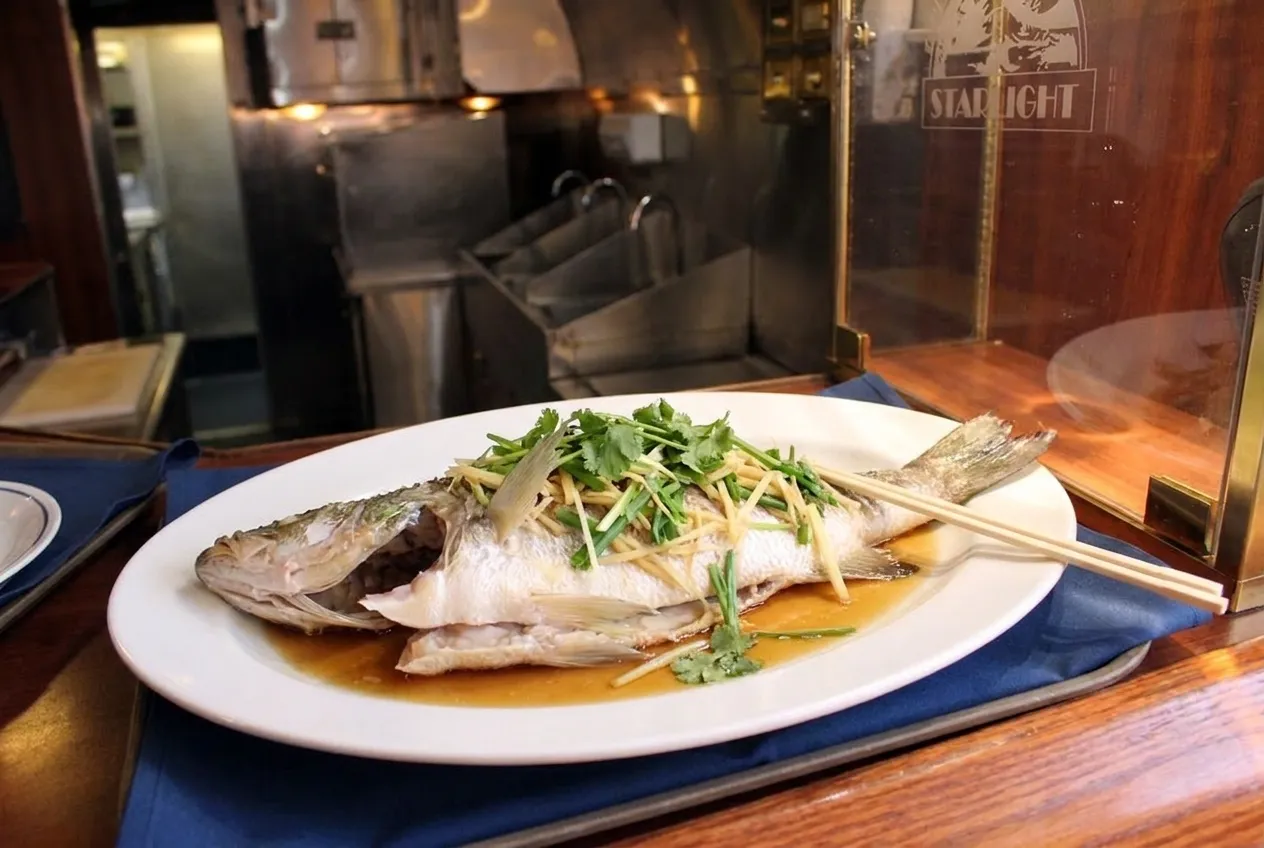
Cantonese steaming and Thai frying represent opposite approaches to the same goal, which is to keep the fish tasting exactly like fish. In Chinatown, the San Gabriel Valley and the South Bay, Cantonese restaurants steam whole fish with ginger, scallion and a pour of hot oil at the end. The fish arrives pale, intact and so delicate that it flakes when you look at it. The technique works best on white-fleshed fish with clean flavor: rock cod, sea bass, snapper. You taste the fish and nothing else.
Thai frying, common in East Hollywood, North Hollywood and the eastern stretches of Sunset Boulevard, takes the opposite route to the same destination. The whole fish is scored, dusted in rice flour or tapioca starch, and fried until the skin shatters. Then it is dressed with lime, fish sauce, chilies and herbs. The flesh stays moist because the bones and skin buffer the heat. You get contrast: crisp skin, soft flesh, sharp sauce. But the fish itself, usually snapper or sea bass, still leads.
Both methods preserve the integrity of the protein. The choice between them is a question of whether you want the fish to arrive quiet and clean or loud and textured. The size question is the same for both: one pound of whole fish per person is conservative. Three people can share a two-pound fish comfortably if you order one substantial vegetable and one starch. Four people should order two fish or go up to a three-pounder if the kitchen has one.
Mexican zarandeado and Korean grilled
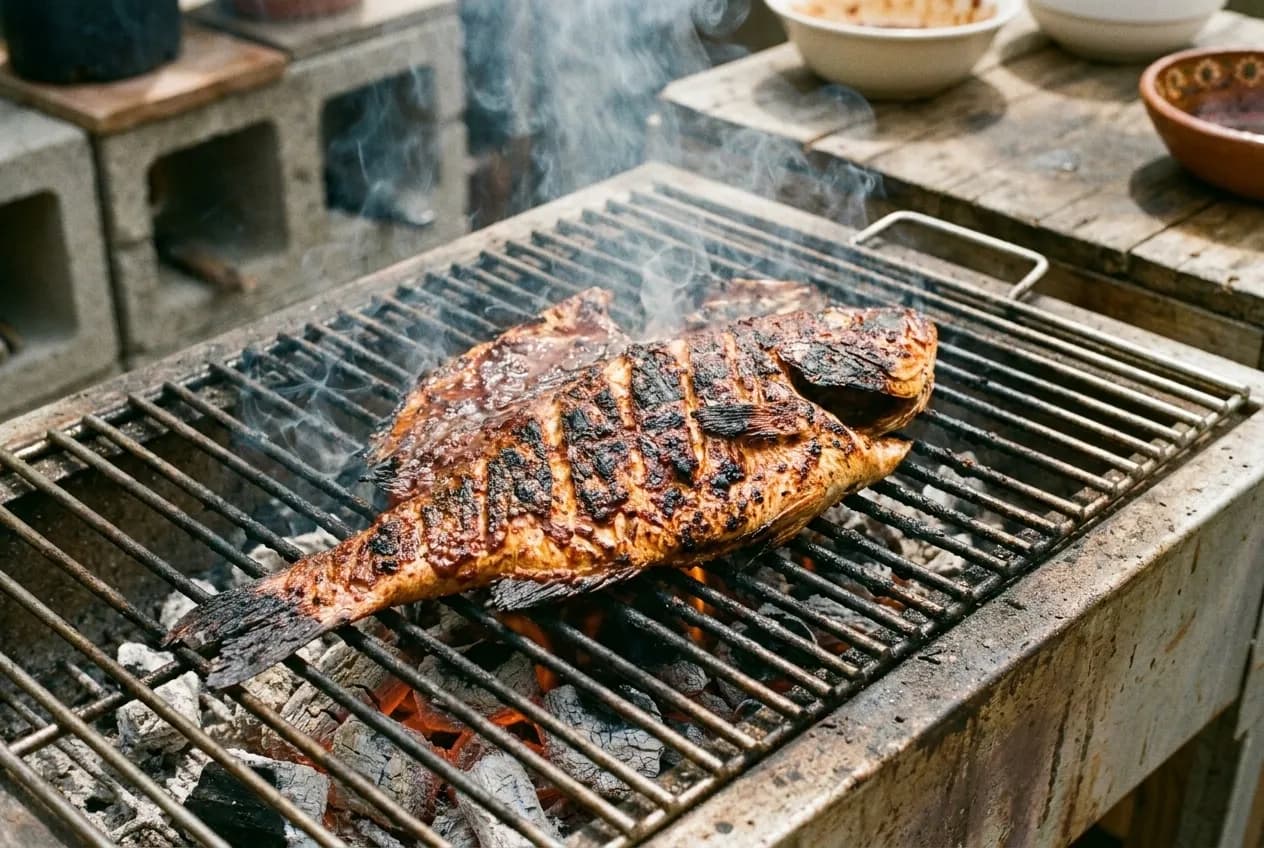
Zarandeado and Korean grilling both use smoke and char to add a second flavor to the fish, which means they work on oilier, more assertive species. Zarandeado, which you find along the eastern edge of South Los Angeles, in Huntington Park, and in pockets of the San Fernando Valley, butterflies the fish, coats it in a chile-and-garlic marinade, and grills it over mesquite or charcoal. The skin blisters. The marinade caramelizes. The fish, often snook or yellowtail when available, picks up smoke without losing its own character.
Korean grilled whole fish, served in Koreatown and the South Bay, usually involves mackerel, black cod or croaker. The fish is salted, sometimes marinated in a light soy-based mixture, and grilled until the skin crisps and the fat renders. It arrives with banchan, rice and ssam vegetables. The fish is rich and the smoke amplifies that richness instead of masking it. You wrap bites in perilla or lettuce to cut the oil.
Both techniques require fish that can stand up to aggressive heat and forward seasoning. The size logic is different here. Mackerel runs small, so one fish per person is standard. A large croaker or a butterflied snook can feed two or three people if the banchan or sides are generous. Ask what size fish they have today and let the kitchen tell you what makes sense for your table.
What to ask about the day's catch
The question that unlocks the order is not which fish is best. The question is what came in today. Whole fish is a daily market situation. The restaurant bought what was available at the pier or the wholesaler that morning. Sometimes that means local rockfish or sculpin. Sometimes it means Hawaiian ono or opah. Sometimes it means farm-raised barramundi or branzino, which are consistent and fine but not the reason to order whole fish.
Ask what is fresh today. Ask where it came from. Ask how big it is. If the server says the fish is two and a half pounds and you have three people, ask if the kitchen can do two smaller fish instead of one large one. If they only have one fish left and it is too big, ask if they will sell you half and prepare it the same way. Most kitchens will work with you because whole fish is a better sell for them too. It moves the expensive inventory and it shows off the cooking.
The other question is preparation. If the restaurant offers more than one method, the default is usually the safest. Cantonese places default to steamed. Thai places default to fried. Mexican places default to grilled. But if you see a whole fish special on the board with a preparation you have not seen before, that is the kitchen telling you what they want to cook today. Order that.
How to sequence the rest of the order around it
Whole fish is not an appetizer and it is not a main course in the Western sense. It is the anchor. Everything else on the table should defer to it. If you are at a Cantonese restaurant, order one green vegetable, one starch like fried rice or noodles, and maybe one cold appetizer. Do not order another protein. The fish is the protein. If you are at a Thai restaurant, the fish is one part of a larger spread, but it should still be the largest single item. Order two or three other dishes, all of them lighter than the fish: a salad, a curry, a stir-fry. Let the fish be the heaviest thing on the table.
At a Mexican seafood restaurant, the fish is the meal. You do not need to order much else. The kitchen will bring rice, beans, tortillas and salsas. Add one aguachile or ceviche if the table is large, but resist the urge to over-order. At a Korean restaurant, the fish comes with banchan and rice automatically. Add one stew or one pancake if you are very hungry, but the fish and the banchan will fill the table.
The timing matters. Whole fish takes longer to cook than a fillet. Tell the server you want the fish to come out with the other dishes, not before and not after. If you ordered an appetizer, tell them to fire the fish when they clear the first plate. If you did not, tell them to bring everything together. The fish will be the last thing to finish cooking, so everything else will sit under the heat lamp if you do not coordinate the timing. The kitchen knows this, but you have to say it.
The single transferable habit is this: when you sit down at a restaurant that serves whole fish, ask what they have today before you look at the menu. The answer will tell you whether the fish is worth building the meal around. If the server lists two or three species and names the ocean or the market where they came from, you are in good hands. If they point you to the menu and say they have whatever is printed there, order something else. Whole fish is only worth it when the kitchen cares about the fish.
Tags: #SeafoodNearMe #LosAngelesSeafood #WholeFish #LARestaurants #CantoneseSeafood #ThaiFood #MexicanSeafood #KoreanBBQ #Koreatown #SanGabrielValley #EastHollywood #LAFoodie #SeafoodOrdering #DiningTips #LosAngelesDining
All trademarks are the property of their respective owners.
Ask Karpo first
Open the Karpo app to see which seafood restaurants near you are serving whole fish today, what time they opened, and whether they have availability in the next two hours. Karpo will map the fastest route and tell you what is actually moving in the kitchen right now.