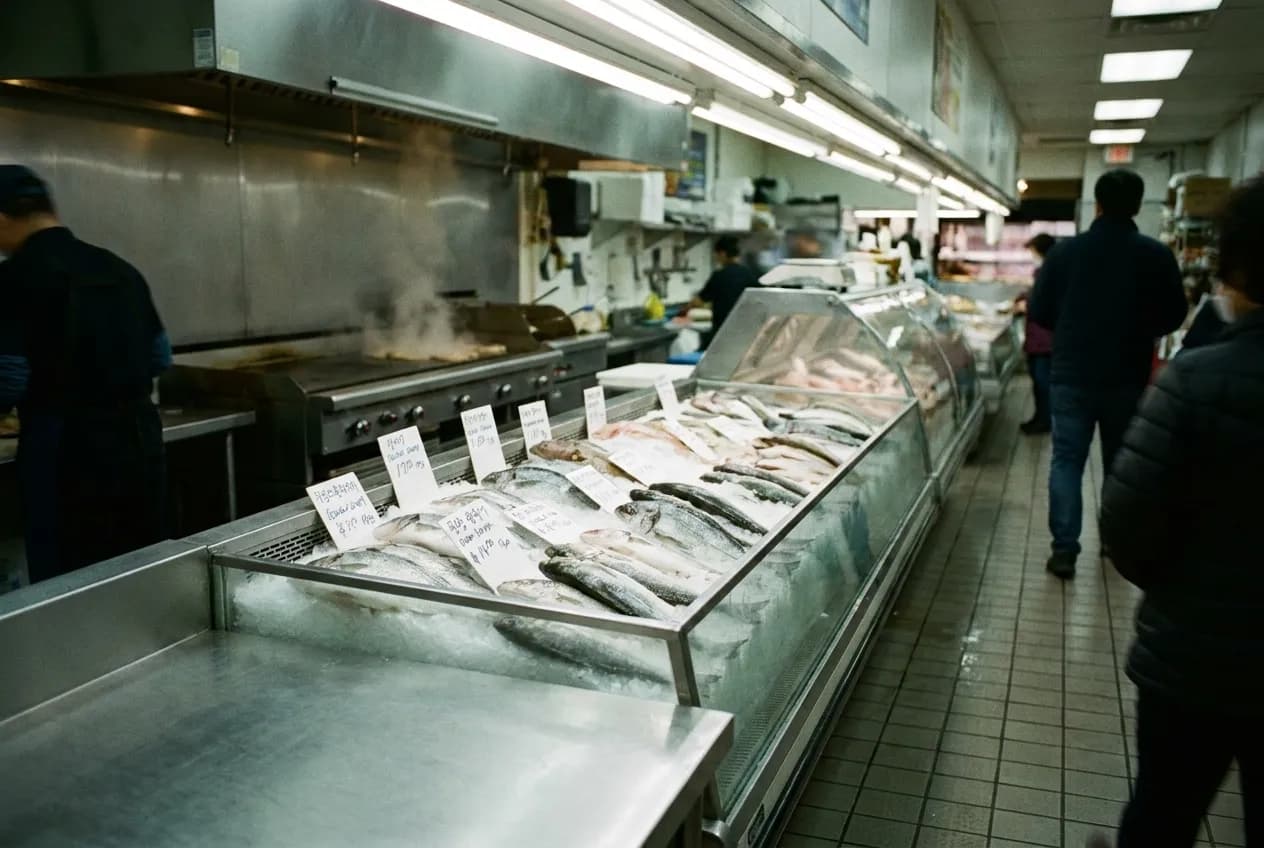
A fish market with a griddle behind the counter is a restaurant with better sourcing and worse seating. Los Angeles has more of them than almost any American city, concentrated in three clusters: the blocks around Koreatown's Western Avenue corridor, the San Pedro waterfront south of the Vincent Thomas Bridge, and the strip malls lining Pacific Coast Highway through Lomita and Torrance. The arrangement works the same way everywhere. You pick fish from the refrigerated case up front, pay by the pound at retail markup plus a cooking fee, and the person who weighed it walks it back to a flat-top or charcoal grill. Fifteen minutes later you eat it standing at a plastic folding table with a fork that bends.
Open the Karpo app to find out which market counters are cooking right now, what the wait looks like, and whether the grill closes before the fish case does.
The Grill Closes Three Hours Before the Fish Case
The single most common failure is arriving after the cooking side shuts down. Most market counters that offer grilling stop taking orders between two and four in the afternoon, even though the retail fish case stays open until six or seven. The reason is staffing. The person working the grill is often the same person who preps whole fish in the back, and that prep work has to happen before the dinner rush at the actual sit-down restaurants the market supplies.
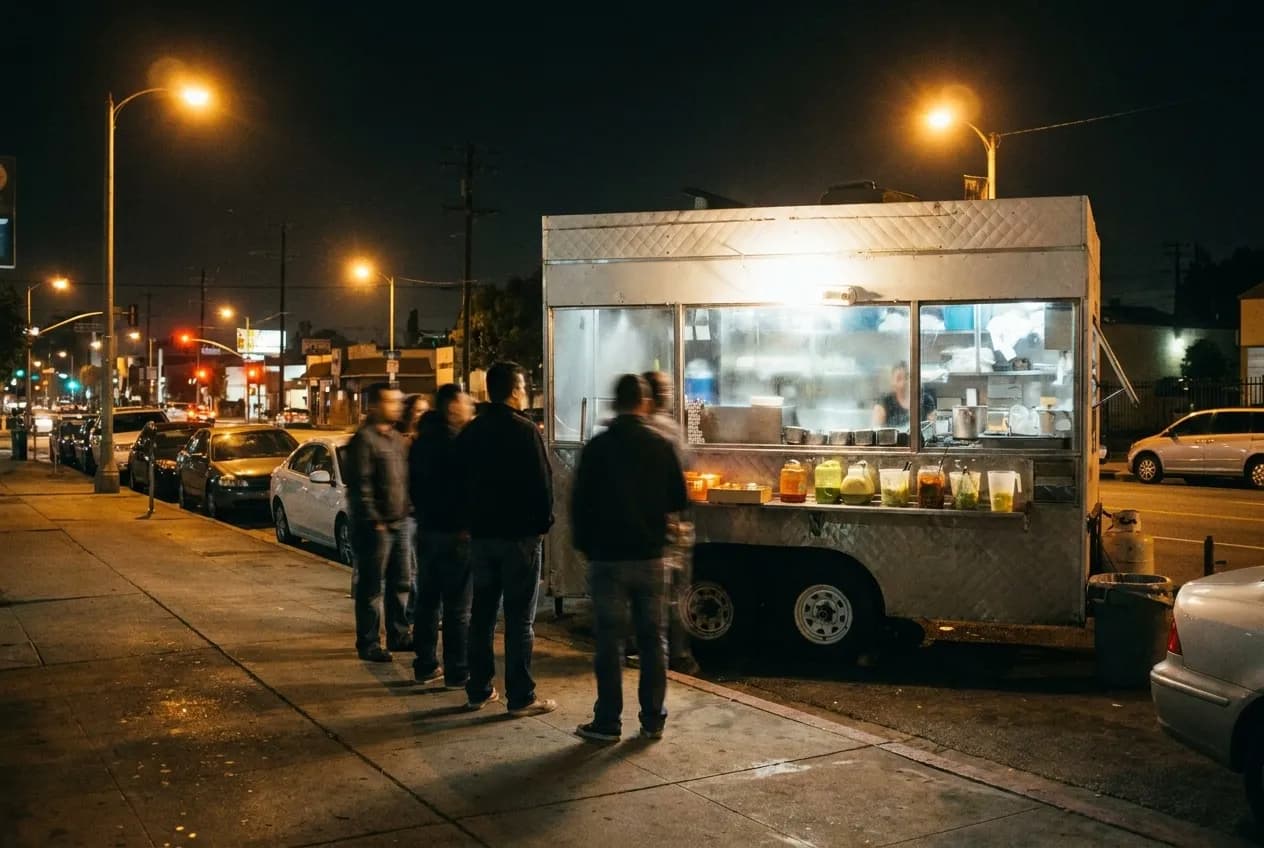
You can spot the cutoff from the street. If there are people eating at the outdoor tables or the standing counter inside, the grill is live. If the tables are stacked or wiped down and the only customers are holding plastic shopping bags, you are too late. Some markets post a handwritten sign on the door with grill hours, but many do not. The safest window is between eleven in the morning and one-thirty in the afternoon. Weekends push an hour later. The San Pedro market cluster near the docks tends to keep the grill going until mid-afternoon on Saturdays because of tourist traffic from the harbor, but that is not a rule you can rely on during the week.
If you arrive after grill service ends, the workaround is to buy fish retail and take it to one of the Korean banchan specialists two or three doors down. Many of them will cook outside fish for a flat fee if you order a bowl of rice and a few vegetable sides. This only works in Koreatown and parts of Torrance. The San Pedro markets are on their own.
The Price Structure Is Retail Plus Cooking, Not Menu Pricing
The second failure mode is misunderstanding what you are paying for. These counters charge retail fish-market rates per pound, then add a cooking fee that runs between three and six dollars depending on preparation. Grilled whole fish costs less to cook than filleted and fried. If you walk in expecting restaurant portion sizes at restaurant prices, the math will not make sense. A pound and a half of wild salmon might run eighteen dollars at the counter, plus four dollars to grill it, which feels expensive until you realize you are getting a pound and a half of fish.
The value proposition depends entirely on what you order. Whole fish priced by the pound is almost always the better deal, especially mackerel, sea bream, and rockfish. Pre-portioned fillets and shellfish move closer to restaurant pricing once the cooking fee is added. The worst value is usually shrimp, which is sold by the piece at a markup and then costs extra to grill. The best value is whatever whole fish is on sale that day, which the counter will scale, gut, score, and grill for the flat cooking fee.
You improve the deal by ordering rice, banchan, and soup as sides. Most market counters that cook fish also sell prepared Korean side dishes from a separate refrigerated section near the register. A container of rice costs two dollars, seasoned seaweed is a dollar, and three types of kimchi run about five dollars total. That turns an expensive piece of fish into a full meal that costs less than most sit-down restaurants and tastes better because the fish was swimming yesterday.
The Seating Is Terrible and That Is Not Fixable
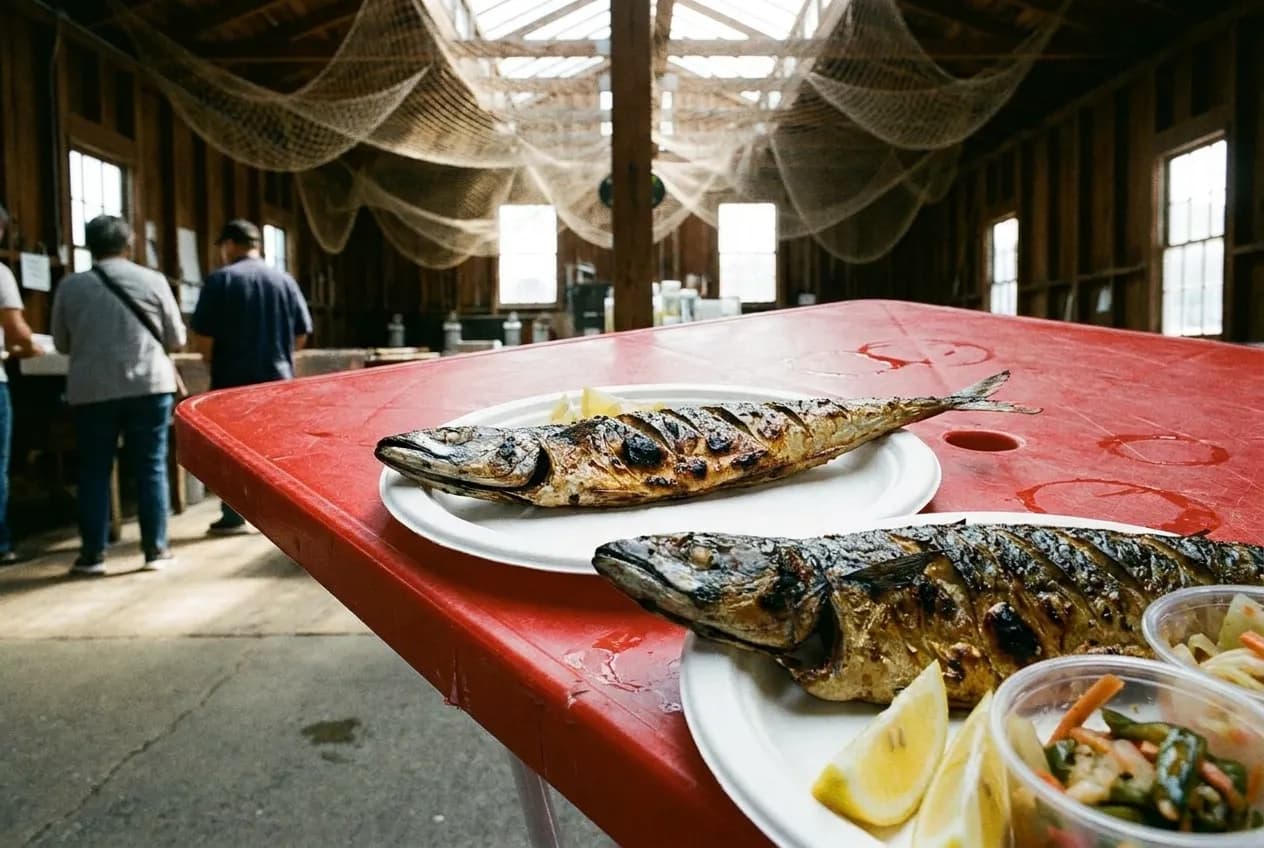
The third problem is the physical experience of eating. You will stand or sit on a plastic stool at a folding table with a paper plate and a plastic fork. There is no waiter. The counter might have napkins or it might not. If the weather is good, the outdoor tables are better than the indoor counter, but the outdoor tables are on the sidewalk next to a parking lot. If the weather is bad, you eat inside next to the refrigerated fish case under fluorescent lights. This is not a date spot unless your date has a specific fondness for functional spaces.
The upsides are speed and flexibility. There is no wait for a table because there are no reservations and barely any tables. You can be in and out in twenty-five minutes if the grill is not backed up. If you are eating alone, this is one of the few formats where solo dining feels completely normal instead of slightly conspicuous. You order, you eat, you leave. No one is managing turnover because there is no host stand.
The format also solves the problem of eating good fish on a Tuesday night when you do not want to sit through a full restaurant experience. The Koreatown markets along Western Avenue between Third Street and Wilshire Boulevard are the densest cluster for this. You can park on a side street, walk into a market, point at a mackerel, and be eating it twelve minutes later. The San Pedro cluster near the docks offers a different trade. The seating is worse and the parking is harder, but the fish is more likely to have been offloaded that morning from a boat you can see through the window.
How to Read the Counter in Ten Seconds
You can tell whether a market counter is worth stopping for before you walk in. Look for a griddle or a charcoal grill visible behind the fish case. If the grill is cold or covered, keep driving. If there is no grill at all, the market is retail-only. Check for people eating at tables or a standing counter. If the tables are empty but the grill is going, you are in the brief window where they are still cooking but the lunch crowd has cleared.
Look at the fish case itself. Whole fish on ice with clear eyes and intact scales means the sourcing is current. Pre-cut fillets wrapped in plastic under bright lights means you are in a supermarket with a grill attachment, which is not the same thing. The best counters have a chalkboard or a handwritten sheet listing whatever came in that morning. If the list changes daily, the sourcing is good. If the menu is printed and laminated, the operation is more stable but less responsive to what the boats brought in.
The final tell is the language on the signs. If the market posts prices and specials in Korean, Spanish, or Tagalog first and English second, you are in the right place. If everything is in English and the design looks like a brand, you are in a different kind of restaurant that happens to sell fish. The markets that cook your order are not trying to be restaurants. They are trying to move product and offering to cook it is a service that keeps customers coming back. That is why the fish is better.
Tags: #SeafoodNearMe #LosAngelesSeafood #FishMarkets #KoreatownFood #SanPedroEats #MarketGrill #HiddenGemsLA #LocalSeafood #LAFoodScene #FreshFish #CasualDining #TorranceEats #LomitagFoodie #SeafoodCounter #AuthenticEats
All trademarks are the property of their respective owners.
Ask Karpo first
Open the Karpo app to find out which market counters are grilling right now, what the grill closes, and how to route from wherever you are to the nearest cluster. Karpo tracks the prep-shift cutoff at a dozen counters across Koreatown, San Pedro, and the South Bay so you do not drive to a market after the grill goes cold.