If you search seafood near me in Los Angeles and sort by what people actually eat rather than what gets reviewed, you end up somewhere specific: a mariscos counter, a truck, or a plastic table under a canopy, with a menu written in a Spanish that even confident Spanish speakers sometimes have to ask about. This is the city's dominant seafood tradition and it is regional rather than generic — the shrimp preparation at a Sinaloan stand in South LA and the one at a Nayarit-style restaurant in Inglewood are different dishes with different logic. Learning six words and three regional styles turns the whole category from intimidating to obvious, and it is the single highest-value hour you can spend on eating in this city.
Karpo can translate a mariscos menu for you on the spot, tell you which regional style a stand is cooking, and point you at the dish that stand does best.
The six words that unlock the menu
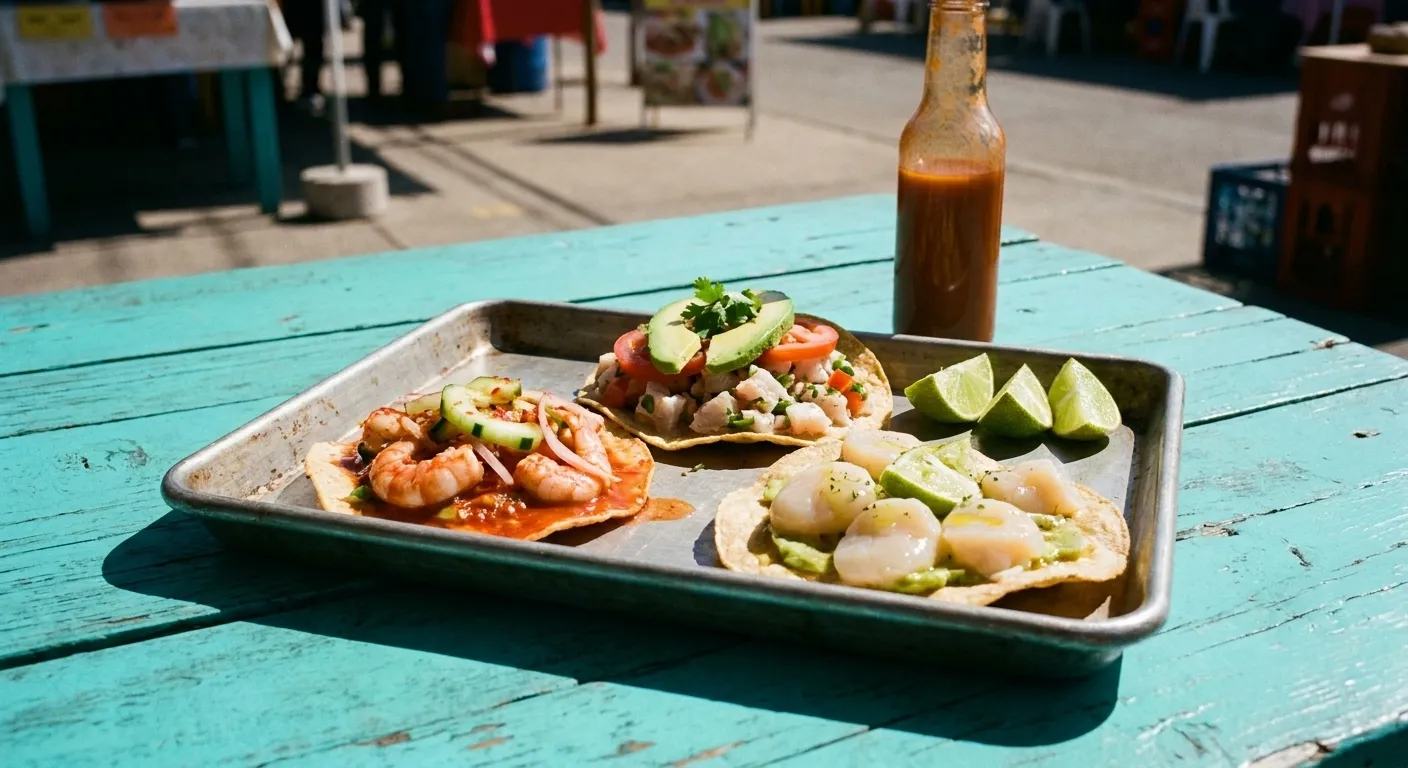
Ceviche is seafood cured in citrus, usually chopped small, usually served with tostadas to scoop it. Aguachile is its sharper cousin: raw shrimp dressed at the moment of ordering in lime and blitzed chilli, served wet and eaten immediately — it is not a marinade you leave to sit. Campechana is a mixed cold seafood cocktail in tomato-based broth, served in a tall glass with avocado and saltines, and it is the closest thing to a shared starter.
Zarandeado means grilled over flame in the Nayarit style, almost always a whole butterflied fish. Coctel is a cocktail-glass preparation, cooked rather than raw, sweeter and more forgiving. And a tostada is the delivery vehicle for most of the above — a fried flat tortilla you load yourself. If you can recognise those six, you can order confidently anywhere in the city.
The regional styles, and why they taste different
Sinaloa-style seafood is the loud one: heavy on chilli and lime, aggressive aguachiles, marlin tacos, and a general preference for sharpness over subtlety. Nayarit-style is built around fire — the zarandeado tradition, whole fish over coals, smoke as the main seasoning. Coni'Seafood in Inglewood, at 3544 West Imperial Highway and open daily 10am to 8pm, brings its shrimp and whole fish from Sinaloa and Nayarit and is the clearest place in the city to taste what the Nayarit style is aiming at.
The third strand is the Los Angeles hybrid that grew up in the trucks and stands: bigger, cheaper, more improvisational, and often the best value in the city. It borrows the vocabulary of both regions and answers to neither, and it is where you find things like a tostada piled beyond structural sense.
Where to start if you have never done this
Order a shrimp ceviche tostada first, at any stand, anywhere. It is the baseline dish, every kitchen makes it, and it tells you immediately how good the shrimp is and whether the kitchen has a light hand with lime. If it is excellent, order the aguachile next. If it is watery or the shrimp is rubbery, pay and move on — there is another stand within a mile.
The second order should be something cooked. A shrimp or fish taco, or a coctel, gives you a read on the kitchen's other half. Stands that are brilliant raw and indifferent cooked are common, and the reverse is common too. Two dishes tells you which kind you are at.
Trucks, stands and sit-down rooms are not interchangeable
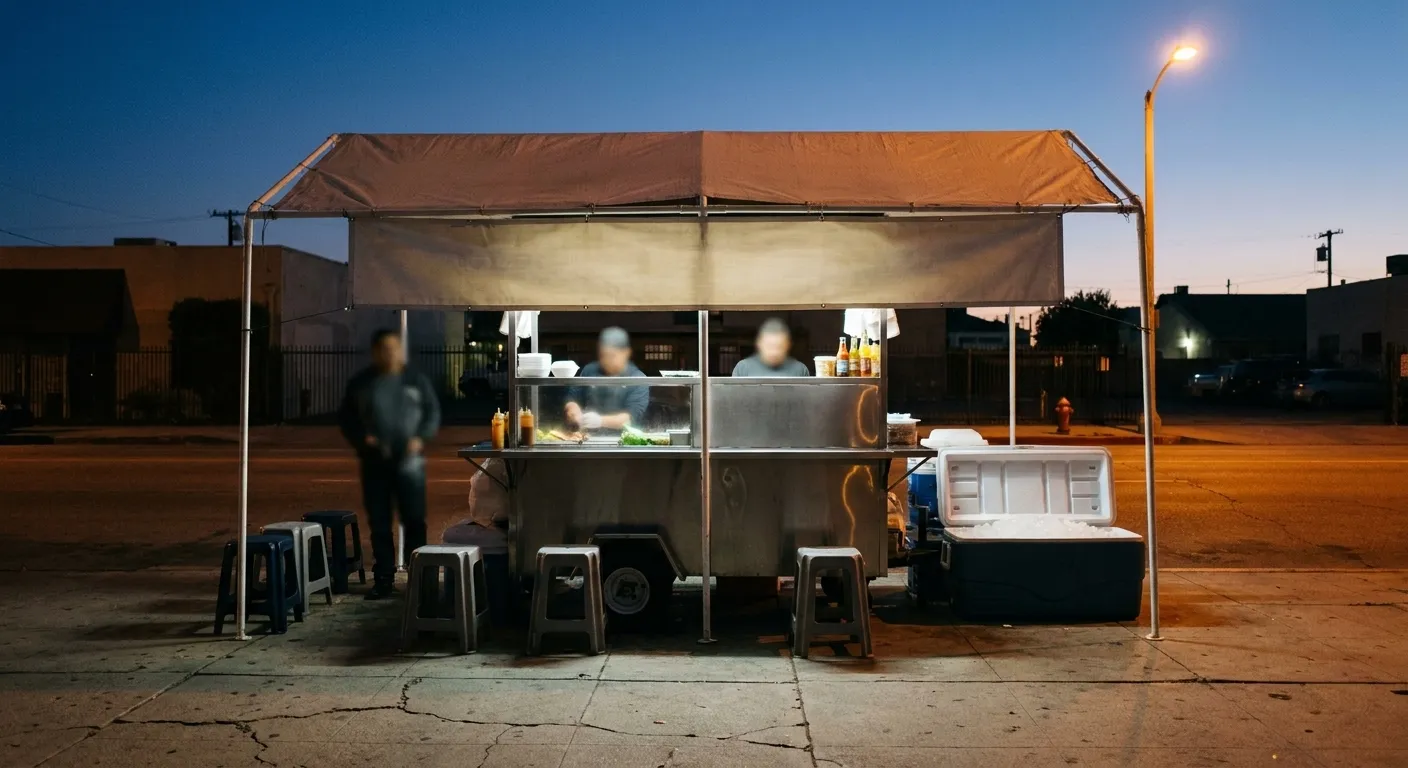
A mariscos truck runs a short menu very fast and is generally at its best in the middle of the day when turnover is highest and the ice is fresh. A stand with plastic tables extends the menu and the hours, and often runs well into the evening. A sit-down restaurant adds the things that need time and equipment — whole grilled fish, large campechanas, a proper bar.
Match the format to what you want. Aguachile from a busy truck at 1pm is a better proposition than aguachile from a quiet restaurant at 9pm, because it is a dish that depends entirely on freshness and volume. A zarandeado is the opposite: it needs a grill, thirty minutes, and a table you are prepared to sit at.
Heat, and how to ask for it
Chilli levels at mariscos counters are not standardised and are frequently calibrated for regulars. The useful phrase is to ask for it the way they make it and then adjust, rather than asking for mild, which at some stands produces a version with the character removed. Aguachile in particular is meant to be sharp — if it does not make you reach for a drink, it has been dialled down.
Salsas on the table are a separate system from the heat in the dish. There is usually a red, a green and something darker and smokier, and the dark one is almost always the interesting one. Try each on a corner of a tostada before committing a whole one.
Practical notes for a first run
Bring cash. Sit-down restaurants take cards without exception, but trucks and smaller stands still run cash-first, and the ones that take cards sometimes have a minimum. Go at lunch for your first visit — the light is better for looking at what is on the ice, the turnover is higher, and you will not be the only person there working out the menu.
Order fewer dishes than you want and add more. Mariscos portions are generous and tostadas are filling in a way the photographs never convey. Two tostadas and a coctel is a full lunch for most people, and the classic first-timer mistake is ordering a third thing that arrives after everyone has stopped being hungry.
Tags: #Mariscos #LASeafood #Aguachile #Ceviche #Tostadas #SeafoodNearMe #LosAngelesFood #Sinaloa #Nayarit #Zarandeado #LAEats #MexicanSeafood #Campechana #FoodGuide
Please drink responsibly. Must be of legal drinking age.
All trademarks are the property of their respective owners.
Ask Karpo first
Want to know which mariscos stands near you are cooking Sinaloa or Nayarit style, what today's ceviche is made from, and which one to order first? Ask Karpo before you join the queue.