Raw seafood in Los Angeles spans at least four formats that a search treats as one category: the omakase sushi counter, the hand roll bar, the oyster and shellfish raw bar, and the Mexican and Peruvian ceviche and aguachile tradition, which is arguably the strongest raw seafood cooking in the county and almost never appears in the same conversation. They differ in cost by a factor of ten and in what they are good for by more than that.
These formats differ by a factor of ten in price and completely in pacing. Ask Karpo which one suits tonight and what is available near you.
Omakase: a fixed length and a fixed cost
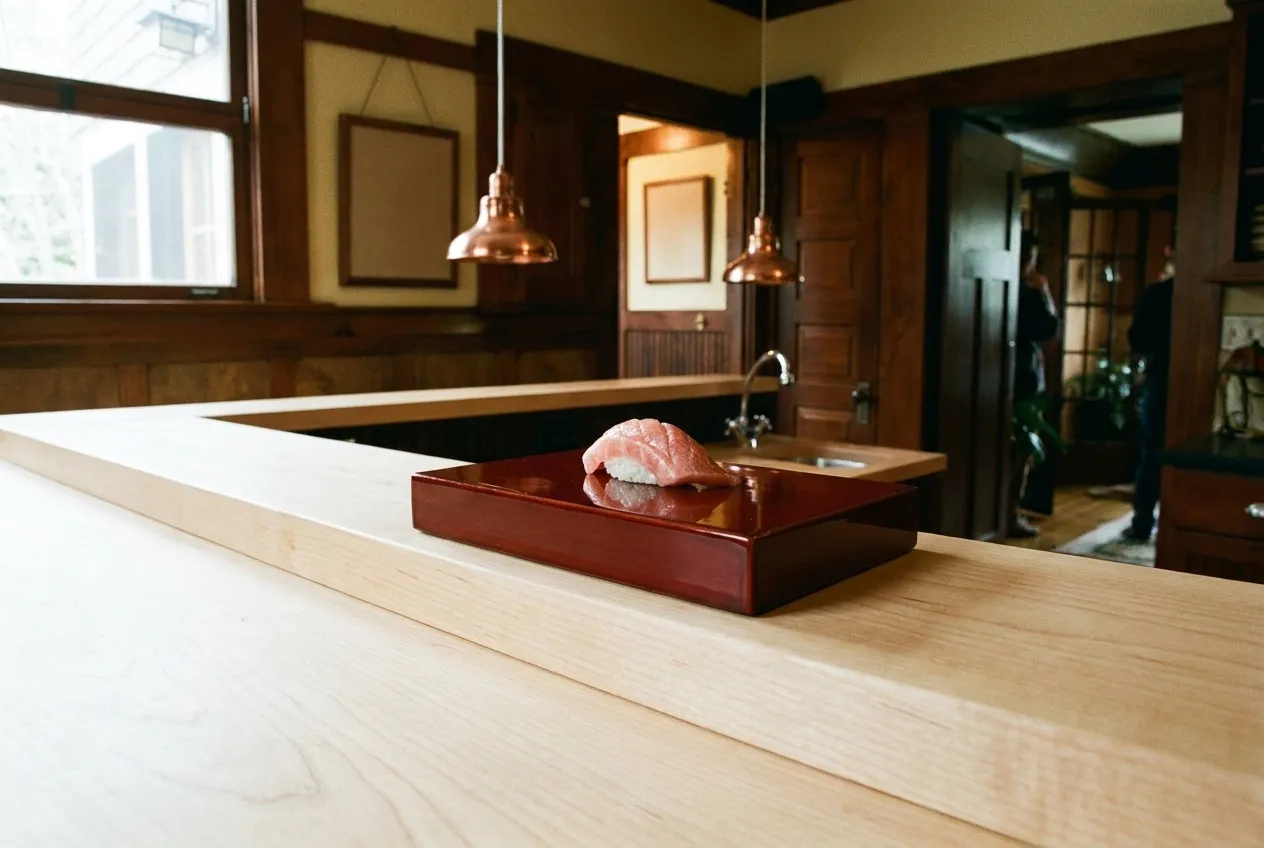
An omakase counter is a set sequence served by the chef, usually somewhere between fifteen and twenty-five pieces, over ninety minutes to two hours. You do not order. The pacing is deliberate — each piece is handed over and expected to be eaten within about thirty seconds, before the rice temperature and the nori texture change.
Los Angeles has a deep bench of these, concentrated in Little Tokyo, along Sawtelle Boulevard, in Studio City along Ventura Boulevard and increasingly on the Eastside. The prices span a very wide range, and the useful thing to understand is that the higher end is largely paying for fish sourcing and the lower end for volume — both can be excellent, and the mid-range is where the value is.
It is a poor choice for a conversation, because a chef is in front of you every four minutes, and an excellent choice for two people who want to watch something being done properly.
Hand roll bars: the fast, cheap, solo-friendly version
The hand roll bar is the most efficient raw seafood format in the city. A counter, a set of four or five rolls, each made and handed over one at a time, eaten within thirty seconds while the nori is still crisp. The whole thing takes about twenty-five minutes and costs a fraction of an omakase.
It is also the best solo dining format in Los Angeles for the same reason it works as a quick meal: the food arrives continuously, so there is never a gap where you are sitting in front of an empty counter. Kazunori's counters are the reference version and the thirty-second window is a real instruction rather than a suggestion.
Raw bars: the social format
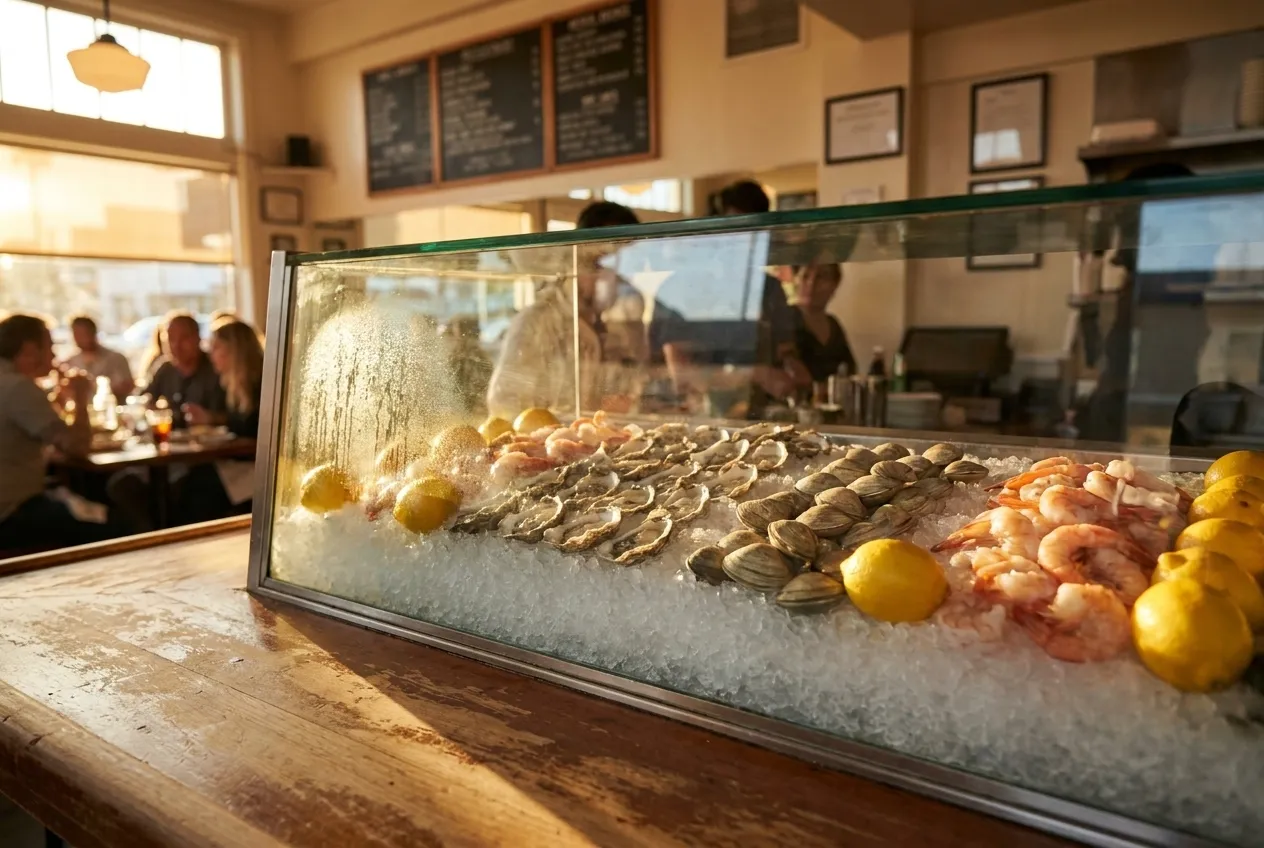
An oyster and shellfish raw bar is the opposite of an omakase counter in every structural respect. You order, it arrives together, you share it, and the pace is yours. It works for a group, it works for a long conversation, and it works as a first act before something else.
The Los Angeles raw bar geography sits in West Hollywood and the Beverly corridor for the full seafood houses — Connie and Ted's on Santa Monica Boulevard is the reference — in Silver Lake and the Eastside for the neighbourhood version, with L&E Oyster Bar on Silver Lake Boulevard the long-running anchor, and in downtown and Santa Monica for the larger formal rooms. Most run a discounted window, typically a two-hour weekday block in the late afternoon at the bar and high-tops only.
Ceviche and aguachile, the category everyone forgets
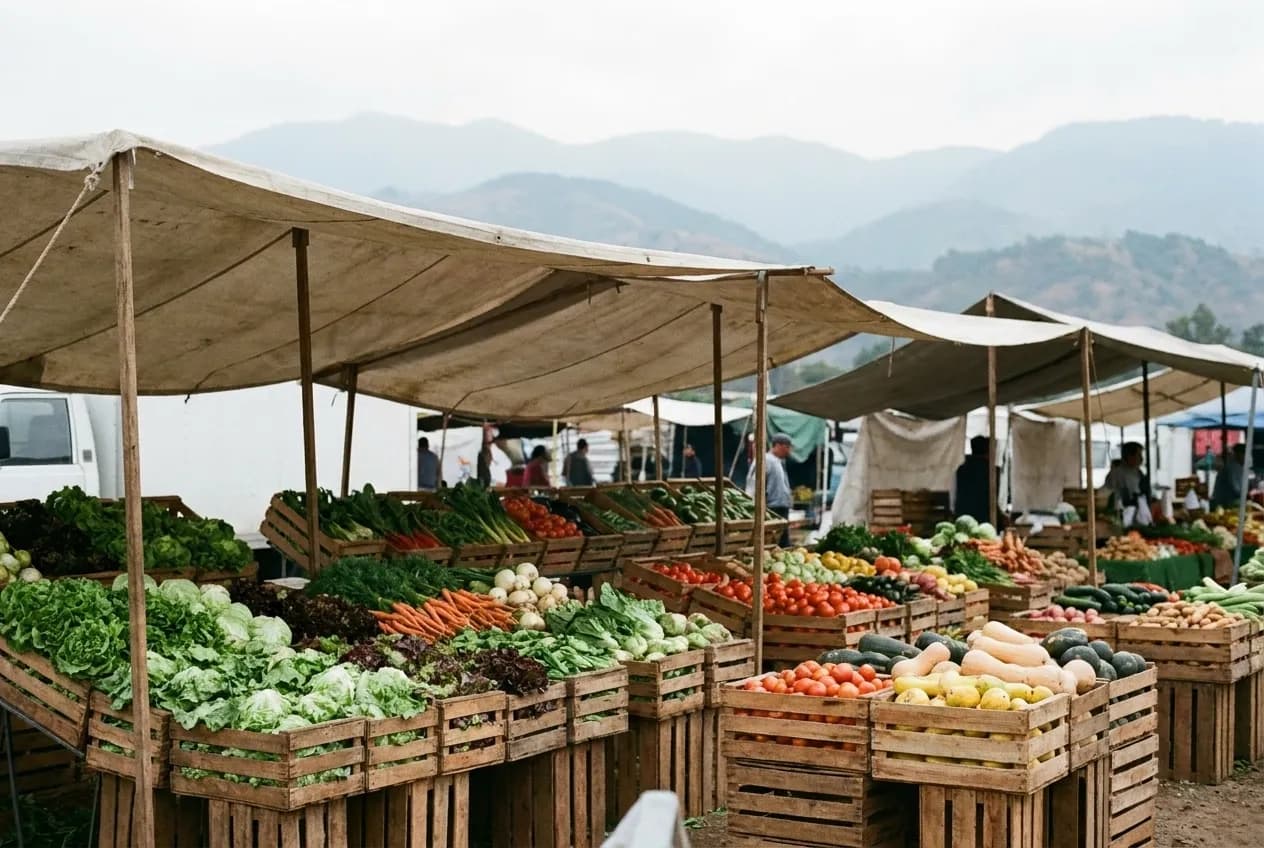
Los Angeles has one of the best supplies of Mexican raw seafood in the world and it is available at mariscos trucks, small counters and sit-down rooms across the eastern and southern county for a fraction of what a sushi counter costs. Aguachile — raw shrimp cured in lime, chilli and cucumber, served immediately rather than marinated for hours — is the dish to order first, and a good one is as technically precise as anything on a sushi counter.
The format is closer to the raw bar than to omakase: you order, it arrives, you share it, and it is meant to be eaten fast because the acid keeps working. Tostadas de ceviche, campechana in a glass and a cold beer is a complete and excellent meal, and it is the cheapest good raw seafood in Los Angeles by a wide margin.
Choosing between them
Two people, no conversation required, a specific occasion, two hours: omakase. One person, twenty-five minutes, no reservation: hand roll bar. Four or more people, a long conversation, drinks involved: raw bar, ideally in a discount window. Any number of people, a hot afternoon, forty dollars total: mariscos. The mistake people make is defaulting to the most expensive format because it signals seriousness — a great aguachile at a truck is a better piece of raw seafood cooking than a mediocre omakase, and it costs a tenth as much.
Practical notes
Omakase: a set sequence of roughly 15 to 25 pieces over 90 minutes to two hours, no ordering, each piece eaten within about 30 seconds; clusters in Little Tokyo, along Sawtelle Blvd, on Ventura Blvd in Studio City and increasingly on the Eastside, with the mid-range offering the best value. Hand roll bars: a set of four or five rolls handed over one at a time, about 25 minutes, the best solo format in the city. Raw bars: ordered and shared at your own pace, suited to groups; West Hollywood and the Beverly corridor for full seafood houses including Connie and Ted's on Santa Monica Blvd, Silver Lake and the Eastside for the neighbourhood version including L&E Oyster Bar, and downtown and Santa Monica for larger rooms, most running a two-hour weekday discount window at the bar only. Mariscos: aguachile is cured and served immediately rather than marinated; tostadas, ceviche and campechana at trucks and counters across the eastern and southern county are the cheapest excellent raw seafood in Los Angeles.
Tags: #SeafoodNearMe #LosAngeles #Sushi #Omakase #HandRollBar #RawBar #Oysters #Aguachile #Ceviche #Mariscos #LittleTokyo #SilverLake #Sawtelle #LAEats
Please drink responsibly. Must be of legal drinking age.
All trademarks are the property of their respective owners.
Ask Karpo first
Raw seafood in Los Angeles spans four formats at wildly different prices and none of them is the right answer for every night. Ask Karpo which is nearest you, which counters have space tonight, and whether the mariscos truck is the better version of the evening you had in mind.