There's a moment in every home cook's life when the pre-cut, plastic-wrapped salmon filet stops being good enough. The answer usually isn't technique. It's sourcing. San Francisco sits next to one of the richest fisheries on the West Coast, and the city still has real fish markets — counters where the person weighing your rockfish can tell you what boat it came off and what to do with it tonight.
This is a guide to the markets locals and line cooks actually trust, plus the checks and questions that let you shop like someone who does this for a living. None of it is complicated. Most of it is knowing what to look at and being willing to ask.
How to Judge Fresh Fish Before You Pay for It
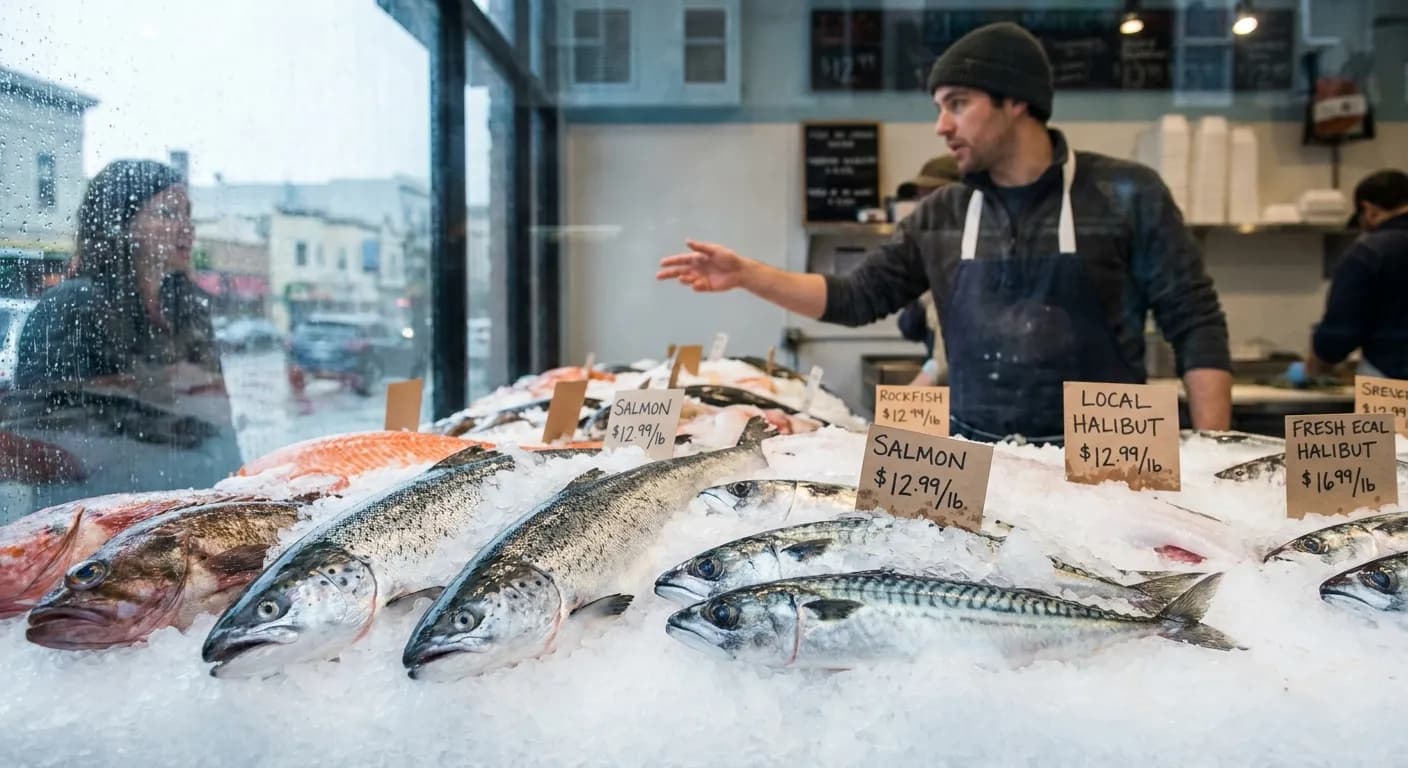
Chefs don't have secret powers at the fish counter. They have a checklist, and they run it every time. Whole fish tells you the most, which is why serious markets display fish with the head on — it's the freshness résumé.
- Eyes should be clear, glossy, and slightly bulging. Cloudy or sunken eyes mean the fish has been sitting.
- Gills should be vivid red or deep pink, never brown or gray. Ask the fishmonger to lift the gill plate — a good one won't flinch.
- Flesh should spring back when pressed. If a fingertip leaves a dent, keep moving.
- Fresh fish smells like the ocean — briny, clean, almost like cucumber. Anything sharply 'fishy' is past its window.
- For filets, look for moist, translucent flesh with no gaps or browning at the edges.
One more chef habit worth stealing: buy what looks best that day, then pick the recipe — not the other way around.
The Mission: Sun Fat Seafood Company
Sun Fat on Mission Street has been at this for more than three decades, and it remains the city's best combination of quality, price, and zero pretension. The tanks hold live crab and Maine lobster, the ice is stacked with whole fish, and the shellfish selection — oysters, clams, mussels — is deep and famously affordable. The counter staff will gut, scale, and fillet your fish on the spot, and talk you through cooking it if you ask. If you're new to buying whole fish, this is the friendliest place in town to learn.
Noe Valley: Billingsgate, the Chefs' Fish Shop
Billingsgate on 24th Street was opened by chefs-turned-fishmongers, and it shows in the case: sustainably sourced local catch, impeccably handled, curated rather than crowded. It's run by the team behind Four Star Seafood, the wholesaler supplying many of the Bay Area's serious restaurant kitchens — you're effectively buying from the same pipeline your favorite tasting menu does. The operation was confident enough to open a second shop in Oakland's Rockridge Market Hall in early 2025. Come here when the fish is the centerpiece of the meal.
The Ferry Building: Nopa Fish and the Saturday Market
The Ferry Building got a proper fish market again in June 2025 when Nopa Fish opened in the south hall — a collaboration between the chef behind Nopa and the owner of local sustainable supplier Water2Table. Half is a fast-casual counter doing fried rockfish sandwiches and fish and chips; the other half is a take-home case of traceable West Coast fish sold by the pound. Traceable is the key word: they can tell you where nearly everything was landed.
On Saturdays, the Ferry Plaza Farmers Market adds another option: H&H Fresh Fish, a Santa Cruz operation selling hook-and-line caught fish from local waters. Buying from the people connected to the boat is the shortest supply chain you'll find in the city — H&H also sets up at the Clement Street farmers market on Sundays.
The Richmond and Sunset: Neighborhood Workhorses
Seafood Center on Clement Street is a family-run Richmond District institution — whole fish on ice, head and tail intact, live Dungeness crab in season, and staff who will clean your fish without ceremony. High turnover, honest prices, and the assumption that you know a fresh fish when you see one (and now you do).
Out in the Sunset, Guerra Quality Meats on Taraval has run a stellar fish counter alongside its butcher case for decades, with staff who genuinely enjoy walking you through what came in. Closer to the beach, Hook Fish Co. on Irving Street pairs a small market case with a restaurant — the whole model is ultra-fresh local catch, so what's in the case is what's actually running.
Pacific Heights and Japantown: The Specialist Counters
Bryan's Market on California Street has one of the city's most impressive fish counters for a reason: it's owned by Flannery Seafood, a wholesaler with direct relationships with fishermen. This is where to go for sushi-grade tuna and the kind of pristine, restaurant-tier fish that rarely makes it to retail. Prices reflect that — this is the splurge counter, not the Tuesday-night counter.
For anything sashimi-bound, Nijiya Market in Japantown is the move. Sushi-grade fish, some of it flown in from Japan, at prices that undercut what you'd expect, plus ready-made sashimi platters when you'd rather not break down a block of tuna yourself.
What to Ask the Fishmonger
The single biggest upgrade to your fish shopping is opening your mouth. Fishmongers like fish and like talking about it. Three questions do most of the work: What came in today? Where is it from? What would you take home tonight? That last one is the chef question — it gives the person behind the counter permission to steer you away from the pretty-but-tired option and toward the sleeper.
Ask for the work, too. Any real market will scale, gut, and fillet a whole fish — keep the bones and head for stock. On seasonality, stay flexible: Dungeness crab dates shift year to year and local salmon has had rocky seasons recently, so ask what's genuinely local before assuming. Whatever the season is doing, something in the case is at its peak. That's the thing to buy.
Fish Market FAQs
What's the best day to buy fish in San Francisco?
High-turnover markets like Sun Fat and Seafood Center are safe most days because stock moves fast. For smaller counters, earlier beats later, and it's worth asking when deliveries land. Farmers market stands like H&H are only there on market days, so plan around Saturday at the Ferry Plaza or Sunday on Clement.
Is it cheaper to buy whole fish or filets?
Whole fish is almost always cheaper per usable pound, and most markets on this list will fillet it for you on request. You also get the freshness evidence — eyes and gills — plus the frame for stock. Filets make sense when you only need a portion.
Where can I buy sushi-grade fish in SF?
Nijiya Market in Japantown is the specialist, with sashimi-ready fish and prepared platters. Bryan's Market carries sushi-grade tuna through its wholesaler connections, and Billingsgate can point you to what's safe to eat raw on a given day. Wherever you buy, tell the fishmonger you're serving it raw — they'll steer you honestly. Deciding between counters? Ask Karpo which one's closest to your route home.