A name can travel faster than the facts behind it, especially when school routines are starting back up and everyone is juggling pickups, study time, errands, and group chats. If scott eastwood is the phrase pulling Miami readers into a headline, treat it as a reason to verify, not as proof of anything happening in Miami-Dade. The official extracts here do not confirm a local appearance, affiliation, event, schedule, venue, reservation rule, broadcast option, park stop, or entertainment connection. What they do support is a practical local verification routine: use Miami-Dade Public Library System tools, check whether the branch you want is available, read original reporting when possible, and review Miami-Dade Transit alerts before making a plan around the day.
Want a quick sanity check before you go? Text Karpo to verify Miami-Dade library status, transit alerts, route logic, and backup stop choices for this exact city plan.

Turn curiosity into a research question
Start by rewriting the headline as a question you can actually answer. Instead of asking, “Is scott eastwood connected to Miami today?” ask, “What exactly does the headline claim, who published it, and what official or primary source supports that claim?” That small change protects your afternoon. It separates celebrity curiosity from decisions that affect real time, such as whether a student should leave early, meet friends, or spend part of the day chasing a claim that has not been supported by official information.
For a back-to-school week, the useful question is narrower: “Can this headline help me practice verification while I am already using public information tools?” The official library extract supports several practical starting points, including Account Login, Get a Library Card, Open Now, Locations, Browse the Catalog, Learning & Training, eBooks, Audiobooks & More, and Online Newspapers & Magazines. Those are useful because they point you toward research rather than reaction.
Before you forward anything, identify four pieces: the claim, the place, the date, and the source. If any one of those pieces is missing, keep the headline in the “unverified” column. The extracts provided here support Miami-Dade library and transit planning. They do not support adding hard claims about celebrity schedules, ticketing, local appearances, filming, school events, or media availability. That limit is part of the fact check.
Start with a reliable public resource
A library-first route works because it gives the task a stable public anchor. Miami-Dade Public Library System lists practical entry points such as Account Login, Get a Library Card, Open Now, Quick Links, Locations, Browse the Catalog, Learning & Training, eBooks, Audiobooks & More, and Online Newspapers & Magazines. Those are the tools to use when a headline is noisy: a way to access publications, a way to locate a branch, and a public research setting where the goal is checking information.
Do not assume every library location is available. Miami-Dade Public Library System states that the Miami Lakes Branch and South Dade Regional Libraries are closed for construction, renovations, and improvements. That is a precise planning detail, not a general guess. It matters if your school-day route depends on a quiet table, computer access, or a parent-student stop after class. Check Open Now and location details before building the day around a specific branch.
If you already have a library card, the digital route may save the trip. The system says library card holders can download and stream digital books, audiobooks, movies, music, and more, anytime and anywhere, free with a library card. It also points readers to Online Newspapers & Magazines. For a scott eastwood headline, that means the first verification step can happen before anyone commits to crossing town. The supported action is simple: use library access to look for original context, then decide whether a branch visit is still useful.
Compare primary reporting before opinions
Once you have a calm place to work, compare the original claim against primary reporting before reading reactions. Look for whether the article identifies a date, named source, venue, public agency, or direct statement. If it only repeats social chatter, treat it as unverified. If it names a publication, the library’s Online Newspapers & Magazines entry gives you a supported place to begin looking for original context instead of relying on screenshots or reposts.
Keep the Miami question separate from the entertainment question. A story can be real and still have no local relevance. A person can be trending nationally and still have no confirmed Miami-Dade plan in the official information provided. For parents helping students practice media literacy, that distinction is the lesson: verify what is claimed, not what the headline makes you imagine.
A practical student workflow is simple. First, write down the headline claim in one sentence. Second, list what would prove it: an official event page, a direct quote, a named venue notice, or a primary news report. Third, mark what you actually found through supported resources. If the answer is “nothing local and official in the provided sources,” the conclusion is not dramatic. It is just that the headline should not control your Miami-Dade schedule.
Choose a study stop that fits the task
The right public stop depends on the job. If the goal is quick verification, library digital access may be enough. If the goal is a longer back-to-school work block, choose a place where you can sit, read, compare sources, and make a transit-aware plan without rushing. Miami-Dade Public Library System’s Locations and Open Now tools are supported decision points to check before you leave.
Think in sequences, not isolated destinations. A student near home might start with Online Newspapers & Magazines, then go to a branch if they need a quieter setting. A parent already moving through the county might pair a library check with transit alerts before choosing the next stop. A student group can divide the work: one person checks the headline source, one checks library access, and one checks the ride plan.
Avoid building the plan around closed or uncertain facilities. The official library notice specifically says the Miami Lakes Branch and South Dade Regional Libraries are closed for construction, renovations, and improvements. If either was your default study place, use the library’s location tools to choose another option before the school day gets crowded with other obligations.
Add one low-cost reset nearby
Verification work is easier when the plan includes a reset that does not depend on hype. Based on the official extracts, the supported reset is not a named park or attraction; the parks source provided here is a 404 page and does not support a park recommendation. Keep the backup practical: a checked library alternative, a transit route adjustment, or a pause before continuing with a claim that remains unsupported.
Use Miami-Dade Transit as the mobility layer. The county transportation page points riders to service updates, rider alerts, a trip planner, a transit tracker, and transit modes including Metrobus, Metrorail, and Metromover. It also says full-time students ride Metrobus and Metrorail for half the price. Treat eligibility and current conditions as things to confirm before leaving, especially if a student is counting on that fare detail.
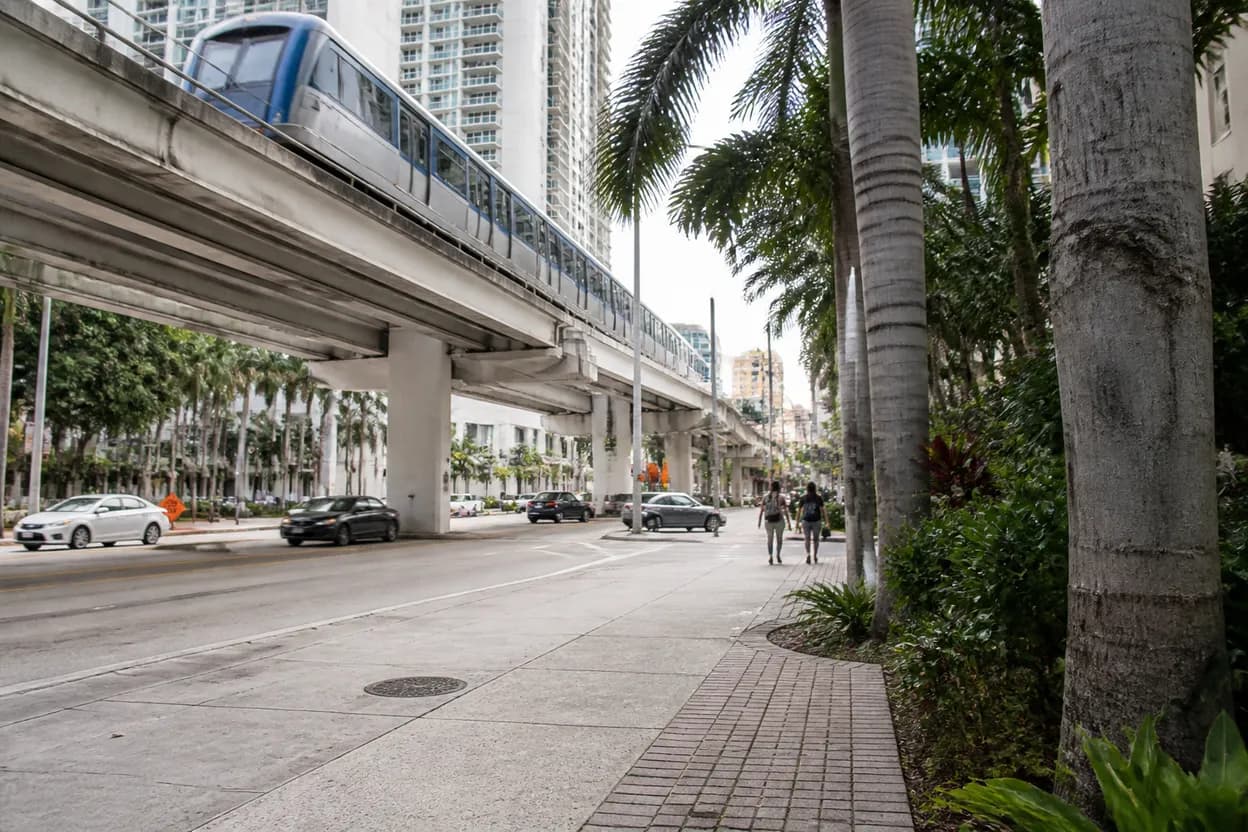
If your route touches Metromover, pay attention to the official notice. Miami-Dade Transit says Metromover is operating a modified Inner Loop, with trains running on the same track as Brickell and Omni Loop. It also says Inner Loop trains will not appear on the platform display, and riders should look inside the train to confirm loop designation. That is a precise, actionable detail that can affect whether a route feels workable.
Verify hours and access before leaving
The last check should happen right before you move. Confirm the library branch status, confirm your route, and look for rider alerts. Miami-Dade Transit explicitly offers rider alerts, service updates, a transit tracker, and a trip planner. Use those official tools when timing matters. The extracts do not support exact travel times, guaranteed connections, or fixed service schedules for this plan, so avoid writing those into your day as facts.
Accessibility should be part of the plan, not an afterthought. The transportation page points riders to elevator and escalator status, and it states that accommodations are made for people with disabilities to access and ride transit. If your student, parent, or group needs accessible routing, check those conditions before choosing a station or transfer. A route that looks fine in theory is not useful if the access path does not work for the people taking it.
End with a go or no-go decision. Go if the branch status works, the route is reasonable, access conditions fit your group, and the headline has a verifiable source worth reading. Pause if the claim is vague, the facility status is uncertain, or transit alerts make the timing too tight. The scott eastwood hook can start the research, but it should not outrank the official facts you can verify.
Tags: #scotteastwood #Miami #BackToSchool #MiamiDade #MiamiDadeLibrary #MiamiDadeTransit #MediaLiteracy #StudentLife #TransitTips #LibraryCard #VerifyBeforeYouShare #PublicResources #AskKarpo #BeforeYouGo
Sources consulted: mdpls.org · miamidade.gov · miamidade.gov
All trademarks are the property of their respective owners.
Ask Karpo first
Ask Karpo first when a headline starts shaping your Miami-Dade plans. Karpo can help check whether the claim is locally supported by the information you have, whether your preferred library stop appears available, what transit alerts may affect the route, and which backup decision keeps the school-day errand realistic.