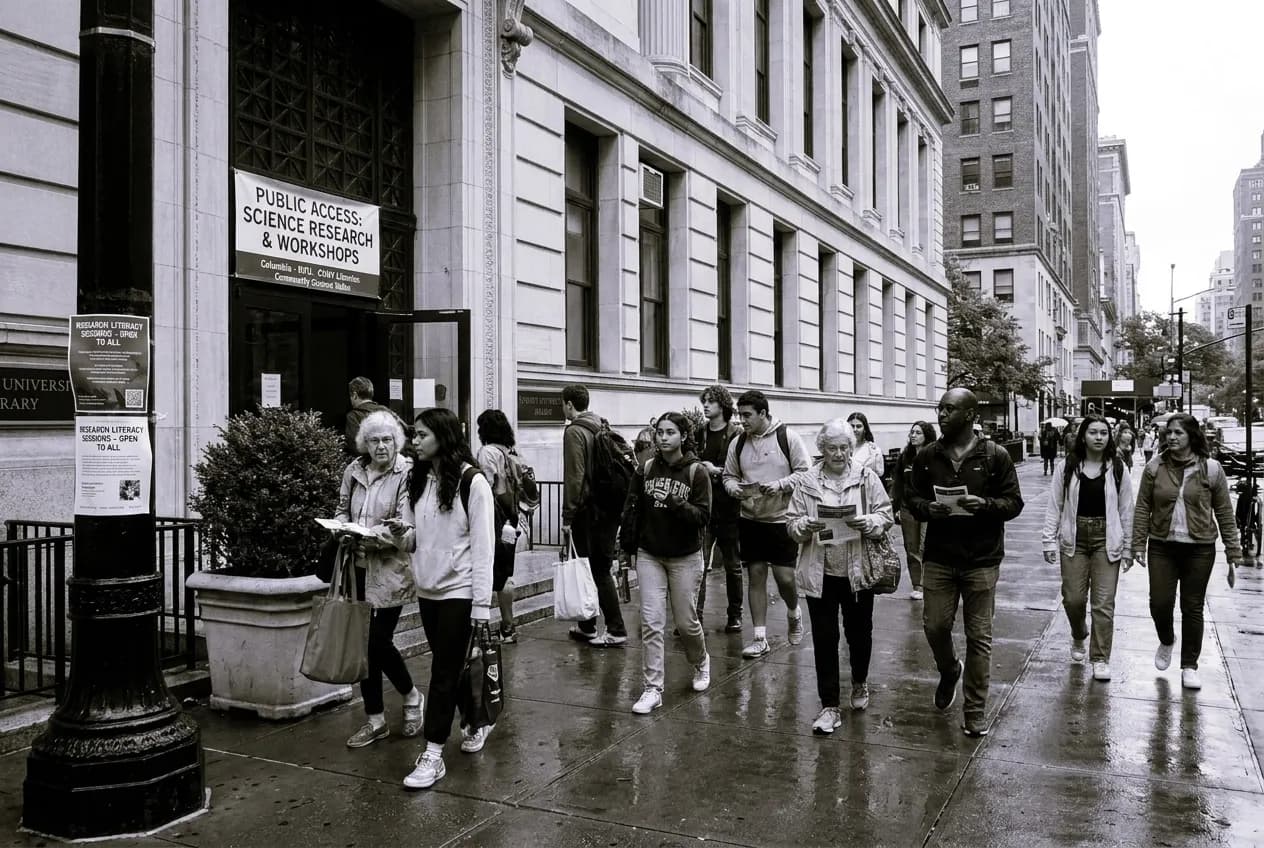
For science enthusiasts and independent researchers frustrated by paywalls blocking access to peer-reviewed studies featured on platforms like ScienceDaily, New York City's university libraries offer a practical workaround. Columbia University, New York University, and the City University of New York system maintain research collections and digital subscriptions that may be accessible to the public under specific conditions—but policies vary widely by institution, requiring advance verification. This weekday afternoon route connects three academic library systems across Manhattan, helping solo researchers understand guest-access protocols, library card eligibility for non-students, and whether reference librarians offer consultations to navigate complex databases. The journey involves moderate difficulty because it demands policy research before arrival, patience with bureaucratic procedures, and willingness to advocate for your access needs at each stop. Rather than promising guaranteed entry, this guide equips you with the right questions to ask, the tradeoffs between different institutions, and realistic expectations for what public science access looks like in practice.
Text Karpo your research topic, nearest university, whether you have a library card, and your available weekday hours—we'll send a route with three libraries offering public science database access, explain guest policies, and suggest one open-access journal directory as a backup.

Who Benefits From This Library Circuit and Who Faces Barriers
This route suits independent researchers, graduate school applicants reviewing literature before applications, science writers fact-checking sources, and lifelong learners pursuing topics beyond popular science summaries. It works best for people comfortable with academic jargon, familiar with database search strategies, and willing to spend 90 minutes to two hours at each location verifying access rather than expecting instant results. The weekday afternoon timing matters because reference desks staff specialist librarians who understand guest policies, whereas evenings and weekends often rely on circulation staff with less authority to grant exceptions. Solo researchers benefit from the focused mission—no companions means flexibility to linger over promising journal archives or pivot quickly if one library denies access.
However, this plan presents barriers for researchers needing immediate access to specific articles, those uncomfortable negotiating institutional gatekeeping, or anyone requiring assistive technology that may not be configured on guest computers. Language barriers complicate policy discussions, and some libraries require government-issued ID or proof of New York residency that excludes visitors or undocumented researchers. The moderate difficulty rating reflects these social and procedural hurdles more than physical exertion—you're navigating institutional bureaucracy, not steep terrain, which demands different stamina.

Columbia University Libraries: Verification Steps and Realistic Access Scenarios
Columbia's library system on the Morningside Heights campus includes Butler Library and several specialized science branches, but public access policies require advance clarification because they change based on collection type and current security protocols. Before traveling, call the main reference desk to ask whether non-affiliates can enter reading rooms, whether guest WiFi allows database access (often it does not, since subscriptions are IP-restricted), and if day passes exist for serious researchers. Some university libraries offer courtesy cards for alumni of any accredited institution or residents within certain zip codes—Columbia's policies on this fluctuate, so phone verification prevents wasted trips. If denied building access, ask whether specific librarians conduct research consultations by appointment for external researchers, a service some departments provide for complex reference questions.
The tradeoff at Columbia involves prestige versus accessibility: its collections are world-class, including extensive science journal backfiles, but its policies often prioritize enrolled students and faculty. Even if you gain entry to reading rooms, you may be prohibited from accessing electronic databases from guest workstations, limiting you to print journals and reference books. This makes Columbia most useful for historical research in physical archives or for scheduling a paid consultation with a subject specialist who can conduct database searches on your behalf and provide citations. The campus location near the 116th Street subway stations on the 1 train makes it a logical first stop, allowing you to assess access before committing your afternoon to the full circuit.
NYU Libraries: Guest Privileges and the Research Commons Model
New York University's Bobst Library in Greenwich Village historically offered more flexible guest access than peer institutions, though current policies require verification through their website's visitor information page or a phone call to access services. NYU operates a tiered system: some reading rooms welcome walk-in visitors for in-library use of materials, while database access and borrowing privileges require a paid community membership or enrollment in NYU's School of Professional Studies continuing education courses. The Research Commons on Bobst's second floor sometimes accommodates external researchers for consultations on navigating specific databases, but appointments fill quickly and may require demonstrating a legitimate research need beyond casual curiosity. Ask explicitly whether guest WiFi permits access to journal subscriptions or only open-access resources.
The advantage of NYU's location in Greenwich Village is proximity to multiple subway lines—the West 4th Street station serves the A, C, E, B, D, F, and M trains—making it a convenient midpoint in your library circuit. The tradeoff involves potential costs: if you pursue a community borrower card (pricing and availability change annually, so verify current terms), you're investing money for access that public library systems provide free but with narrower science collections. For researchers focused specifically on recent journal articles rather than books, this expense may not be justified unless you plan sustained use over months. Consider NYU most valuable if you can secure a free day pass or if their subject librarians in sciences agree to a consultation that includes database demonstrations.

CUNY System Libraries: Public Mission and Borough-Specific Policies
The City University of New York system operates libraries across all boroughs with a public mission that sometimes translates to more generous guest access, though policies vary significantly by campus. The Graduate Center Library on Fifth Avenue near 34th Street serves doctoral students across disciplines and occasionally permits serious external researchers to use materials on-site after completing a visitor registration process. Hunter College's library on the Upper East Side and Baruch College's Newman Library in Gramerle Park each maintain science collections with different guest policies—some CUNY campuses allow New York Public Library cardholders to access reading rooms, while others restrict entry to CUNY students and faculty only. The verification burden is higher here because you must research individual campus policies rather than relying on system-wide rules.
CUNY's tradeoff centers on mission versus resources: as a public university system, it philosophically supports broad access to knowledge, but budget constraints mean fewer subscriptions to expensive science databases compared to Columbia or NYU. You may find excellent access to open-access journals, government databases, and older print collections, but limited holdings of paywalled journals from commercial publishers. For researchers exploring topics covered by PubMed Central, PLOS, or other open repositories, CUNY libraries provide workspace and librarian expertise without the access barriers of private institutions. The Graduate Center's location near Herald Square (accessible via B, D, F, M, N, Q, R, W trains at 34th Street) makes it a practical final stop if you're moving south from Columbia through NYU.
Crafting Your Research Questions and Managing Expectations
Success in this library circuit depends on preparing specific research questions and understanding what public access realistically provides versus what remains restricted. Before visiting any library, compile a list of journals or databases essential to your research—knowing you need access to Nature, JSTOR, or Web of Science helps librarians assess whether they can assist you. Frame your access requests around legitimate research needs rather than general curiosity; librarians exercise discretion in granting guest privileges and respond better to focused projects. Bring government ID, proof of address if you have New York residency, and any credentials suggesting serious research intent (alumni ID from any university, professional association membership, or a draft manuscript showing work in progress).
Manage expectations by recognizing that no library will replicate the full database access of an enrolled student or faculty member. You're seeking workarounds—on-site access to specific articles, librarian-mediated searches, or guidance toward open-access alternatives—not comprehensive subscription privileges. The frustration that drives this search, the paywall barriers blocking sciencedaily research trends and primary sources, won't disappear entirely, but strategic library use reduces costs and expands access beyond what individual subscriptions allow. Document which libraries grant you access and under what conditions, building a personal map of resources for future research needs. This reconnaissance mission, though moderately difficult, creates a sustainable research infrastructure for independent scholars operating outside traditional academic institutions.
Tags: #researchaccess #universitylibrariesNYC #sciencedatabases #publicresearchresources #independentresearchers #journalaccess #Columbialibraries #NYUBobstLibrary #CUNYlibraries #academicresearch #paywallalternatives #libraryguestpolicies #Manhattanresearchroute #scienceliteracy #researchconsultations
Sources consulted: Source 1: nycgovparks.org · Source 2: new.mta.info · Source 3: nypl.org · Source 4: a816-health.nyc.gov
All trademarks are the property of their respective owners.
Ask Karpo first
Ask Karpo to turn this NYC idea into a current plan for your date, budget, companion, transit preference, and energy level. Karpo can narrow the route and flag what to verify before you go.


