 Setrak's Watch Repair Shop: Union Square Hours, Tue to Fri
Hidden Gems & Odd Finds
Wok Shopping in SF Chinatown: Where Chefs Buy Theirs
Professional cooks skip the cookware chains and head to three storefronts on Grant and Wentworth for hand-hammered carbon steel.
Most people walk into the souvenir shops along Grant between California and Broadway and leave with a thin stamped wok that warps the first time it hits a flame. The pans hanging in those windows are display stock, not what anyone cooks with. Professional cooks in San Francisco buy their woks three blocks deeper into Chinatown, in storefronts that keep hand-hammered carbon steel in the back and sell restaurant supply by the case out front.
Text Karpo right now for a live route through Chinatown's wok suppliers, plus current open hours and which shops still have hand-hammered stock this week.
Why the tourist blocks sell the wrong pans
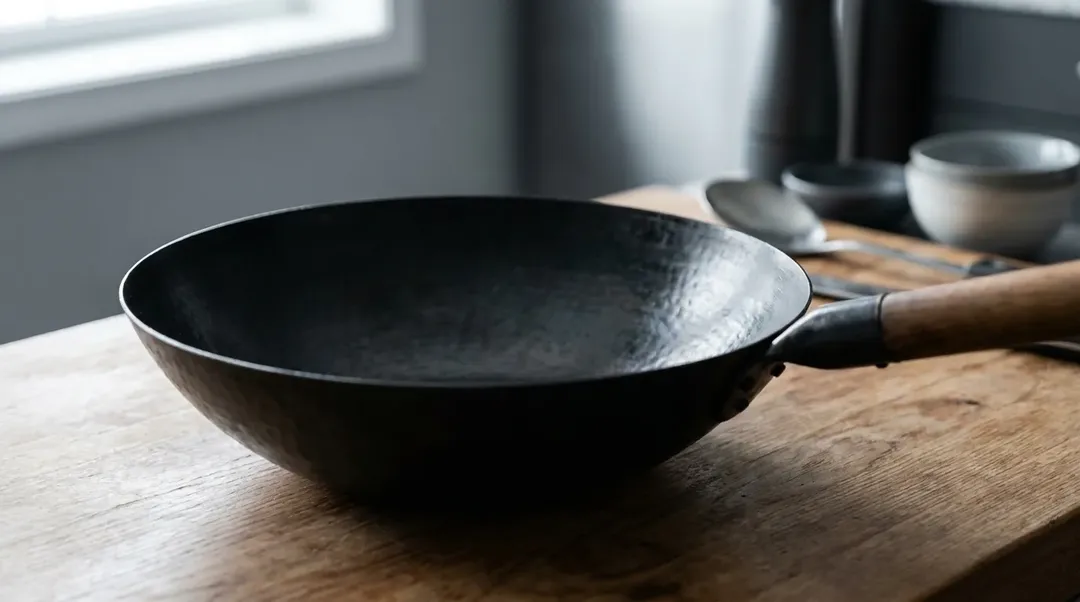
The best buy is still a fourteen-inch hand-hammered carbon steel wok with a single wooden handle, the kind that costs thirty to fifty dollars and lasts two decades if you season it correctly. You want carbon steel that's been shaped over a mandrel, not stamped from a press. The hammer marks are visible on the interior surface. The metal is thicker at the base, thinner up the sides. It conducts heat unevenly on purpose—the hottest zone stays at the bottom, the cooler upper walls let you push ingredients aside without burning them.
Chinatown's restaurant-supply shops stock these because Chinese restaurants in the city replace their woks constantly, and line cooks know which storefronts carry the real ones. The same shops sell walk-in cooler shelving, rice cookers by the pallet, and industrial gas burners. If you see a chef in whites buying soy sauce by the gallon, you're in the right place.
A three-block walk that hasn't moved in thirty years
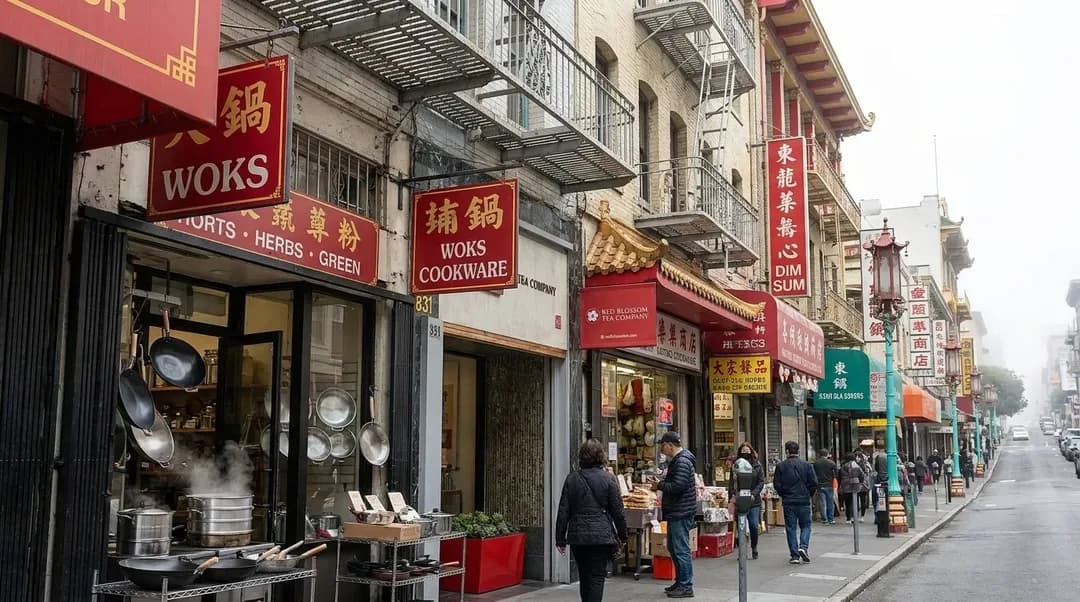
Start at the Stockton Street gate of the Chinatown station on the California Street cable car line. Walk north on Stockton to Clay, then cut east one block to Grant. The Wok Shop sits at 718 Grant, just south of Sacramento. It's been there since 1972. The storefront is narrow. Woks hang from ceiling hooks. The owner or her staff will pull down a hand-hammered pan and show you the weight difference between that and a stamped one. They stock flat-bottomed woks if your stove is electric, round-bottomed if you have gas or a dedicated wok burner. They also carry wok spatulas, spider skimmers, and bamboo brushes for cleaning.
Two blocks north on Grant, just past Washington, you'll find storefronts that serve the restaurant trade but sell to walk-ins. These places don't have names in English on the awning—look for open doors, stacks of aluminum steam-table pans, and commercial rice cookers in the window. Walk in and point to the woks on the wall. The staff will ask what size and what handle configuration. If you say "like the chefs use," they'll pull a round-bottomed fourteen-inch with one wood handle. Cash works better than cards in some of these shops.
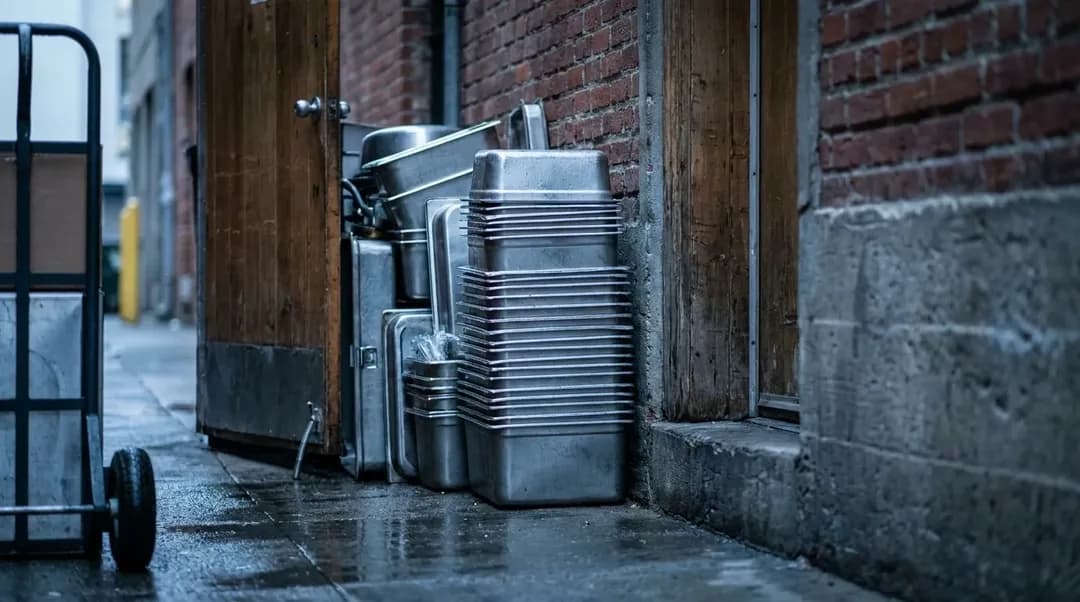
One block west, Wentworth Alley runs parallel to Grant. It's a service street, one lane wide, where delivery trucks unload in the early morning. A couple of restaurant-supply shops open onto Wentworth between Clay and Washington. These are where SF chefs actually buy in bulk. You can walk in and buy a single wok, but you'll be standing next to someone ordering two dozen. The selection here includes hand-hammered, machine-hammered, and stamped pans. Ask which is which if the hammer marks aren't obvious. The staff won't upsell you—they'll point at the cheapest one that does the job.
The entire walk from California Street to Washington on this route is uphill, but it's a gentle grade. The fog rolls through hardest in the late afternoon. By five most of these shops are thinking about closing, and by six they're dark. Go before three if you want time to compare pans and ask questions. Muni's 30 and 45 lines run on Stockton; the 1 runs on Sacramento. BART to Montgomery is a ten-minute walk west, but you'll be carrying a wok, so the cable car back down California is easier.
This route is not for nonstick or beginners
If you want a nonstick wok, buy it online. The shops in Chinatown stock carbon steel and cast iron because that's what works on a restaurant flame. Carbon steel requires seasoning—you burn off the factory coating, heat oil until it smokes, repeat three or four times. The pan turns black. It will never be dishwasher-safe. You scrub it with water and a bamboo brush, dry it on the flame, and rub it with a thin layer of oil after every use. If that sounds like a problem, this is not your pan.
These shops also assume you know what you're buying. The staff will answer direct questions, but they won't walk you through wok technique or recommend a recipe. They're selling tools to people who cook every day. If you've never used a wok, pick one up at The Wok Shop on Grant—they're more patient with questions and they print a seasoning guide on the receipt. The deeper supply stores on Wentworth are for people replacing a wok they already wore out.
Flat-bottomed woks exist because American electric and induction stoves can't cradle a round bottom. They work, but they lose the advantage of a wok's heat gradient. If you have gas, buy a round-bottomed wok and a steel wok ring to stabilize it over the burner. If you have electric, buy flat-bottomed and accept that it's a compromise. Don't buy a wok with a nonstick coating and a glass lid—that's not a wok, it's a high-sided skillet.
What to confirm before you ride the cable car up
The Wok Shop posts its hours on the door and updates them on its own site. Confirm before you go—they've shortened hours in the past during slow seasons. The restaurant-supply shops on Grant and Wentworth keep less predictable schedules. Most open by ten, most close by six, some close earlier if it's quiet. Go midweek if you can. Saturday mornings are busy with restaurant orders. Sunday some of these places stay closed.
Expect to pay cash at the smaller supply stores. The Wok Shop takes cards. Prices for a fourteen-inch hand-hammered carbon steel wok range from thirty to sixty dollars depending on the thickness of the metal and whether it's been hammered by hand or by machine. A wok spatula runs eight to twelve dollars. A spider skimmer is six. If someone quotes you more than seventy dollars for a basic carbon steel wok with one handle, they're assuming you're a tourist. Point at the pan and ask again.
Carry the wok home in a bag if the shop offers one, but expect to carry it by the handle if they don't. It's not fragile. The patina will develop with use, and the first few stir-fries will taste slightly metallic until the seasoning sets. If the wind picks up on the walk back down the hill, the round bottom catches it—hold the wok low and close to your body.
If you're coming from Bernal Heights, the 24 bus to Mission and 16th connects to BART. Get off at Montgomery, walk east to Grant, and start the wok walk from there. If you're driving, the Portsmouth Square garage on Kearny is the closest parking, but it fills by noon on weekends. Street parking on the blocks south of California is metered and turns over fast. The cable car from Powell or California drops you at the edge of the wok district and costs eight dollars. Muni day passes work on the cable cars.
Practical notes
- Most wok shops close by 6 p.m.; go before 3 p.m. for full selection and patient service.
- Bring cash for smaller restaurant-supply stores on Wentworth; The Wok Shop on Grant takes cards.
- A fourteen-inch hand-hammered carbon steel wok runs $30–$60; anything over $70 is tourist pricing.
- Fog and wind hit hardest after 4 p.m.; the round bottom of an unseasoned wok catches wind on the walk back.
- Cable car from Powell or California Street drops you at the district edge; Muni 30, 45, or 1 lines stop closer.
- Confirm hours before you go—some supply shops close early midweek or stay closed Sundays.
Tags: #karpo #sanfrancisco #sfchinatown #wok #carbonsteelwok #cheftools #wherechefsbuy #cookware #kitchentools #sfeats #theoddedit #restaurantsupply #handtools #bayarea #sflocal
Sources consulted: The Wok Shop · SF Chinatown Community Development Center · SFMTA Muni routes
All trademarks are the property of their respective owners.
Ask Karpo first
Text Karpo before you head to Chinatown and ask which wok shops are open right now, plus the fastest route from your starting point. Karpo will check current status and map the walk from the cable car or Muni stop, so you're not guessing which storefronts are still open when you arrive.
Ask Karpo for more information.
Keep reading
- Setrak's Watch Repair Shop: Union Square Hours, Tue to Fri
 Visitacion Valley Chess Club: Library Fridays at 4:30 pm
 Mechanics' Institute Chess Club, SF: Tuesday Night Marathon