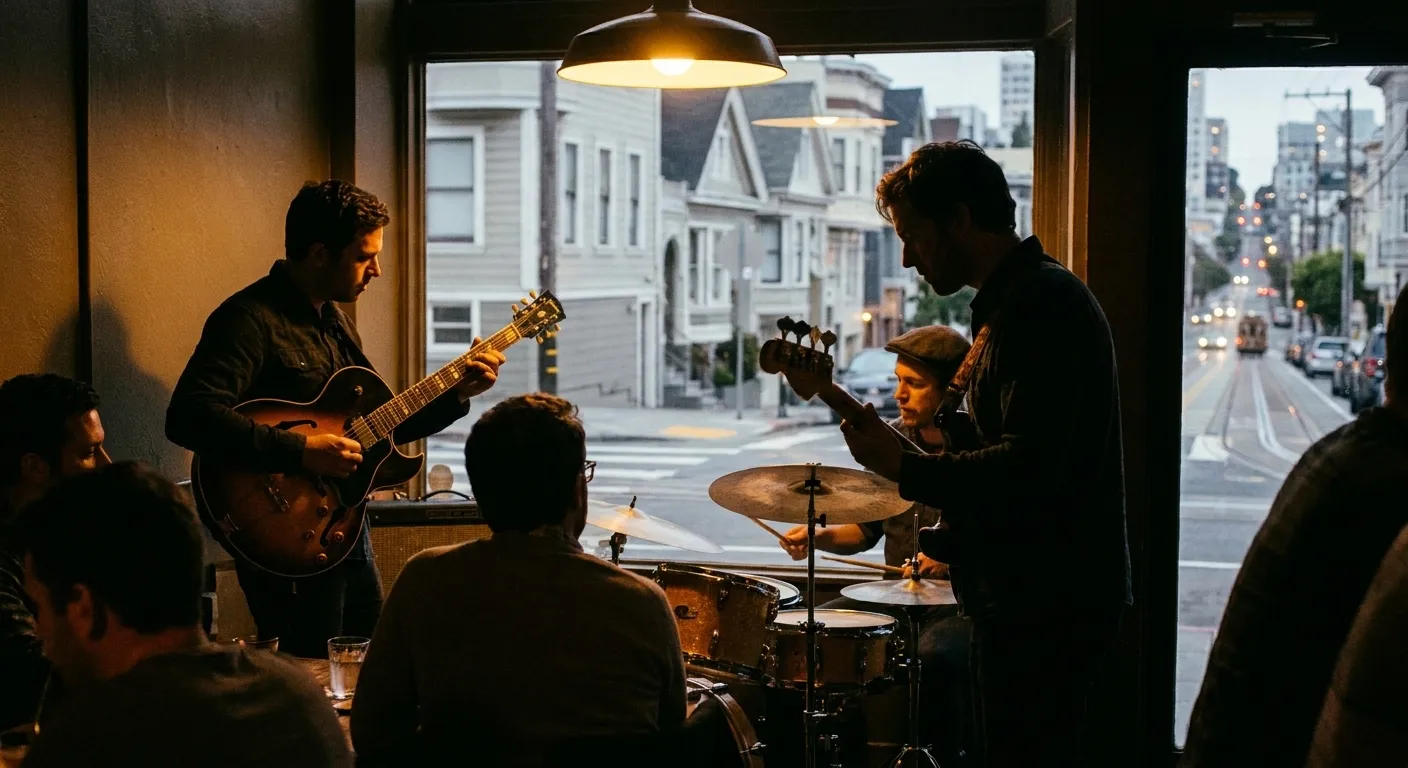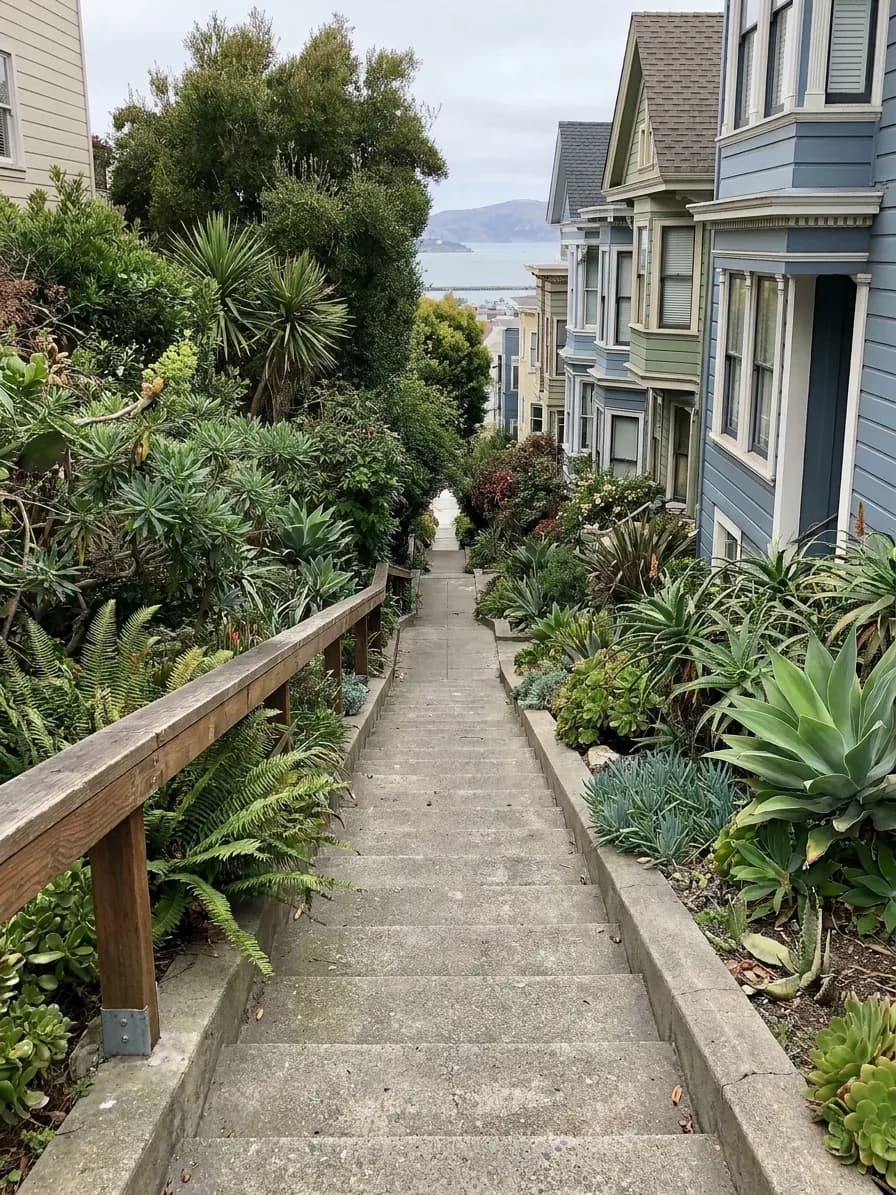
Ask which rooms locals book first for a Friday and you get a list of wine lists, which misses the point entirely. The rooms that go first in this city solve a logistics problem: six people, arriving between six and seven thirty, some of whom will leave early, none of whom want to shout. Wine tasting in San Francisco is at its most socially useful in exactly that configuration, and only a subset of rooms are built for it.
Group capacity disappears before the good tables do. Ask Karpo which wine rooms near you can still take a group tonight.
What makes a room work for a group
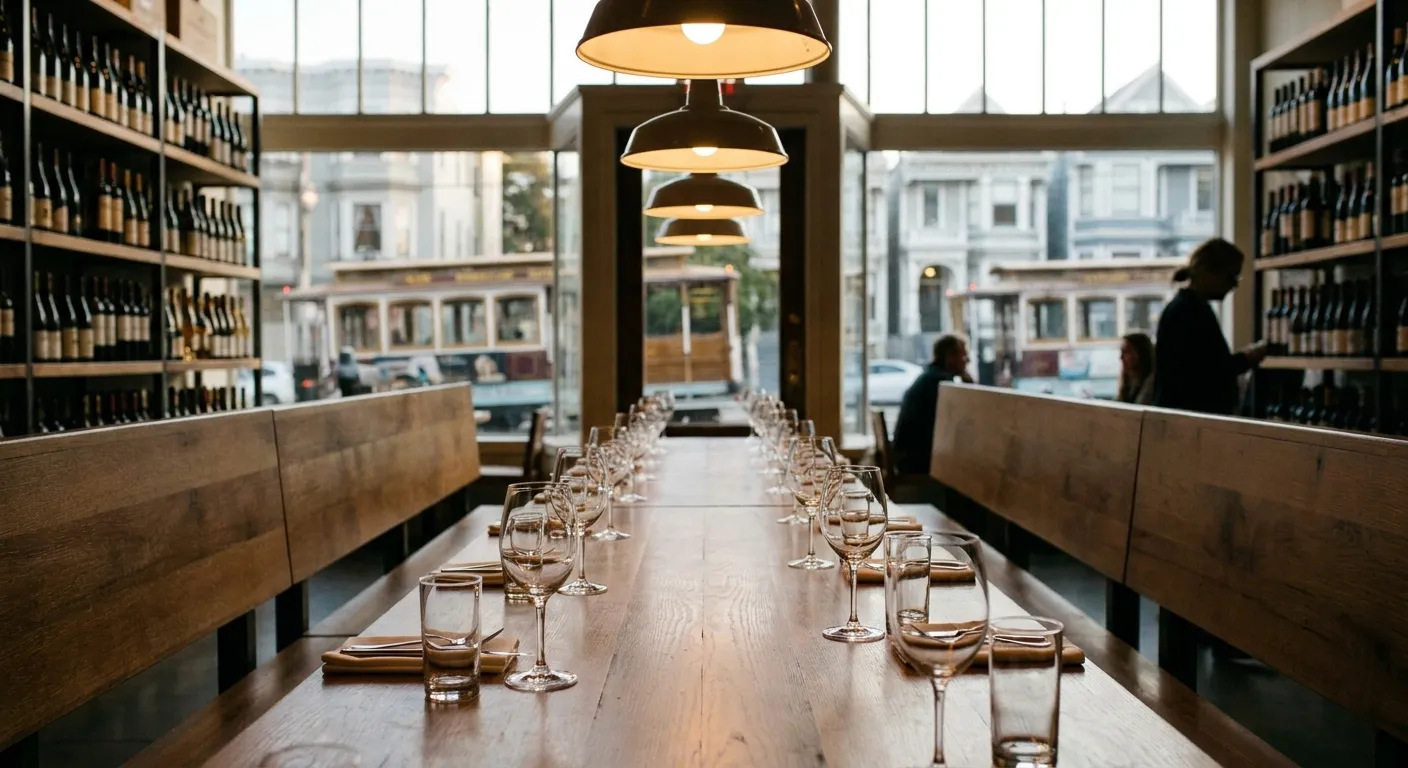
Communal tables and standing room, first of all. A wine bar with eight two-tops has no group capacity at any price, whereas one long table takes six or ten without any negotiation. This is why the industrial-format rooms — the converted warehouses, the urban wineries with barrel rooms — are consistently the easiest bookings for a group and the hardest to get late.
Second, a flexible pour size. A group of six will contain someone who wants a full glass, someone who wants to taste four things and someone who is not drinking. A room that only sells bottles forces a group decision that takes ten minutes and pleases nobody; a room with tasting pours, glasses and bottles all available absorbs the whole group without discussion.
The timing that decides everything
Friday capacity in this city is decided between six and seven. The after-work crowd arrives early and settles, which means a room that looks empty at five forty-five is full at six forty. Groups that plan to meet at seven are competing for the tables that turn over, and there are fewer of those than people expect because nobody leaves a wine bar quickly.
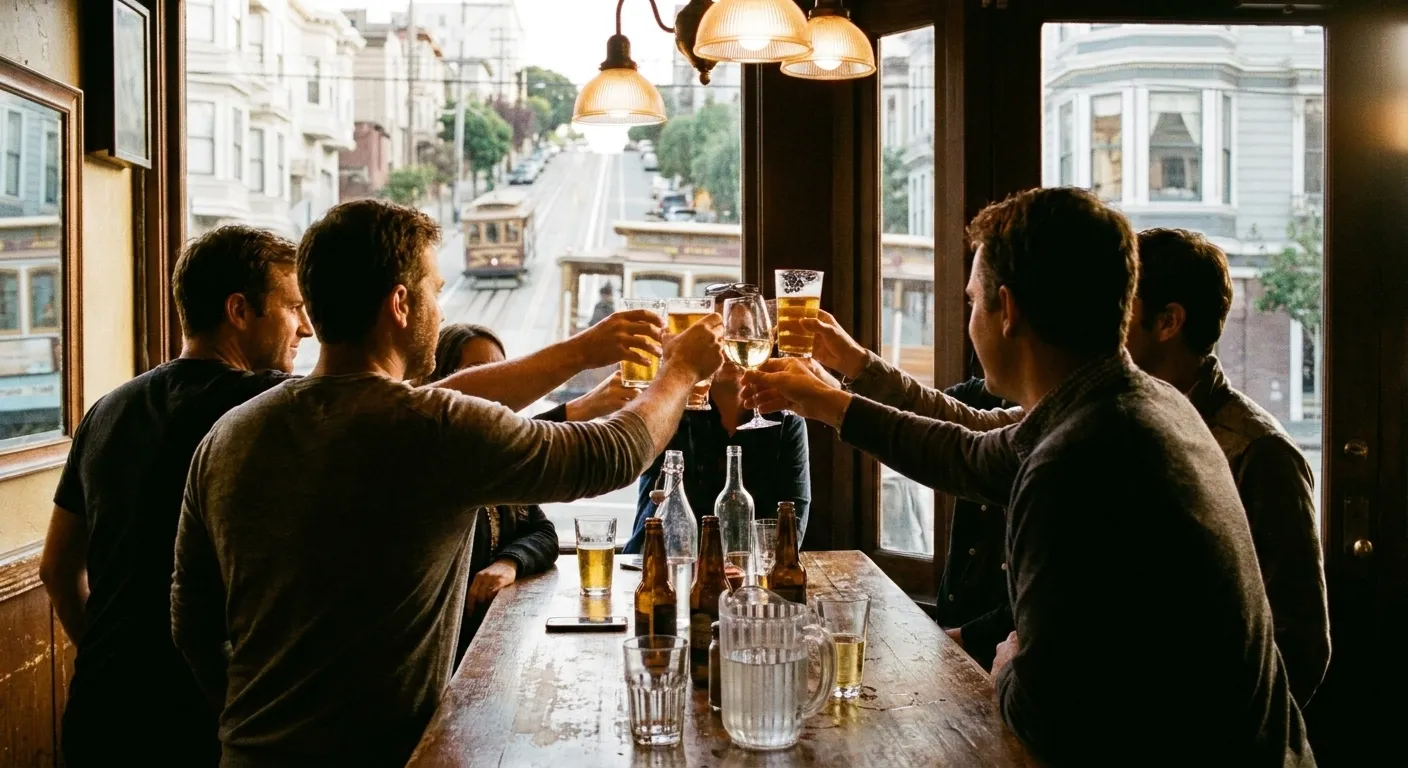
The practical version: book for six or book for eight thirty. Six catches the room before it fills, eight thirty catches the second seating after the after-work group disperses. Seven o'clock on a Friday is the single most contested hour of the week in this category and the least likely to be available on the day.
Where the capacity actually is
The Dogpatch and the industrial southeast have the most physical space and therefore the most group capacity, and they are still comparatively underbooked because they are not on the way home for most people. That inconvenience is precisely why they still have tables at seven on a Friday when Hayes Valley does not.
Hayes Valley, the Mission and the Marina are the most contested. Small rooms, high demand, and an after-work population that arrives on foot. If you want one of those on a Friday, book at the start of the week rather than on the day, and expect the booking to be for a fixed ninety minutes rather than for the evening.
The walk-in strategy that still works
Split the group. Two people can walk into almost anything; six cannot. Sending two ahead at half five to take a table and hold it while the rest arrive over the next hour is what people who do this a lot actually do, and most rooms are fine with it as long as you are ordering. It looks like a trick and it is really just arriving early in shifts.
The other move is to accept standing. Several of the best rooms in this city have a bar and a standing area that is never bookable and always available, and a group standing at the counter has a considerably better evening than the same group sitting in a mediocre room they could get into. Standing also makes it easy for people to join and leave, which on a Friday is the actual requirement.
Cost, and how groups get it wrong
Bottles are cheaper per glass and worse for groups, because the group has to agree and because the person who wanted one glass ends up subsidising the person who wanted four. Ordering by the glass costs more on paper and produces fewer arguments, and the difference across six people is smaller than the social cost of the negotiation.
Happy-hour windows are the real lever and they are widely available here between roughly four thirty and six thirty. A group that arrives at five thirty and orders inside the window can drink well for half what the same order costs at eight, and the room is emptier. This is the least glamorous and most effective piece of advice in this whole category.
Reading whether a room wants your group
Some do not, and they will tell you politely by offering a ninety-minute slot at five forty-five or by declining parties over four. That is not rudeness; it is a small room protecting its economics, and pushing against it produces a bad evening for everyone. Believing the first answer and moving on is faster than negotiating.
The rooms that do want groups make it obvious — large tables, a stated party maximum in double figures, food designed to be shared, and staff who ask how many are coming rather than how many are here. Learning three of those and rotating between them is what most groups here eventually settle into, and it is a considerably better system than searching every Friday.
One further thing that makes the whole exercise easier: nominate someone to book. Groups of six reliably fail to secure a table not because nothing was available but because the decision circulated in a message thread for two days and nobody acted. A single person booking something adequate on Tuesday beats six people optimising toward nothing by Friday afternoon.
Tags: #SanFrancisco #WineBarsSF #FridayNight #AfterWorkDrinks #Dogpatch #HayesValley #GroupDining #SFNightlife #SocialSF #WineTastingSF #BayArea #ThingsToDoSF #HappyHour
All trademarks are the property of their respective owners.
Ask Karpo first
Ask Karpo which wine bars near you in San Francisco can take a group tonight, whether they hold walk-in space, and when happy hour ends.