 Expert Pet Boutique on Ocean Avenue: Sunday Resort Stop
Hidden Gems & Odd Finds
Super El Niño Precipitation Changes Make San Francisco's Fog Belt Feel Different This Year
When the rain pattern shifts this hard, even Japantown's covered walkways and Muni timing start to matter in new ways.
The benches along the Peace Pagoda plaza in Japantown collect water differently this winter. Where the usual fog drip used to bead and evaporate by mid-morning, now the runoff pools near the ginkgo roots and stays through lunch. Super El Niño precipitation changes have rewritten the city's moisture calendar—not just heavier storms, but longer drying times, wind that drives rain sideways under awnings, and microclimates that used to stay dry now holding onto dampness for hours. The Western Addition and the blocks stretching toward the Panhandle see it earliest because they sit in the path of Pacific systems before downtown's building canyons break them up.
Karpo tracks live Muni delays and checks which indoor spots in Japantown and the Western Addition are open right now, so you're not walking uphill into a closed door. Text it before you leave.
Why the Western Neighborhoods Feel the Shift First
This matters for anyone planning an afternoon walk or trying to catch the last hour of a museum before dinner. The usual rhythm—fog burns off by noon, streets dry by two—doesn't hold when super El Niño precipitation changes keep the pavement slick past four and the bus shelters dripping until evening. Japantown's covered walkways along the Japan Center become essential infrastructure instead of aesthetic detail. The pagoda plaza, normally an open place to sit and regroup, turns into a wind tunnel when storms push through, and the east-facing benches under the eaves of Kinokuniya become the only dry perch within three blocks.
The hills amplify everything. Fillmore climbs steeply enough that runoff braids down the crosswalks, and the stretch between Post and Geary becomes a test of traction when the rain's been steady for more than an hour. locals know to take Buchanan or Laguna instead—gentler grades, better drainage, fewer surprises. If you're coming from the east on Muni, the 38 Geary runs frequently enough that waiting an extra few minutes for a less-crowded bus pays off; standing-room on a wet afternoon means jostling with backpacks and umbrellas for twenty blocks.
Start at the Kabuki Springs Building Block
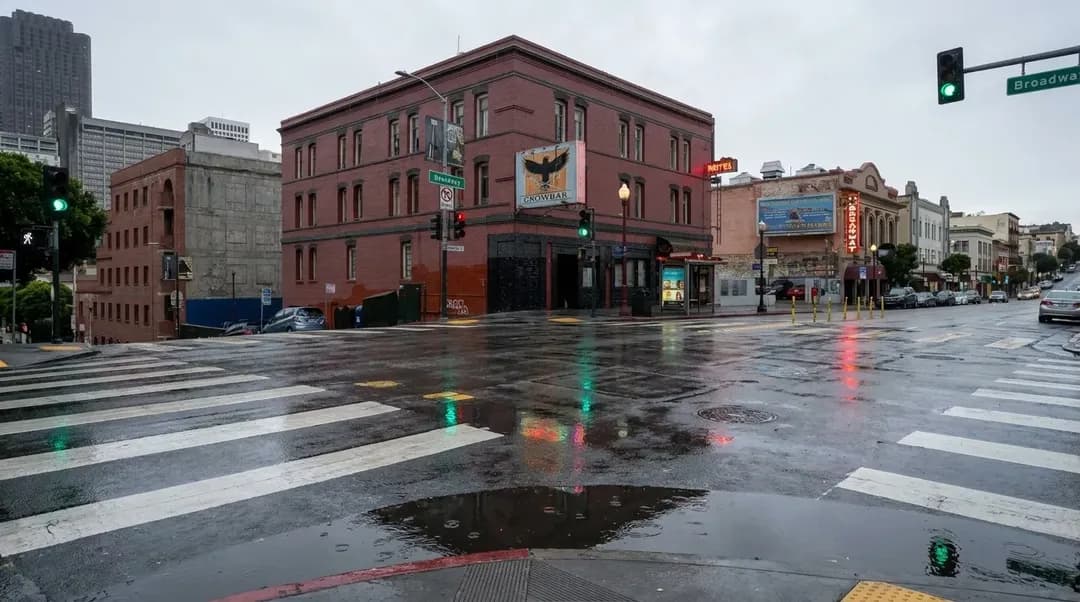
Kabuki Springs & Spa anchors the Japantown complex on the northwest corner, and its entrance lobby—warm, dim, stone-floored—gives you a place to shake off and decide whether to commit to the next few hours indoors or pivot. The building's heated, the hallways connect to the rest of Japan Center without stepping outside, and there's a public restroom near the ground-floor entrance if you need to dry your glasses or check a phone without buying anything. Confirm the spa's day-pass availability if you want the baths; walk-ins sometimes fill by early afternoon on rainy weekends.
From there, the Kinokuniya bookstore on the second level of the East Building offers two solid hours of browsing if the weather's holding you hostage. The manga section runs deep, the stationery aisle has enough variety to kill thirty minutes on its own, and the magazine racks near the front windows let you watch Geary Boulevard's bus flow while you flip through architecture or food journals. The café corner serves warm drinks, and the seating near the back wall stays quiet even when the main floor gets crowded. Super El Niño precipitation changes mean you'll see more people lingering here than usual, using the space as a waiting room between transit connections.
If you're hungry early, the ramen and udon counters in the center's ground-floor food court open by eleven. Marufuku and Tanpopo both have lines by noon on weekends, but the turnover is fast, and you can watch the kitchen work while you wait. The seating area near the Post Street entrance has good light in the morning, and the tables nearest the windows give you a view of the street traffic and the pagoda plaza. Check whether the specific stall you want is open that day—some vendors close Tuesdays or Wednesdays, and holiday schedules shift without much advance notice.
The Fillmore Corridor and Its Wet-Weather Logic
Fillmore Street between Geary and Pine has enough awnings and recessed doorways that you can move a few blocks north without getting soaked, but the cross streets—Post, Sutter, Bush—are exposed, and super El Niño precipitation changes have made those intersections miniature river crossings when the storm drains back up. The southwest corner of Fillmore and Bush tends to flood ankle-deep during heavy runoff; locals cross on the north side and cut through the covered bus zone instead. The vintage clothing shops and small cafés along this stretch keep irregular hours, so don't build a plan around a specific storefront without checking current status.
The New People building at 1746 Post, just west of the main Japan Center complex, has a small gallery on the ground floor and a retail space upstairs. It's free to walk through, the lighting is even and warm, and the basement level sometimes hosts pop-culture exhibits or screenings—confirm what's on view before you go, as the schedule changes monthly. The building's entrance faces Post, which gets less foot traffic than Geary and stays quieter even during weekend afternoon surges.
Alamo Square Park sits about ten blocks northeast, up Fillmore's long climb past Bush and Pine. On a clear day it's a straightforward walk, but when super El Niño precipitation changes bring sustained rain, the park's southwest corner—the famous Painted Ladies view—becomes a muddy, windswept plateau with no shelter. The trees along the north edge of the park offer some cover, and the benches near the Fulton Street side tend to dry faster because they face south. If you're set on the postcard view, go early in the day before foot traffic churns the lawn into slick grass, and know that the walk back down Fillmore can be slippery if your shoes don't have tread.
When the Plan Shifts Mid-Afternoon
The 38 Geary runs every eight to twelve minutes during midday hours, but bunching is common when rain slows traffic between Fillmore and Van Ness. If you're trying to move east toward Union Square or the Ferry Building, the 38 Rapid stops less frequently and sometimes makes up time, but both lines use the same stretch of Geary and hit the same delays. BART from Civic Center is faster if you're headed downtown, but the walk from Japantown to Civic Center Station is about fifteen minutes, mostly downhill on Gough or Franklin, and both streets channel wind hard enough that an umbrella becomes a liability.
The AMC Kabuki 8 cinema on Post Street, part of the Japan Center complex, offers another indoor fallback. Showtimes run from late morning through evening, and the lobby connects to the rest of the center so you can move between the theater, bookstore, and food court without stepping outside. Matinee pricing sometimes applies before five, and the smaller screens upstairs tend to be less crowded than the main floor auditoriums. Check the current schedule online; the theater occasionally closes for private events or reduces screens during slower weekdays.
If you need a quieter, drier reset, the Asian Art Museum at Civic Center is a twenty-minute walk southeast from Japantown, mostly along Fulton or McAllister. The museum's entrance lobby is vast and warm, the coat check is free, and the galleries on the second and third floors give you room to move at your own pace. Admission runs around fifteen to twenty dollars for adults; confirm current pricing and any special-exhibit surcharges before you go. The museum café on the ground floor stays open through mid-afternoon, and the seating near the windows overlooks the plaza and the main library across the street. Super El Niño precipitation changes mean the plaza itself will be slick and wind-battered, but the museum's interior stays comfortable and well-lit regardless of what's happening outside.
Evening Transit and Kitchen Cutoffs
Japantown's dinner spots start filling by six, and many kitchens close by nine, earlier than you'd expect in other neighborhoods. If you're planning a late meal, confirm closing times for the specific restaurant; ramen counters and izakayas sometimes stop seating by eight-thirty, and the food court vendors in Japan Center often shut down by seven or eight. The 38 Geary runs until past midnight, but frequency drops after nine, and the wait between buses can stretch to twenty minutes or more. The 22 Fillmore runs north-south and connects to the 38 at the Fillmore and Geary intersection, giving you a backup route if one line is delayed.
The walk back to BART or a hotel in Union Square takes about twenty-five minutes on foot, mostly downhill along Geary or Post. Post Street has fewer bus stops and lighter pedestrian traffic, which can feel quieter but also more exposed if the weather's still bad. Geary has more light, more storefronts, and more people, but the sidewalks narrow near Van Ness and the wind funnels hard through the intersection. If you're carrying bags or trying to stay dry, the extra few minutes on the bus are worth it.
Super El Niño precipitation changes mean that evening fog now often arrives with drizzle instead of dry mist, and the temperature drop after sunset is sharper than usual. The blocks between Japantown and Civic Center don't have much in the way of covered bus shelters, so if you're waiting for the 38 or the 22, the stops near Japan Center or the one at Fillmore and Geary offer nearby doorways and awnings where you can step back if the rain picks up. Keep a transit app open so you can see real-time arrivals; paper schedules don't account for weather delays, and the difference between a five-minute wait and a fifteen-minute wait matters when you're standing in the wind.
Practical notes
- Muni's 38 Geary and 22 Fillmore serve Japantown; expect bunching and delays during rain.
- Fillmore Street climbs steeply between Geary and Bush; runoff makes crosswalks slippery.
- Japan Center's covered walkways connect buildings; use them to avoid repeated exposure.
- Many Japantown kitchens close by 9 p.m.; confirm dinner timing before you commit to a late plan.
- BART from Civic Center is faster for downtown trips, but the walk from Japantown is exposed and windy.
- Kabuki Springs requires advance check for day-pass availability; walk-ins fill on rainy weekends.
Tags: #karpo #sanfrancisco #japantown #superelnio #precipitationchanges #sfweather #munilife #wetweatherplans #westernaddition #theoddeditsf #rainydaysf #transitlife #sfneighborhoods #exploringsf #livelocal
All trademarks are the property of their respective owners.
Ask Karpo first
Text Karpo to check which Japantown restaurants and shops are open right now, especially if you're heading over after four when some vendors close early. It'll also give you a live Muni route from your current location and flag any delays on the 38 or 22 so you're not standing in the rain longer than you need to.
Ask Karpo for more information.
Keep reading
- Expert Pet Boutique on Ocean Avenue: Sunday Resort Stop
 Rowdy & Archie Pet Boutique: Early Dog-Food Shopping
 Noe Valley Pet Boutique: Late Weekday Supply Run