 Setrak's Watch Repair Shop: Union Square Hours, Tue to Fri
Hidden Gems & Odd Finds
How to Build a Mindhunter-Mood Evening in San Francisco Without Leaving Japantown
The serial-killer procedural vibe translates to foggy walks, quiet bars, and the kind of late lighting that makes every corner feel like evidence.
The first season of Mindhunter aired in 2017, and its methodical pacing, muted palette, and institutional interiors created a mood that still lands when you're looking for something deliberate and a little removed. San Francisco doesn't have the basements or the humid Midwest brick of the show, but Japantown after dark—especially the blocks between Fillmore and Laguna—has its own version of that withdrawn, observational feeling. The fog moves through in layers, the street lighting is uneven, and the architecture mixes postwar concrete with older wood-frame buildings that hold shadow differently than the glass towers downtown.
Karpo keeps the route live while you move—text it when you want to shift the plan, check what's still open past ten, or find a warm bar if the wind picks up on Post Street.
Why the Mindhunter Tone Works in This Part of the City
What people search for when they type Mindhunter now isn't always about the show itself. It's about the procedural headspace: slow, focused, a little unsettling, good for walking without talking much. Japantown gives you that because it's compact enough to cover on foot, it has indoor spaces that stay open later than surrounding neighborhoods, and the hills to the south and west create natural breaks in foot traffic. You're not going to recreate a 1970s FBI academy, but you can build an evening that respects the same textures—low light, long stretches of quiet, and places to sit and watch without being watched back.
The practical advantage here is transit. The 38 Geary runs frequently until close to midnight, and the 22 Fillmore connects you north to the Marina or south toward the Mission if the plan shifts. Japantown itself is flat, which matters when you're moving between spots after nine PM and don't want to fight the hills around Pacific Heights or Nob Hill. The Peace Pagoda in the Japan Center courtyard is lit at night and gives you a fixed landmark; the surrounding mall structure stays open even when individual shops close, so you have a warm, covered fallback if the wind turns.
Start at the Kabuki Theater Block When the Last Showing Lets Out
The AMC Kabuki on Post Street is a working theater with eight screens, and the building's lobby has that institutional scale—high ceilings, concrete, long sightlines—that fits the Mindhunter aesthetic better than the ornate movie palaces downtown. You don't need to see a film to use the block; the sidewalk between Fillmore and Webster has wide concrete planters and a covered walkway that catches foot traffic around nine or ten PM when the later showings end. People move through quickly, which leaves the space feeling observed rather than social.
Across Post, the Benkyodo Company storefront is a Japanese confectionery that's been operating since 1906. It closes by six PM most days, but the building itself—wood frame, small windows, hand-painted signage—anchors the block and gives you a reference point. If you arrive earlier, confirm the hours and pick up mochi to carry; if you're there after closure, the exterior is enough. The contrast between the old storefront and the modern theater lobby a few dozen feet away creates the kind of temporal layering that the show used in its cut between decades.
Walk west on Post toward Laguna. The blocks here are mixed-use: ground-floor retail with apartments above, narrow storefronts, and service alleys that run perpendicular. The streetlights are sodium vapor, which gives everything a yellow cast, and the fog diffuses it into a glow rather than a beam. This is the kind of light that flattens faces and makes parked cars look like props. If you're moving slowly and letting your eyes adjust, you'll notice how much of the block is actually empty after hours—gates down, interiors dark—but the sidewalk itself stays wide and clear.
Move Through the Japan Center Mall and Use the Upper Walkways
The Japan Center is a three-building complex connected by open-air courtyards and second-level bridges. It was built in the 1960s as part of urban redevelopment, and the architecture is unambiguous modernist: poured concrete, right angles, exposed aggregate. The East and West malls have interior corridors with tile floors and fluorescent lighting that stays on even when the shops close. You can walk the circuit without buying anything, and the bridges between buildings give you elevated views of the courtyard and the Peace Pagoda below.
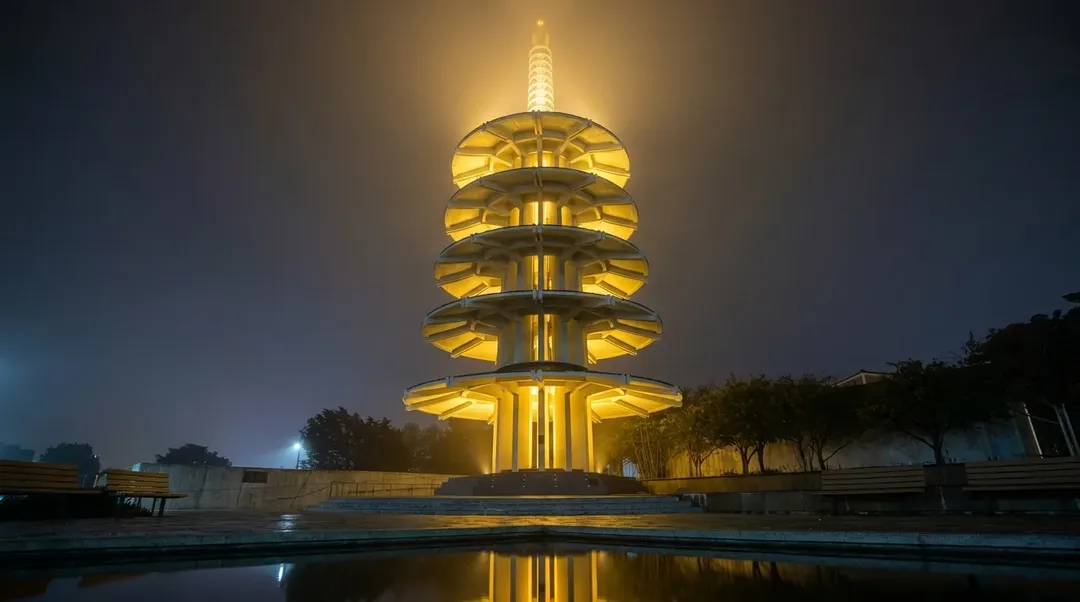
The Pagoda itself is a five-tier structure donated by San Francisco's sister city Osaka in 1968. It's lit from below at night, and the reflecting pool around it picks up the light in a way that's more stark than romantic. The courtyard is open to the sky, so if the fog is low, you'll see it move across the upper tiers. There are concrete benches on the north side of the pool that are usually unoccupied after ten PM; they're cold, but they're positioned so you're looking at the structure rather than at other people.
Inside the West Mall, the Kinokuniya Bookstore on the second floor is one of the largest Japanese-language bookstores in the US. It typically closes at eight PM, but confirm the current hours before planning around it. If it's open, the back section has English-language books on architecture, design, and true crime—relevant if you're leaning into the procedural mood. If it's closed, the hallway outside has floor-to-ceiling windows that overlook Post Street, and the glass reflects the interior lights in a way that doubles the space. You can stand there without anyone asking why.
The mall's public restrooms are on the ground floor of the East building, near the Fillmore Street entrance. They're institutional but clean, and they're a practical stop before you move to the next leg. The vending machines near the restrooms sell cold canned coffee and tea; the coffee is over-extracted and bitter, which fits the evening better than something carefully sourced.
If the Wind Turns or You Need to Sit, Head to a Fillmore Bar
Fillmore Street between Geary and Pine has several bars and small restaurants that stay open past eleven PM on weekends, though kitchen hours vary and often end by ten. The Boom Boom Room, a live music venue near Geary, books blues and funk acts most nights; cover charges apply when there's a performance, but the front bar area sometimes allows walk-ins without a ticket—check the door policy that night. The interior is dark wood, low ceilings, and red lighting, which leans more juke joint than interrogation room but still keeps the muted palette.
If live music isn't the goal, the Hotel Tomo bar on Sutter near Buchanan is a quieter option. The hotel's aesthetic is pop-culture maximalist, but the bar itself is small and underpopulated on weeknights. You can order a drink and sit without conversation. The bartenders don't push interaction, and the seating faces the back bar rather than the room. It's a place to let the evening settle before deciding whether to stay in the neighborhood or move elsewhere.
The Fillmore corridor itself is wide and well-lit, but the side streets—Sutter, Bush, Pine—are narrower and darker. If you're walking between bars, take the side streets. The residential buildings here are Edwardian and Victorian, wood-frame with bay windows, and the front steps create a rhythm of shadow and threshold that the main avenues don't offer. You're not trespassing—these are public sidewalks—but you're moving through space that feels more withheld.
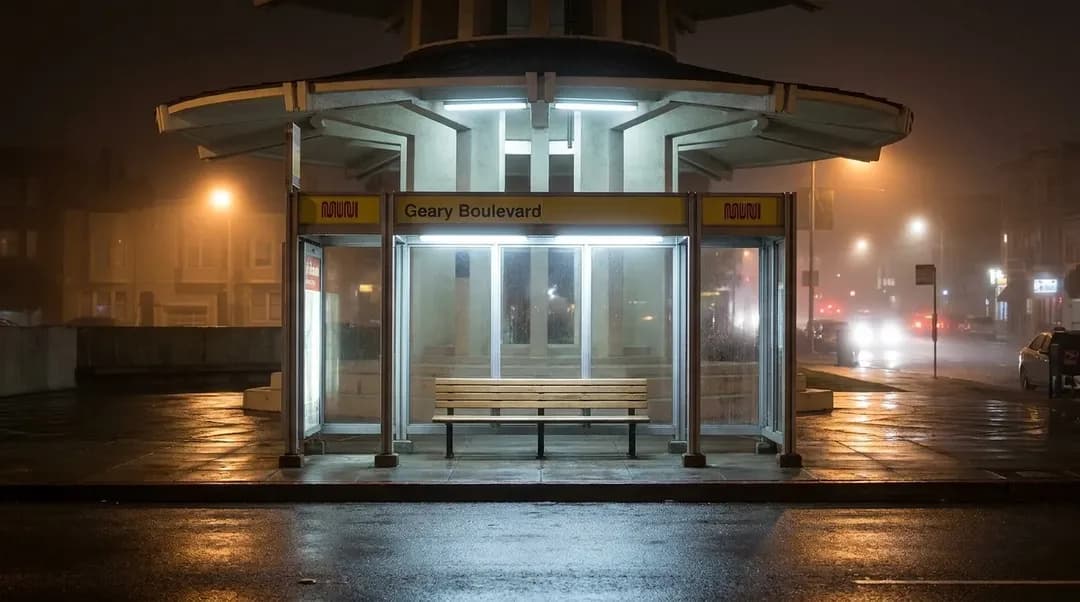
If the fog turns to drizzle, the covered walkways inside the Japan Center are still accessible, and the Fillmore Street side of the mall has a sheltered bus stop for the 22. The 38 Geary runs more frequently, but the 22 gives you a north-south option if you want to reroute toward the Marina or the Castro without backtracking downtown.
What to Confirm Before You Go and What to Ask for Live
The Mindhunter search isn't about finding a shrine or a tour stop. There's no filming location here, no pop-up exhibit, no anniversary screening announced at the Kabuki as of now. If an event is scheduled in the future, the AMC's own website will list it; don't plan around rumor. What you're building instead is a route that respects the procedural mood—slow movement, institutional textures, low light, and the option to stop or shift without the plan collapsing.
Check the Kabuki's showtimes that day so you know when the lobby will have foot traffic. Verify Kinokuniya's hours if you want to go inside; the store's website lists closures and holiday changes. Confirm bar hours on Fillmore before you commit to a late stop—kitchens close early, and some venues are private-event only on certain nights. The Japan Center courtyard is always accessible, but the interior mall corridors may lock exterior doors after midnight; if you're there late, know which exit you're using.
The 38 Geary is the most reliable line for getting home or moving east toward Union Square. The 22 Fillmore connects you to other neighborhoods, but it runs less frequently after ten PM. If you're taking BART, the closest station is Civic Center, about a fifteen-minute walk southeast from Japantown; that walk crosses Tenderloin blocks that are louder and more populated at night, so factor that into your exit timing. A rideshare pickup on Fillmore near Geary is usually fast; the curb is clear and the street is wide enough that drivers don't circle.
Karpo is useful here because the plan is modular. If the Kabuki lobby is closed for a private event, if the bar you wanted is at capacity, if the fog turns to wind and you need an indoor reset, text Karpo for a live adjustment. It knows what's open now, what's a five-minute walk, and how to reroute you without starting over. The evening works because the neighborhood is dense and the transit is legible, but the details shift every night.
Practical notes
- The 38 Geary runs frequently until close to midnight; the 22 Fillmore is slower but gives north-south options.
- Japantown is flat, but surrounding hills mean wind funnels through the corridor—bring a jacket even if it's clear downtown.
- Kinokuniya and most retail close by eight PM; confirm hours if you're planning around it.
- Bar kitchens on Fillmore often close by ten PM; arrive earlier if you want food.
- The Japan Center courtyard and Peace Pagoda are always accessible; interior mall corridors may lock exterior doors after midnight.
- If rerouting to BART, Civic Center station is a fifteen-minute walk southeast through the Tenderloin—factor in foot traffic and noise.
Tags: #karpo #sanfrancisco #japantown #mindhunter #theoddedit #sfnightlife #fillmore #peacepagoda #japancenter #sfmuni #kabukirtheater #latenightsf #fogcity #sfwalks #proceduralvibes
Sources consulted: AMC Kabuki 8 · Kinokuniya San Francisco · SF Muni Routes & Schedules · Japan Center Malls
All trademarks are the property of their respective owners.
Ask Karpo first
Text Karpo before you head out to confirm what's open tonight in Japantown and get a live route from your current location. If the weather shifts or a venue is closed, ask for a same-night backup that keeps the mood—Karpo knows which bars are still seating, which transit line is running on time, and how to adjust the plan without losing the thread.
Ask Karpo for more information.
Keep reading
- Setrak's Watch Repair Shop: Union Square Hours, Tue to Fri
 Vintage Watch Repair Shop Off Union Square: Gears & Jewels
 See's Candies Halloween Candy Shop: Market Street Gifts