Search for free events in San Francisco this week and you will get a list that is technically accurate and socially wrong: a festival aimed at visitors, a promotional activation, a park concert that finished last month. The things residents actually turn up to are mostly recurring, mostly civic or community-run, and mostly invisible to anyone searching the phrase. They are not secret. They are just organised by institutions that do not buy advertising.
The recurring civic calendar is where the real free stuff is. Ask Karpo what is on near you this week that locals would actually go to.
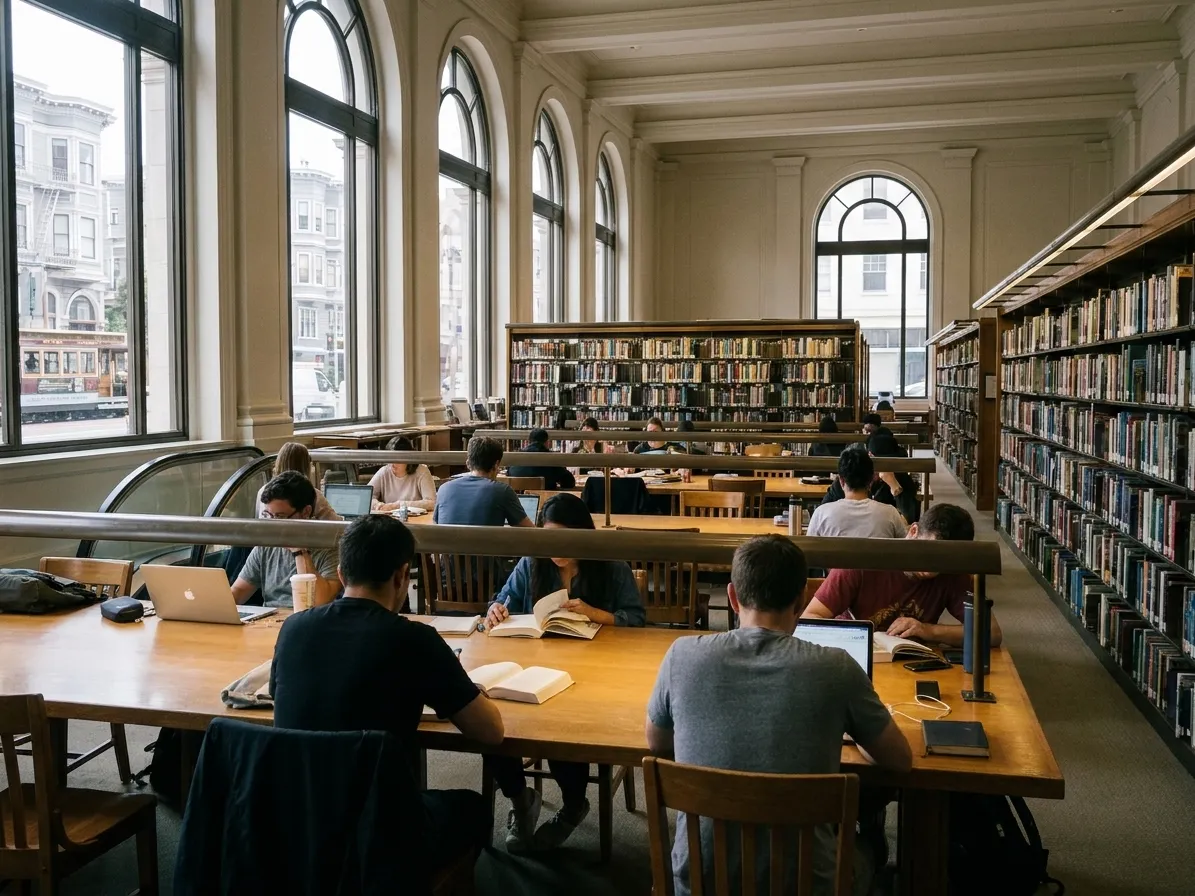
The library system is the most underused thing in the city
Free talks, author events, film screenings, language classes, repair workshops, live music, and tax help, running across dozens of branches, every week, all year. The main library alone programmes more free events in a month than most listing sites carry in a season. The quality is genuinely high — visiting authors on tour do library events routinely, and they are the same talk you would pay for elsewhere.
The reason nobody knows this is distribution: the programme lives on a municipal website with municipal design and no promotional budget. Five minutes with the events calendar of your nearest two branches will produce more usable plans than an hour on any aggregator, and it is the single highest-return search in this whole category.
Markets are an outing, not an errand
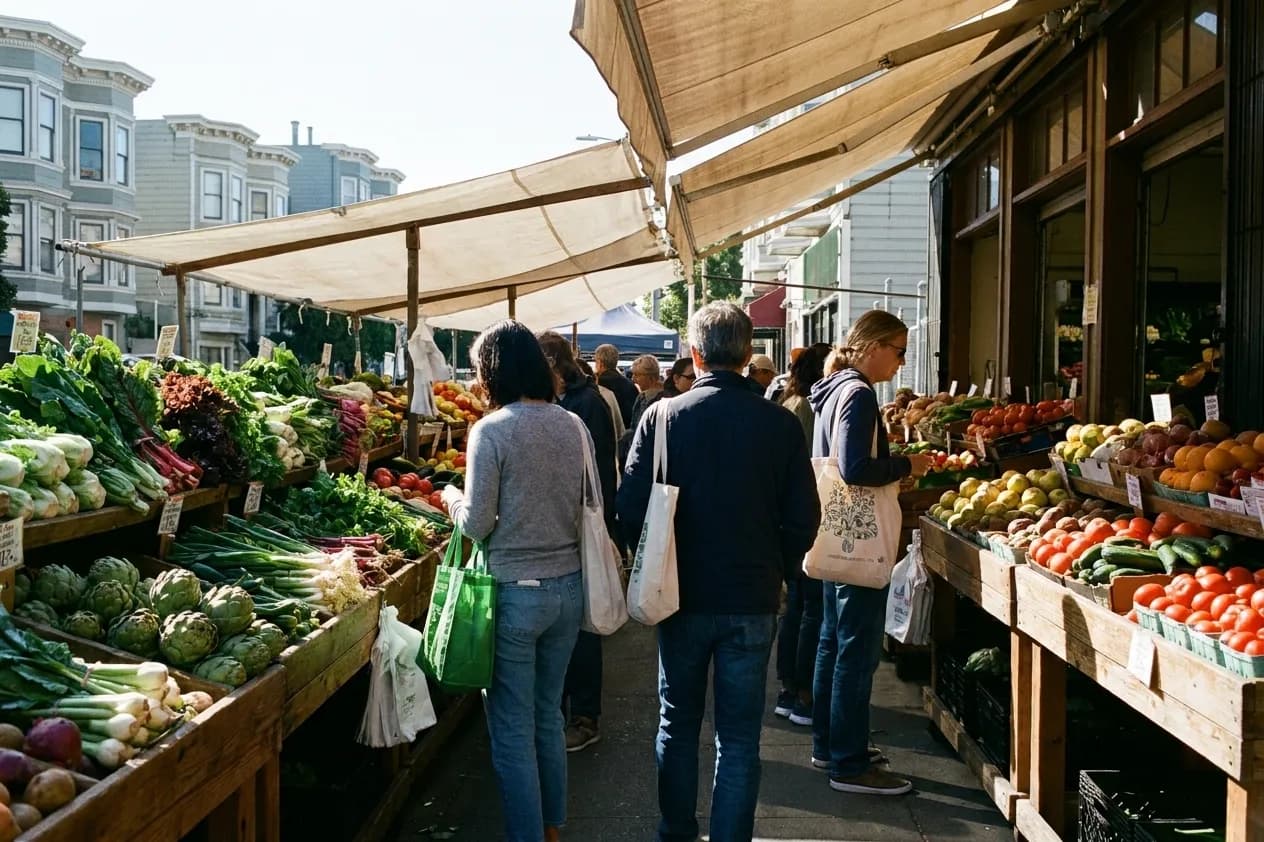
The bigger neighbourhood markets here function as weekly social events: prepared food, music, people you know, and enough going on to fill two hours. Residents treat them as the default Saturday or Sunday morning plan in a way visitors rarely appreciate, and the smaller weekday ones — which are quieter and better for actually buying things — are almost entirely a local affair.
The year-round point matters here. Unlike almost everything else outdoors in this city, the markets do not have a season. In February, when the free calendar is at its thinnest, they are still running, and that reliability is a large part of why they anchor so many people's weeks.
Gallery openings and first-of-the-month programming
The gallery districts here run coordinated openings, generally on first Thursdays and first Fridays, and they are free, welcoming and come with a drink. Nobody will ask you anything. They function as a low-commitment evening plan that involves walking between four or five spaces, and they are a genuinely good way to spend two hours with a friend without booking anything.
The related habit is the free museum day. Most of the major institutions have one, they are on fixed days each month, and residents plan around them. They are busy — that is the trade-off — but a crowded free museum is a better Tuesday evening than most paid alternatives, and the schedules are stable enough to memorise.
Participation beats spectatorship
The free things that residents attend repeatedly are almost all participatory rather than performances: run clubs, swim groups, chess in the park, language exchanges, community gardens, volunteer shifts, pickup sport, board-game nights in bars. These are free because there is nothing to sell, and they are the actual social infrastructure of the city.
They are also, unlike a concert, a way to meet people, which is the unstated thing most people looking for free events are actually after. A weekly run club will change your experience of living here far more than twelve free concerts will, and it costs the same. The barrier is that the first attendance is awkward and the second is not.
The civic layer
Public meetings, neighbourhood association nights, planning hearings and community board sessions are free, open, and much more interesting than they sound in a city where land use is a contact sport. This is a minority taste, but for anyone who wants to understand why their neighbourhood is the way it is, two hours at a planning hearing is more illuminating than any amount of reading.
Adjacent to that are the free civic-programmed things: park department classes, public health clinics, city-run festivals, and the various commemorations and parades that run through the year. These are advertised badly and attended heavily, which is a reliable signature of the local rather than the visitor calendar.
How to build a week from this
Pick one recurring thing and attend it four times. That is the whole method. The free calendar in this city rewards regularity rather than variety, because the value compounds — the fourth time at a market or a run club or a gallery night is better than the first, and nothing about a one-off free event compounds at all.
Then use the library calendar as the variable slot. Between one recurring commitment and one library or gallery event, a week has two free plans in it without any searching, and both are things residents do rather than things the city advertises. That is a considerably better use of the category than chasing whatever a listings site has put at the top this week.
What to ignore
Brand activations, which are free because they are advertising and are structured to extract a queue and a photograph from you in exchange for very little. Anything described as an experience with a capital letter. And the large ticketed festivals that have a free fringe, where the free portion is usually a merchandise area and a stage nobody is watching.
The test is simple enough: ask who is paying for it and why. A library, a park department, a neighbourhood association or a gallery has a straightforward answer and no interest in your attention beyond the evening. If the answer is a brand, the event is the price, and free is doing a lot of work in that sentence.
Tags: #SanFrancisco #FreeEventsSF #FreeThingsToDo #SFLibrary #FarmersMarket #GalleryNight #CommunitySF #RunClub #ThingsToDoSF #LocalKnowledge #BayArea #WeekendSF #SFCulture
All trademarks are the property of their respective owners.
Ask Karpo first
Ask Karpo what free events are on near you in San Francisco this week, including the library and community programming that never shows up in a search.