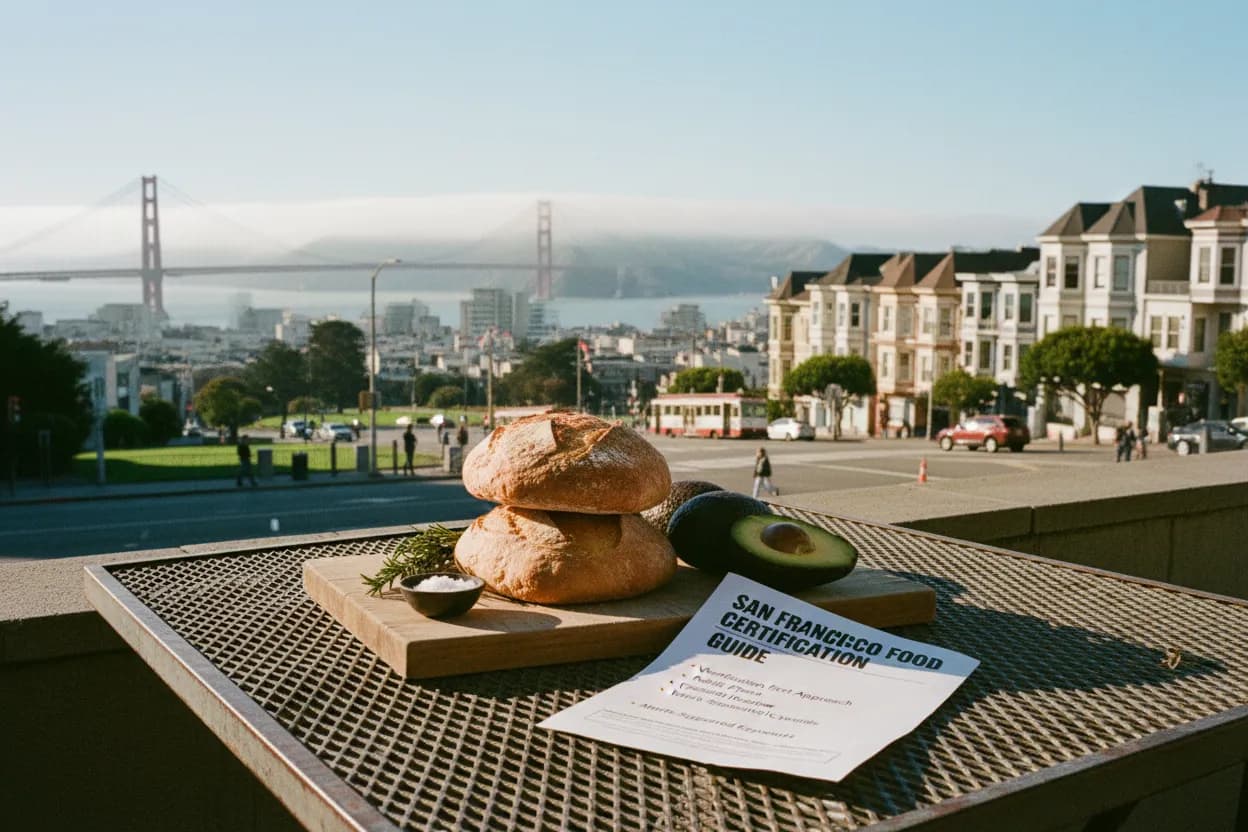
If you are searching for a San Francisco Food Handler Certification Guide for Restaurant Workers, start with one uncomfortable truth: credential details are local, and the wrong assumption can cost you time, money, or a missed shift. The official extract available here confirms how New York City structures its Food Protection Certificate, including public access, course formats, exams, and supervisor coverage rules. It does not confirm San Francisco’s current credential name, accepted providers, fees, renewal cycle, or employer requirements. So the smart local move is not to copy another city’s process. It is to verify the San Francisco requirement with the relevant official local health or business page, then choose the simplest path your employer will recognize.
Want a quick check before you sign up for a food safety class or ask your manager for reimbursement? Text Karpo with the course link and your job role, and we will help you spot what to verify.

Decide Whether You Want Making Or Browsing
Restaurant workers usually approach food safety credentials in one of two modes. In “making” mode, you need a certificate because you prep, cook, store, handle, or supervise food. In “browsing” mode, you are comparing classes because a manager, job posting, pop-up opportunity, or catering gig mentioned certification. Those are different levels of urgency. If you are already on a schedule, ask your manager exactly what credential they need, what name it appears under, and whether they require it before your next shift.
The official New York City extract shows why the wording matters. NYC’s Health Code says food places must have a supervisor with a Food Protection Certificate on duty during all hours of operation to supervise food preparation and processing. It also says anyone can take the class and that the Health Department recommends more staff get certified to avoid supervision gaps. That is useful context, but it is not San Francisco law. For a san francisco food handler certification decision, verify the local rule before treating any course as accepted.
Check Materials Before You Commit
Before paying for any class, open the official page connected to the credential and check the course title, certificate title, exam requirement, delivery format, language options, and whether the final step is online or in person. The NYC official extract separates the course from the final exam for the online path: the online course is free, self-paced, has 15 lessons, requires passing a quiz before moving forward, and the final exam must be taken in person. That kind of detail is exactly what can get missed when a third-party page says “certification” in big letters.
For San Francisco, do not rely on a generic search result alone. Confirm whether the certificate is for a food handler, food manager, food protection supervisor, or another food safety role. Also verify whether your employer accepts the provider, whether the course language works for you, whether an exam is required, and what proof you receive after passing. If a page lists costs, exam locations, renewal periods, or card delivery timing, treat those as changeable facts and re-check them on the official page before you commit.
Match The Class To Your Attention Span
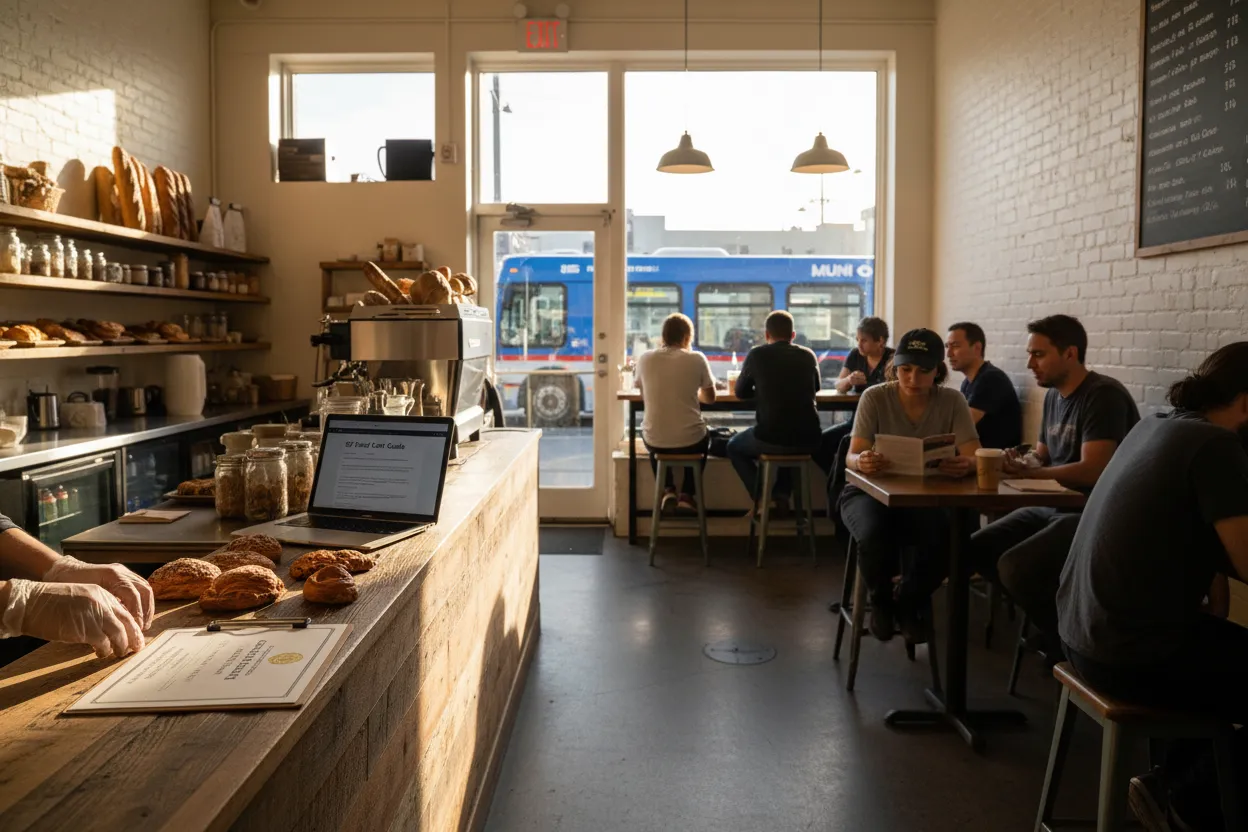
The best food safety class is not always the shortest one. It is the one you will actually finish, understand, and be able to prove you completed. The NYC extract gives two official examples: an in-person Food Protection Course at the NYC Health Academy, and an online course that is self-paced. The in-person version is described as 15 hours over five days, while the online version is structured as 15 lessons with quizzes required before moving ahead. Those details show the tradeoff between scheduled accountability and flexible pacing.
Use that framework for San Francisco planning. If you focus better in a room, look for an officially accepted in-person option and verify the current schedule, location, registration method, price, and exam process before going. If you work variable shifts, an online or self-paced course may fit better, but you still need to verify whether any final exam, identity check, or physical certificate step must happen separately. Do not assume “online” means “done today,” and do not assume “certificate” means “accepted by my restaurant.”
Pair The Workshop With An Easy Reset
Food safety training is practical, but it can still feel like a workshop: you are learning procedures, vocabulary, storage logic, contamination risks, and the habits that keep a kitchen from becoming chaotic. Plan it like something that needs a reset afterward. If you are taking a class before or after a shift, leave enough time to eat, commute, review notes, and avoid rushing into service with your brain full of exam language.
For getting around San Francisco, the official SFMTA site is the page to check before you travel. It includes a trip planner with options for Muni, bike, walk, drive, and park, plus route and stop information, travel maps and guides, accessibility information, and transit updates. Because service details and alerts can change, verify your route, stop, timing, and any posted travel updates on SFMTA before you head to a class, exam, or employer meeting. Do not build your plan from a screenshot someone sent last week.
Leave Room For Pickup Or Shipping
A certificate is only useful if you know how you receive it and how to show it. The NYC official extract says that when someone passes the final exam, they receive a temporary Food Protection Certificate. It also states that final exams and exam study guides are available in 37 languages, while the online course itself is offered in English, Spanish, and Chinese. Those are specific NYC facts, and they illustrate the kind of proof and language questions workers should ask anywhere.
For a San Francisco food handler certification plan, verify the proof format before you book. Ask whether you get a printable certificate, wallet card, temporary certificate, digital record, mailed document, or employer-facing verification. If pickup or shipping is involved, check the official page for current instructions before depending on it for a job start date. If you need accommodation, translation, or a study guide in a specific language, verify availability directly on the official credential page rather than assuming all materials match the exam.

Confirm Policies Before Booking
The final checkpoint is policy, not hype. Before booking, confirm the official credential name, who is required to hold it, whether your role needs it, whether your employer reimburses it, and whether the course provider is accepted. If fees are listed, verify the current amount on the official page. The NYC extract lists application fees ranging from $24 to $114 for its Food Protection Certificate paths, but those numbers belong to NYC’s program and should not be treated as San Francisco pricing.
Also check cancellation rules, rescheduling steps, exam requirements, ID requirements, language options, and what happens after you apply. If you are using public transportation, verify your trip on SFMTA the same day because routes, events, and transit updates can change. A cautious plan is simple: confirm the local San Francisco requirement, choose the accepted format that fits your schedule, save proof of registration, and tell your manager what step you completed. That beats paying twice because a course sounded official but was not the credential your workplace needed.
Tags: #SanFrancisco #FoodHandlerCertification #RestaurantWorkers #FoodSafety #FoodTraining #CredentialCheck #KitchenJobs #HospitalityCareers #SFMTA #PublicTransit #LocalGuide #creative_workshops #AskKarpo #BeforeYouGo
Sources consulted: food handler certification · San Francisco Travel · SFMTA
All trademarks are the property of their respective owners.
Ask Karpo first
Ask Karpo first if a course page feels vague, a manager gives you a credential name without a link, or you are unsure whether a certificate will count in San Francisco. Send the official page, your role, and your deadline so the next step is easier to verify.