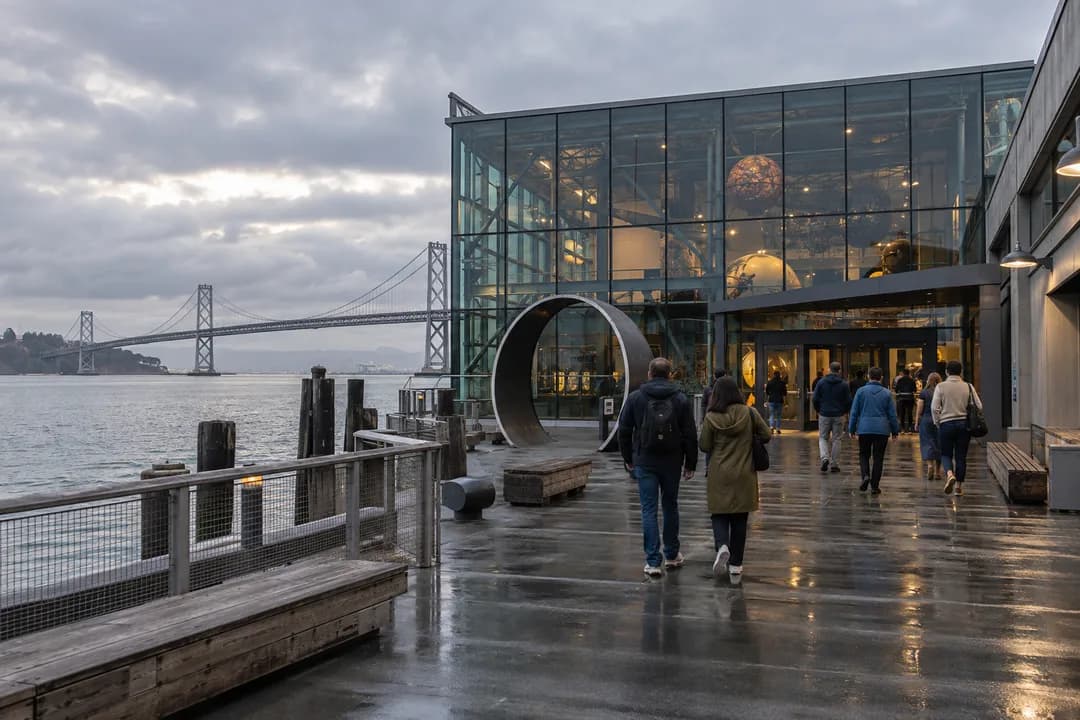
 Exploratorium Horror Wax Museum: Pier 15 After Dark
Weekend Plans

San Francisco Weekend Guide: Ferry Building Market to the Embarcadero
Karpo is your proactive AI city assistant in the Karpo APP. Just ask where to have dinner, what's worth seeing this weekend, or which vintage shop to check out — like you would a friend with good taste.
Ferry Building Marketplace is a practical answer when you want seasonal market bites in San Francisco without wasting the whole day on guesswork. The address rewards a little planning: choose your arrival window, order the item that defines the room, and connect it to a walk through Embarcadero.

A useful city guide starts with a clear reason to go. At Ferry Building Marketplace, the reason is seasonal market bites, but the better visit is a small sequence: arrive at the right time, understand the ordering rhythm, choose one signature item, and leave with enough energy for a the waterfront promenade and Rincon Park. That approach turns a search for the best seasonal market bites in San Francisco into a plan you can actually use.
The first practical decision is timing. Go during the opening part of the service if you want the widest choice and a calmer conversation with staff. A later arrival can be more atmospheric, but it may also mean a longer line, fewer seats, and popular items selling through. If your group has different schedules, set a meeting point outside and let the first person check the current queue rather than holding a table or blocking the entrance. A flexible plan is part of the experience in a busy neighborhood.
Once inside, read the room before ordering. Ferry Building Marketplace has its own pace, and regulars usually make one focused first order instead of asking the counter to explain the entire menu during the rush. Start with a shareable portion of seasonal market bites, then add one contrasting item after everyone has tasted the first bite. This gives the kitchen a clean sequence and helps the group avoid buying too much of one rich or salty thing.
The signature order should be treated as a reference point, not a rule. Ask what is freshest, what takes the longest, and what staff would choose for a first visit. Those questions are more useful than simply asking for the most popular item. If the dish arrives hot, taste it before reaching for sauce or extra seasoning. If it is served cold, notice temperature and texture first. A good guide leaves room for the place to surprise you.
There are small house manners worth knowing. Keep bags under the table or by your feet, avoid spreading a large group across narrow service areas, and have a backup choice ready if an item sells out. If the staff asks you to move along after finishing, take it as a sign that the room is managing a real neighborhood flow, not as a personal rejection. The fastest way to get better service is to be decisive, polite, and aware of the people waiting behind you.
For a first course, choose something that shows the venue's foundation. That might be a simple pastry, a carefully made sandwich, a market vegetable, or a bowl built around one excellent ingredient. Then order the more distinctive specialty. The contrast explains why the place works. It also makes the visit friendlier for a mixed group: one person can try the headline item while another stays with a familiar favorite.
The useful insider detail is to watch where regulars pause. At Ferry Building Marketplace, that may be a side counter, a window ledge, a back corner, or the edge of the market hall. The best position is not always the most photogenic one. Look for a seat that lets you see the service, hear your companions, and leave without making another guest stand up. On a first visit, a little observation is often more valuable than a complicated reservation strategy.
The surrounding area is part of the meal. After eating, take the short route through Embarcadero; notice the change from commercial blocks to residential side streets, storefronts, stoops, small parks, or working waterfront edges. Keep the walk to twenty or forty minutes so it feels like a continuation rather than an expedition. If weather turns, identify a coffee stop or covered arcade before you leave the venue. A good neighborhood plan has an easy shorter version.
For dates, arrive early enough to talk before the room fills. For coworkers, choose orders that can be shared without creating a long pause between dishes. For families, confirm seating and make sure at least one option is familiar to younger diners. For solo visitors, the counter is often the best seat because it removes the pressure of taking a full table. The same address can support several kinds of outing when the timing and order are adjusted.
There is also a value question. A lower-cost visit does not mean choosing the cheapest item in isolation. It means picking one excellent anchor, adding water or a simple drink, and using the walk afterward as the second activity. If you are trying to stay within a budget, ask about half portions, daily specials, or the smallest serving that still represents the kitchen. Avoid ordering several trendy add-ons before you know how filling the main item will be.
Practical Notes: confirm current hours, service format, menu availability, accessibility, and any timed promotion before leaving. Expect neighborhood traffic, limited seating, and a queue during peak periods. Wear comfortable shoes if you plan to continue through Embarcadero. Bring a light layer for outdoor waiting. If you are visiting on a weekend, allow extra time for market crowds and transit delays. Treat online menus as a starting point rather than a guarantee, because seasonal ingredients and staffing can change the day-to-day selection.
The best way to remember Ferry Building Marketplace is not as a checklist of famous items. Remember the sequence: arrive before the sharpest rush, ask one good question, order the specialty with something grounding, and walk through Embarcadero while the meal is still fresh. That is the kind of plan that works for visitors and locals alike, and it gives a San Francisco search a human scale.
Use the outside market as your first loop, then return inside for the purchase you actually want; it keeps the visit from becoming a rushed browse. If the first visit is crowded, do not force the exact same plan. Return at a quieter hour, choose the counter instead of a table, or make the specialty a short stop before continuing elsewhere. The neighborhood will still be there, and a little flexibility usually produces the more memorable version of the day.
Ask Karpo for more information.
Keep reading
- Exploratorium Horror Wax Museum: Pier 15 After Dark
 ATA Independent Cinema in the Mission: Free First Thursdays
 Roxie Independent Cinema in the Mission: $11 Before 3 pm