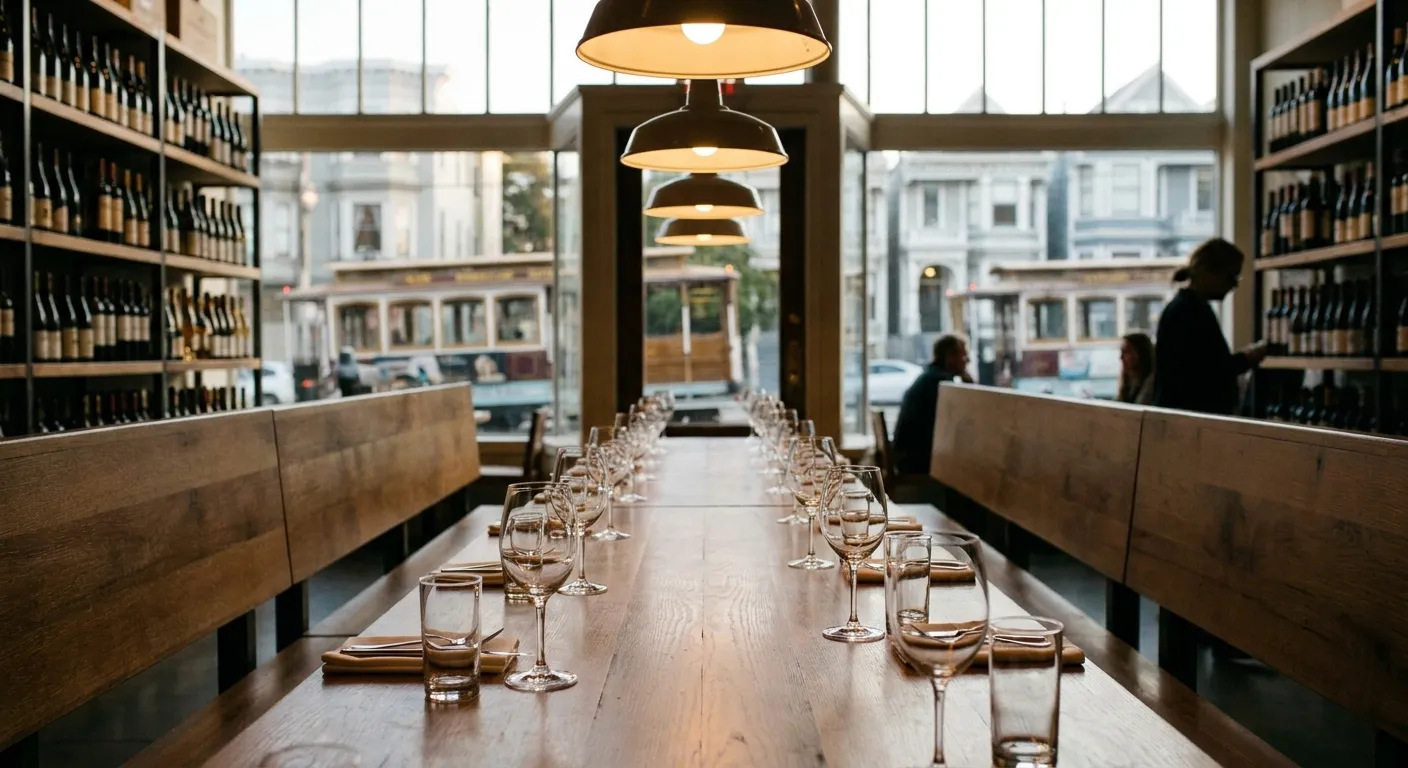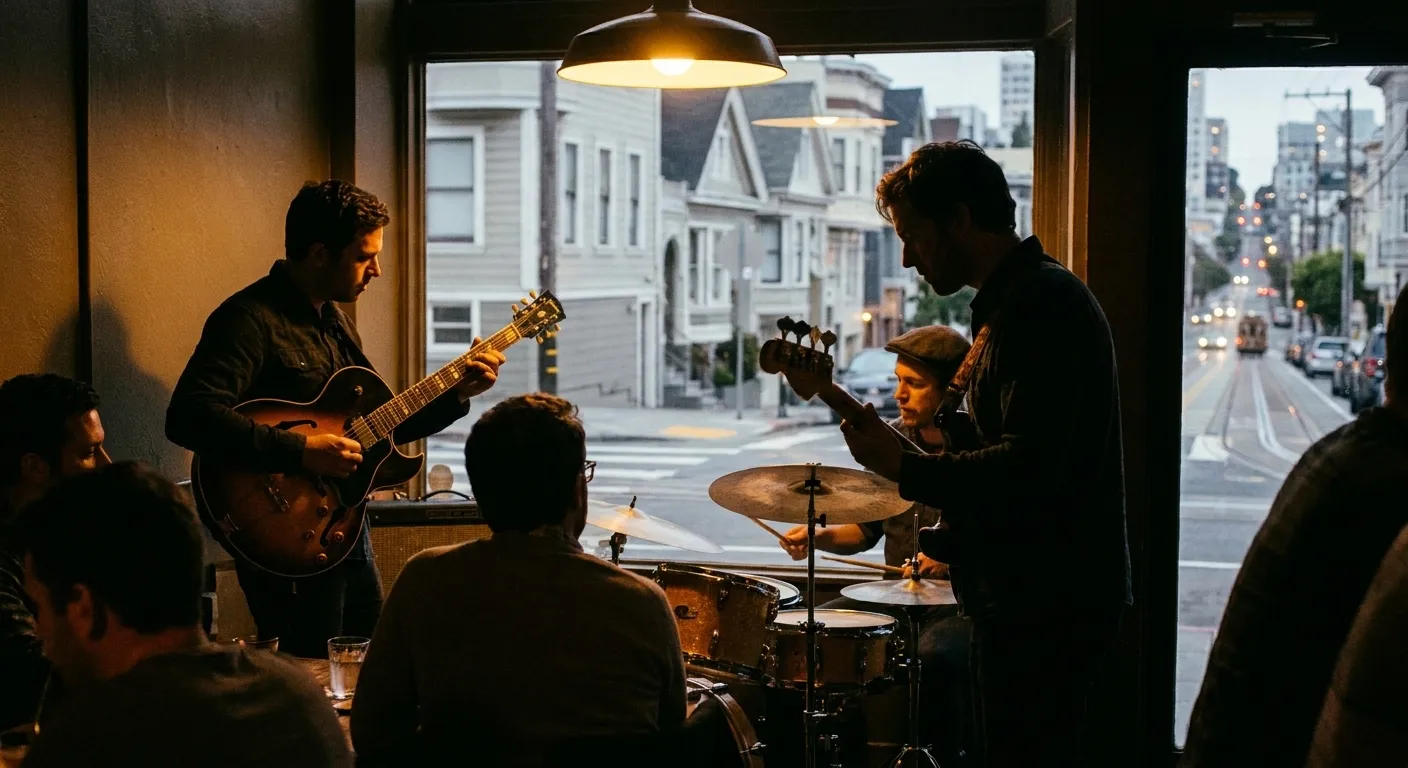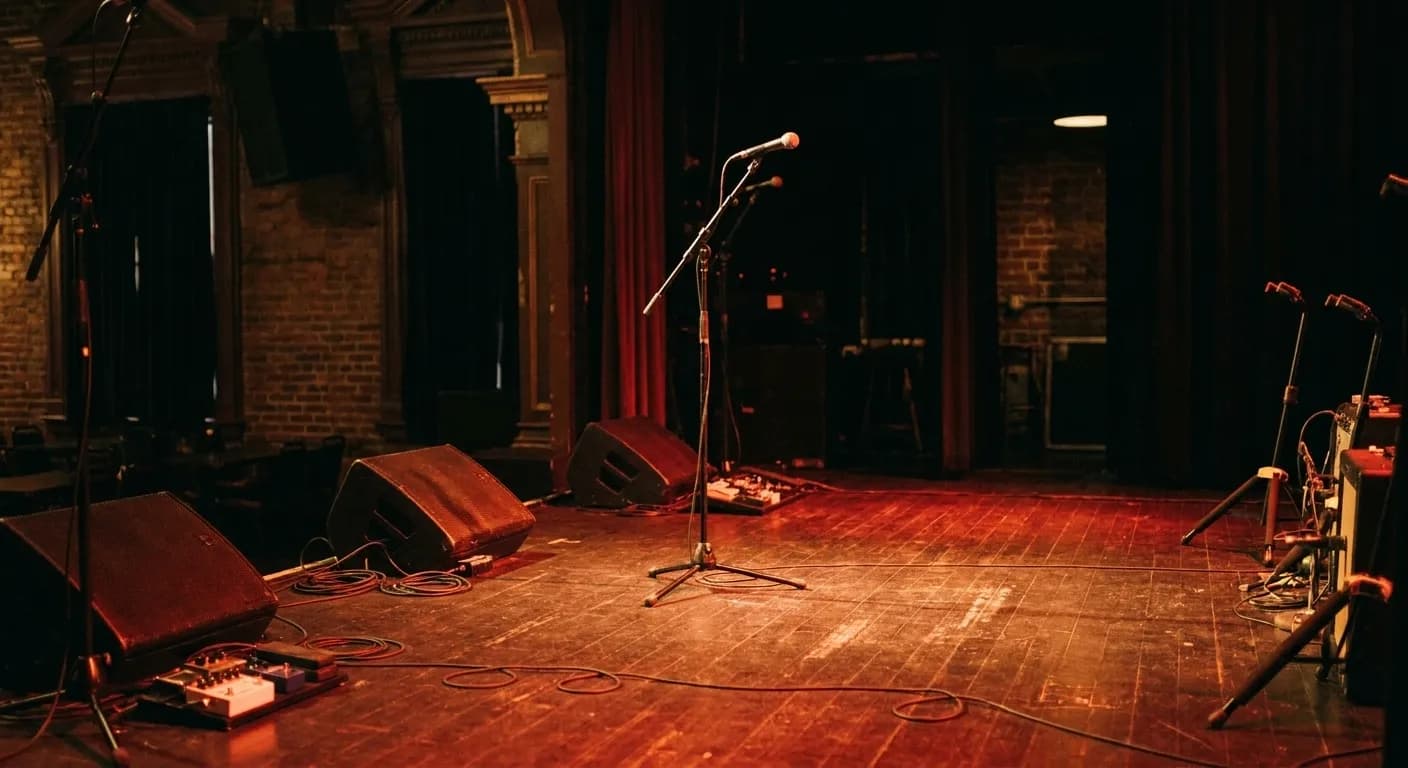
The discourse about concerts in San Francisco is almost entirely about lineups, which is strange given how much of the experience is determined by the building. This is a city of small and mid-size rooms with genuinely different acoustics, sightlines and crowd behaviour, and a good act in the wrong room is a worse night than a middling act in the right one. What follows is a read on the rooms rather than the calendar.
The room matters as much as the lineup. Ask Karpo who is playing near you tonight and what the venue is actually like.
The mid-size rooms are the city's strength
San Francisco's best asset is a dense cluster of venues in the six-hundred to twelve-hundred capacity range. That size is the sweet spot: big enough to attract touring acts on their way up, small enough that the back of the room is still a good place to stand. Cities with a gap at this size end up with acts jumping from tiny bars to arenas, and the mid-tier live experience disappears. Here it is the default.
The practical consequence is that the same act on the same tour is frequently a much better show in this city than in the market before or after it, purely because of what was available to book. If you have the choice of where to catch a tour, San Francisco is usually the better ticket.
Sound quality is not evenly distributed
A handful of rooms here have genuinely excellent systems and rooms tuned for them. Several others have good systems in buildings that were never meant to hold music — long, narrow, hard-surfaced spaces where the sound at the bar bears little relation to the sound at the front. The tell is architectural: high ceilings with soft surfaces and a shallow, wide floor plan are good; a deep rectangle with a low ceiling and bare walls is not.
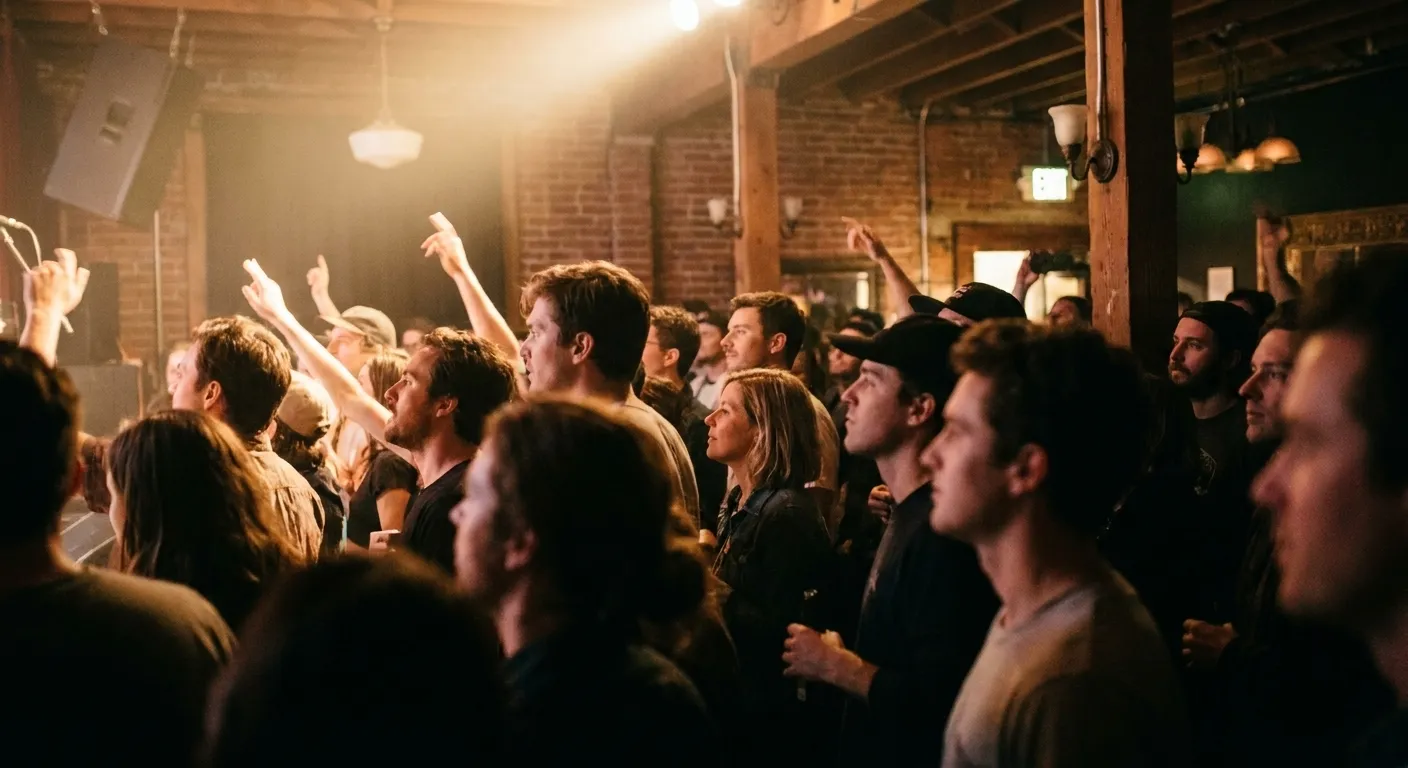
Where you stand matters more in the bad rooms than the good ones. In a long narrow venue the usable zone is a surprisingly small area from about a third back to two thirds back, dead centre. At the front you get stage volume rather than the mix; at the very back you get the room. This is worth knowing before you commit to a spot forty minutes early.
Sightlines and the flat-floor problem
Most of the standing rooms in this city have flat floors, which means your view is determined by the person in front of you and nothing else. The venues with raked floors, balconies or elevated side sections are meaningfully better for anyone not at the front, and they are worth paying more for if the act is one you want to watch rather than hear.
The balcony question is where local opinion splits. Balconies here are usually seated, cooler, and have the best sound in the building; they are also detached from the crowd in a way that suits some shows and ruins others. For a band you love, the floor. For a band you are curious about, the balcony, every time.
Door times and the missed-support problem
The single most common complaint about gigs in this city is people arriving to find they have missed the act they came for. San Francisco venues run early relative to their reputation — headliners frequently start between nine and nine thirty on a weeknight, and curfews are real. Turning up at ten because that is when things start in other cities is how people end up catching four songs.
The corollary is that support slots here are worth arriving for. Because the headline slot is early, the opener goes on at a civilised hour rather than at half seven to an empty room, and the mid-size venues in this city book supports unusually well. Arriving at doors is a better default here than almost anywhere.
The outdoor and unconventional rooms
The city's outdoor music is seasonal and mostly free, and it is a different proposition entirely — good for an afternoon, unreliable for a specific act, and heavily weather-dependent in a place where a summer evening can be twelve degrees. The general rule is to treat outdoor shows as a plan for the day rather than a plan for the music.
The other category worth knowing is the non-venue: record shops, churches, converted warehouses and the back rooms of bars all host real shows here, and they are where the most interesting things happen. They are also poorly listed, sell out through channels that never touch the big platforms, and reward following the promoters rather than the venues.
How to choose when you do not know the act
Pick the room and trust it. Several venues in this city book with enough consistency that a random night at one of them is a better bet than a researched night somewhere else. This is the habit that separates people who see a lot of live music here from people who see three shows a year: they follow buildings and bookers, not artists, and they end up in front of things they would never have searched for.
The other thing that helps is being honest about what you want from the evening. A loud, packed, standing show and a seated room with good acoustics are different activities that happen to share a name. Deciding which one you are in the mood for, before looking at who is playing, produces better nights than the reverse.
Tags: #SanFrancisco #ConcertsSF #LiveMusicSF #SFVenues #GigGuide #SFMusic #SmallVenues #NightOutSF #SFNightlife #MusicLovers #BayArea #ThingsToDoSF #SocialSF
All trademarks are the property of their respective owners.
Ask Karpo first
Ask Karpo who is playing near you in San Francisco tonight, what time the headliner actually goes on, and whether the room is worth standing in.