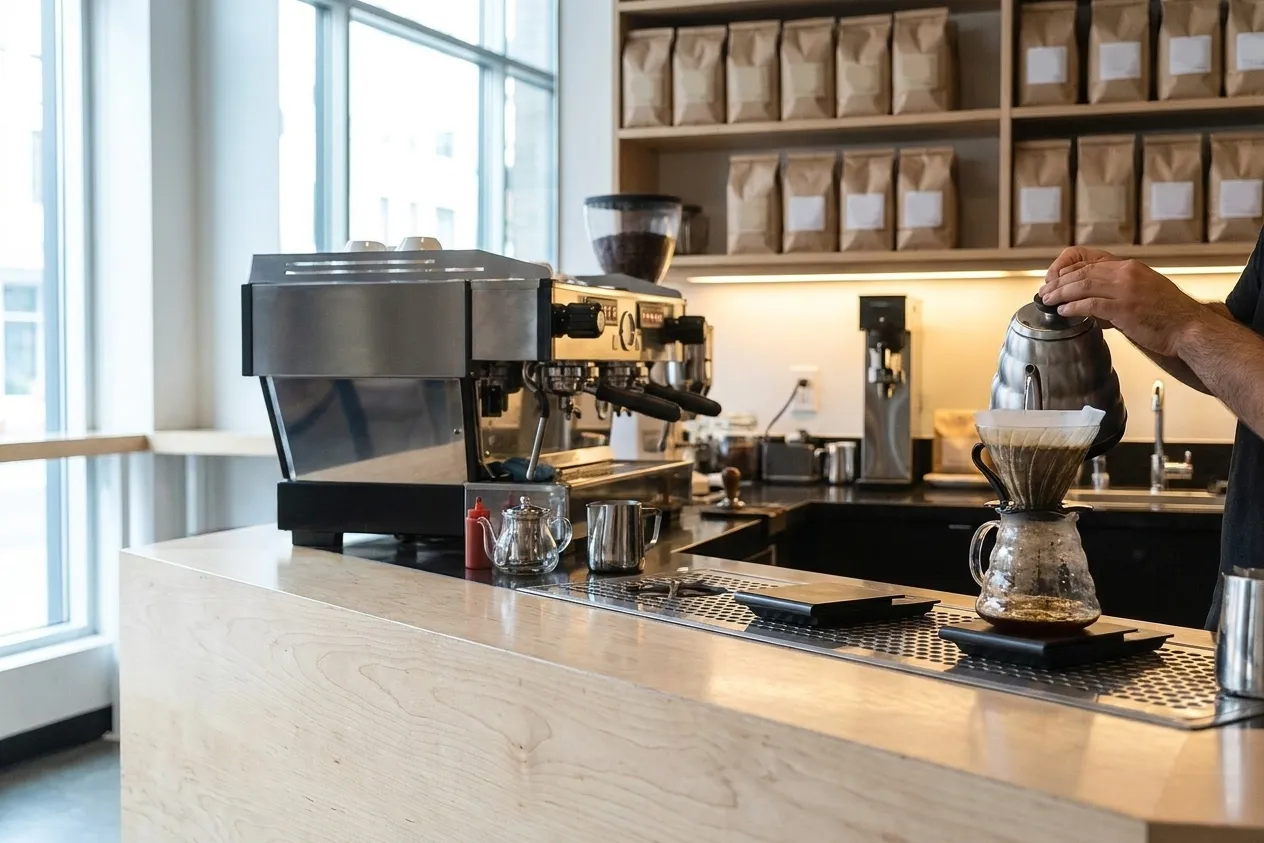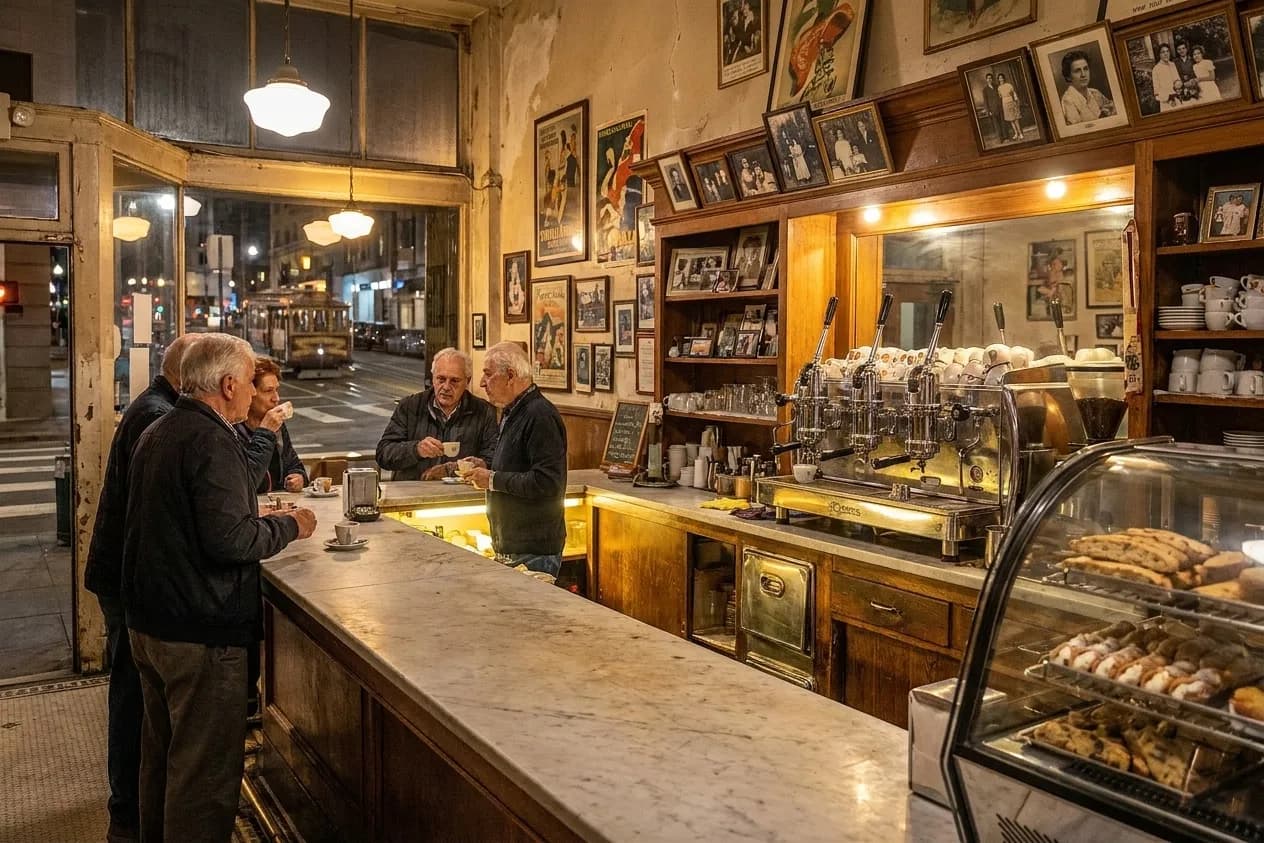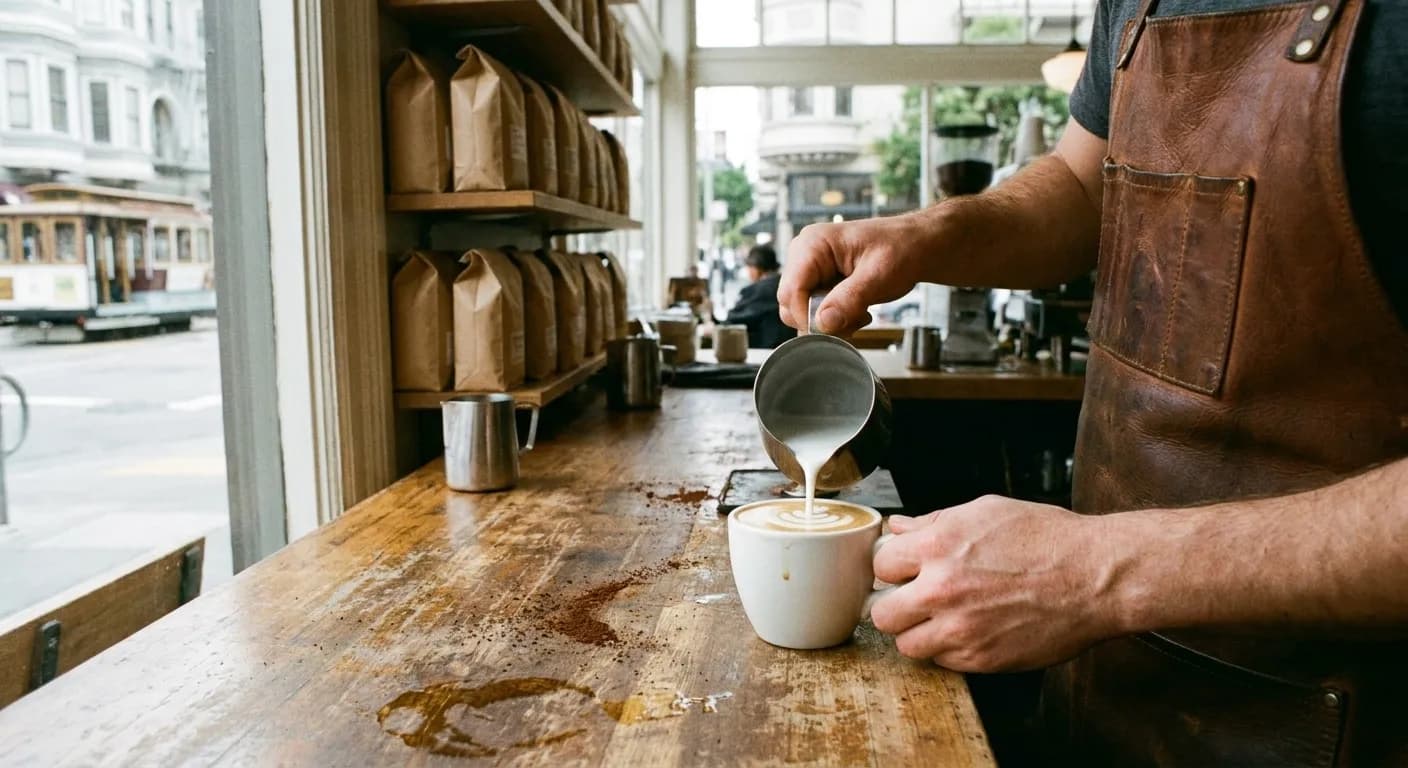
The line outside a San Francisco cafe is not a verdict on the coffee. It is a verdict on turnover. A shop pulling shots continuously through the morning is grinding beans that landed from the roaster days ago; a shop with an empty counter at nine on a Tuesday is working through the same hopper it opened at seven. That is the honest reason the queue matters, and it is why the best coffee in San Francisco tends to cluster around cafes that roast their own — the supply chain is about four miles long and there is no warehouse in the middle of it.
The queue moves at different speeds depending on whether a shop batch-brews. Ask Karpo which counters near you are open and how long the wait usually runs.
Roaster-owned counters are a different category
San Francisco has an unusually high density of cafes that roast in the city or just across a bridge, and it changes what you should order. At a roaster-owned shop the filter coffee is the house argument — it is the drink they designed the roast profile around, and it is usually the cheapest thing on the board. At a multi-roaster cafe buying beans from three or four suppliers, the espresso is generally the safer order, because the staff have dialled it in that morning and the filter is often a compromise.
Ritual Coffee Roasters on Valencia Street is the oldest of the current generation, open since the mid-2000s and still the reference point for the bright, acidic style that people either love or describe as sour. Four Barrel, a few blocks down the same street, roasts on site in a building you can smell from the sidewalk. Sightglass built its SoMa flagship around a roaster sitting in the middle of the floor, which is either a nice piece of theatre or a genuinely useful thing to stand next to in February.
The Outer Sunset is the one worth the trip
Andytown, out on Lawton Street near the ocean, is the cafe that most reliably converts visitors into people who drive across town. It roasts its own, it is Irish-inflected in a way that shows up in the soda bread rather than anything gimmicky, and its signature drink — espresso poured over ice, sparkling water and a float of lightly sweetened cream — is genuinely unlike anything else in the city. It sounds wrong on paper and works completely in practice, particularly in the fog.

Nob Hill, Polk and the small-format shops
The Coffee Movement on Nob Hill runs one of the smallest footprints in the city and one of the longest relative queues, and it is a useful illustration of the turnover principle: the room is too small to hold stale coffee. Saint Frank on Polk Street is the more comfortable version of the same idea, with proper seating and a roasting operation behind it. Both are places where asking what the filter is today will get you an actual answer rather than a shrug.
Wrecking Ball on Union Street is worth knowing about for a reason beyond the cups. Trish Rothgeb, one of its founders, is the person who coined the phrase third wave coffee in a trade article in 2002 — the entire vocabulary that the industry now uses to describe itself came out of that piece. The coffee is good. The historical footnote is free.
What the North Beach holdouts still do
Graffeo has been roasting in North Beach since 1935 and has never pretended to be a cafe. You walk in, you buy beans, you leave. There is no espresso machine, no seating, no menu of single origins with tasting notes. For a certain kind of San Franciscan this is the only correct way to run a coffee business, and the dark roast they have sold for decades is a completely different proposition to anything on Valencia Street. It is worth going once to understand what the city drank before 2005.
Equator, based across the water in San Rafael with cafes in the city, is the other outlier — the first coffee roaster in the United States to certify as a B Corp, and one of the few at this scale that is woman-owned. If you care about where the money goes as much as where the beans do, that is the one to look up.
Hayes Valley, the Mission and the density trade-off
Hayes Valley packs an unusual number of good cafes into a few walkable blocks, which is convenient and also means none of them are doing anything especially adventurous — the competition pushes everyone toward a safe, well-executed middle. Linea Caffe in the Mission is the counter-example worth seeking out, a small operation from a roaster who spent years working the sourcing side, and the menu is short in the way that only confident places manage.
If you are moving between neighbourhoods, the thing that actually varies is the milk drinks rather than the espresso. Espresso extraction is fairly standardised across serious shops in this city now. Steaming technique is not, and the gap between a cafe that pours properly textured milk and one that does not is far more noticeable in a cortado than in a straight shot.
How to read a menu you have not seen before
Two quick tests. First, look for a batch brew price under four dollars: a shop that charges espresso-drink money for filter is usually not confident in the filter. Second, check whether the bean bags on the shelf have a roast date rather than a best-before date. Roast date means someone in the building is accountable for it. Best-before means the bags came off a truck.
The thing nobody tells you about coffee in this city is that geography does most of the work. The Mission and Hayes Valley are saturated and competitive, so the floor is high and the ceiling is not much higher. The Sunset, the Richmond and the far end of Polk have fewer options, which means the good ones there are good because they have to be. If you are staying downtown and want one trip that is actually worth the transit time, go west.
Tags: #SanFrancisco #SFCoffee #BestCoffeeSF #CoffeeRoasters #ThirdWave #OuterSunset #MissionDistrict #NobHill #NorthBeach #SFEats #SpecialtyCoffee #FlatWhite #BayArea
All trademarks are the property of their respective owners.
Ask Karpo first
Ask Karpo which roaster-owned cafes near you in San Francisco are open now, whether they are pouring batch brew today, and how far the walk is from where you already are.