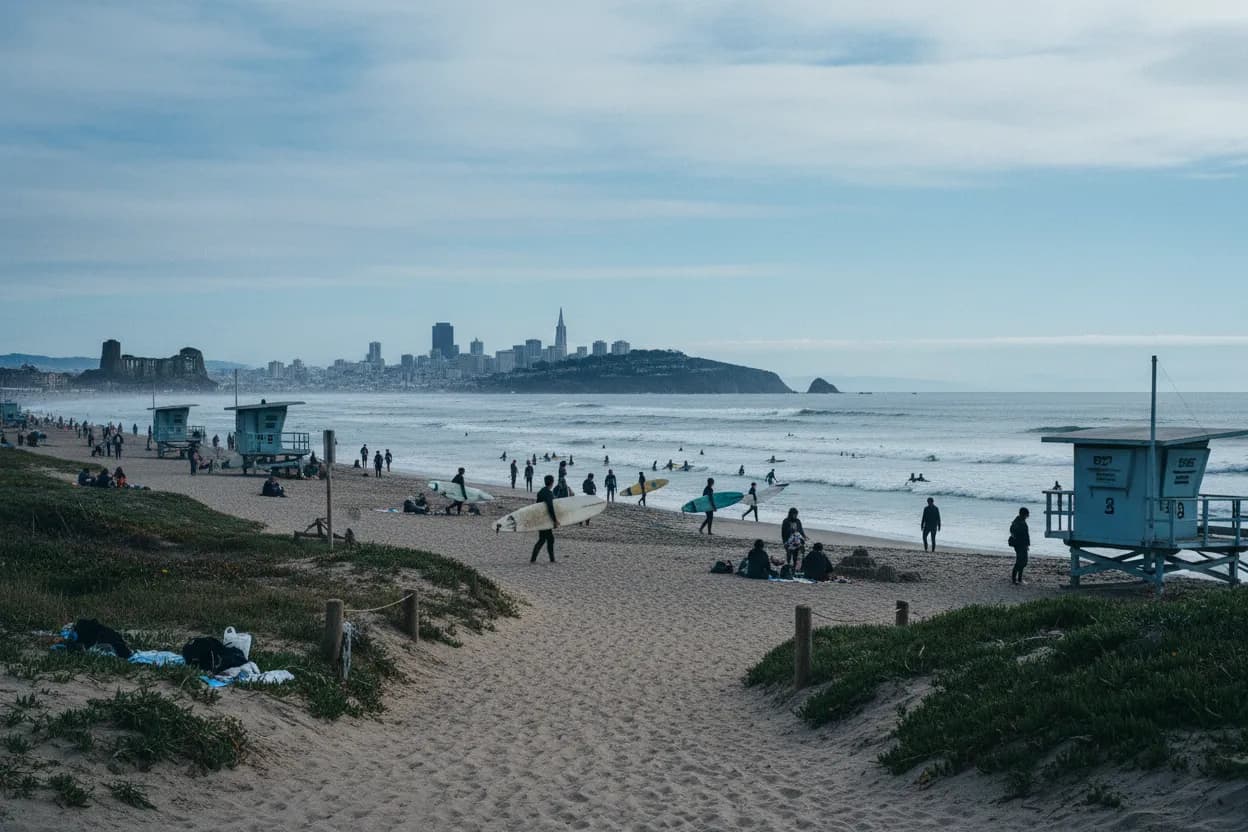
San Francisco can make a surf day feel simple on paper and complicated in real life: fog, wind, transit timing, parking choices, and shifting beach conditions all matter. This San Francisco surf guide is for beginner days, not bragging rights. It treats “best places to surf” as a planning question first: where can you get to, what can you verify, and what can you do without committing to a costly setup? Because the official extracts available here do not confirm specific surf breaks, lesson operators, rental inventory, lifeguard coverage, or beach rules, the smarter move is to build a flexible public-access plan and recheck official pages before you head out.
Want a quick sanity check before you grab a board or invite friends? Text Karpo with your start point, travel mode, and comfort level, and ask for a beginner-day surf plan.

Start With Public Access
For a beginner surf day, start with the part you can control: getting to a public shoreline safely and leaving yourself options. SFMTA’s visitor guidance says people can see San Francisco by Muni transit, bike, foot, or car, and its site includes a trip planner with modes for Muni, walking, biking, driving, and parking. That matters because a surf plan is not only about waves. It is also about whether your group can reach the area, carry gear, meet up, and get home without turning the day into a logistics problem.
Use this as your baseline rule: do not pick a surf spot from hype alone. If an article, map, or friend names a beach, verify the official access information before treating it as your destination. Check whether the route you want is realistic by transit, bike, walking, or car, and look for current transportation notices. SFMTA’s homepage includes travel and transit updates, plus alerts, so make that part of the pre-trip routine rather than an afterthought.
Check Whether Free Still Means RSVP
Surfing can fit into a free_things_to_do mindset when the plan is simply to visit a public beach, watch conditions, walk the shoreline, or practice dry-land basics. But “free” should never be read as “nothing to check.” A beach visit may still require you to verify access, transportation disruptions, parking rules, restroom status, equipment needs, and any current notices on official pages. If you cannot confirm a detail, do not build your whole day around it.
This is especially important for beginners because paid lessons, rentals, storage, group meetups, and transportation choices can quietly change the budget. The source material does not confirm San Francisco lesson prices, rental availability, operator schedules, or reservation policies, so treat all of those as live facts. Before going, verify directly with the official page of any provider or agency involved, and do not assume that a social post, old blog, or friend’s memory is still accurate.
Build Around One Strong Anchor
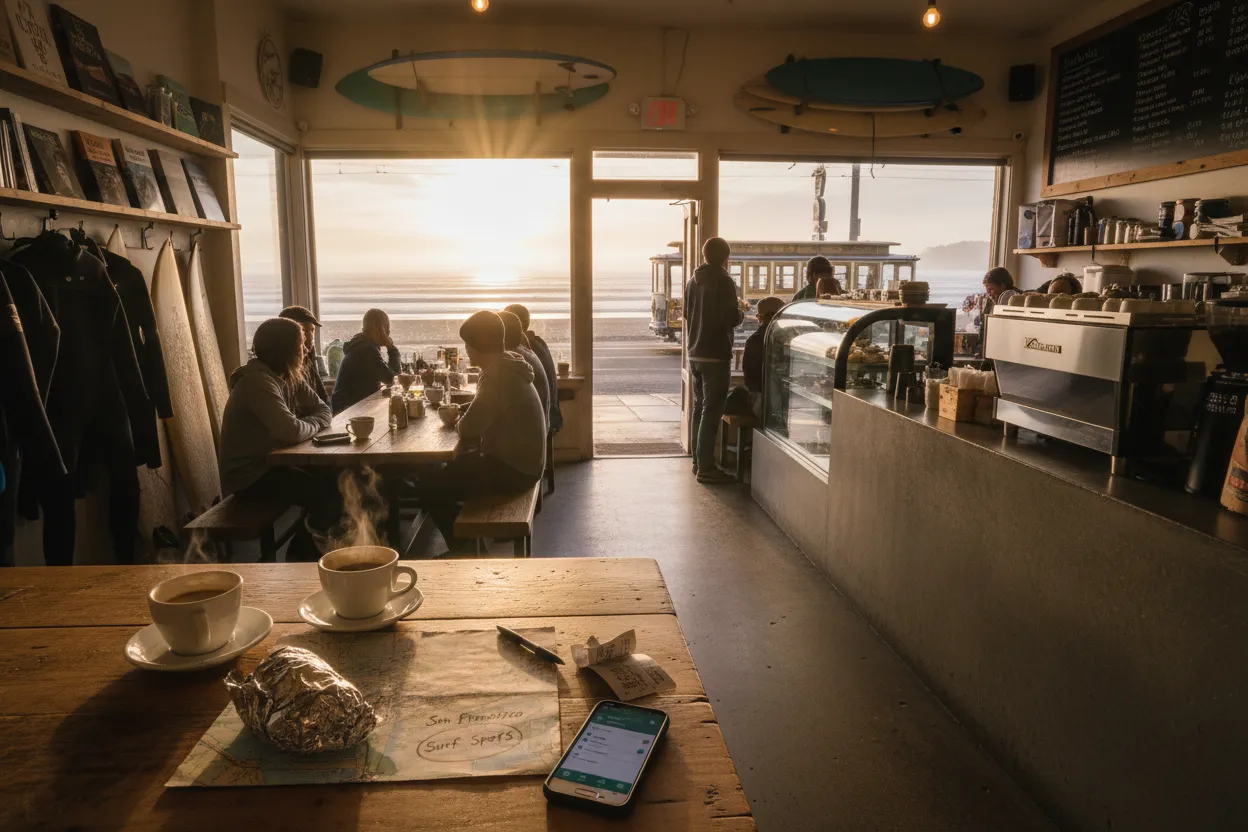
A beginner surf day works best when it has one strong anchor and several fallback choices. Your anchor might be a public beach access point you have verified, a transit route you know is running, or a meet-up location that everyone can find. From there, keep the rest loose. Time Out describes surfing as appealing to beginners and pros alike, but also notes that surf trips can be made or broken by unfavorable conditions. That is the planning lesson to borrow: flexibility beats overconfidence.
For San Francisco Best Places to Surf Guide for Beginner Days planning, the anchor should not be “the perfect wave.” It should be “the most verifiable plan.” Pick the public location only after checking official access information, then decide what you will do if the water does not look right for your ability. A good fallback can still be a beach walk, coffee nearby, transit-friendly sightseeing, or simply watching experienced surfers while learning how local conditions behave.
Use Weather As A Planning Filter
Weather is not background noise for surfing; it is the filter. Time Out’s surf coverage points out that changing weather can affect surf suitability and that some places work differently depending on wind, swell, and season. For a beginner in San Francisco, that means you should not decide based only on a pretty forecast icon or a photo from another day. You need to check current and official condition information before you commit to getting in the water.
Before leaving, verify the day’s weather, surf, and safety information from official or directly responsible sources, then match it to your own ability. If conditions look confusing, too powerful, too cold, too windy, or hard to interpret, choose the low-risk version of the day. Beginners do not lose anything by watching, walking, or postponing. The worst plan is the one that pressures a new surfer to enter the water because the calendar invite already went out.
Keep Costs From Creeping In
The cheapest version of a San Francisco surf day is often the one you plan with restraint. Use SFMTA’s trip planning tools to compare transit, walking, biking, driving, and parking options before defaulting to the most expensive path. The SFMTA site also points visitors to transit maps and ways to get around, which can help you avoid last-minute rideshare decisions or parking confusion. Check fares, parking rules, and route updates on official pages because those details can change.
Be equally cautious with surf-specific spending. The available official extracts do not verify local board rental costs, wetsuit rental costs, lesson packages, deposits, cancellation terms, or walk-up availability. If you plan to buy, book, or rent, confirm the exact price, pickup process, sizing, return rules, and refund terms directly with the provider before you go. If the goal is a budget-friendly beginner day, decide your spending ceiling before the group chat starts adding extras.

Recheck Access Before Leaving
The final check should happen close to departure, not the night before. SFMTA’s homepage shows that alerts and travel updates exist, and it lists current items such as service changes and event-related transit information. That is a reminder that city movement can shift quickly. Before leaving, recheck your route, transfer plan, parking choice if driving, and any posted notices connected to the area you plan to visit.
Then recheck the surf-day essentials: official beach access information, weather and water conditions, group meet-up point, gear plan, and your exit plan. If one of those pieces is uncertain, simplify. A useful San Francisco surf guide should help you avoid preventable mistakes, not push you into a fixed itinerary. On beginner days, the best place is the one you can reach, verify, afford, and leave safely if conditions are not right.
Tags: #SanFrancisco #SanFranciscoSurf #SurfGuide #BestPlacesToSurf #BeginnerSurfing #BeachDay #OutdoorRecreation #NatureGuide #FreeThingsToDo #PublicAccess #SFMTA #LocalPlanning #AskKarpo #BeforeYouGo
Sources consulted: best places to surf · San Francisco Travel · SFMTA
All trademarks are the property of their respective owners.
Ask Karpo first
Ask Karpo first if your surf plan depends on a specific route, provider, or beach detail. Share your start point, travel mode, budget, and comfort level, and Karpo can help you turn scattered checks into a practical beginner-day plan before you go.