The easiest way to choose a cafe in SF is to begin with the night you want, not with a list of the most talked-about places. If the goal is a calm reset after work, a short read, or an unhurried conversation, look for a cafe that matches that energy before you worry about style points. In practice, that means choosing a place near where you already are, or near where you will be later, so the trip itself does not become the stressful part.
Build a calmer SF cafe plan with a reliable backup
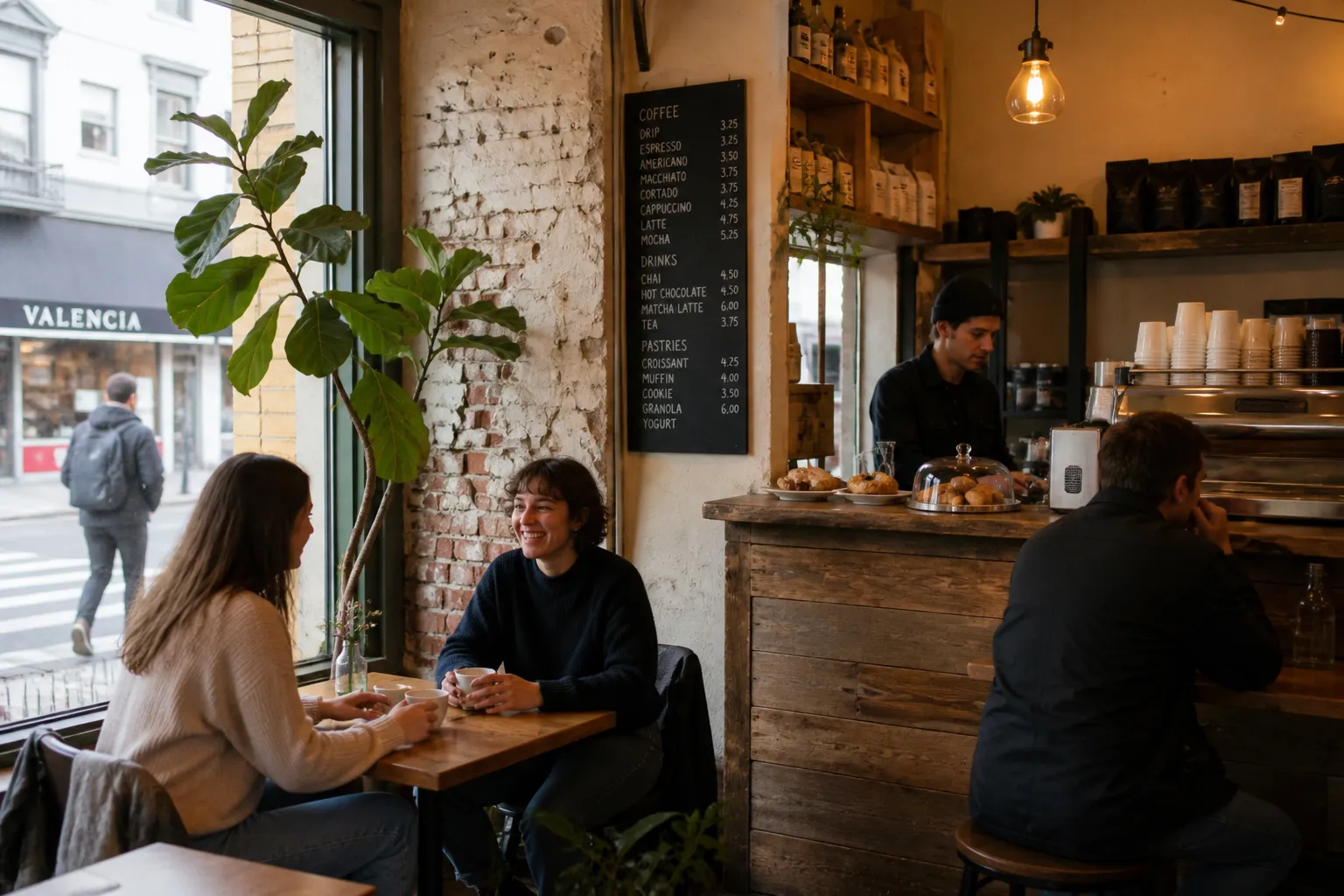
San Francisco rewards simple plans. A cafe that is close to a transit stop, on a street you already know, or in a neighborhood you are comfortable walking at night will usually feel better than a destination that adds transfers, hills, or a long cross-town ride. Check the live map, scan recent photos, and look at the most recent reviews for signs of crowding, noise, or seating limitations. If the place seems busy but manageable, that can still work. If it looks like you will be standing outside wondering what to do next, keep moving.
Read the neighborhood before you pick the cafe
SF neighborhoods behave differently in the evening, and that matters more than the coffee menu. Some areas feel active into the night because of dining, nightlife, or commuter traffic. Others settle down earlier and are better for a quiet stop. Downtown, SoMa, and parts of the Financial District can feel convenient on weekdays but thinner after the office crowd leaves, while residential areas such as the Inner Sunset, the Richmond, Noe Valley, the Castro, and Potrero Hill may feel calmer and more predictable. The Mission can be lively and flexible, but the exact block matters a lot because some streets feel busy and social while others empty out quickly.
Use the block, not just the neighborhood name, as your unit of planning. In San Francisco, two cafes a few minutes apart can feel completely different because of bus traffic, street lighting, foot traffic, and the slope of the walk between them. If you want an easier night, choose a cafe on a well-trafficked street with clear sidewalks and simple exits, especially if you may be leaving after dark. A place near a main corridor is usually easier to reach again if you need to switch plans, and it is easier for a friend to join you without a long search.
Watch timing, weather, and seating in real time
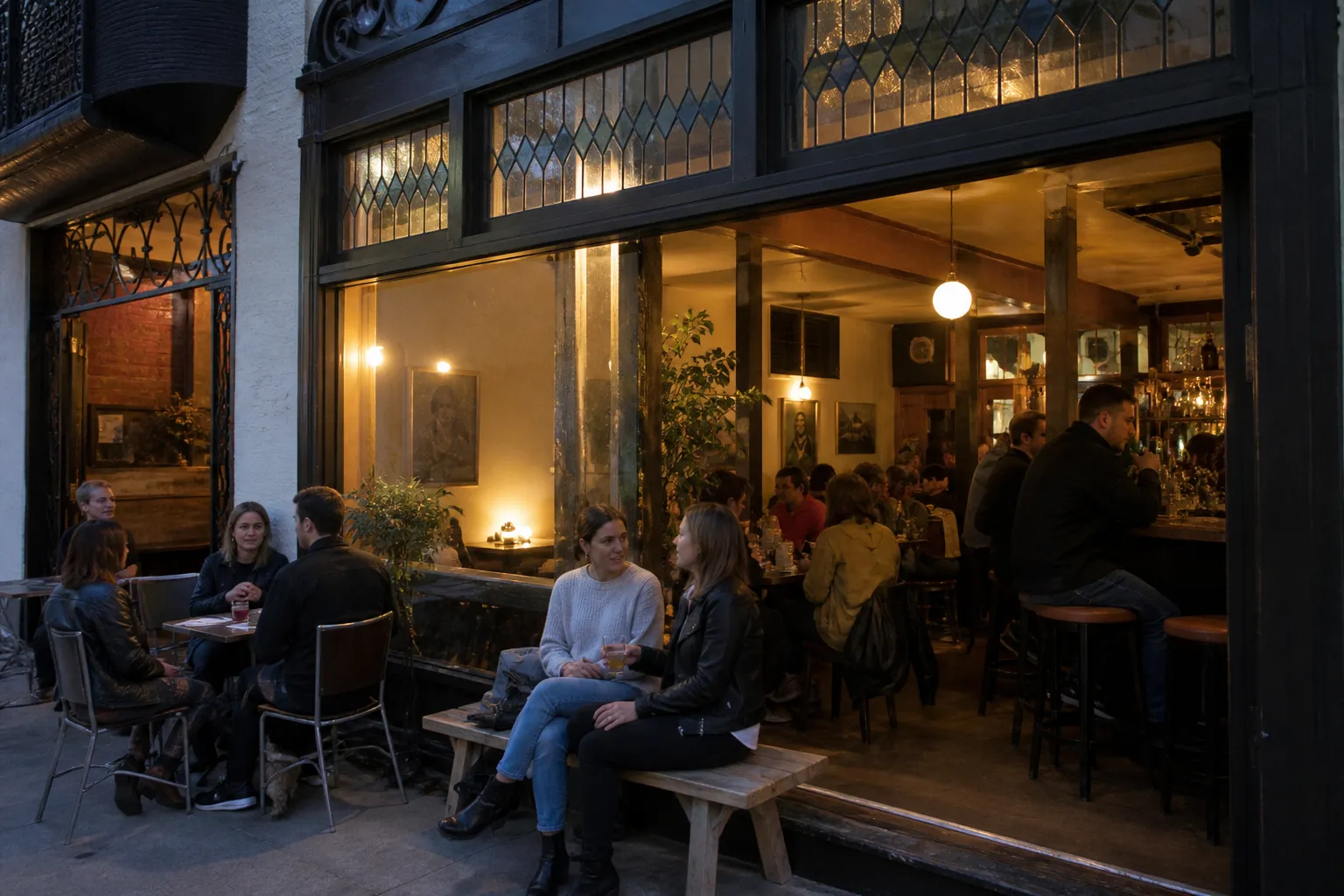
Even in summer, SF evenings can turn cool, windy, or foggy fast. That is why an outdoor table that looks pleasant at 5 p.m. may feel less comfortable an hour later. Before you go, check the local weather closely enough to know whether you need a jacket, and assume the wind will be stronger near the water, on higher ground, or along exposed streets. If you are hoping for a peaceful evening, indoor seating with a window view can be a better bet than a patio that depends on perfect conditions.
Timing also affects how relaxed the visit feels. Early evening can overlap with the end of the workday, school pickup, or dinner traffic, while later evenings may be quieter but less predictable for seating. In many parts of SF, the safest move is to arrive with enough time to settle before the rush peaks. If a cafe is too crowded when you arrive, do not wait too long hoping it will clear. Use the live crowd level, the number of open tables you can see from the door, and the noise level at the entrance as your go or no-go signals. A low-stress night starts with deciding quickly.
Make transit and accessibility part of the choice
In San Francisco, a cafe can be technically close and still feel hard to reach if it sits at the top of a steep hill, far from a Muni stop, or in an area with awkward evening parking. If you want an easier night, choose a place that works with your actual travel mode. If you are taking BART, Muni Metro, or a bus, look for a route that keeps the last walk short and well lit. If you are driving, factor in parking uncertainty and how much walking you are willing to do after you park.
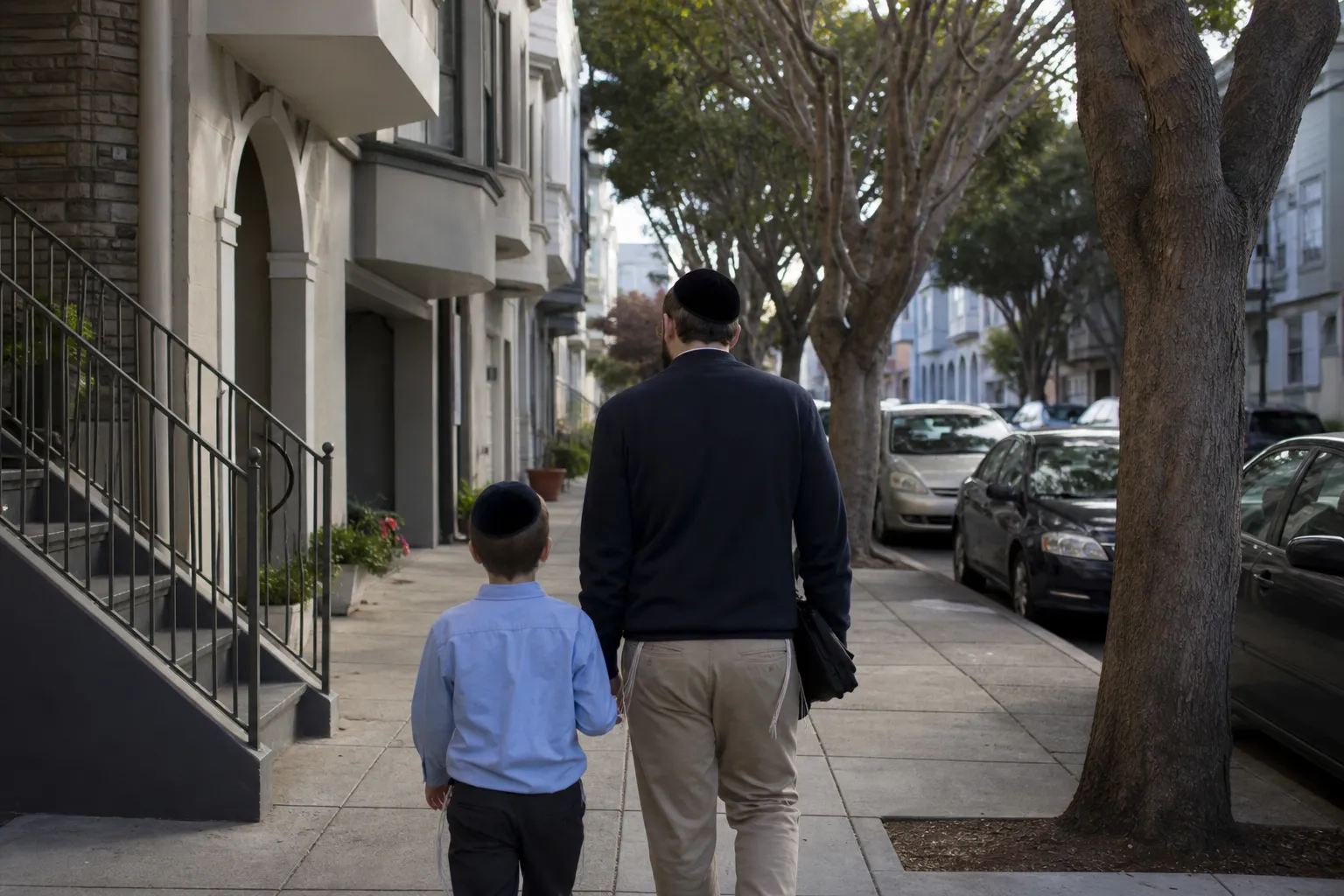
Accessibility is more than the front door. Think about the sidewalk condition, the number of steps, whether the entrance is easy to spot after dark, and whether you will be comfortable carrying a jacket, laptop, or book. If you use a mobility aid, travel with someone who wants the same pace, or simply prefer a smoother route, build those needs into the search from the start. A cafe that is slightly less exciting but easier to enter, easier to exit, and easier to reach can be the better choice for a quiet evening.
Use a simple backup rule so the night stays easy
The most useful SF cafe plan is not one option. It is a short list in the same area. Pick a primary cafe, then identify a second place within a short walk or one transit stop away. That way, if the first spot is too loud, full, cold, or inconvenient, you are not starting over from scratch. A good backup should solve the same problem as the first choice: if the first is calm but small, the second should be calm too; if the first is near transit, the backup should not force a long detour uphill.
You can make the decision in under a minute if you know what to check. First, confirm live seating or a visible opening at the door. Second, look at the temperature and wind and decide whether outdoor space still makes sense. Third, check the route home before you commit, especially if you will be leaving after dark. Fourth, notice the tone of the room: if it is too loud for conversation or too dim for comfort, move on. The best cafes in SF for an easier night are the ones that let you adapt without turning the outing into a project.
A simple plan before you go
- Choose a cafe within the neighborhood you already plan to be in.
- Check live crowding, lighting, and seating before you walk in.
- Favor routes with short, well-lit walks from Muni or BART.
- Keep one nearby backup cafe so a full room does not spoil the night.

Tags: #watch_parties #sf
Sources consulted: Official city information · Google Maps · Karpo local search
All trademarks are the property of their respective owners.