 Best Trick or Treating Neighborhoods Near Me: West Portal
Neighborhood Guides
How a Ben Affleck Jennifer Garner Outing Shapes a Japantown Walk in San Francisco
When co-parenting news breaks, it's a reminder to walk a neighborhood that knows something about grace under scrutiny.
Another Ben Affleck Jennifer Garner outing makes the rounds online—school drop-off photos, a coffee run, the two of them managing the logistics of shared custody with cameras trailing. It's a strange genre of celebrity content: not scandal, not reunion, just the mechanics of two people doing ordinary errands under a level of attention that would flatten most of us. The search spike isn't about gossip. It's about watching people navigate something hard with a kind of visible effort, and maybe wondering how you'd hold up.
Karpo can text you the live Muni timing from your hotel to the Peace Pagoda, confirm which tea room is open that afternoon, and hold a backup route if the fog comes in heavy. Text it before you leave.
Why Japantown holds up when the news cycle doesn't
San Francisco's Japantown offers a walk that mirrors that energy without trying to. It's a neighborhood that has survived urban renewal, displacement, and decades of being overlooked in favor of flashier districts. It doesn't perform resilience—it just keeps its doors open. The blocks between Geary and Post, roughly from Fillmore to Laguna, contain enough texture for a two-hour loop, and the infrastructure is gentle: flat streets, frequent bus lines, and a density of quiet interiors where you can reset if the wind picks up or your patience runs thin.
Start at the Peace Pagoda and work your way into the side blocks
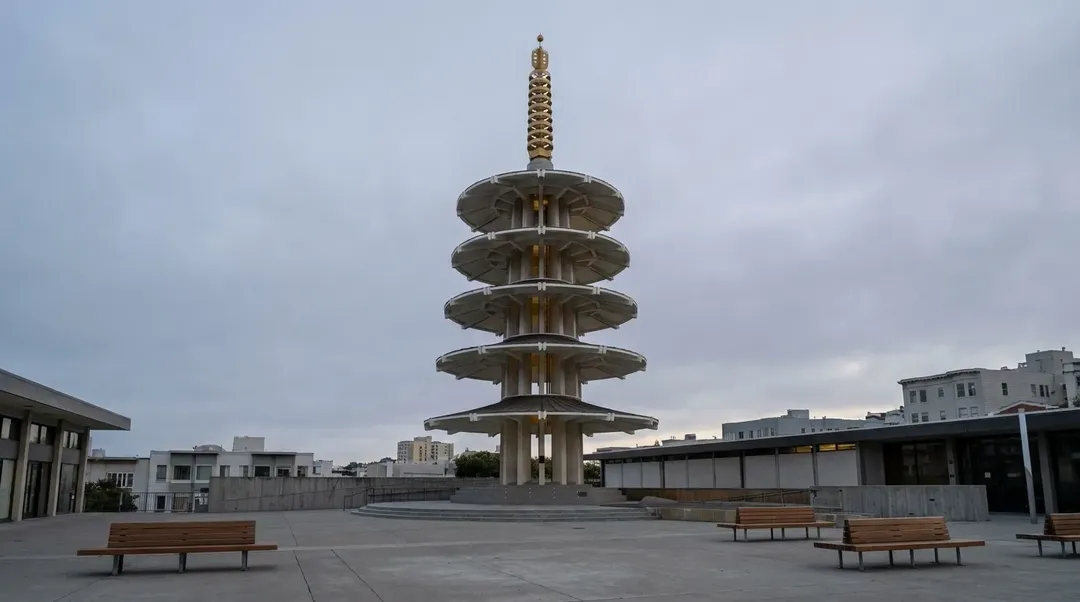
The five-tiered Peace Pagoda in Japantown's Peace Plaza is the obvious anchor. It's visible from Geary, and it gives you a fixed point to orient around. The plaza itself can feel stark on a cold afternoon—concrete, open sky, not much shelter—but it's worth standing there for a few minutes to let the neighborhood come into focus. The pagoda was a gift from Osaka in 1968, and it still reads as both monument and threshold.
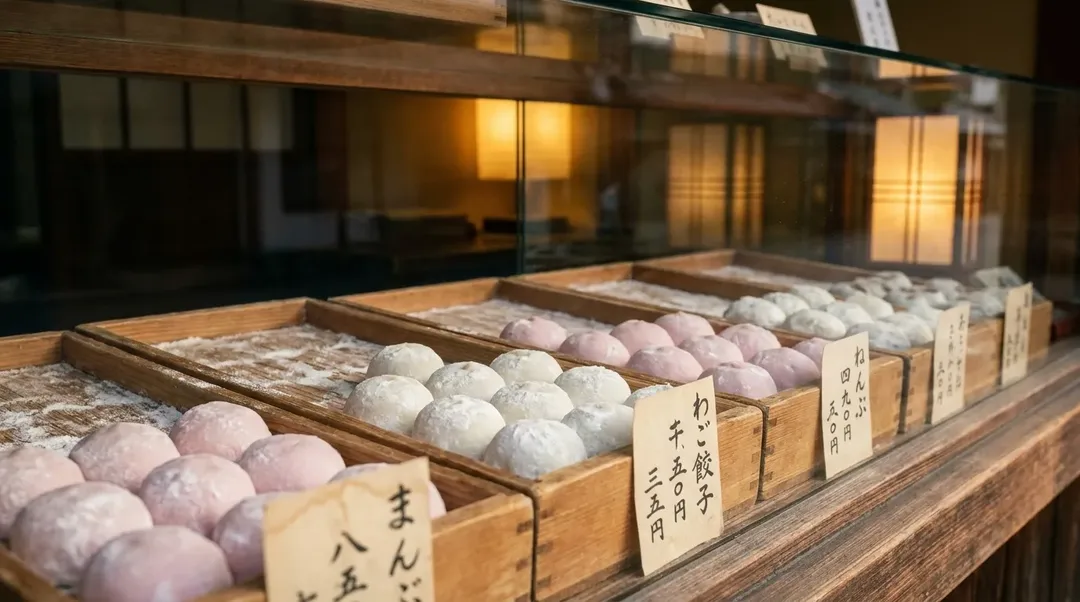
From the plaza, walk west on Post Street toward Fillmore. The storefronts here are a mix of long-standing businesses and newer tenants, but the scale stays low. You'll pass Benkyodo Company, a mochi shop that has been operating since 1906. The front window usually holds trays of hand-formed manju, and the interior smells like sweet rice and red bean. It's the kind of place where you can buy something small, eat it on the sidewalk, and feel like you've participated in something that predates the current round of headlines.
If you want to sit, the lobby of the Kabuki Hotel on the south side of Post has seating that's open to the public during the day. It's warm, the chairs are decent, and no one will rush you. Across the street, Soko Hardware has been in the neighborhood since the 1920s. It's a real hardware store—nails, tools, brooms—but also a reminder that Japantown is still a place where people live and fix things, not just a weekend destination.
The middle stretch: Buchanan Mall and the indoor hallways
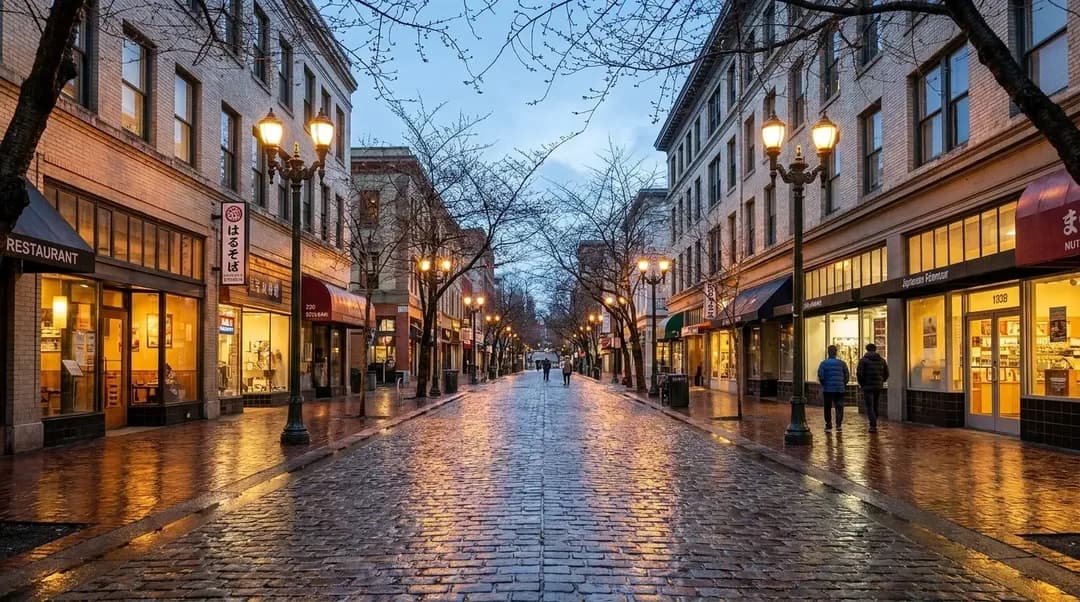
Buchanan Street between Post and Sutter is closed to cars and functions as a pedestrian mall. It's lined with cherry trees that bloom in late March, but even in winter the proportion of the space—narrow, enclosed by mid-rise buildings—makes it feel intentional. The mall connects to Japan Center, the indoor complex that holds most of the neighborhood's restaurants and shops. The center is split into two buildings, East and West, connected by the Peace Plaza bridge on the second level.
Inside Japan Center West, the hallways are dimly lit and the acoustics are soft. It's a good place to slow down. There are tea shops, a bookstore with Japanese magazines and stationery, and Daiso, the discount chain that carries an overwhelming volume of small household goods. The selection is idiosyncratic—rice molds, tiny scissors, shelf liners—and browsing it is oddly calming. If you need to kill twenty minutes while you decide whether to keep walking or head home, this is where you do it.
For food, check the posted hours before you commit. Marufuku Ramen often has a line, but it moves. Sweet potatoes and tonkotsu broth, served in a bright, tiled room. If the line is too long, Benihana is upstairs in the East building—yes, the teppanyaki chain, but this location has been here since the center opened in 1968, and the consistency is part of the point. The kitchens in Japantown tend to close earlier than in other neighborhoods, often by 9 or 9:30 PM on weekdays, so if you're planning dinner, arrive before 7:30 to avoid the last-seating cutoff.
When the original route stops making sense
San Francisco weather can turn a plan inside out. Japantown sits in a part of the city that gets less fog than the western neighborhoods, but wind off the bay can make the plaza and Buchanan Mall unpleasant by late afternoon. If that happens, the indoor sections of Japan Center give you a full reset without abandoning the walk. You can move between East and West buildings on the second-floor bridge and never step outside.
Muni timing is generally reliable on Geary—the 38 Geary runs frequently—but if you're coming from downtown or the Mission, confirm whether you need to transfer. The walk from the 16th Street BART station is over two miles and crosses several long uphill blocks, which is fine if you've planned for it but punishing if you haven't. If you're starting from Union Square or the Financial District, the 38 Geary is direct. If you're coming from the south or east, check whether a transfer to the 38 saves you time over taking BART to Civic Center and walking up.
If the neighborhood feels too quiet or you want a longer walk, you can extend north toward Pacific Heights. Fillmore Street between Post and Pine has cafes, bakeries, and enough foot traffic to feel social without being crowded. The hill is noticeable but manageable, and you'll get a clearer sense of how Japantown fits into the broader grid of the city. On the way back down, the light changes and you'll see the pagoda from a different angle, framed by the slope.
What to confirm before you leave your hotel
Check whether the tea room or restaurant you're hoping to visit is open that day. Some of the smaller businesses in Japan Center keep irregular hours, especially mid-week. If you're planning to sit down for a meal, verify the kitchen's closing time—many places stop seating by 8 PM, earlier than you'd expect in a larger district. If you're relying on Muni, look at the real-time arrival board for the 38 Geary or the 22 Fillmore. Both lines are frequent, but construction or service changes can add ten or fifteen minutes to your trip.
The Ben Affleck Jennifer Garner outing that prompted this search will have moved off the front page by tomorrow. The tabloid cycle is fast, and the actual lives behind the photos are none of our business. But the impulse that brought you to the search bar—wanting to see how people manage hard things with some measure of steadiness—translates well to a neighborhood walk. Japantown doesn't solve anything, but it gives you a few hours in a place that has figured out how to stay itself under pressure. That's worth the Muni fare and the wind.
If you're still unsure about timing or the route, text Karpo before you leave. It can pull current transit schedules, confirm what's open in Japan Center that afternoon, and suggest a backup loop through the Fillmore corridor if the plaza is too windy. The walk works best when you're not guessing.
Practical notes
- Japantown is flat and walkable; the core loop is under a mile, easy to extend north toward Pacific Heights if you want hills.
- Muni: 38 Geary or 22 Fillmore. Both stop within a block of the Peace Plaza. Check real-time arrivals before you leave.
- Many restaurant kitchens close by 9 PM on weekdays, earlier than other SF neighborhoods. Arrive by 7:30 if you're planning dinner.
- Wind picks up in the late afternoon; Japan Center's indoor hallways offer full shelter and enough to browse for 30-45 minutes.
- Free to walk; budget $8-$15 for mochi or tea, $15-$25 for ramen, $3.50 for a Muni round trip if you're not walking both ways.
- Confirm hours for smaller tea shops and Benkyodo before you go—some close Tuesdays or keep shortened winter schedules.
Tags: #karpo #sanfrancisco #japantownsf #neighborhoodwalk #sfneighborhoods #benaffleck #jennifergarner #benaffleckjennifergarner #peacepagoza #japancenter #sfmuni #walkablecity #citywalks #sanfrancisconeighborhoods #sfjapantown
Sources consulted: SF Japantown · SFMTA Muni Routes · Japan Center San Francisco
All trademarks are the property of their respective owners.
Ask Karpo first
Text Karpo to confirm which tea rooms and shops in Japan Center are open that afternoon, and to get live Muni timing from your starting point to the Peace Pagoda. If the weather shifts or the plaza is too windy, ask for a sheltered backup route through the indoor sections and the Fillmore blocks just north.
Ask Karpo for more information.
Keep reading
- Best Trick or Treating Neighborhoods Near Me: West Portal
 Best Trick or Treating Neighborhoods Near Me: Noe Valley
 Best Trick or Treating Neighborhoods Near Me: Bernal Heights